
Cancer Immunotherapy Report
: Analysis on the Market, Trends, and TechnologiesThe cancer immunotherapy market stands at an inflection point, driven by platform engineering, targeted microenvironment interventions, and diagnostics-led patient selection; the internal data reports a projected compound annual growth rate of 11.6% for the cancer immunotherapy trend, signalling sustained commercial expansion and high investor interest. Market forecasts in the public literature vary by horizon and methodology, from mid-decade projections near US$195 billion by 2029 to long-horizon estimates exceeding US$600 billion by the 2030s, reflecting differences in included therapy classes and geographic scope Market.US – Global Cancer Immunotherapy Report, 2025. The practical implication is clear: firms that commercialize scalable cell engineering, reliable in situ modulators of the tumor microenvironment, or validated predictive diagnostics will capture the largest share of the growth opportunity.
We updated this report 5 days ago. Noticed something’s off? Let’s make it right together — reach out!
Topic Dominance Index of Cancer Immunotherapy
The Topic Dominance Index trendline combines the share of voice distributions of Cancer Immunotherapy from 3 data sources: published articles, founded companies, and global search
Key Activities and Applications
- Development and optimization of immune checkpoint therapies, including new CTLA-4 and PD-1/PD-L1 variants designed to improve efficacy and reduce immune toxicity.
- Engineering of adoptive cell therapies for solid tumors, including TCR-T and advanced CAR constructs to address persistence and exhaustion in hostile microenvironments Affini-T Therapeutics.
- Localized, in situ immunomodulation using devices, microbial vectors, or pH-triggered payloads to convert immune-excluded tumors into inflamed lesions susceptible to systemic agents.
- Personalized neoantigen vaccines and AI-assisted antigen selection to increase response rates in tumors with sufficient mutational burden.
- Diagnostic and computational platforms that predict immunotherapy response by mapping tumor-immune network interactions, enabling smarter trial design and precision combination choices.
Emergent Trends and Core Insights
- Divergent market forecasts reflect differing scope, not contradiction. Shorter-term, conservative forecasts (for example, US$194.6B by 2029) focus on currently commercialized classes and conservative uptake, while longer horizons embed more speculative adoption of next-generation cell and gene therapies and broader regional penetration thebusinessresearchcompany – Cancer Immunotherapy Global Market Report, 2025. The strategic takeaway is to prioritize capabilities that perform under multiple uptake scenarios: manufacturing scale and diagnostic stratification.
- The tumor microenvironment, not antigen discovery alone, controls therapeutic reach into solid tumors. Recent patent trends and company pipelines concentrate on TME remodeling, STING/TLR agonists, and macrophage/Treg modulation as necessary complements to checkpoint or cell therapy.
- AI and multi-omics diagnostics shift risk from late-stage failure to front-loaded patient selection. Tools that predict responders shorten trial timelines and increase per-trial signal, increasing asset value for both acquirers and developers Cancer Research Institute 2025 Insights.
- Combination regimens define near-term commercial opportunity. Clinical readouts show improved survival when checkpoint inhibitors pair with targeted agents, chemotherapy, or intratumoral modulators, creating an ongoing market for validated combination protocols and companion diagnostics Oncology News Central marketresearch – Cancer Immunotherapy, 2024.
- Manufacturing and cost remain the gating constraints for broad adoption of autologous cell therapies; off-the-shelf allogeneic approaches and in vivo delivery routes will determine which platforms scale commercially gminsights – Cancer Immunotherapy Market Report, 2024.
Technologies and Methodologies
- Multiplex gene editing and logic-gated constructs to protect engineered cells from TME suppression and antigen escape Verismo Therapeutics.
- Localized payload systems, including intratumoral STING/TLR agonists, pH-activated micelles, and engineered microbes that act directly within tumors to limit systemic toxicity while enhancing antigen presentation Red Arrow Therapeutics.
- Neoantigen prediction pipelines that couple AI ranking with engineered antigen-presenting cell platforms to compress the design-to-dose window for personalized vaccines NexCalibur Therapeutics NeoTargets AB.
- Molecular logic gates and DNA nanoswitches to restrict antibody activity spatially or conditionally, reducing off-tumor toxicity.
- High-resolution imaging and tracer technologies to visualize immune cell infiltration and activation as dynamic biomarkers for treatment monitoring immuneAdvice GmbH.
Cancer Immunotherapy Funding
A total of 432 Cancer Immunotherapy companies have received funding.
Overall, Cancer Immunotherapy companies have raised $54.4B.
Companies within the Cancer Immunotherapy domain have secured capital from 2.1K funding rounds.
The chart shows the funding trendline of Cancer Immunotherapy companies over the last 5 years
Cancer Immunotherapy Companies
- OncoC4, Inc. — OncoC4 develops next-generation anti-CTLA-4 biologics that attempt to separate anti-tumor activity from autoimmune toxicity; the company also pursues CD24-Siglec pathway targets that address immune evasion in hard-to-treat tumors, positioning ONC-392 as a differentiated checkpoint candidate for refractory settings.
- Neobe Therapeutics — Neobe engineers tumor-colonizing bacteria that disrupt the tumor microenvironment locally, increasing immune cell infiltration while avoiding systemic toxicity; the company’s approach directly addresses cold tumors and integrates with systemic checkpoint or cell therapies as combination partners.
- Syncromune® — Syncromune combines partial oncolysis, local infusion of a multi-target biologic, and a proprietary device to synchronize tumor antigen release with immune stimulation; the platform targets metastatic solid tumors and is in Phase 2a for metastatic castration-resistant prostate cancer, providing a clinical path for device-enabled, localized immunotherapy.
- KiraGen Bio — KiraGen applies AI to design multiplex gene-editing combinations that protect CAR-T and other cell therapies from TME suppression, building off an ML-guided platform intended to identify synergistic edits for persistence and function in solid tumors.
- Plectonic Biotech — Plectonic engineers DNA-based “logic” nanoswitches to make antibody activity conditional on tumor-specific signals, a design that reduces healthy-tissue exposure and lowers risk of systemic immune overactivation, enabling safer targeted antibody therapies.
Gain a better understanding of 862 companies that drive Cancer Immunotherapy, how mature and well-funded these companies are.
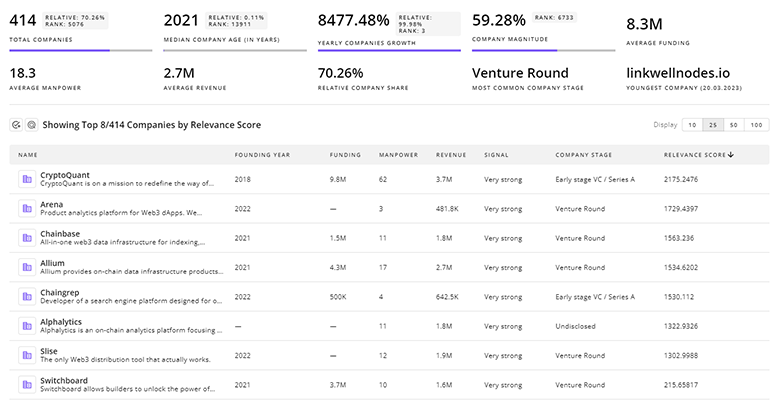
862 Cancer Immunotherapy Companies
Discover Cancer Immunotherapy Companies, their Funding, Manpower, Revenues, Stages, and much more
Cancer Immunotherapy Investors
Gain insights into 2.1K Cancer Immunotherapy investors and investment deals. TrendFeedr’s investors tool presents an overview of investment trends and activities, helping create better investment strategies and partnerships.
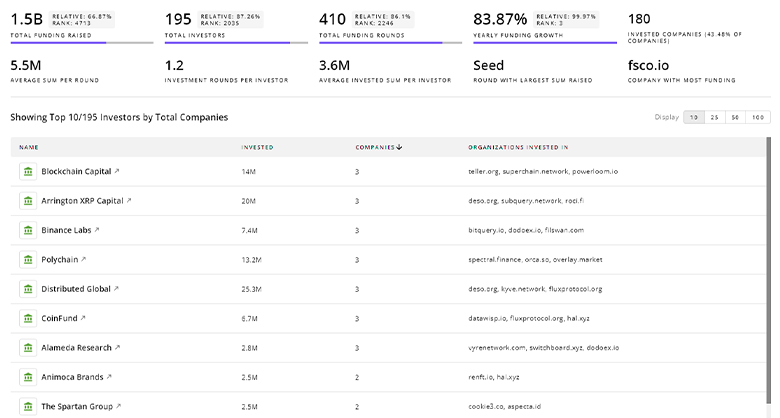
2.1K Cancer Immunotherapy Investors
Discover Cancer Immunotherapy Investors, Funding Rounds, Invested Amounts, and Funding Growth
Cancer Immunotherapy News
Gain a competitive advantage with access to 5.4K Cancer Immunotherapy articles with TrendFeedr's News feature. The tool offers an extensive database of articles covering recent trends and past events in Cancer Immunotherapy. This enables innovators and market leaders to make well-informed fact-based decisions.
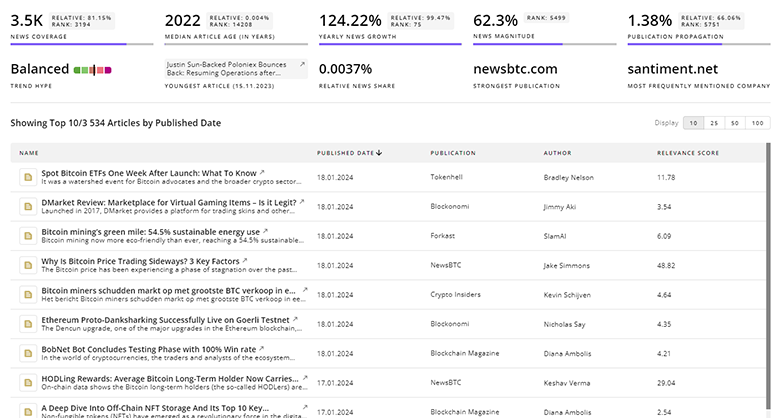
5.4K Cancer Immunotherapy News Articles
Discover Latest Cancer Immunotherapy Articles, News Magnitude, Publication Propagation, Yearly Growth, and Strongest Publications
Executive Summary
Three practical strategic priorities emerge from the integrated data. First, therapeutic platforms that enable reliable access into immune-excluded solid tumors, either by reprogramming the tumor microenvironment or by engineering cells to resist suppression, will identify the next generation of commercial leaders. Second, diagnostic and AI systems that shrink patient selection uncertainty will increase trial success rates and de-risk assets, raising valuations and accelerating partnerships. Third, manufacturability and cost control for advanced cell and personalized therapies will determine which technologies move from boutique clinical successes to sustainable global products. Investors and corporate strategists should therefore prioritize companies that combine a defensible engineering platform, clinical evidence of meaningful TME engagement, and a clear pathway to scale manufacturing or to deploy lower-complexity localized approaches.
We seek partnerships with industry experts to deliver actionable insights into trends and tech. Interested? Let us know!