
Silicium Report
: Analysis on the Market, Trends, and TechnologiesThe silicium ecosystem is shifting from commodity supply to high-value, purity-driven segments: the internal data shows 12,286 companies active on silicium and $204.28B in total funding across the topic, underlining large capital flows directed at material and application innovation. Market forecasts for related segments corroborate demand: the silicone materials market is projected to reach USD 35.58 billion by 2034 while silicon-metal forecasts vary but indicate multi-billion dollar expansion into the early 2030s, driven by battery anodes, SiC power devices, and specialty silica applications precedenceresearch – Silicone Market Report. The strategic implication for industry and investors is clear: control of ultra-high-purity feedstock, scalable anode materials, and SiC substrate capacity will determine who captures the largest margins in the next five to ten years alliedmarketresearch – Silicon Carbide (SiC) Market Report.
7 days ago, we last updated this report. Notice something that’s not right? Let’s fix it together.
Topic Dominance Index of Silicium
To gauge the influence of Silicium within the technological landscape, the Dominance Index analyzes trends from published articles, newly established companies, and global search activity
Key Activities and Applications
- Aluminum alloying for lightweight structures — silicon metal remains a primary alloying agent to improve castability and mechanical properties in automotive and aerospace parts, sustaining metallurgical-grade silicon demand alliedmarketresearch – Silicon Metal Market Report.
- Battery anode materials — silicon-based anodes (silicon, silicon-carbon composites, silicon monoxide) target large energy density gains (material-level improvements of ~20–40% reported for commercial composites), creating a near-term high-volume market for processed silicon powders and slurries Sila Nanotechnologies, Inc..
- Silicon-carbide (SiC) substrates and devices — SiC wafers and power devices enable higher efficiency and smaller form factors in EV powertrains and grid electronics, making SiC wafer capacity a strategic bottleneck
- Photonics and quantum substrates — demand for ultra-high-purity silicon and isotopically enriched silicon (e.g. Si-28) grows with photonics, quantum computing, and sensing applications that require atomic-scale control and low defect densities globenewswire – Silicon Photonics Market.
- Specialty silica and nano-silica additives — high surface area silica (nano/precipitated/fumed) drives performance gains in tires, coatings, and advanced concretes, supporting an independent growth trajectory for silica derivatives researchnester – Silicon Dioxide Market Report.
Emergent Trends and Core Insights
- Purity is the new choke point. Patent and trend data emphasize incremental returns from process innovations that reduce trace impurities and oxygen content; firms that control ultra-high-purity routes (silane gas, float-zone, chlorine refining) will secure semiconductor and photonics supply chains.
- Battery anode commercialization is shifting from lab to supply contracts. Startups and scale-ups offering silicon-carbon composites report consistent energy density and charging improvements and are sourcing metallurgical silicon or silane precursors upstream to meet OEM volume targets
- SiC capacity scaling accelerates capital deployment. Recent multi-billion dollar plant investments and 200 mm wafer programs show OEMs moving to secure SiC substrate and device capacity to serve EV and grid electrification.
- Circular feedstocks and waste valorization gain commercial traction. Patent filings and several startups show viable pathways to produce techno-economic silica from agricultural residues and kerf-loss recycling, creating a differentiated “low-carbon silicon” product segment
- Market bifurcation: commodity vs. specialized chemistry. Core bulk silicon producers remain essential for alloys and silicones, while margin pools concentrate on high-purity silicon, SiC substrates, and engineered silica where IP and process control command premiums marketresearchfuture – Silicon Dioxide Market Report.
Technologies and Methodologies
- Carbothermic and alternate reduction routes — conventional submerged-arc carbothermic reduction remains common for metallurgical silicon; lower-temperature alternatives such as magnesiothermic reduction and plasma refinement are emerging for porous silicon and lower emissions footprint.
- Silane-based purification and specialty gases — silane (SiH4) chemistry enables high-purity gas-phase deposition and precursor control used for polysilicon and specialty anode chemistries, creating an upstream value node REC Silicon.
- Zone refining / float-zone and isotopic enrichment — critical for quantum/photonic-grade silicon and isotopically pure Si-28 production; companies investing in these processes aim at very small but high-value markets.
- Epitaxial SiC growth and 200 mm wafer platforms — the move to larger diameter SiC wafers and improved epitaxy increases throughput and reduces unit cost per device, enabling broader adoption in EVs and data center power systems.
- Nano-silica synthesis routes — sol-gel, flame-spray, and controlled precipitation produce high surface area silica for tires, coatings, and construction admixtures; these methods determine particle morphology and application performance
Silicium Funding
A total of 1.8K Silicium companies have received funding.
Overall, Silicium companies have raised $203.2B.
Companies within the Silicium domain have secured capital from 6.5K funding rounds.
The chart shows the funding trendline of Silicium companies over the last 5 years
Silicium Companies
- Sicona Battery Technologies — Sicona makes silicon-carbon anode materials designed for mass-market Li-ion cells and claims ~20% energy density improvement and faster charge capability versus graphite-only anodes; the company emphasizes low-cost silicon-metal feedstock sourcing to scale production economically Sicona targets Tier-1 battery manufacturers and emphasizes manufacturability at automotive volumes, positioning itself at the critical interface between raw silicon supply and cell-level integration
- Circular Silicon — recovers silicon from wafer kerf and end-of-life PV panels to produce metallurgical-grade silicon (typical quality ~99%) sold as powders, pellets and lumps; their model reduces upstream emissions and creates a traceable low-carbon feedstock for alloys and silicones By commercializing recycling of established waste streams, the company offers OEMs a verifiable emissions reduction pathway that can be monetized under corporate procurement rules
- Brisil Technologies Private Limited — Brisil converts rice husk ash into high-dispersion precipitated silica for tire and rubber fillers, replacing conventional feedstock and delivering material performance gains for low rolling resistance tires; the company has a commercial plant in India and won grants and industry awards for its biomass feedstock route This feedstock substitution lowers raw material cost and creates a circular input suitable for regional tire manufacturers focused on sustainability metrics
- BIOSILICO by BSB Nanotechnology Joint Stock Company — BIOSILICO commercializes rice-husk derived nano-silica as a multifunctional additive for coatings, rubber, and construction formulations; the product targets customers seeking bio-based performance additives and regional supply resilience in APAC Their position demonstrates a repeatable model for lower-cost specialty silica where agricultural waste is abundant
Get detailed analytics and profiles on 11.6K companies driving change in Silicium, enabling you to make informed strategic decisions.
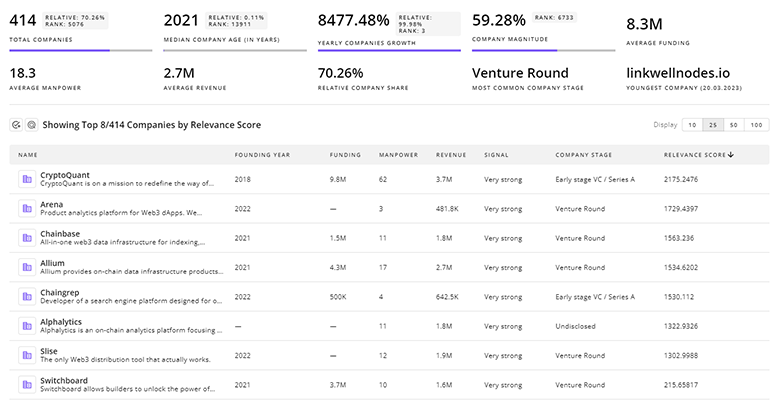
11.6K Silicium Companies
Discover Silicium Companies, their Funding, Manpower, Revenues, Stages, and much more
Silicium Investors
TrendFeedr’s Investors tool provides an extensive overview of 6.9K Silicium investors and their activities. By analyzing funding rounds and market trends, this tool equips you with the knowledge to make strategic investment decisions in the Silicium sector.
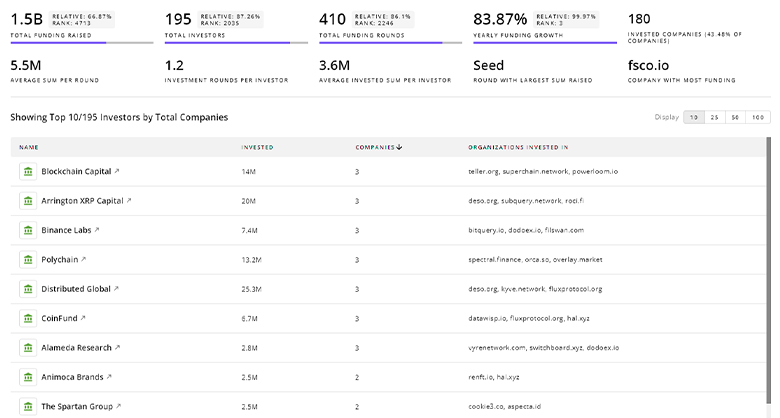
6.9K Silicium Investors
Discover Silicium Investors, Funding Rounds, Invested Amounts, and Funding Growth
Silicium News
Explore the evolution and current state of Silicium with TrendFeedr’s News feature. Access 182.0K Silicium articles that provide comprehensive insights into market trends and technological advancements.
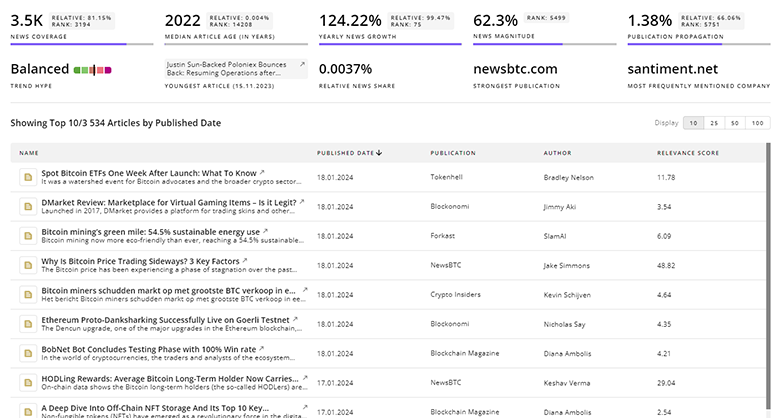
182.0K Silicium News Articles
Discover Latest Silicium Articles, News Magnitude, Publication Propagation, Yearly Growth, and Strongest Publications
Executive Summary
Silicium is evolving from a bulk commodity into a segmented industrial system where purity, process control, and feedstock origin determine value capture. The largest commercial opportunities sit where high technical barriers constrain supply: battery anodes, SiC power substrates, photonics-grade silicon, and engineered silica derivatives. Regionalization and circular feedstock strategies create defensible positions for smaller players that can supply traceable, lower-carbon material to OEMs under procurement and regulatory pressure. For investors and corporate strategists, the priority is to secure or partner with suppliers that can guarantee purity and emission credentials while simultaneously backing scale-capable anode and SiC manufacturers that convert material advancement into long-term supply contracts.
We're looking to collaborate with knowledgeable insiders to enhance our analysis of trends and tech. Join us!