AI Data Centers Report
: Analysis on the Market, Trends, and TechnologiesThe AI data center market is accelerating into a high-stakes infrastructure race driven by AI model scale, power density, and sustainability: the internal trend dataset projects a current market baseline of USD 7.5 billion with a projected near-term addressable market of USD 19.2 billion (forecast projection) and a reported CAGR of 9.8% within that internal view. External market forecasts place larger, faster growth at the global level — several sources converge on a multi-hundred‑billion to nearly‑USD‑1‑trillion outcome by 2030 as AI workloads scale GPU capacity and hyperscale buildouts AI Data Center Market worth $933.76 billion by 2030 — PR Newswire / MarketsandMarkets and a parallel estimate shows sustained, high‑double‑digit CAGR into the decade Grand View Research AI data center market estimates. The combined implication: owners and operators must prioritize power procurement, liquid/immersion cooling, high‑bandwidth fabrics, and green energy integration to host AI training and inference at scale.
This report was last updated 369 days ago. Spot an error or missing detail? Help us fix it by getting in touch!
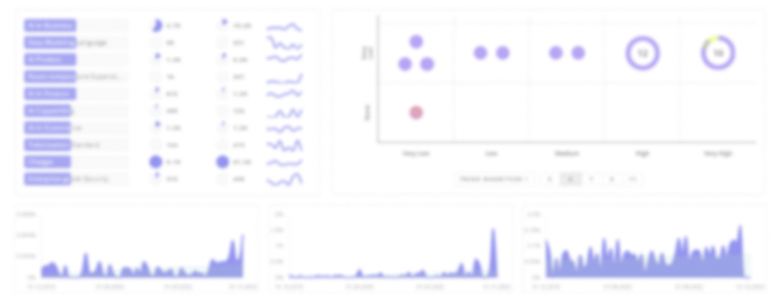
Topic Dominance Index of AI Data Centers
To identify the Dominance Index of AI Data Centers in the Trend and Technology ecosystem, we look at 3 different time series: the timeline of published articles, founded companies, and global search.
Key Activities and Applications
- AI model training and inference on GPU/accelerator clusters — hyperscalers and cloud providers expand GPU pools for large‑scale model training and hosted inference services.
- High‑density colocation and wholesale capacity for AI customers — colocation providers retrofit and sell high‑density racks to handle >10s of kW per cabinet as demand for colocated AI compute rises Data Center Colocation market growth and drivers.
- Edge AI inference and micro/multi‑site deployments — micro data centers and edge nodes execute latency‑sensitive inference for IoT, autonomous systems, and telco use cases.
- AI‑native operations and DCIM automation — AI/ML is applied to thermal control, load scheduling, and predictive maintenance to squeeze energy and availability improvements from existing facilities.
- Secure, compliance‑grade AI hosting (privacy, sovereign data) — regulated verticals (BFSI, healthcare, government) require certified, auditable environments for AI workloads U.S. data center market regulatory & vertical drivers.
Emergent Trends and Core Insights
- Liquid and immersion cooling adoption rising because air cooling cannot meet GPU thermal budgets; vendors and operators adopt direct‑to‑chip or immersion to support >2kW–100kW cabinet densities.
- Energy procurement and on‑site power solutions are strategic priorities as AI capex strains grids; operators pursue PPAs, onsite generation, microgrids, and storage to close projected power gaps news analysis of large US AI capex and power pressure.
- Modular and prefabricated builds speed deployment for edge and hyperscale expansions, reducing time to revenue and enabling staged power rollouts.
- Carbon management and heat reuse differentiate customers — waste‑heat capture for district heating and aggressive renewable sourcing appear across projects and financing structures.
- Networking bottlenecks push silicon photonics and optical interconnect adoption to reduce host‑to‑host latency and overhead for distributed training and external networking reports highlight leaf‑spine and 100/400G migration across DC networks.
Technologies and Methodologies
- Direct‑to‑chip two‑phase liquid cooling and immersion cooling for ultra‑high power density; vendors report significant energy and capacity gains versus air cooling.
- AI‑driven DCIM and digital twins for predictive cooling, workload placement, and power orchestration to reduce PUE and incident risk.
- High‑performance accelerators (GPUs, TPUs, Gaudi‑class ASICs) and NVMe/NVMe‑oF storage fabrics to support model training I/O patterns.
- Silicon photonics and optical interconnect to reduce host interconnect latency and power used in board‑to‑board and rack‑to‑rack fabrics.
- Modular power staging, microgrids, and PPA-based renewable procurement to secure long‑term, stable power for AI campuses; some hyperscale projects use combined solutions including storage and on‑site generation.
AI Data Centers Funding
A total of 324 AI Data Centers companies have received funding.
Overall, AI Data Centers companies have raised $157.2B.
Companies within the AI Data Centers domain have secured capital from 1.4K funding rounds.
The chart shows the funding trendline of AI Data Centers companies over the last 5 years
AI Data Centers Companies
- SUB1 Data Centres — SUB1 develops wholesale data centers optimized for AI workloads with a focus on direct liquid cooling and commercially favourable powered shells. The company targets customers seeking lower operating costs through facilities designed for modern high‑density racks and rapid permissioning for conversions and brownfield builds.
- Accelsius — Accelsius supplies two‑phase direct‑to‑chip liquid cooling systems (NeuCool) engineered to service sockets with >2200W and to cut energy use at rack level; their product roadmap centers on scalable, serviceable liquid cooling for mission‑critical AI and HPC deployments, which directly addresses thermal limitations of GPU clusters.
- Borealis Data Center — Borealis operates sustainable campuses in Iceland and Finland using zero‑waste renewable energy and long‑term energy contracts; they market AI/HPC hosting where natural cold climates and renewables lower operating cost and carbon footprint while enabling high‑density operations.
- SmartEdge DC — SmartEdge deploys a distributed mesh of edge data centers and managed services aimed at low‑latency inference and edge AI use cases; their approach aligns with the growth of micro/data‑at‑edge models that reduce core load and improve response for latency‑sensitive services.
Identify and analyze 1.4K innovators and key players in AI Data Centers more easily with this feature.
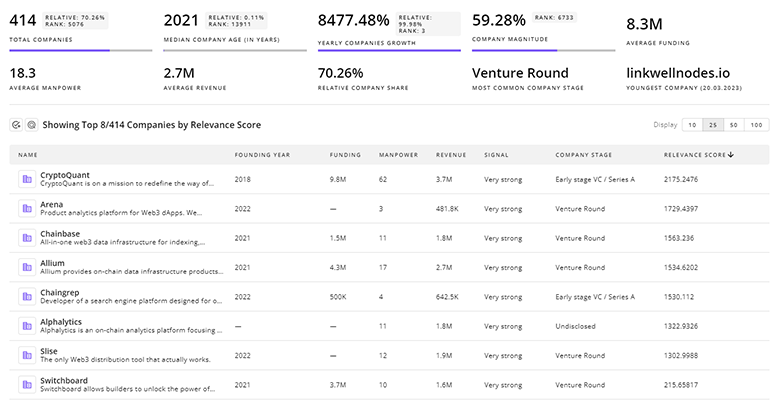
1.4K AI Data Centers Companies
Discover AI Data Centers Companies, their Funding, Manpower, Revenues, Stages, and much more
AI Data Centers Investors
TrendFeedr’s investors tool offers a detailed view of investment activities that align with specific trends and technologies. This tool features comprehensive data on 1.9K AI Data Centers investors, funding rounds, and investment trends, providing an overview of market dynamics.
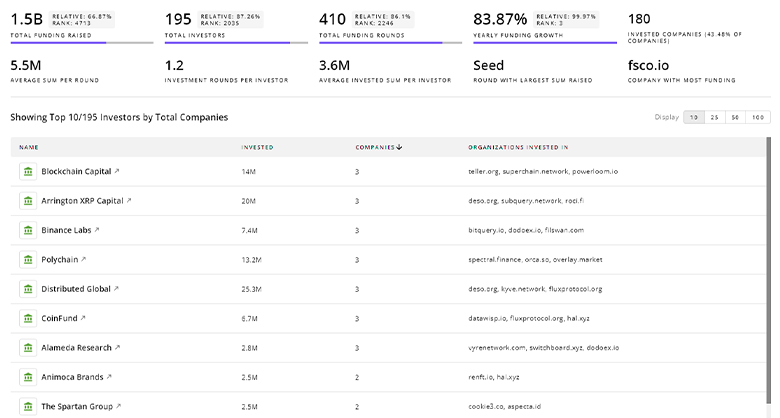
1.9K AI Data Centers Investors
Discover AI Data Centers Investors, Funding Rounds, Invested Amounts, and Funding Growth
AI Data Centers News
Stay informed and ahead of the curve with TrendFeedr’s News feature, which provides access to 4.9K AI Data Centers articles. The tool is tailored for professionals seeking to understand the historical trajectory and current momentum of changing market trends.
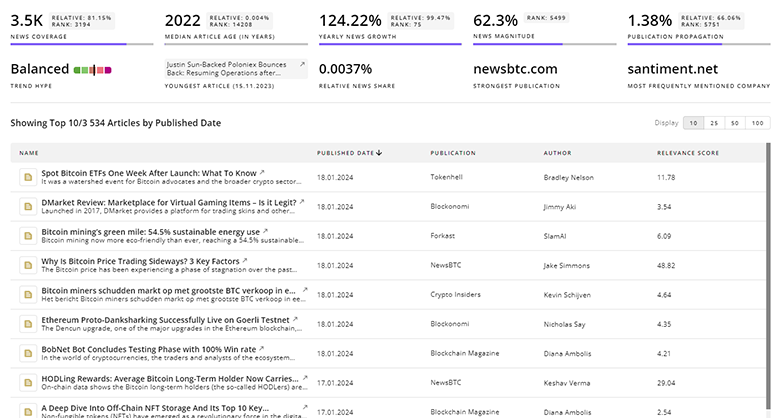
4.9K AI Data Centers News Articles
Discover Latest AI Data Centers Articles, News Magnitude, Publication Propagation, Yearly Growth, and Strongest Publications
Executive Summary
The business imperative for AI data centers is now tri‑fold: secure large‑scale power and connectivity, host extremely high density compute with liquid/immersion cooling, and demonstrate verifiable low carbon intensity to meet customer and regulatory demands. Operators and investors face a bifurcated market: hyperscalers will continue to fund massive campuses with integrated renewable and power strategies, while a broad tier of specialized providers—edge, modular, and low‑carbon hosts—will compete on speed of deployment, specialized cooling, and proximity to users or subsea connectivity. Financial and operational winners will be the organizations that pair fast, modular delivery with advanced thermal platforms and long‑term energy contracts, and who integrate AI into operations to compress costs and improve uptime.
Interested in enhancing our coverage of trends and tech? We value insights from experts like you - reach out!