
Alternative Protein Report
: Analysis on the Market, Trends, and TechnologiesThe alternative protein sector is at a decisive commercialization inflection driven by ingredient- and platform-level innovation and $97.61B of cumulative funding already deployed into the topic. Market forecasts diverge, but independent reports converge on sustained double-digit growth: one model projects the market reaching USD 130.1B by 2034 Alternative Protein Market Opportunity, Growth Drivers, Industry Trend Analysis, and Forecast 2025-2034 while another estimates USD 50.22B by 2030 for the ingredients segment at a 14.1% CAGR (2025–2030). These funding and forecast signals, combined with accelerating adoption of precision fermentation and circular feedstock conversion, indicate that winners will be those who secure scalable production platforms and tight cost curves rather than consumer-brand marketing alone Alternative Protein Market Size, Share & Forecast.
This report was last updated 257 days ago. Spot an error or missing detail? Help us fix it by getting in touch!
Topic Dominance Index of Alternative Protein
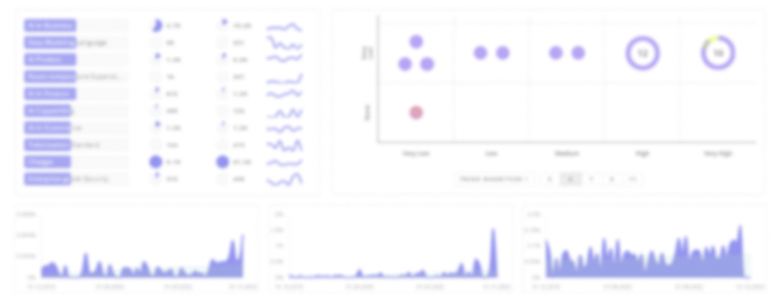
To identify the Dominance Index of Alternative Protein in the Trend and Technology ecosystem, we look at 3 different time series: the timeline of published articles, founded companies, and global search.
Key Activities and Applications
- Precision fermentation for functional ingredients — producing animal-identical proteins (egg whites, casein, serum proteins) for B2B supply chains that target high-value food-manufacturing applications rather than direct-to-consumer SKUs.
- Upcycling industrial and agricultural side streams into mycoprotein and single-cell proteins to cut input costs and emissions while supplying ingredients for meat analogues and pet food.
- Insect-based biomass for animal and aquaculture feed — scaling black soldier fly and other larvae platforms to replace fishmeal and soybean meal in feed rations.
- Advanced texturization and whole-cut replication — high-moisture extrusion, tailored binder systems, and additive strategies to create whole-cut and chef-grade plant or fungal steaks for food-service channels.
- Localized micro-factories and decentralized bioprocessing — small-scale modular fermentation and mycelium plants to reduce logistics cost and meet regional regulatory/labeling preferences.
Emergent Trends and Core Insights
- Ingredient-platform bifurcation: capital flows now favor upstream ingredient and platform providers (precision fermentation strains, mycoprotein production, upcycling processes) over consumer brand spend, because ingredient-level solutions compress downstream R&D and accelerate formulation wins.
- Evidence: investor concentration and industrial grant programs supporting ingredient scale-up and facilities.
- Hybrid formulations as practical sensory economics: blends of plant isolates with precision-fermented proteins or small fractions of cultured fats enable markedly improved taste/texture at lower cost than full cultured products.
- Feed applications will monetize earlier than some consumer categories: insect and single-cell protein adoption in aquaculture and pet food is outpacing human-food acceptance in several regions, presenting high-volume revenue opportunities with lower consumer-sentiment friction.
- Geographic growth reallocation toward Asia-Pacific: China and India will account for a growing share of volume and scale investments; one market analysis indicates China represented ~35% of market volume in 2024 and Asia-Pacific is the fastest growing region Grandview Research – Alternative Protein Market Report.
- Cost curve compression via circular feedstocks and process engineering: converting brewery yeast, crop residues, or CO2/biogas feedstocks into protein materially reduces marginal cost trajectories for microbial and fungal proteins.
Technologies and Methodologies
- Precision fermentation and strain engineering for targeted animal-identical proteins and performance enhancers for formulations.
- Mycelium and fungal biomass platforms that convert inexpensive substrates (including agri-waste) into fibrous, whole-cut structures with favorable protein content.
- High-moisture extrusion and 3D structuring to recreate muscle fiber architecture in plant-based and hybrid products Alternative Proteins Market for Food Application.
- Bioprocess intensification and continuous bioreactors to reduce CAPEX/OPEX for precision fermentation and single-cell protein production.
- AI and computational protein design to shorten strain engineering cycles and accelerate recipe/system optimization for taste and texture.
- Enabling modular, low-footprint factories (micro-factories) to meet local demand and regulatory constraints while cutting logistics and tailoring formulations.
Alternative Protein Funding
A total of 1.4K Alternative Protein companies have received funding.
Overall, Alternative Protein companies have raised $97.6B.
Companies within the Alternative Protein domain have secured capital from 5.9K funding rounds.
The chart shows the funding trendline of Alternative Protein companies over the last 5 years
Alternative Protein Companies
- Enifer — Enifer converts dilute industrial side streams into a commercial mycoprotein ingredient (PEKILO®) designed for ingredient suppliers and food manufacturers; the firm emphasizes circular feedstock use and B2B scaling rather than consumer branding and has advanced grant-backed factory projects.
Enifer's approach reduces feedstock cost exposure and aligns with regulatory preference for traceable, localized ingredient supply, making its value proposition centered on margin advantage for manufacturers. The company has raised institutional backing to support first-of-a-kind plants targeting industrial scale. - Mycosortia — Mycosortia uses proprietary microbial co-culture fermentation to convert food byproducts into a versatile FibProt ingredient for plant-based formulations and confectionery applications.
Operating in Singapore and at seed stage, Mycosortia focuses on B2B supply and rapid validation partnerships, which positions it to capture demand from manufacturers seeking clean-label, upcycled inputs. Their low-capex, flexible fermentation model targets regional supply chains. - PROTICYCLE — PROTICYCLE is building large-scale automated black soldier fly operations in South Africa focused on converting organic waste into protein, fat, and compost; their first commercial-scale facility handles 60 tons per day of organic feedstock and is designed for replication.
By combining plant-building expertise with low-cost automation, PROTICYCLE targets aquaculture and livestock feed markets where fishmeal substitution yields immediate unit-margin uplift for buyers constrained by raw-material inflation. - PoLoPo — PoLoPo pursues molecular farming to express animal proteins in potato crops, enabling production of functional animal-like proteins inside a plant chassis; the company aims to supply plant-derived functional ingredients to food manufacturers.
PoLoPo's approach trades higher R&D complexity for potentially lower CAPEX and logistics versus large fermentation plants, offering an alternative scale path for nature-equivalent proteins with agricultural partners. - UPP Freya — UPP Freya develops patent-protected harvest automation plus a processing chain to convert broccoli and brassica waste into hypoallergenic plant protein ingredients; the company has attracted UK innovation grants and positions its product as low-cost, hypoallergenic ingredient for both food and pet applications.
Their integration of field robotics with a dedicated bioprocess offers a defensible feedstock and a margin advantage in price-sensitive markets where allergen avoidance is a value driver.
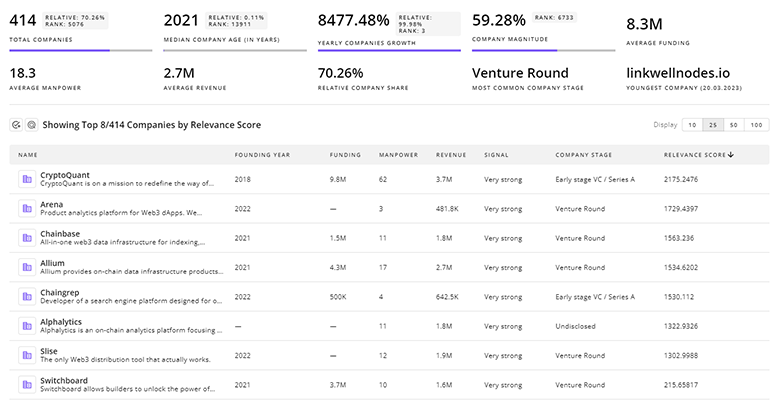
Identify and analyze 4.3K innovators and key players in Alternative Protein more easily with this feature.
4.3K Alternative Protein Companies
Discover Alternative Protein Companies, their Funding, Manpower, Revenues, Stages, and much more
Alternative Protein Investors
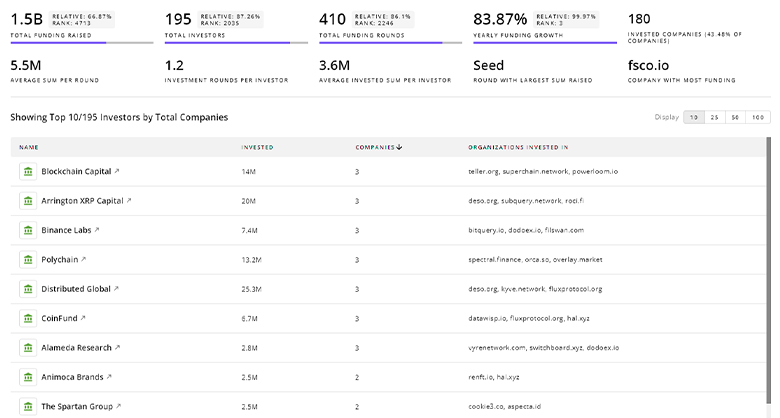
TrendFeedr’s investors tool offers a detailed view of investment activities that align with specific trends and technologies. This tool features comprehensive data on 5.5K Alternative Protein investors, funding rounds, and investment trends, providing an overview of market dynamics.
5.5K Alternative Protein Investors
Discover Alternative Protein Investors, Funding Rounds, Invested Amounts, and Funding Growth
Alternative Protein News
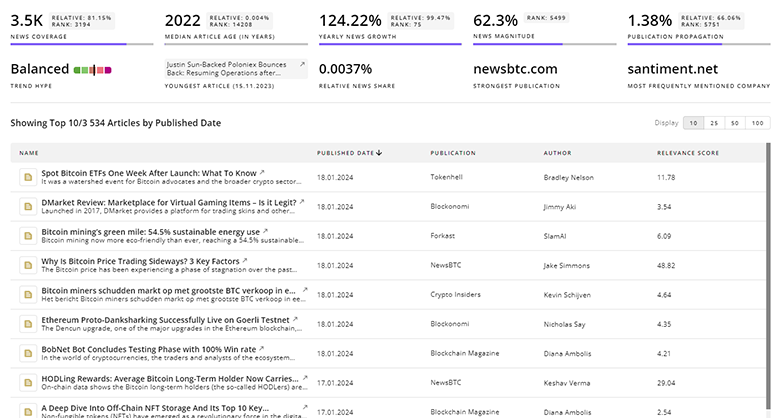
Stay informed and ahead of the curve with TrendFeedr’s News feature, which provides access to 10.4K Alternative Protein articles. The tool is tailored for professionals seeking to understand the historical trajectory and current momentum of changing market trends.
10.4K Alternative Protein News Articles
Discover Latest Alternative Protein Articles, News Magnitude, Publication Propagation, Yearly Growth, and Strongest Publications
Executive Summary
The alternative protein market is shifting from a consumer-brand centric expansion to a phase where upstream platform economics determine long-term value capture. Investors and strategists should prioritize exposure to platform players that (1) reduce unit production cost through circular feedstocks or process intensification, (2) offer modular scale paths (micro-factories, plant molecular farming) that shorten time-to-revenue, and (3) solve clear formulation problems for manufacturers (nature-equivalent functional proteins, texture building blocks). Feed-grade and ingredient B2B routes present nearer-term revenue realizations than many consumer propositions; therefore, aligning partnerships between ingredient innovators and large food processors will accelerate commercial adoption and compress time required to reach price parity with conventional proteins.
Interested in enhancing our coverage of trends and tech? We value insights from experts like you - reach out!