
Ambulant Care Report
: Analysis on the Market, Trends, and TechnologiesThe ambulant care market is at a clear inflection: capital committed across the topic totals $17.82B, underlining active investor interest even as company formation slows. Recent market reports present divergent scale assumptions — from a niche services forecast of USD 5.57 B by 2030 to broader ambulatory projections above USD 1.3T in the early 2030s — highlighting definitional variance between narrow ambulatory services and the wider ambulatory-health ecosystem. This report synthesizes operational activity, technological enablers, and company positioning to show that data capture, payer integration, and high-acuity specialization will determine winners — with platform integrators and niche clinical specialists capturing the most durable margins.
This report was last updated 56 days ago. Spot an error or missing detail? Help us fix it by getting in touch!
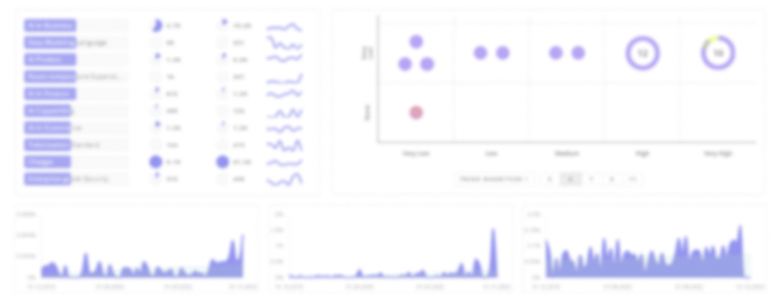
Topic Dominance Index of Ambulant Care
To identify the Dominance Index of Ambulant Care in the Trend and Technology ecosystem, we look at 3 different time series: the timeline of published articles, founded companies, and global search.
Key Activities and Applications
- Day care and respite services that relieve family caregivers and reduce institutional transitions; these services appear as a primary application area in ambulant care reporting.
- Home nursing and personal care for elderly, disabled, and chronically ill patients delivered through agency and private-duty models, forming a core revenue base and workforce anchor for the sector.
- Ambulatory Surgical Centers (ASCs) and same-day procedural units that shift inpatient volume to outpatient sites, improving unit economics for many procedures and tightening hospital discharge pathways Ambulatory Services Market Report, 2023-2032.
- Non-Emergency Medical Transportation (NEMT) as logistical backbone that preserves appointment adherence and access for mobility-impaired populations; operators integrate software dispatch with payer networks to monetize access Call the Car.
- Outpatient intensive care and home ventilation for high-acuity patients who otherwise require inpatient resources — a specialized delivery model that commands premium reimbursement and reduces readmissions.
- Chronic Care Management (CCM) and Remote Patient Monitoring (RPM) that convert non-face-to-face clinical time into reimbursable workflows and continuous risk management for payers and providers.
- Mobile primary care and mobile clinics delivering house calls, diagnostics and point-of-care testing to senior living and homebound patients — an application expanding alongside telehealth integration.
Emergent Trends and Core Insights
- Platform vs. niche bifurcation. Investment and M&A favor platform integrators that control data flows and payer contracts, while specialized providers preserve margin via clinical complexity.
- Reimbursement alignment with value-based care. Expansion of value-based contracts for HCBS and hospital-at-home models makes outcomes measurement (readmissions, total cost of care) essential for contract retention.
- Operational automation as defensive moat. Workforce constraints make scheduling, EVV, billing automation, and rostering software de facto survival tools for small agencies; automation reduces overhead and protects margins CareLineLive.
- Ambulatory monitoring and multimodal RPM adoption. Wearables, contactless sensors, and FDA-cleared ambulatory devices enable earlier intervention and reduce readmissions; regulatory approvals and clinical validation are accelerating adoption in post-acute pathways.
- Logistics and access as outcome levers. Integrated NEMT and appointment-coordination reduce no-show rates and shape utilization patterns, making transportation vendors strategic partners for payers.
Technologies and Methodologies
- Telehealth platforms and multi-modal RPM that combine vitals telemetry, structured questionnaires, and clinician dashboards for continuous risk stratification.
- Cloud-based documentation and EVV systems geared to outpatient regulatory compliance and billing automation; these systems reduce fraud risk and streamline claims submission.
- AI and predictive analytics applied to admission/readmission risk, staffing optimization, and predictive safeguarding for residents; early adopters use models to prioritize visits and allocate clinical resources.
- Interoperable EHR augmentation (plug-ins and embedded modules) that enable CCM billing and RPM workflows inside clinician EMRs rather than forcing separate portals, improving clinician adoption and revenue capture Dulcian Health.
- Mobile diagnostics and point-of-care testing (portable ECG, ultrasound, lab kits) enabling clinically meaningful interventions during house calls and mobile clinic visits.
- Mobility-support hardware + software stacks for safe patient transfers and activity monitoring that reduce caregiver injury and enable objective mobility outcomes measurement.
Ambulant Care Funding
A total of 555 Ambulant Care companies have received funding.
Overall, Ambulant Care companies have raised $19.8B.
Companies within the Ambulant Care domain have secured capital from 1.2K funding rounds.
The chart shows the funding trendline of Ambulant Care companies over the last 5 years
Ambulant Care Companies
- Claris Healthcare Inc — Claris Healthcare provides a configurable remote-care platform used across RPM, social isolation management, and telerehab; its modular kits support “bring your own device” and direct-to-cloud devices to minimize installation friction. The product targets providers that need rapid deployment for large cohorts and emphasizes family engagement tools for seniors. Claris reports later-stage VC backing with $5.64M in funding and focuses on configurable kits that drive adoption in home and community settings.
- Atlas Lift Tech — Atlas Lift Tech pairs on-site mobility technicians with a Mobility Cloud to reduce clinician injury and improve patient mobilization metrics; the company sells training, rounding services, hardware and analytics to hospitals and post-acute providers. Atlas positions mobility as an operational KPI and reports a growth profile consistent with later-stage commercialization and service contracts.
- Mendota Health — Mendota Health delivers advanced wound care and mobile clinics focused on stubborn chronic wounds, operating as a clinical specialist that reduces downstream facility utilization. The company embeds advanced practice providers into long-term care and home settings and markets outcomes-driven programs that shorten healing trajectories and limit rehospitalization risk.
- CareCar — CareCar operates as a supplemental-benefits administrator that bundles in-home care and NEMT benefits for payers, using a platform to close access gaps and report utilization to plan partners. The model appeals to payers seeking to reduce missed appointments and transportation-related barriers to care; CareCar shows multi-year revenue growth and raised $32.3M prior to a strategic acquisition.
Identify and analyze 6.9K innovators and key players in Ambulant Care more easily with this feature.
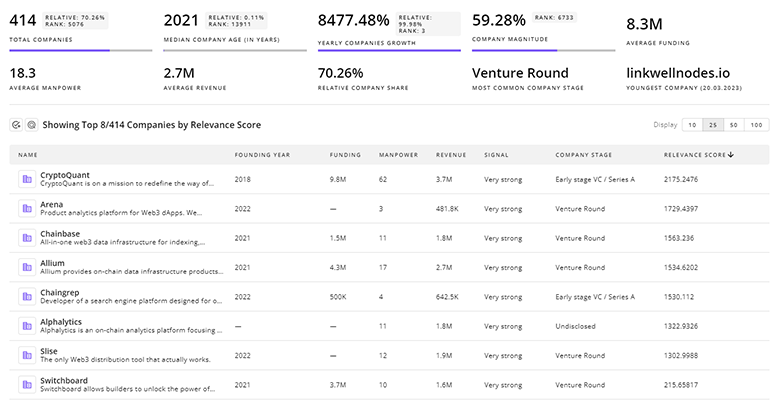
6.9K Ambulant Care Companies
Discover Ambulant Care Companies, their Funding, Manpower, Revenues, Stages, and much more
Ambulant Care Investors
TrendFeedr’s investors tool offers a detailed view of investment activities that align with specific trends and technologies. This tool features comprehensive data on 987 Ambulant Care investors, funding rounds, and investment trends, providing an overview of market dynamics.
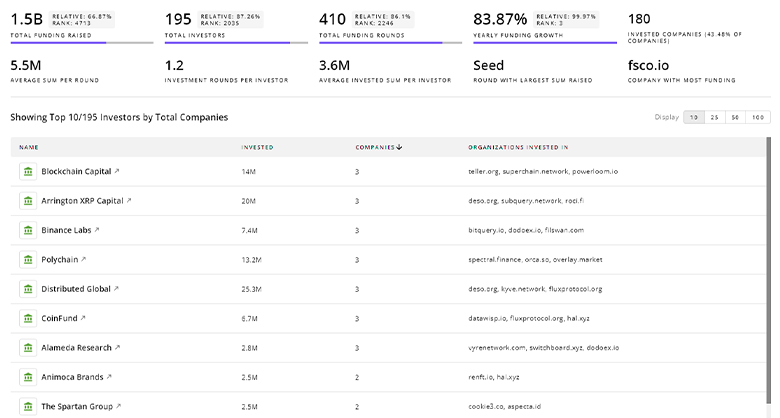
987 Ambulant Care Investors
Discover Ambulant Care Investors, Funding Rounds, Invested Amounts, and Funding Growth
Ambulant Care News
Stay informed and ahead of the curve with TrendFeedr’s News feature, which provides access to 2.5K Ambulant Care articles. The tool is tailored for professionals seeking to understand the historical trajectory and current momentum of changing market trends.
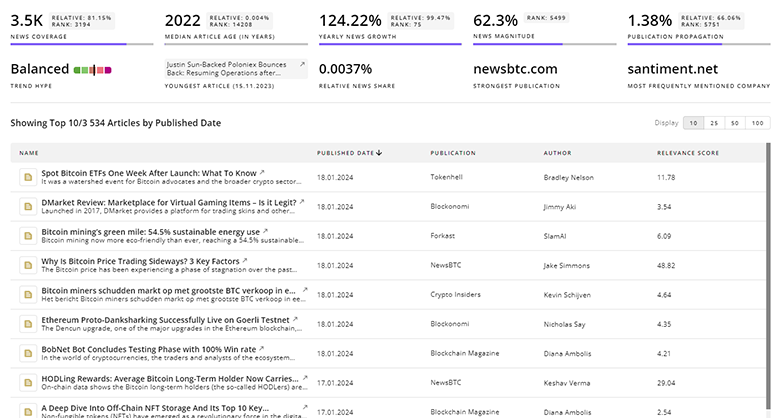
2.5K Ambulant Care News Articles
Discover Latest Ambulant Care Articles, News Magnitude, Publication Propagation, Yearly Growth, and Strongest Publications
Executive Summary
The business case for ambulant care now depends on two linked capabilities: measurable clinical impact for high-price cohorts and frictionless data integration with payers and provider EMRs. Agencies that invest in automated documentation, EVV, RPM and targeted high-acuity skill sets will defend margins; platform integrators that stitch transportation, caregiver support, and predictive analytics into a single contracting interface will win institutional payer relationships. Conversely, undifferentiated labor-only providers will face margin pressure as reimbursement ties to outcomes tighten. Strategic moves that produce auditable reductions in utilization and demonstrable improvements in functional mobility and caregiver capacity will command the premium in the next five years.
Interested in enhancing our coverage of trends and tech? We value insights from experts like you - reach out!