
Automotive Report
: Analysis on the Market, Trends, and TechnologiesThe automotive sector is reconfiguring into a software-centric and electrified value chain underpinned by large aftermarket and manufacturing economics: the market baseline sits at $2,600,000,000,000 (2023) and technology adoption is accelerating as engineering and analytics segments expand. Origination and retail signals show renewed volume: Q1 2025 origination rose 8.2%, while digital retail now accounts for 22% of purchases, pushing OEMs to monetize software and data platforms. Battery economics are remapping price points (battery costs near $85/kWh), enabling sub-$30,000 EV segments and driving OEM powertrain retooling Business Research Insights – Automotive Market Report.
This report was last updated 268 days ago. Spot an error or missing detail? Help us fix it by getting in touch!
Topic Dominance Index of Automotive
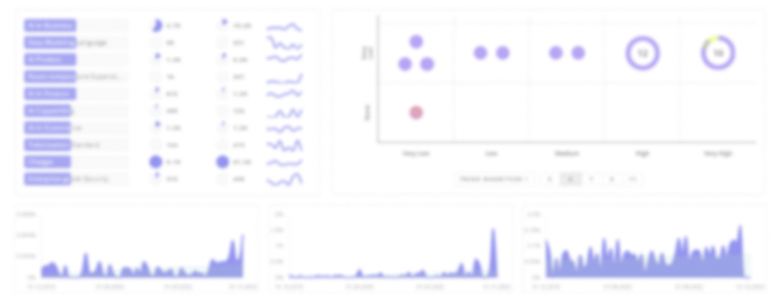
To identify the Dominance Index of Automotive in the Trend and Technology ecosystem, we look at 3 different time series: the timeline of published articles, founded companies, and global search.
Key Activities and Applications
- Electric powertrain integration — cell/module/pack design, BMS validation and thermal systems for longer range at lower cost. OEMs and Tier-1s are reallocating R&D to power electronics and thermal management.
- Autonomous driving stack development — perception sensors, sensor fusion, and safety validation for L3+ vehicles; functional safety and SOTIF workflows are now core program costs.
- Connected vehicle data platforms & DaaS for aftermarket — VIN-accurate parts data, live telemetry and predictive maintenance services that convert physical repair flows into subscription revenue streams
- Digital retail and e-commerce for vehicle sales — end-to-end online purchase funnels, virtual financing, and home delivery that shift dealer economics from showroom to fulfillment centers Market Research on Automotive E-commerce.
- Factory digitalization and Agentic AI — edge AI for predictive maintenance, digital twin commissioning and autonomous material handling that raise throughput and reduce downtime How automotive and automation are entering a new industrial age.
Emergent Trends and Core Insights
- Electrification made economical — falling battery pack costs (~$85/kWh) and high-voltage architectures enable mass market EVs and concentrate value in battery, motor, and inverter suppliers S&P Global – Automotive Industry Market Trends.
- Software-defined vehicle business models — OTA updates, subscription features and vehicle data monetization shift lifetime value to software owners and platform integrators.
- Aftermarket data as a new moat — precise parts identification and predictive maintenance data create margin in what was previously a commodity supply chain; DaaS providers enable lower returns and fewer warranty incidents for distributors
- Factory autonomy and localized production — automated conveyance, robotized assembly, and modular cell lines reduce dependence on high-volume, centralized plants and raise the case for regionalized EV production.
- Security and compliance as procurement levers — regulatory frameworks (UN R155/156 and evolving AI safety standards) make cybersecurity providers and compliance integrators mandatory procurement items for OEM programs AUTOCRYPT.
- Secondary market pressure — used-vehicle pricing volatility (example: average resale falls of $1,200 in prior cycles) compresses dealer margins and accelerates certified pre-owned programs and data-driven pricing tools.
Technologies and Methodologies
- Silicon carbide (SiC) power electronics — SiC inverters and GaN devices to reduce losses in traction inverters and enable 800V architectures.
- Edge AI and sensor fusion — on-vehicle inference for ADAS/AV stacks combining LiDAR, radar and camera feeds with real-time control loops.
- Digital twin and HIL/SIL validation — virtual validation of vehicle software, battery abuse testing and lifecycle simulations to accelerate homologation and reduce physical test cycles.
- Machine vision for inline quality — deep-learning inspection systems for paint, welds and battery assembly to raise yield and shorten rework loops
- Modular vehicle and platform architectures — standardized E-EA platforms and domain controllers to decouple hardware from software roadmaps and speed variant launches.
Automotive Funding
A total of 18.6K Automotive companies have received funding.
Overall, Automotive companies have raised $1.5T.
Companies within the Automotive domain have secured capital from 48.4K funding rounds.
The chart shows the funding trendline of Automotive companies over the last 5 years
Automotive Companies
- AutoDAP — AutoDAP supplies API-driven DaaS subscriptions focused on the European aftermarket; its product portfolio targets VIN-accurate parts matching to reduce returns and improve catalog performance. The company reports a staff base of ~1,000 and Series-A positioning that signals active commercialization of parts accuracy services
- AutoFacets — AutoFacets operates integrated retail and aftermarket platforms used to digitize dealer operations and remarketing across the vehicle lifecycle; the company lists ~1,400 employees and a long track record of turnkey transformations that convert physical retail into data-driven operations
- Eines Vision Systems — Eines Vision Systems specializes in inline metrology and defect detection for press, paint and final assembly lines, deploying deep-learning inspection cells across OEM and Tier-1 plants to cut quality escapes; the firm positions its solutions around battery assembly inspection and operator guidance. The company's niche focus on automotive quality-control automation addresses the exacting tolerance needs of EV component production
- Waldaschaff Automotive — Waldaschaff Automotive provides lightweight aluminum and structural solutions for battery housings and crash management systems aimed at e-mobility platforms; the supplier emphasizes Industry-4.0 production lines and claims nearly 1,000 employees supporting premium OEM programs, making it a candidate partner for OEMs seeking regionalized e-drive assemblies
- Autopro LLC — Autopro LLC is a small, consumer-centred startup (~15 staff) that deploys a sales-stage diagnostic device to surface vehicle health and pricing signals during test drives; its model gives buyers independent data that can erode traditional dealer information asymmetry and spawn alternative service networks anchored on verified diagnostics
Identify and analyze 305.4K innovators and key players in Automotive more easily with this feature.
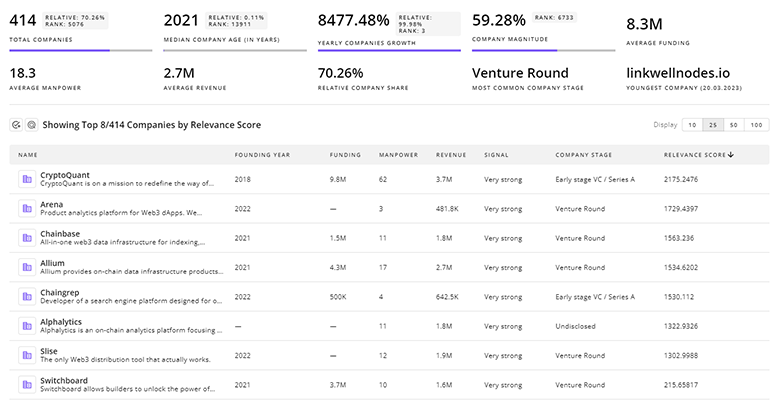
305.4K Automotive Companies
Discover Automotive Companies, their Funding, Manpower, Revenues, Stages, and much more
Automotive Investors
TrendFeedr’s investors tool offers a detailed view of investment activities that align with specific trends and technologies. This tool features comprehensive data on 34.4K Automotive investors, funding rounds, and investment trends, providing an overview of market dynamics.
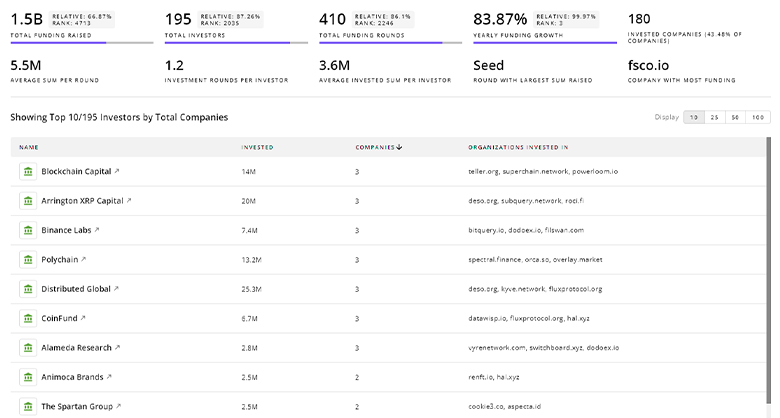
34.4K Automotive Investors
Discover Automotive Investors, Funding Rounds, Invested Amounts, and Funding Growth
Automotive News
Stay informed and ahead of the curve with TrendFeedr’s News feature, which provides access to 245.6K Automotive articles. The tool is tailored for professionals seeking to understand the historical trajectory and current momentum of changing market trends.
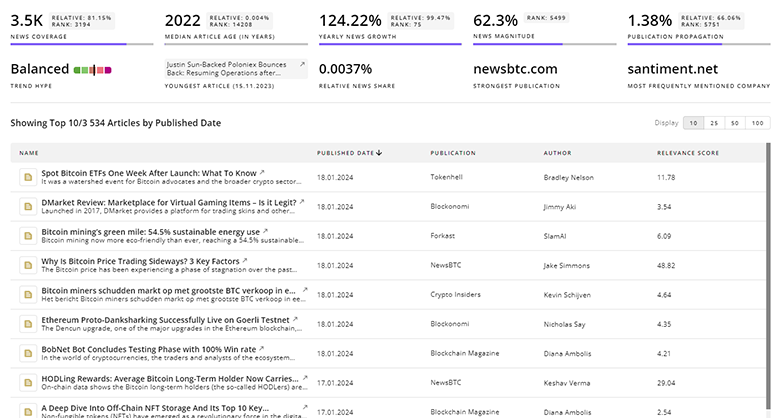
245.6K Automotive News Articles
Discover Latest Automotive Articles, News Magnitude, Publication Propagation, Yearly Growth, and Strongest Publications
Executive Summary
The automotive industry's next decade will be decided by three vectors: who controls vehicle and aftermarket data, who owns the software distribution path for feature monetization, and who secures compliant, scalable EV component supply. Falling battery costs and rising digital retail adoption create large, measurable opportunities—but they also accelerate value migration away from commodity hardware. Strategic choices for manufacturers, suppliers and service providers are clear: invest capital into software platforms and DaaS capabilities tied to ownership lifecycle, secure compliance and cybersecurity as procurement differentiators, and reconfigure manufacturing footprints for modular EV architectures and digital test/validation to protect margins. Companies that reposition from part-makers to indispensable data or platform nodes will preserve pricing power; those that do not will face commoditization and margin erosion.
Interested in enhancing our coverage of trends and tech? We value insights from experts like you - reach out!