
Aviation Fuel Report
: Analysis on the Market, Trends, and TechnologiesThe aviation fuel market sits at a strategic inflection point: demand recovery, regulatory pressure, and SAF scale-up push the 2024 market to roughly USD 238.2 billion with a projected rise to USD 474.9 billion by 2034 (8.2% CAGR), creating a two-track growth challenge—meeting near-term jet-fuel volumes while building new SAF and e-fuel capacity to satisfy mandates and airline offtakes. This creates immediate commercial opportunities in SAF feedstock logistics, modular PtL plants, and fuel-management digitization, and medium-term strategic risk for incumbents that delay investment in low-carbon pathways (policy and offtake regimes will increasingly determine who captures incremental margin) Aviation Fuel Market Size – By Grade, End Use, Application Analysis, Share, Growth Forecast, 2025 – 2034 Aviation Fuel Market.
This report was last updated 153 days ago. Spot an error or missing detail? Help us fix it by getting in touch!
Topic Dominance Index of Aviation Fuel
To identify the Dominance Index of Aviation Fuel in the Trend and Technology ecosystem, we look at 3 different time series: the timeline of published articles, founded companies, and global search.
Key Activities and Applications
- Fuel production and supply for commercial airlines and military operators — primary volume driver for Jet A/Jet A-1 and the starting point for SAF blending contracts Aviation Fuel Market Opportunity, Growth Drivers, Industry Trend Analysis, and Forecast 2025-2034 North America Aviation Fuel - Market Share Analysis, Industry Trends & Statistics, Growth Forecasts (2025 - 2030).
- Sustainable Aviation Fuel (SAF) production and offtake agreements — HEFA, ATJ, FT-SPK and emerging PtL projects supply airlines with drop-in blends and underpin long-term procurement Sustainable Aviation Fuel (SAF) Market Outlook & Pathways Sustainable Aviation Fuel market (Visiongain / Market research summaries).
- Feedstock sourcing and logistics (waste oils, MSW gasification syngas, agricultural residues, CO₂ + green H₂) — establishing reliable, low-cost feedstock streams is the scalability bottleneck for SAF projects Aviation Biofuel Market: Global Opportunity Analysis and Industry Forecast, 2023-2032 Aviation Fuel Market Opportunity, Growth Drivers, Industry Trend Analysis, and Forecast 2025-2034.
- Fuel-quality testing, contamination control and additive treatments — on-site microbial testing, filtration and lubricity additives protect assets and support SAF blending at airport terminals Conidia Bioscience FUELSTAT® and Aquafighter® product descriptions Fuel Ox additives overview.
- Digital fuel-management and procurement platforms — e-fuel tendering, real-time inventory and reconciliation reduce waste, improve traceability for book-and-claim SAF systems, and shrink working capital i6 Group fuel management platform results Skymetrix platform scale (28% of commercial aviation fuel flows handled).
Emergent Trends and Core Insights
- Policy is the demand lever. Mandates and incentives (EU ReFuelEU, UK Jet Zero, US IRA / SAF Grand Challenge) move SAF from voluntary niche to contracted mainstream; capacity pledges (industry + policy) will determine which production pathways scale first Sustainable Aviation Fuel (SAF) – Market Outlook October 2024 Sustainable Aviation Fuel: Visiongain analysis.
- Wide forecast dispersion reflects methodological scope differences (regional vs global, value vs volume) and uncertainty about SAF scale economics. Conservative projections (low single-digit CAGRs) coexist with >8–15% scenarios and extreme high-growth SAF estimates; firms must plan for scenario ranges, not a single path Aviation Fuel Market (GM Insights) Aviation Fuel Market (IMARC) MarketsandMarkets aviation fuel forecast.
- Feedstock diversification becomes strategic advantage. Waste-to-fuel, MSW gasification, DAC + green hydrogen PtL, and algae/fermentation routes reduce feedstock risk and capex exposure to commodity feedstocks GAFT / aerobrew approach to CO₂ → lipid feedstock AvIndia MSW → FT pathway.
- Modular, lower-CAPEX SAF plants and book-and-claim tracking accelerate uptake at regional airports. Modular plants reduce project lead time and align capacity with offtake step-ups; digital registries and blockchain support traceability and accounting for decarbonization claims Shell Avelia blockchain book-and-claim example (industry news context).
- Fuel logistics electrification and quality control matter: electric refuellers and AI sensors at airports cut terminal emissions and ensure blend integrity as SAF share increases.
Technologies and Methodologies
- HEFA (Hydroprocessed Esters & Fatty Acids) — mature, commercially deployed HEFA-SPK from waste oils and fats; near-term volume source for SAF blends.
- ATJ (Alcohol-to-Jet) and FT-SPK (Fischer-Tropsch Synthetic Paraffinic Kerosene) — ATJ converts ethanol/isobutanol into SPK; FT is used for syngas → hydrocarbons from gasified waste or biomass LanzaJet Altalto.
- Power-to-Liquid (PtL) / e-fuels — electrolysis H₂ + captured CO₂ → synthetic kerosene; high potential for deep decarbonization where low-cost renewable electricity exists (Norway, coastal hydro/wind) Nordic Electrofuel RMI SAF market outlook PtL capacity notes.
- Direct Air Capture (DAC) + CO₂ utilization and catalytic conversion chains — enables e-SAF with lifecycle emissions reduction when combined with green hydrogen; cost profile improves with modular scaling and cheap renewable power.
- Advanced fuel additives, filtration and testing — microbial contamination detection and water removal maintain fuel system reliability with higher SAF fractions and longer storage times Conidia Bioscience Fuel Ox.
- Digital fuel management, e-tendering and tokenized book-and-claim — software platforms that reconcile volumes, CO₂ certificates and financial flows reduce counterparty risk and administrative friction for blended fuel procurement i6 Group Skymetrix market position and platform metrics.
Aviation Fuel Funding
A total of 259 Aviation Fuel companies have received funding.
Overall, Aviation Fuel companies have raised $151.7B.
Companies within the Aviation Fuel domain have secured capital from 984 funding rounds.
The chart shows the funding trendline of Aviation Fuel companies over the last 5 years
Aviation Fuel Companies
Avioxx
Avioxx develops a patented process to convert low-cost waste hydrocarbons into drop-in SAF suitable for aviation use; the company targets municipal and industrial hydrocarbon wastes to reduce feedstock competition with agriculture and lower lifecycle emissions. Its small team and early-stage capital structure position it as a feedstock-integration specialist that can partner with modular SAF plants and airport blending hubs to provide localized supply Avioxx.GAFT (Green Air Fuel Technology)
GAFT develops an aerobrew™ fermentation route that converts CO₂ and renewable H₂ into lipids suitable for SAF feedstock production; the firm emphasizes compatibility with both e-fuel PtL inputs and biogenic sugar routes. GAFT's model targets a "fat-brewery" feedstock supply chain for industrial SAF sites and builds on EIC grant recognition to accelerate pilot scale GAFT.Metafuels
Metafuels pursues an aerobrew™-style e-kerosene process with a strong focus on process selectivity and high SAF yield to lower PtL unit economics; the company markets itself as a cost-competitive e-fuel developer targeting direct air capture CO₂ and green electricity regions. Its capital strategy emphasizes smaller, repeatable modules to reduce initial CAPEX and shorten time-to-first-production Metafuels.Sora Fuel
Sora Fuel aims for carbon-negative jet fuel by integrating atmospheric CO₂ capture with tailored catalytic conversion pathways; its early funding and Cambridge/MIT-proximate team focus on proof-of-concept carbon-negative lifecycle footprints and feedstock-agnostic process integration. As a small, research-intensive startup, Sora targets partnerships with project developers that can host modular conversion units Sora Fuel.HCP Hansaconsult Projects
HCP offers engineering, design and commissioning services for aviation fuel terminals, hydrant and blending infrastructure; they specialize in integrating SAF handling, quality control and regulatory compliance into airport systems. For airports and SAF project sponsors requiring rapid deployment of blending corridors and safety systems, HCP provides a practical, low-visibility but high-value engineering pathway to operational readiness HCP.
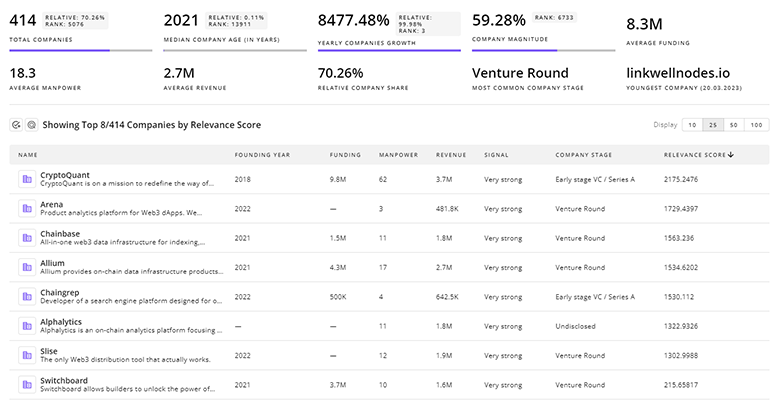
Identify and analyze 1.8K innovators and key players in Aviation Fuel more easily with this feature.
1.8K Aviation Fuel Companies
Discover Aviation Fuel Companies, their Funding, Manpower, Revenues, Stages, and much more
Aviation Fuel Investors
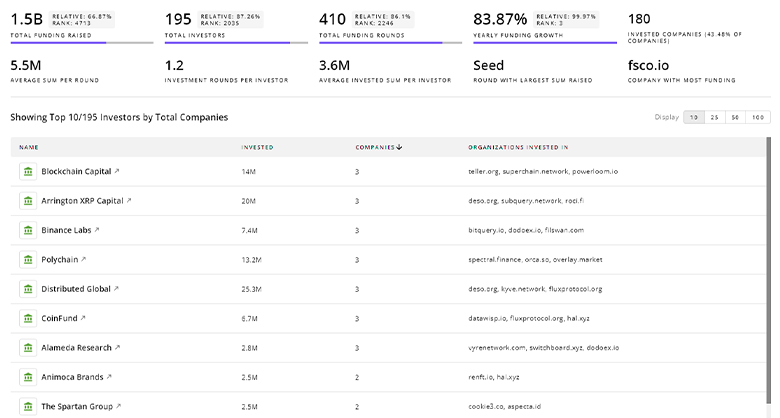
TrendFeedr’s investors tool offers a detailed view of investment activities that align with specific trends and technologies. This tool features comprehensive data on 1.0K Aviation Fuel investors, funding rounds, and investment trends, providing an overview of market dynamics.
1.0K Aviation Fuel Investors
Discover Aviation Fuel Investors, Funding Rounds, Invested Amounts, and Funding Growth
Aviation Fuel News
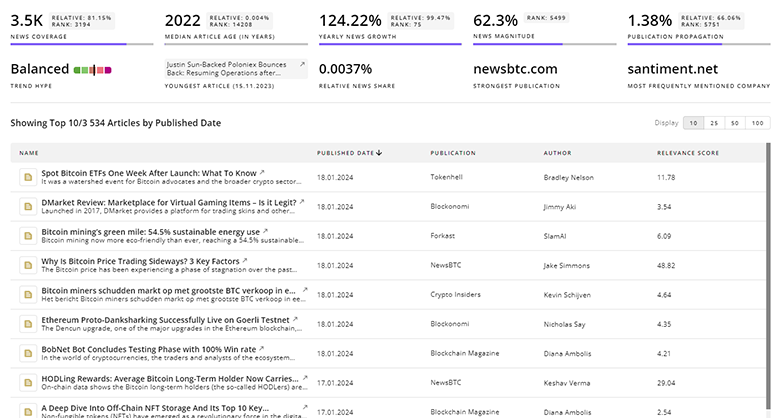
Stay informed and ahead of the curve with TrendFeedr’s News feature, which provides access to 13.5K Aviation Fuel articles. The tool is tailored for professionals seeking to understand the historical trajectory and current momentum of changing market trends.
13.5K Aviation Fuel News Articles
Discover Latest Aviation Fuel Articles, News Magnitude, Publication Propagation, Yearly Growth, and Strongest Publications
Executive Summary
Demand recovery combined with mandatory and voluntary SAF commitments creates a dual commercial dynamic: legacy jet-fuel volumes remain the cash engine while SAF and PtL projects become the strategic value pool. Market forecasts vary widely because they embed different assumptions on SAF economics, feedstock availability, and policy stringency; this means corporate strategy must blend defensive supply continuity with proactive investment in low-carbon pathways. Practically, that translates into three near-term priorities: secure diversified feedstock and offtake contracts, deploy modular SAF capacity and airport blending/logistics upgrades, and digitalize fuel procurement and accounting to capture premium margins for verified low-carbon fuel volumes. Companies that coordinate feedstock aggregation, modular plant deployment and transparent carbon accounting will win the most predictable share of the emerging low-carbon aviation fuel market.
Interested in enhancing our coverage of trends and tech? We value insights from experts like you - reach out!