Battery Cell Durability Report
: Analysis on the Market, Trends, and TechnologiesThe battery cell durability landscape is shifting decisively toward predictive lifecycle management and material innovation, driven by concentrated R&D and funding: the durability topic dataset records 409 patents and $2.92B total funding, highlighting both technical breadth and investor conviction. Rapid advances in cell-level diagnostics, accelerated aging tests, and next-generation chemistries now make it possible to move from warranty-bound replacement models to operational-value propositions based on measurable remaining useful life and second-life monetization.
This report was last updated 234 days ago. Spot an error or missing detail? Help us fix it by getting in touch!
Topic Dominance Index of Battery Cell Durability
To identify the Dominance Index of Battery Cell Durability in the Trend and Technology ecosystem, we look at 3 different time series: the timeline of published articles, founded companies, and global search.
Key Activities and Applications
- Real-time State-of-Health (SOH) monitoring and fleet diagnostics — High-resolution cell telemetry, contactless chip-on-cell systems, and cloud analytics enable continuous life-tracking and event logging that feed predictive maintenance and warranty models Dukosi.
- Accelerated ageing and high-precision testing — High-precision coulometry and differential voltage analysis shorten aging campaigns by up to 80%, enabling faster qualification cycles for durable cell designs.
- Charge-profile optimisation to extend cycle life — Physics-based charging algorithms and tailored charge profiles demonstrably increase usable cycles versus standard CCCV charging, with vendor pilots reporting substantial cycle-life gains through optimized on-charger strategies.
- Second-life qualification and repurposing — Systematic SOH assessment and module-level sorting create validated pathways to deploy retired traction packs into stationary energy systems, recovering value while meeting grid-service requirements EcarACCU.
- Component and materials engineering for intrinsic durability — High-silicon anodes, solid electrolytes, and inorganic electrolyte additives aim to reduce key degradation vectors (SEI growth, lithium plating, thermal runaway) and create cells that tolerate harsher thermal and cycling regimes.
Emergent Trends and Core Insights
- Data-first durability: Cell-level telemetry and data integrity create a new commercial moat: validated, timestamped SOH records enable warranty differentiation, insurance underwriting, and verifiable second-life contracts.
- Physics-aware ML for fast prognostics: Physics-informed neural surrogates and hybrid Kalman filtering compress high-fidelity degradation simulations by orders of magnitude, enabling near-real-time RUL estimates for fleets NREL – PINN diagnostics.
- Material tradeoffs repositioned by manufacturability: Several solid-state and silicon-anode approaches now demonstrate high cycle counts at lab scale, but commercialization hinges on manufacturable processes and cost parity with incumbent Li-ion lines Adden Energy.
- Second-life economics moving from anecdote to contract: Utilities and OEMs are formalizing residual-capacity agreements that monetize packs once they reach 70–80% of original capacity, creating measurable depreciation curves for asset owners CMU analysis on reuse pathways.
- Thermal and mechanical durability now first-order constraints: High SOC at elevated temperatures and mechanical stressors (e.g. tab stress, swelling) dominate real-world failure modes, shifting R&D attention toward integrated TMS and pack structural design Manufacturing teardown.
Technologies and Methodologies
- High-precision coulometry and Differential Voltage Analysis (DVA) for sensitive, repeatable detection of capacity fade mechanisms and internal resistance trends.
- Chip-on-cell, contactless cell monitoring (C-SynQ® style) to capture per-cell temperature and voltage at scale, enabling single-cell forensic traceability from manufacture through second life.
- Physics-informed neural networks (PINNs) and hybrid Kalman filters used as fast surrogates for porous-electrode models to predict degradation trajectories with dramatically reduced compute cost.
- High-silicon and silicon-graphene anodes employing single-step fabrication routes to balance capacity gains with cycle retention and scalable manufacturing.
- Dry-electrode and additive manufacturing processes that lower manufacturing energy and enable novel electrode architectures which reduce tortuosity-driven resistance growth.
- Inorganic electrolyte additives and stabilizers that slow thermal and electrochemical breakdown, reducing SEI growth and enabling higher-voltage operation with improved safety margins New Dominion Enterprises Inc..
- Active balancing and compact in-pack electronics that extend usable pack life by mitigating cell-to-cell imbalance; field devices report measurable life extension when active balancing is deployed.
Battery Cell Durability Funding
A total of 101 Battery Cell Durability companies have received funding.
Overall, Battery Cell Durability companies have raised $2.9B.
Companies within the Battery Cell Durability domain have secured capital from 292 funding rounds.
The chart shows the funding trendline of Battery Cell Durability companies over the last 5 years
Battery Cell Durability Companies
- Battery Dynamics GmbH — Battery Dynamics builds high-precision battery test equipment and operates contract test facilities that reduce aging test durations by up to 80%, enabling cell makers to compress validation timelines and surface durability failure modes earlier in development. The company’s focus on coulometry and DVA provides dataset quality that feeds better semi-empirical aging models and supports pack-level qualification programs. Its specialist position in measurement hardware makes it a preferred partner for cell developers aiming to accelerate time-to-market without sacrificing life-prediction fidelity.
- BattGenie Inc. — BattGenie commercializes physics-based charging and battery management algorithms that have shown capacity-retention improvements in pilots; the vendor reports cycle-life uplift by reshaping charge profiles and avoiding harmful operating windows. Their approach targets OEMs and pack integrators seeking lifetime value rather than raw energy density, and the software-first model lowers integration cost relative to chemistry swaps. BattGenie’s early-stage funding and focused product stack make it an attractive partner for fleet operators and consumer electronics manufacturers seeking immediate SOH gains.
- Enerstone — Enerstone supplies compact active balancing boards and an integrated BMS targeted at in-service life extension; field evidence indicates a 34% life increase for batteries equipped with their solution. The product addresses the classic weakest-cell limitation in series strings, improving usable capacity and deferring module replacement. Enerstone’s low hardware footprint and clear ROI cases make it relevant to EV retrofits, robotics, and stationary systems where CAPEX recovery matters.
- Ecellix Inc. — Ecellix offers a high-silicon anode (eCell™) fabricated in a one-step process that delivers >3x the capacity of typical graphite anodes while showing markedly improved cycle retention in lab programs. Their integration with university labs and national labs accelerates scaleup and de-risking, positioning the company as a materials supplier to incumbent cell manufacturers rather than a direct-to-consumer cell producer. Ecellix’s manufacturing-friendly route addresses a common commercialization bottleneck for silicon-heavy anodes.
- Kinetic Batteries — Kinetic Batteries developed an additive (dry spray) manufacturing process for electrodes that promises >40% production cost reductions versus conventional wet processing and enables conformal, 3D-printed cell geometries that mitigate mechanical failure modes. By altering the manufacturing economics, Kinetic’s method can make higher-durability chemistries commercially viable at scale and open integrations where batteries double as structural components.
Identify and analyze 1.0K innovators and key players in Battery Cell Durability more easily with this feature.
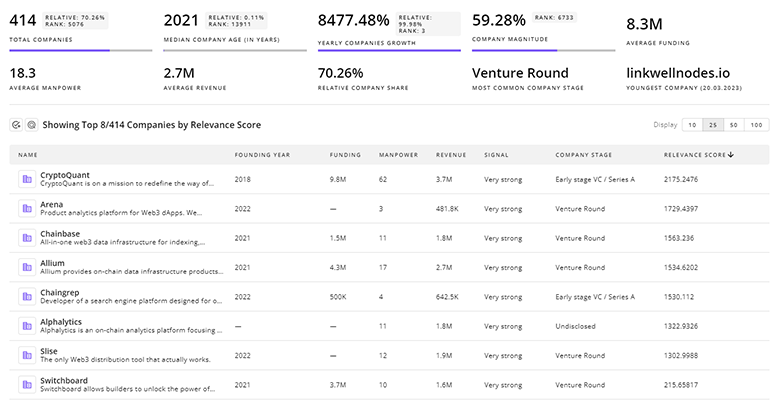
1.0K Battery Cell Durability Companies
Discover Battery Cell Durability Companies, their Funding, Manpower, Revenues, Stages, and much more
Battery Cell Durability Investors
TrendFeedr’s investors tool offers a detailed view of investment activities that align with specific trends and technologies. This tool features comprehensive data on 287 Battery Cell Durability investors, funding rounds, and investment trends, providing an overview of market dynamics.
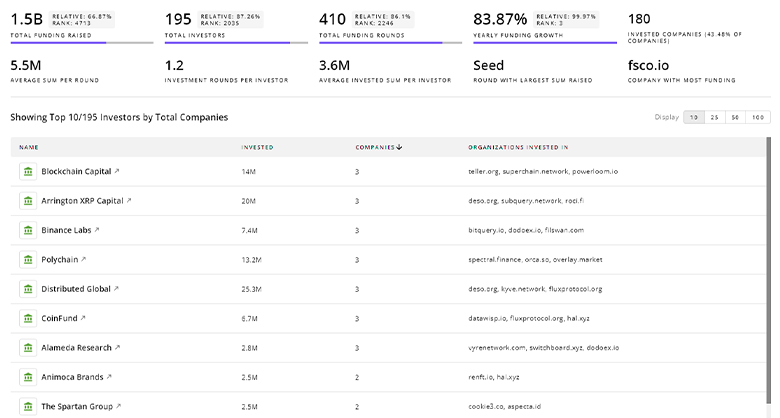
287 Battery Cell Durability Investors
Discover Battery Cell Durability Investors, Funding Rounds, Invested Amounts, and Funding Growth
Battery Cell Durability News
Stay informed and ahead of the curve with TrendFeedr’s News feature, which provides access to 4.1K Battery Cell Durability articles. The tool is tailored for professionals seeking to understand the historical trajectory and current momentum of changing market trends.
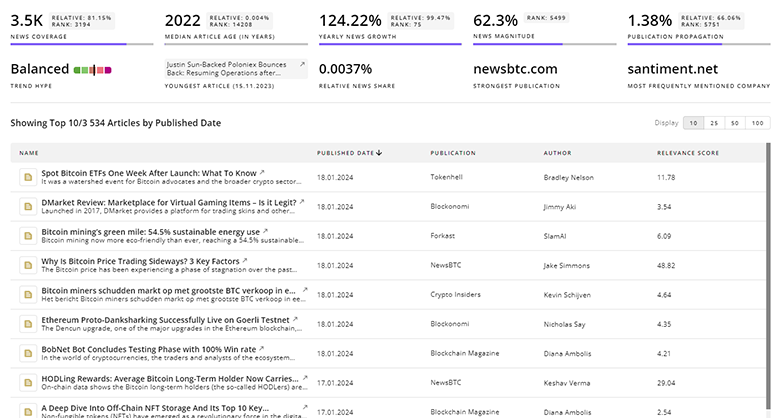
4.1K Battery Cell Durability News Articles
Discover Latest Battery Cell Durability Articles, News Magnitude, Publication Propagation, Yearly Growth, and Strongest Publications
Executive Summary
Battery cell durability now sits at the intersection of material science and lifecycle intelligence. Measurable dataset growth (4,144 topical articles and 1,044 companies in the broader durability ecosystem) and concentrated funding ($2.92B) show that markets reward demonstrable lifetime improvements and verifiable SOH data. Strategic advantage will accrue to organizations that combine manufacturable materials (silicon-anode, solid-state, or stabilized electrolytes) with credible diagnostics and per-cell traceability; together, these reduce total cost of ownership, create contractable second-life value, and allow insurers and large asset owners to underwrite performance. For investors and industrial buyers, the near-term highest-leverage plays lie in (1) validated cell-level diagnostics and data platforms that prove life claims, (2) scalable material innovations that integrate into existing production, and (3) system-level controls (BMS/TMS/active balancing) that translate cell improvements into pack-level uptime and warranty performance.
Interested in enhancing our coverage of trends and tech? We value insights from experts like you - reach out!