Biopharmaceutical Manufacturing Report
: Analysis on the Market, Trends, and TechnologiesThe global biopharmaceutical contract-manufacturing market is at a pivotal growth inflection: the market is estimated at USD *47,420,000,000 in 2025 and is projected to reach USD *90,020,000,000 by 2030, reflecting sustained high demand for outsourced biologics production and capacity expansion as firms move to larger, integrated CDMO partnerships. Investment and technology adoption are concentrated in advanced modalities (viral vectors, mRNA, cell therapies) and in process-automation stacks that shorten lead times and improve release certainty, creating materially higher value for providers that can combine process IP with real-time analytics grandviewresearch – Biologics Manufacturing Market, 2025.
This report was last updated 83 days ago. Spot an error or missing detail? Help us fix it by getting in touch!
Topic Dominance Index of Biopharmaceutical Manufacturing
To identify the Dominance Index of Biopharmaceutical Manufacturing in the Trend and Technology ecosystem, we look at 3 different time series: the timeline of published articles, founded companies, and global search.
Key Activities and Applications
- Large-scale API and upstream bioprocessing (mammalian & microbial): Industrial production of biologic active ingredients (mAbs, recombinant proteins, viral vectors) remains the core revenue engine for CDMOs, with mammalian expression (CHO) dominating complex protein output researchandmarkets - Bioprocess Optimization and Digital Bio-manufacturing, 2024.
- Downstream purification and sterile fill-finish: High-value purification (continuous chromatography, high-throughput polishing) plus aseptic fill-finish for injectables and vaccines drives margin differentiation for providers offering integrated drug-substance-to-drug-product services.
- Viral-vector and cell-therapy clinical/commercial supply: End-to-end process development, potency assays, and GMP viral-vector runs (AAV, LV) are a discrete, high-growth service line as developers move from bench to clinic marketresearch - Survey Of Biopharmaceutical Manufacturing, 2024.
- Analytical services and rapid QC: Rapid microbial methods, advanced potency assays, and inline PAT shorten release cycles; these services are now purchase criteria for sponsors seeking speed-to-patient.
- Single-use systems and sustainable feedstock sourcing: Disposable trains and alternative materials (biopolymers for disposables) reduce cleaning validation burden and support multi-product facilities while sustainability requirements drive material innovation in consumables.
- Process development for biosimilars and ADCs: High-yield cell lines, process intensification, and cost-of-goods optimization for biosimilars/antibody-drug conjugates remain high-frequency applications for CDMOs mordorintelligence - Biopharmaceutical Contract Manufacturing Market.
Emergent Trends and Core Insights
- Shift from capacity to capability purchasing: Sponsors increasingly select providers for specific process IP and analytical depth rather than pure tank volume, concentrating margin capture on providers that own how a product is made and verified ProBio .
- Acceleration of digital process control and PAT: Adoption of digital biomanufacturing platforms, PAT sensors, and digital twins is becoming a procurement requirement for clinical-to-commercial scale transitions; these systems compress release timelines and reduce batch failures in practice.
- Continuous processing and process intensification move toward commercialization: Continuous perfusion and continuous chromatography are transitioning from pilot projects to validated commercial runs; the capital intensity and regulatory validation remain barriers but payback of lowered COGS is compelling.
- Geographic rebalancing: North America leads share, Asia-Pacific grows fastest: North America holds the largest installed demand, but APAC expands capacity fastest, creating opportunities for regional CDMOs and geopolitical risk management strategies.
- Quality-release speed as a front-line differentiator: Rapid QC technologies (reducing microbial release from days to ~48 hours) materially improve time-to-clinic and become negotiable procurement terms for vaccine and ATMP sponsors.
- Talent and validation risk concentrate program timelines: Skilled operator shortages and heavy validation burdens lengthen facility ramp and favor CDMOs with experienced regulatory track records; workforce constraints now appear as one of the top operational risks for domestic scaling plans.
Technologies and Methodologies
- Continuous bioprocessing (perfusion bioreactors, continuous chromatography): Delivers higher volumetric productivity and smaller footprints; commercial validation is increasing and licensing models for continuous modules are appearing.
- Single-use systems with improved materials: Disposable bioreactors and disposable chromatography trains reduce turnaround and cross-product contamination risk; material innovation (bio-derived PHA polymers for disposables) addresses sustainability and end-of-life concerns Paques Biomaterials.
- Process Analytical Technology (PAT) and inline sensors: Real-time release paradigms reduce reliance on end-of-batch testing; PAT adoption supports regulatory expectations for continuous control strategies.
- Digital twin, IIoT and advanced process control: Predictive models and digital twins for upstream optimization materially reduce scale-up risk and standardize yield performance across sites.
- AI/ML applications for media design, strain engineering, and process optimization: Machine learning reduces experimental cycles for media formulation and yield optimization; vendors offering integrated AI-to-PAT workflows command premium engagements.
- Modular and flexible facility design (cleanroom rentals, mobile GMP suites): Flexible, modular cleanrooms and rental GMP models support rapid clinic-supply scaling for cell and gene therapies while lowering sponsor capital requirements.
Biopharmaceutical Manufacturing Funding
A total of 566 Biopharmaceutical Manufacturing companies have received funding.
Overall, Biopharmaceutical Manufacturing companies have raised $72.9B.
Companies within the Biopharmaceutical Manufacturing domain have secured capital from 2.2K funding rounds.
The chart shows the funding trendline of Biopharmaceutical Manufacturing companies over the last 5 years
Biopharmaceutical Manufacturing Companies
- DINAMIQS — DINAMIQS is a science-driven CDMO focused on AAV and lentiviral vector production offering end-to-end viral vector manufacturing, process development and analytics services; its model demonstrates how deep modality focus (viral vectors) creates durable commercial moats for gene-therapy sponsors. DINAMIQS emphasizes customized upstream/downstream procesess and analytical depth to ensure lot-to-lot consistency and regulatory readiness.
- **NecstGen — NecstGen provides a 4,000 m2 development and GMP manufacturing facility for cell and gene therapies with flexible rental and hybrid service models that let academic and small-biotech developers access clinical-grade manufacturing without building in-house capacity; the center packages QA/QC, process development and QP support for rapid clinic supply.
- **biotactical — biotactical commercializes an ultra-rapid microbial detection platform that reduces traditional release waiting times from 14 days to ~48 hours for sterile products, directly addressing a major QC bottleneck and accelerating time-to-clinic for vaccines and ATMPs.
- **RIBOPRO — RIBOPRO is an RNA-specialist CDMO delivering high-performance mRNA and GMP CDMO services, bridging design, synthesis and formulation for RNA therapeutics; their full-stack RNA offering addresses a persistent bottleneck in nucleic-acid scale-up and delivery readiness.
- **ExCulture — ExCulture applies mixed-culture fermentation for novel biologic ingredient production and is advancing fermentation-first approaches to produce non-animal biological inputs (e.g. heparin substitutes); by de-risking animal-derived supply inputs, such platforms can become critical upstream partners for resilient biologics supply chains.
Identify and analyze 1.7K innovators and key players in Biopharmaceutical Manufacturing more easily with this feature.
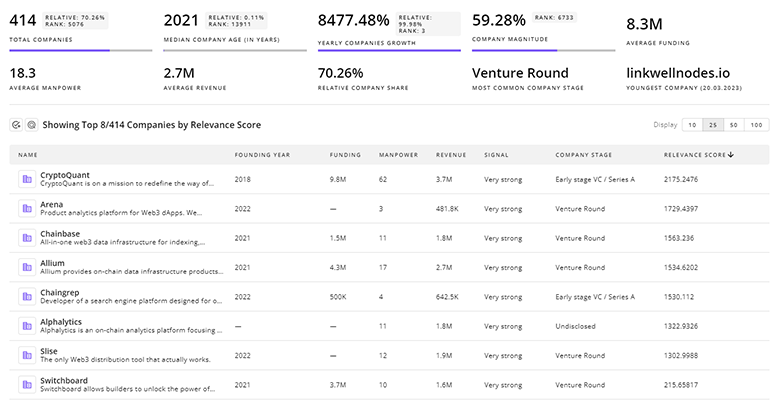
1.7K Biopharmaceutical Manufacturing Companies
Discover Biopharmaceutical Manufacturing Companies, their Funding, Manpower, Revenues, Stages, and much more
Biopharmaceutical Manufacturing Investors
TrendFeedr’s investors tool offers a detailed view of investment activities that align with specific trends and technologies. This tool features comprehensive data on 2.5K Biopharmaceutical Manufacturing investors, funding rounds, and investment trends, providing an overview of market dynamics.
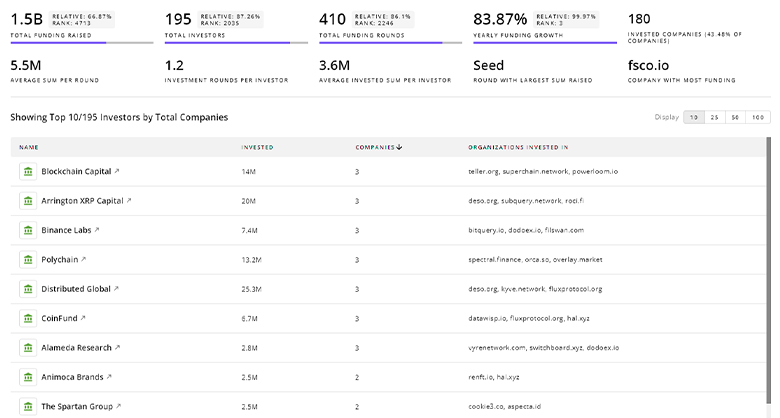
2.5K Biopharmaceutical Manufacturing Investors
Discover Biopharmaceutical Manufacturing Investors, Funding Rounds, Invested Amounts, and Funding Growth
Biopharmaceutical Manufacturing News
Stay informed and ahead of the curve with TrendFeedr’s News feature, which provides access to 4.6K Biopharmaceutical Manufacturing articles. The tool is tailored for professionals seeking to understand the historical trajectory and current momentum of changing market trends.
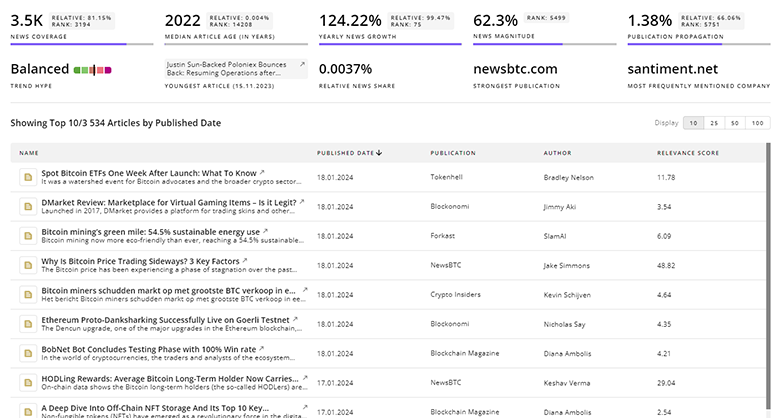
4.6K Biopharmaceutical Manufacturing News Articles
Discover Latest Biopharmaceutical Manufacturing Articles, News Magnitude, Publication Propagation, Yearly Growth, and Strongest Publications
Executive Summary
Biopharmaceutical manufacturing is evolving into a segmented market where specialized process IP, digital quality release, and modality expertise capture the highest value. The next wave of winners will not be defined solely by tank capacity but by the ability to deliver predictable yields, fast and verifiable release, and regulatory-ready scale for complex modalities (viral vectors, mRNA, cell therapies). Sponsors will contract selectively: they will trade capital ownership for providers that can demonstrate consistent process performance, deep analytical control, and the workforce to validate and run advanced operations. Strategic actions that create optionality—modular facilities, PAT-driven release, AI-anchored process development, and material-supply resilience—map directly to commercial capture in the coming five years.
Interested in enhancing our coverage of trends and tech? We value insights from experts like you - reach out!