
Biosimilars Report
: Analysis on the Market, Trends, and TechnologiesThe biosimilars market sits at a decisive inflection where process mastery and targeted technology create commercial advantage: the internal biosimilars trend data shows a projected CAGR of 17.8% and a 2030 market projection of USD 93.1 billion, highlighting rapid expansion driven by patent expiries and cost pressures. Adoption concentrates in oncology and autoimmune indications, regulators are simplifying evidence expectations, and commercial winners will be those that pair manufacturing intensity (continuous processing, xeno-free inputs) with product-differentiating delivery or formulation capabilities Biosimilars Market Industry Report 2024 – Rising Demand for Biosimilars.
This report was last updated 95 days ago. Spot an error or missing detail? Help us fix it by getting in touch!
Topic Dominance Index of Biosimilars
To identify the Dominance Index of Biosimilars in the Trend and Technology ecosystem, we look at 3 different time series: the timeline of published articles, founded companies, and global search.
Key Activities and Applications
- Development and regulatory submission of monoclonal-antibody biosimilars (adalimumab, infliximab, rituximab) — the anchor therapeutic class for biosimilar value capture given near-term patent expiries and high payer savings potential.
- Manufacturing scale-up and process-intensification (continuous manufacturing, single-use bioreactors, optimized CHO cell lines) to lower cost of goods and accelerate time-to-market.
- High-concentration, subcutaneous formulation development (viscosity reduction and excipient optimization) to convert IV-administered reference biologics to patient-friendly SubQ formats and open new commercial differentiation.
- Analytical comparability and immunogenicity risk-management (advanced mass spectrometry, functional bioassays, RWE post-market surveillance) to satisfy shifting regulatory emphasis toward rigorous analytical demonstration.
- Supply-chain and input substitution (xeno-free serum replacements, synthetic microcarriers) to reduce raw-material risk, cost, and regulatory friction in global manufacturing footprints.
Emergent Trends and Core Insights
- Price compression plus payer pressure is pushing biosimilars into mainstream formularies; empirical evidence shows sharp ASP declines post-entry, with certain biosimilars offering discounts approaching two-thirds of reference prices (market observations of wide price erosion) — this shifts the competition from molecule replication to cost and access strategies Samsung Bioepis Reports 2024 Biosimilar Market Growth Trends.
- Regulatory schemes are converging toward accepting highly granular analytical comparability in place of large comparative efficacy trials for many products, shortening development timelines and lowering incremental clinical costs Biosimilars through Physician’s Lens – Strategic Intelligence.
- Technical pivot from replication to complexity: patent and innovation activity evidences a move into bispecifics, ADCs, and multispecific scaffolds — firms convert biosimilar process knowledge into IP for higher-value, novel biologics rather than pure copies.
- Supply-chain resilience becomes strategic: companies investing in xeno-free media, local manufacturing capacity, or alternative feedstocks reduce geopolitical and contamination risk and gain negotiating leverage with payers and regulators.
- Digitalization and computational modelling are rising from support-tools to strategic assets: advanced in-silico bioprocess and trial-simulation platforms accelerate CQA mapping and can materially reduce wet-lab and clinical costs Synthetrial.
Technologies and Methodologies
- Advanced cell-line engineering and expression optimization (CHO strain selection, glycosylation control) for consistent CQA profiles and higher yields.
- Continuous manufacturing and secretion-based production platforms to compress cycle time and lower downstream burden (one-step secretion systems reduce purification steps).
- High-precision analytical comparability suites (mass spectrometry, orthogonal functional assays) enabling regulators to accept analytics-first submissions in many cases.
- Viscosity-reduction excipient platforms and formulation engineering to enable high-dose SubQ delivery of mAbs (lower volume, maintained stability).
- AI / in-silico bioprocess and clinical simulation (CQA prediction, synthetic patient datasets) to reduce experimental burden, speed comparability studies and de-risk trials.
Biosimilars Funding
A total of 196 Biosimilars companies have received funding.
Overall, Biosimilars companies have raised $112.5B.
Companies within the Biosimilars domain have secured capital from 738 funding rounds.
The chart shows the funding trendline of Biosimilars companies over the last 5 years
Biosimilars Companies
-
Ice Bear Therapeutics SPC
Ice Bear targets insulin affordability through a patented continuous manufacturing process that it asserts is substantially faster and lower-cost than legacy insulin production; its strategy focuses on drastically lowering cost of goods and expanding supply capacity for biosimilar insulin. The model directly addresses a high-volume, high-price therapeutic area where payers and policy reforms demand lower prices and greater availability. Ice Bear’s approach can shorten scale-up timelines and reduce waste intensity versus batch manufacturing. -
Qprotyn
Qprotyn commercializes HILOPRO®, a viscosity-reduction platform that enables very high-concentration monoclonal antibody formulations (>225 mg/mL) at injectable volumes, enabling IV→SubQ transitions that improve patient convenience and payer economics. This capability directly supports commercialization of high-dose biosimilars (e.g. adalimumab-class products) by removing a major administration barrier and creating a product differentiation pathway. -
AnalysisMode
AnalysisMode offers SimCell, an AI/ML bioprocess simulation and optimization platform that the company positions to cut wet-lab experiments substantially and accelerate process development. The platform targets CQA mapping, scale-up prediction, and batch-failure risk reduction — capabilities that materially compress validation timelines and CAPEX needs for biosimilar entrants. Its value proposition aligns with the industry pivot to analytics-first regulatory strategies and process intensification. -
Opera Bioscience
Opera leverages a secretion-based bacterial protein production system intended to deliver high-purity proteins with reduced downstream processing. For biosimilar COGs pressure points, Opera’s platform can shorten purification complexity and enable lower manufacturing costs for selected therapeutic proteins, offering an alternative to traditional mammalian-cell dominated routes. This manufacturing differentiation is attractive for challengers seeking to undercut reference biologic pricing while maintaining acceptable quality metrics.
Identify and analyze 1.3K innovators and key players in Biosimilars more easily with this feature.
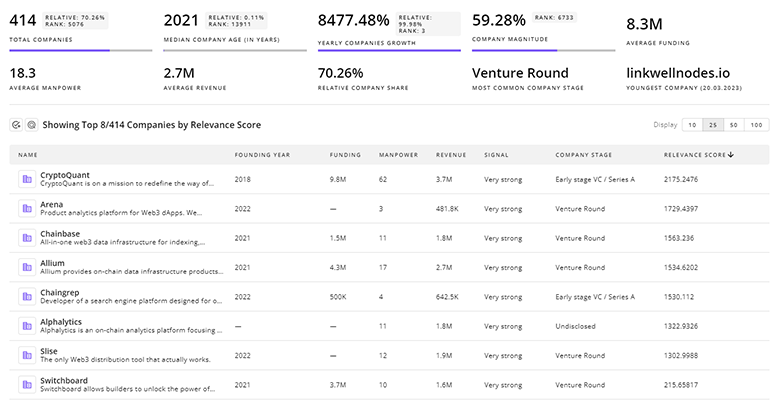
1.3K Biosimilars Companies
Discover Biosimilars Companies, their Funding, Manpower, Revenues, Stages, and much more
Biosimilars Investors
TrendFeedr’s investors tool offers a detailed view of investment activities that align with specific trends and technologies. This tool features comprehensive data on 783 Biosimilars investors, funding rounds, and investment trends, providing an overview of market dynamics.
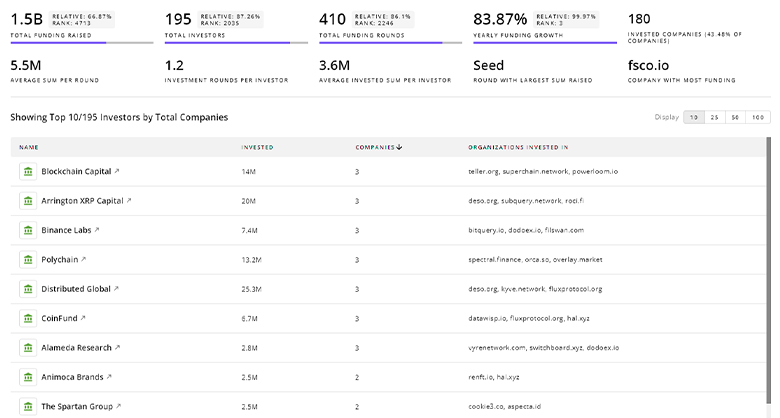
783 Biosimilars Investors
Discover Biosimilars Investors, Funding Rounds, Invested Amounts, and Funding Growth
Biosimilars News
Stay informed and ahead of the curve with TrendFeedr’s News feature, which provides access to 5.9K Biosimilars articles. The tool is tailored for professionals seeking to understand the historical trajectory and current momentum of changing market trends.
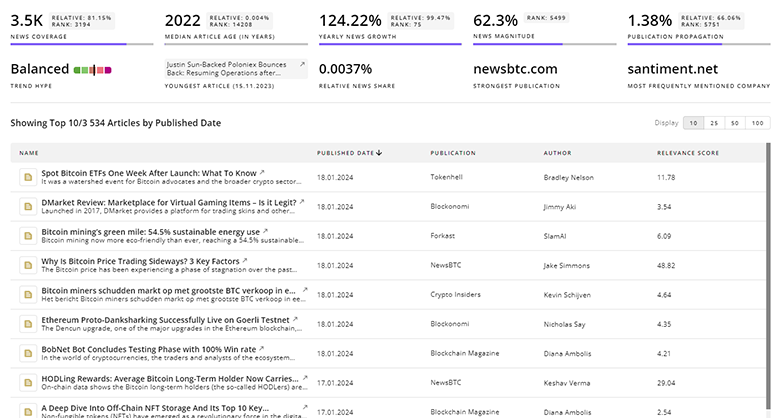
5.9K Biosimilars News Articles
Discover Latest Biosimilars Articles, News Magnitude, Publication Propagation, Yearly Growth, and Strongest Publications
Executive Summary
The business opportunity in biosimilars now rewards technology and process advantage as much as molecule selection. Short-term winners will be those that (1) combine analytical-first regulatory strategies with AI-enabled process characterization to reduce development cost and time; (2) secure manufacturing and input innovations (continuous processes, xeno-free media) that lower unit costs and insulate supply chains
(End of report)
Interested in enhancing our coverage of trends and tech? We value insights from experts like you - reach out!