Cleanup & Remediation Report
: Analysis on the Market, Trends, and TechnologiesThe global cleanup and remediation market is large and expanding, with the internal trend data valuing the market at $131.6 billion in 2025 and forecasting growth to $233.0 billion by 2033, implying sustained mid-single to high-single percent annual growth Global Environmental Remediation Market. Soil-focused services account for roughly half of revenues across major studies and are the primary revenue engine, while bioremediation and PFAS-targeted solutions represent the fastest technology-led upside in commercial demand Environmental Remediation Market Size, Share (Allied Market Research) U.S. Environmental Remediation Market (Precedence Research).
We updated this report 139 days ago. Noticed something’s off? Let’s make it right together — reach out!
Topic Dominance Index of Cleanup & Remediation
The Topic Dominance Index trendline combines the share of voice distributions of Cleanup & Remediation from 3 data sources: published articles, founded companies, and global search
Key Activities and Applications
- Soil remediation (excavation, soil washing, in-situ treatment) — largest revenue share; drives brownfield redevelopment and industrial site closures Soil Remediation Market.
- Groundwater cleanup (pump-and-treat, permeable reactive barriers, in-situ oxidation/reduction) — long-lived programmatic demand from regulatory programs and legacy contamination Environmental Remediation Market Overview.
- Hazardous material abatement (asbestos, lead, PCBs) and removal & disposal — high-volume, compliance-driven work that dominates many local contracts and removal revenues Remediation & Environmental Cleanup Services (MarketResearch).
- Thermal remediation and PFAS destruction — applied where contaminants resist biological treatment; growing because of PFAS regulatory pressure.
- Disaster response, mold and biohazard remediation, and emergency abatement — immediate, revenue-dense work streams for response specialists and national programs Remediation & Environmental Cleanup Services in the US ServiceMaster BioClean.
Emergent Trends and Core Insights
- Rising regulatory and public pressure on persistent contaminants (PFAS, 1,4-dioxane) is creating dedicated project pipelines and specialized technology demand; commercial players are allocating R&D and project capacity to these flows.
- Bioremediation adoption accelerates as a cost and ESG advantage for many site types; global forecasts show bioremediation gaining the fastest CAGR among remediation technologies Bioremediation Market Outlook 2037.
- Integrated, multi-technology treatment trains become standard for complex sites: combinations of ISCO/ISCR, activated carbon injectates, thermal units, and biological amendments improve overall cleanup velocity and certainty.
- Data, remote sensing, and predictive modeling move from pilot to procurement-grade tools for site characterization and performance monitoring, reducing trial-and-error costs and shortening remediation schedules Environmental Remediation Technology.
- Market structure bifurcates: large integrators win major public and brownfield programs; mid-sized specialists capture niche technology and regional work. Private-sector remediation (brownfield unlocks) underwrites a growing share of commercial project work.
Technologies and Methodologies
- In-situ chemical oxidation/reduction (ISCO/ISCR) and reagent injection systems — widely used for VOCs and some persistent organics; high utility when paired with targeted delivery systems ISOTEC.
- Bioremediation and bioaugmentation (emulsified vegetable oil substrates, engineered consortia) — lower operational cost for many source zones and attractive for stakeholders focused on environmental impact.
- Thermal remediation (ERH, TCH, inductive heating) — technically preferred for dense non-aqueous phase liquids and some PFAS destruction use cases; vendors guarantee rapid source removal on complex sites McMillan-McGee thermal solutions.
- Advanced sorbents, engineered macroparticles and nano-materials for targeted capture — enables reclamation and resource recovery while lowering secondary waste volumes.
- Enhanced site characterization and continuous monitoring (MIP, OIP, telemetry, AI models) — improves design confidence and reduces field mobilization cycles.
Cleanup & Remediation Funding
A total of 3.8K Cleanup & Remediation companies have received funding.
Overall, Cleanup & Remediation companies have raised $100.9B.
Companies within the Cleanup & Remediation domain have secured capital from 9.4K funding rounds.
The chart shows the funding trendline of Cleanup & Remediation companies over the last 5 years
Cleanup & Remediation Companies
- Terra Systems
Terra Systems manufactures and sells in-situ bioremediation products (including emulsified vegetable oil substrates) and offers treatability studies and on-site support; the company traces its patented substrate innovation to early industry work and emphasizes product performance and low operational carbon footprint for groundwater projects Terra Systems. - ecoSPEARS
ecoSPEARS develops modular, sorptive technologies for extraction and permanent elimination of persistent organics such as PFAS and PCBs using systems derived from NASA research; the firm targets sediment and soil applications where disposal or incineration is undesirable and seeks to enable beneficial reuses of treated materials ecoSPEARS. - Allied Microbiota
Allied Microbiota engineers microbial products, including thermotolerant strains, to accelerate biodegradation of hard-to-treat compounds; the company positions its microbes for rapid, cost-effective in-situ treatments of chlorinated solvents and emerging contaminants Allied Microbiota. - Countertrace, LLC
Countertrace has developed programmable polymer macroparticles that selectively bind target contaminants in fluids and gases for focused capture and reclamation; early applications include produced-water treatment in oilfield operations and selective element recovery, offering a route to reduce treatment waste and recover value Countertrace, LLC. - Remington Technologies, LLC
Remington specializes in remedial injection systems, activated carbon amendments, and low-impact excavation techniques; it integrates bench-scale testing and field engineering to optimize injection campaigns and reduce installation footprint on active sites Remington Technologies, LLC.
Gain a better understanding of 52.8K companies that drive Cleanup & Remediation, how mature and well-funded these companies are.
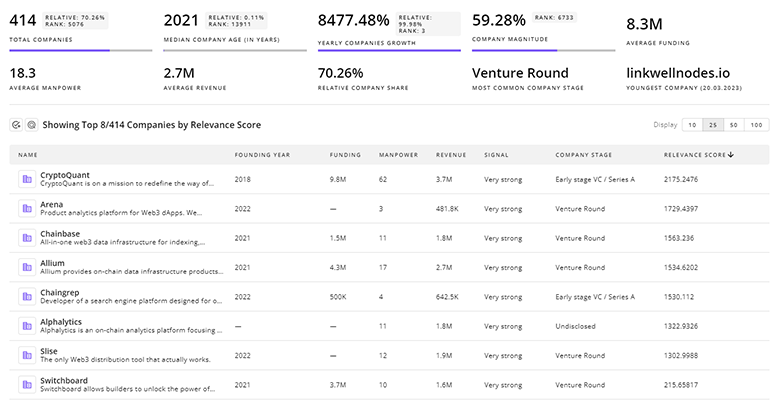
52.8K Cleanup & Remediation Companies
Discover Cleanup & Remediation Companies, their Funding, Manpower, Revenues, Stages, and much more
Cleanup & Remediation Investors
Gain insights into 7.0K Cleanup & Remediation investors and investment deals. TrendFeedr’s investors tool presents an overview of investment trends and activities, helping create better investment strategies and partnerships.
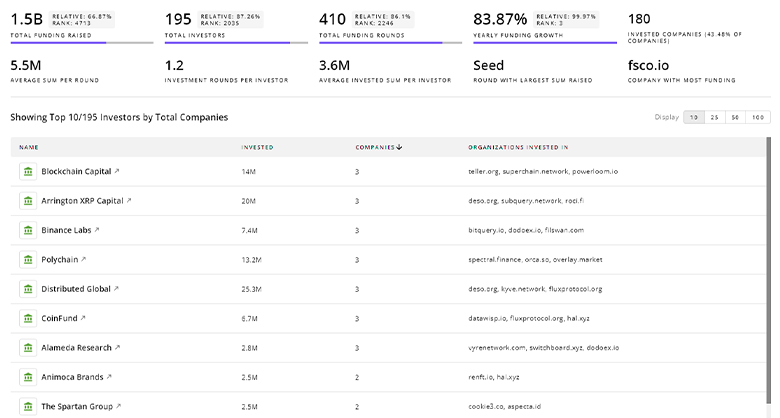
7.0K Cleanup & Remediation Investors
Discover Cleanup & Remediation Investors, Funding Rounds, Invested Amounts, and Funding Growth
Cleanup & Remediation News
Gain a competitive advantage with access to 16.4K Cleanup & Remediation articles with TrendFeedr's News feature. The tool offers an extensive database of articles covering recent trends and past events in Cleanup & Remediation. This enables innovators and market leaders to make well-informed fact-based decisions.
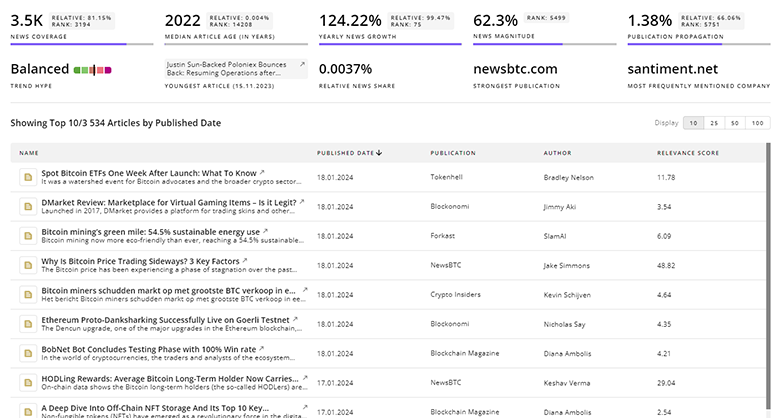
16.4K Cleanup & Remediation News Articles
Discover Latest Cleanup & Remediation Articles, News Magnitude, Publication Propagation, Yearly Growth, and Strongest Publications
Executive Summary
Cleanup and remediation represent a sizeable, resilient industrial market under active transformation. Regulatory tightening, public health priorities, and the rise of persistent contaminants create durable, project-level demand for both conventional removal services and technology-led fixes. The practical path to commercial success is clear: combine proven field delivery with targeted technology investments that raise treatment certainty, shorten project timelines, and reduce net waste. Businesses that demonstrate measurable performance, cost predictability, and lower environmental impact will secure the most attractive contracts from government and private developers. Strategic positioning should emphasize integrated remediation capability, demonstrable technical outcomes on PFAS and difficult organics, and scalable deployment models for in-situ biological and thermal interventions.
We seek partnerships with industry experts to deliver actionable insights into trends and tech. Interested? Let us know!