
Computational Chemistry Report
: Analysis on the Market, Trends, and TechnologiesThe computational chemistry sector is set for substantial growth as its market size was valued at approximately USD 3.3 billion in 2023 and is forecast to expand at a compound annual growth rate of 15.5 % through 2032 (GM Insights). The discipline—which integrates molecular modelling, quantum chemical methods and data analysis to support drug discovery as well as materials innovation—has already garnered attention, with the internal trend report noting 779 articles published on this topic. This report synthesises financial indicators, key activities, emergent trends, technological approaches and profiles five innovative yet less‑popular companies propelling the field forward.
We updated this report 246 days ago. Noticed something’s off? Let’s make it right together — reach out!
Topic Dominance Index of Computational Chemistry
The Topic Dominance Index trendline combines the share of voice distributions of Computational Chemistry from 3 data sources: published articles, founded companies, and global search
Key Activities and Applications
- Drug Discovery and Optimisation: Computational chemistry accelerates the identification of lead compounds and optimises candidate properties by employing in‑silico screening and structure–activity relationship analysis (MarketResearch).
- Materials Science Applications: The field supports the design of novel materials for electronics and energy applications through predictive molecular simulation techniques.
- Molecular Modelling and Simulation: Advanced models such as density functional theory and ab initio methods are used to simulate molecular behaviour and reaction mechanisms accurately.
- Data Analysis and Database Management: Large‑scale chemical data are curated and analysed for quality control and trend identification, ensuring efficient research workflows.
- Consulting and Software Services: Tailored computational platforms and consulting services help integrate computational chemistry into R&D pipelines across pharmaceuticals and other industries.
Emergent Trends and Core Insights
- Integration of AI and Machine Learning: Advanced algorithms are being integrated into computational methods to enable better prediction of molecular properties and reduce experimental cycles.
- Adoption of Cloud and High‑Performance Computing: The increasing use of cloud‑based platforms and HPC resources is making otherwise‑intensive simulations more accessible and cost‑efficient.
- Focus on Personalised Drug Discovery: There is a rising demand for precision therapies, driving the need for computational tools that can analyse patient‑specific molecular interactions.
- Enhanced Collaboration between Disciplines: Cross‑disciplinary initiatives combining chemistry, biology and computer science are paving the way for innovative research models.
- Scalable Virtual Screening Techniques: Rapid virtual‑screening approaches are gaining traction, significantly cutting down the time and cost of traditional laboratory experiments.
Technologies and Methodologies
- Quantum Chemical Methods: Techniques such as density functional theory (DFT) and ab initio methods are fundamental for predicting electronic structures and reaction energetics.
- Molecular Dynamics Simulations: These simulations provide insights into the time‑dependent behaviour of molecules, enabling detailed analyses of complex interactions.
- Machine‑Learning Algorithms: Data‑driven predictive models enhance the accuracy of molecular‑property predictions and streamline lead‑optimisation processes.
- Cloud‑Computing Platforms: These enable scalable, distributed computations essential for handling the immense datasets generated in contemporary chemical research.
- Advanced Visualisation and Data‑Processing Tools: Integrated software environments allow researchers to model 3‑D molecular structures and dynamically visualise key chemical interactions (Research and Markets).
Computational Chemistry Funding
A total of 99 Computational Chemistry companies have received funding.
Overall, Computational Chemistry companies have raised $15.4B.
Companies within the Computational Chemistry domain have secured capital from 399 funding rounds.
The chart shows the funding trendline of Computational Chemistry companies over the last 5 years
Computational Chemistry Companies
- Nextmol: Based in Barcelona, Nextmol develops a cloud‑based SaaS platform that combines molecular modelling, machine learning and high‑performance computing to support the discovery of sustainable chemicals. Their solutions focus on virtual testing and optimisation of polymers and surfactant applications, thereby reducing development time and cost.
- CompChem Solutions: Headquartered in Cambridge, UK, CompChem Solutions offers computational chemistry and biology services designed to support pharmaceutical and biotech research without the need for full in‑house installations. Their services include virtual screening, medicinal‑chemistry support and comprehensive IP services.
- Computational Chemistry Consortium (FuelMech): This consortium unites industry, academic and government partners to develop advanced combustion and emissions models. Their collaborative approach provides innovative solutions tailored to both materials and process‑optimisation challenges.
- Pharmacelera: Pharmacelera leverages quantum mechanics and machine learning to facilitate drug design and discovery. Their proprietary software platforms offer flexible licensing and computational services that help pharmaceutical companies identify novel hits and optimise ligand‑binding properties.
Gain a better understanding of 344 companies that drive Computational Chemistry, how mature and well-funded these companies are.
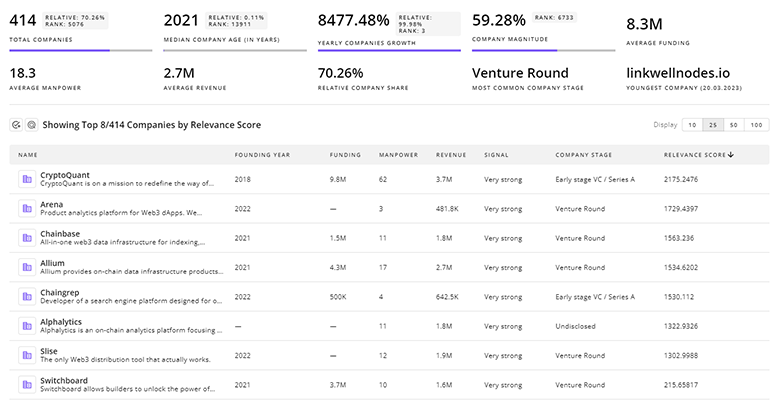
344 Computational Chemistry Companies
Discover Computational Chemistry Companies, their Funding, Manpower, Revenues, Stages, and much more
Computational Chemistry Investors
Gain insights into 628 Computational Chemistry investors and investment deals. TrendFeedr’s investors tool presents an overview of investment trends and activities, helping create better investment strategies and partnerships.
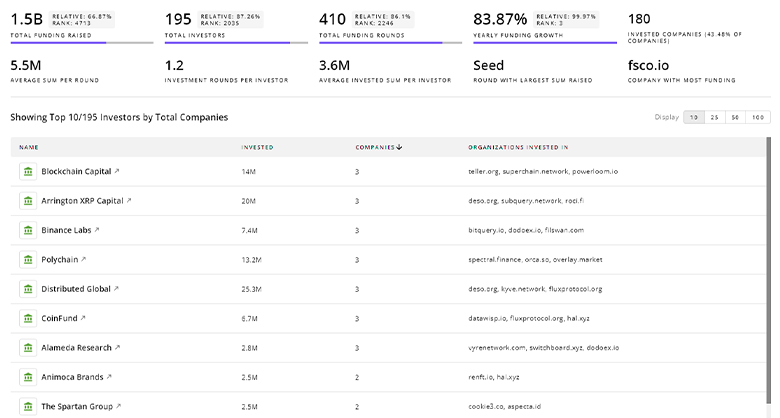
628 Computational Chemistry Investors
Discover Computational Chemistry Investors, Funding Rounds, Invested Amounts, and Funding Growth
Computational Chemistry News
Gain a competitive advantage with access to 779 Computational Chemistry articles with TrendFeedr's News feature. The tool offers an extensive database of articles covering recent trends and past events in Computational Chemistry. This enables innovators and market leaders to make well-informed fact-based decisions.
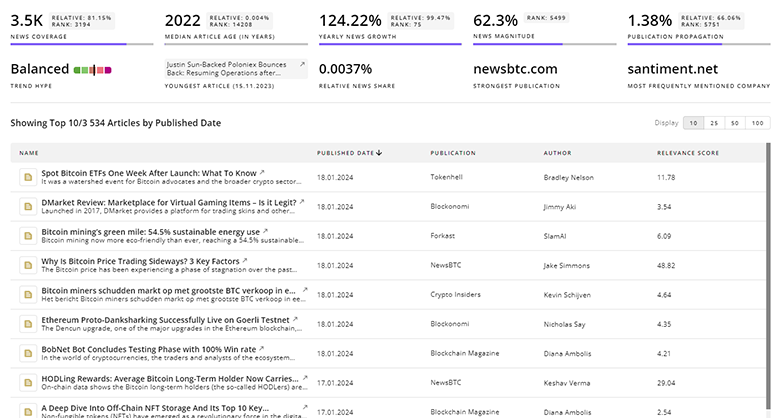
779 Computational Chemistry News Articles
Discover Latest Computational Chemistry Articles, News Magnitude, Publication Propagation, Yearly Growth, and Strongest Publications
Executive Summary
Computational chemistry stands at the forefront of modern research, underpinning advancements across drug discovery, materials innovation and precise molecular simulations. The integration of artificial intelligence with quantum and classical computational methods is narrowing experimental cycles and driving cost efficiencies. Strategic adoption by niche companies and collaborative R&D investments ensure that the sector will continue to provide critical insights and practical applications for a data‑driven future.
We seek partnerships with industry experts to deliver actionable insights into trends and tech. Interested? Let us know!