
Computer & Video Games Report
: Analysis on the Market, Trends, and TechnologiesThe computer and video games market is large and accelerating: total industry revenue was reported at $219,000,000,000 in 2023 and the internal data forecasts continued expansion through the decade, driven by cloud gaming, mobile software share, and AI-enabled content workflows. Market intelligence from Newzoo and related market reports points to platform- and region-specific growth (console cycles lifting revenue, APAC strengthening PC engagement), while developer surveys show one in three studios already using generative AI in production—together these forces re-shape product roadmaps, distribution, and unit economics for studios and platform owners Newzoo Global Games Market Report 2025.
We updated this report 349 days ago. Noticed something’s off? Let’s make it right together — reach out!
Topic Dominance Index of Computer & Video Games
The Topic Dominance Index trendline combines the share of voice distributions of Computer & Video Games from 3 data sources: published articles, founded companies, and global search
Key Activities and Applications
- Development & publishing of cross-platform titles (PC, console, mobile) with emphasis on persistent live-service features and in-game economies to drive lifetime value and retention.
- Cloud gaming and streaming services that remove local-hardware barriers and extend high-fidelity titles to low-end devices and browsers.
- Generative AI pipelines for rapid asset creation, localisation, QA assistance, and procedural content generation that reduce production time and cost for both indies and mid-sized studios.
- Immersive AR/VR experiences and location-based venues (LBEs) used for social gaming, training, and fitness use cases; these integrate motion tracking, haptics, and free-roam designs.
- Competitive gaming and esports platforms (tournaments, wagering, sponsored leagues) as audience and monetisation engines that feed hardware and peripheral sales.
- Serious and cognitive games for education, rehabilitation, and workforce training that leverage game mechanics and measurement frameworks to deliver measurable skill outcomes.
Emergent Trends and Core Insights
- Console and premium platform resurgence concentrates high revenue per user during hardware cycles; platform owners use exclusives and subscriptions to capture longer retention windows, raising the value of console-first investments for studios targeting higher ARPU.
- Cloud gaming is the fastest-growing technical segment (very high CAGR in forecasts) and changes addressable markets by enabling instant-play on thin clients, which opens monetisation in regions with low console penetration.
- Generative AI moves from experimentation to production: developer surveys show ~33% adoption for asset, text, and localisation tasks; this materially shortens iteration cycles and lowers marginal content costs, but it raises IP, quality-control, and tooling-integration questions that studios must manage.
- Regional divergence: APAC (China, Japan) fuels PC and mobile revenue growth and requires sharper localisation and platform partnerships; Western markets shift toward subscriptions and live services—market entry and product strategy must be regionally tailored Japan Games Market Report (ResearchAndMarkets).
- Immersive hardware (wireless HMDs, haptic peripherals) and LBE venues expand the types of playable experiences, but high headset cost and motion-comfort issues remain adoption constraints for mass consumer uptake augmented reality gaming market signals.
- Games-as-career and cognitive signaling: accumulating evidence links gameplay to specific cognitive gains and workplace-relevant skills, creating emergent B2B demand for training and assessment games across education and health verticals News Landscape Report on cognitive benefits.
- Indie and creator economy: no-code/low-code engines, marketplace asset stores, and AI copilots lower production thresholds and increase the flow of small teams delivering niche IP, shifting some publisher value away from greenlighting and toward distribution and live operations.
Technologies and Methodologies
- Real-time rendering advances (ray tracing plus AI upscaling) that deliver high-fidelity visuals on midrange hardware, improving perceived value without proportionate hardware spend Allied Market Research PC Games Report.
- Cloud streaming stacks (edge compute + 5G + adaptive codecs) that reduce latency and enable instant play across devices, turning games into on-demand services rather than downloads.
- Generative AI and procedural systems for automated 3D asset, animation, dialogue, and level generation that speed iteration and widen creative scope; companies build AI pipelines as part of core production tech stacks GDC 2025 AI usage.
- Sensor fusion and haptic systems (gloves, suits, adaptive controllers) that translate fine motion into game inputs and tactile outputs, enabling embodied interactions used in XR, sports sims, and rehabilitation.
- Data-driven live operations: telemetry, cohort analytics, and A/B experimentation govern content cadence, pricing, and retention playbooks to maximize LTV for live-service titles.
- Cross-platform and middleware SDKs (Unity/Unreal + platform adapters) that reduce porting cost and support one-codebase strategies for "play anywhere" launches.
- AI-assisted QA and automated testing tools that scan builds for regressions, balance issues, and multi-platform regressions—critical to shorten release windows in multi-platform pipelines.
Computer & Video Games Funding
A total of 8.7K Computer & Video Games companies have received funding.
Overall, Computer & Video Games companies have raised $490.0B.
Companies within the Computer & Video Games domain have secured capital from 29.3K funding rounds.
The chart shows the funding trendline of Computer & Video Games companies over the last 5 years
Computer & Video Games Companies
- PlayFab — A backend-as-a-service focused on live operations, player data, and economy systems; it shortens time-to-market for mid-sized studios by providing hosted multiplayer logic, analytics, and virtual economy tooling that integrate into major engines and storefronts.
(Note: PlayFab's tooling directly maps to the Key Activities of live service operations and cross-platform data pipelines.) - Improbable — Provides distributed simulation technology to host large persistent worlds and complex server-side simulations; its platform targets MMOs and persistent social experiences that require horizontal scalability and deterministic event processing.
(Improbable addresses cloud-native multiplayer and large-scale world simulation use cases highlighted in Emergent Trends.) - Moonlander.ai — An emergent AI toolchain focused on generative 3D asset creation and automated environment generation for small teams; it enables rapid prototyping and reduces art-production bottlenecks for 3D titles and XR experiences.
(Moonlander.ai aligns with the Technologies section on generative asset tooling and fast iteration.) - Sphery — A specialist in mixed-reality fitness and cognitive-training games that combine physical motion with cognitive tasks; its work reflects the convergence of immersive gaming with health and training verticals and the documented rise of cognitive/therapeutic applications.
(Sphery illustrates the commercial pathway from entertainment mechanics to measurable training outcomes.) - Tilki.ai — A smaller company building AI copilots and gameplay analytics tools that assist designers with procedural dialogue, NPC behaviour tuning, and automated playtesting; their stack targets faster iteration and improved accessibility of advanced AI models for mid-sized studios.
(Tilki.ai maps to the trend of AI integration across design, QA, and dynamic content systems.)
Gain a better understanding of 85.0K companies that drive Computer & Video Games, how mature and well-funded these companies are.
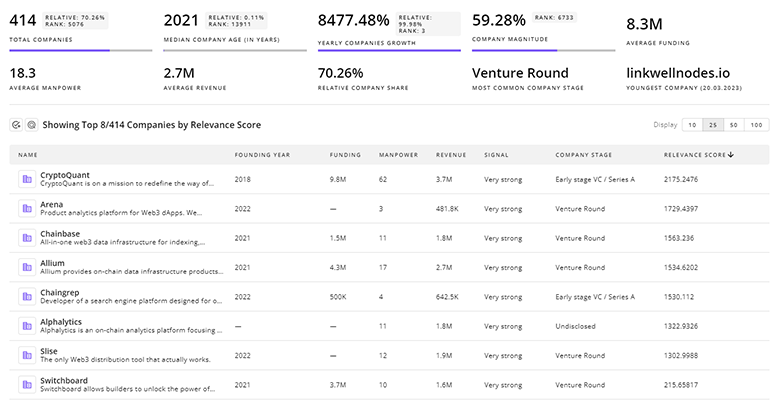
85.0K Computer & Video Games Companies
Discover Computer & Video Games Companies, their Funding, Manpower, Revenues, Stages, and much more
Computer & Video Games Investors
Gain insights into 22.1K Computer & Video Games investors and investment deals. TrendFeedr’s investors tool presents an overview of investment trends and activities, helping create better investment strategies and partnerships.
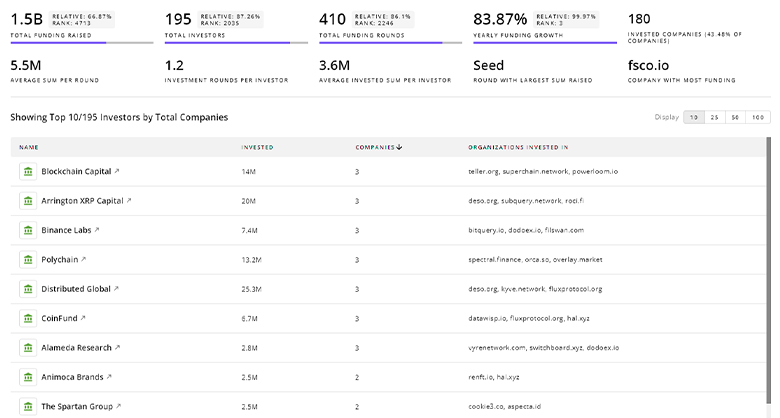
22.1K Computer & Video Games Investors
Discover Computer & Video Games Investors, Funding Rounds, Invested Amounts, and Funding Growth
Computer & Video Games News
Gain a competitive advantage with access to 270.8K Computer & Video Games articles with TrendFeedr's News feature. The tool offers an extensive database of articles covering recent trends and past events in Computer & Video Games. This enables innovators and market leaders to make well-informed fact-based decisions.
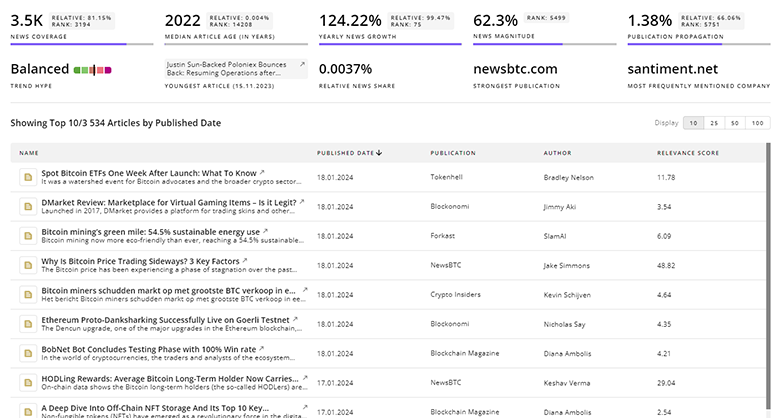
270.8K Computer & Video Games News Articles
Discover Latest Computer & Video Games Articles, News Magnitude, Publication Propagation, Yearly Growth, and Strongest Publications
Executive Summary
The computer and video games sector presents a mixed picture for business leaders: large and expanding market value sits beside shifting unit economics driven by subscriptions, cloud delivery, and AI-augmented production. Strategic winners will pair platform-aware product strategies (regionally tuned) with technology investment in AI pipelines, cross-platform middleware, and cloud streaming. Opportunities concentrate where technology reduces barrier-to-entry (generative asset tools, no-code engines) and where games intersect adjacent markets (education, health, fitness, and enterprise simulation). Companies that coordinate product, data, and distribution strategies to capture long-term engagement will increase monetisation per user while reducing per-title production risk.
We seek partnerships with industry experts to deliver actionable insights into trends and tech. Interested? Let us know!