Decarbonization Report
: Analysis on the Market, Trends, and TechnologiesThe decarbonization market is already a multi-trillion dollar opportunity: it was estimated at USD 2.2 trillion in 2023 and internal forecasts project roughly USD 4.7 trillion by 2033 with an 11.8% CAGR, signaling large, sustained capital deployment into capture, fuels, grid, and services over the coming decade Decarbonization Market, by Technology (Renewable Energy Technologies, Carbon Capture and Storage (CCS) Technologies, Energy Storage Technologies, Smart Grid Technologies, Others), by End-Use Industry (Automotive and Transportation, Oil and Gas, Energy and Utility, Aerospace and Defense, Others): Global Opportunity Analysis and Industry Forecast, 2024-2033. Policy incentives and industrial project pipelines are concentrating spending in CCUS, green hydrogen, DAC and grid modernization, creating near-term revenue for services and medium-term demand for hardware and fuels Decarbonization Market Size, Share, Value | Global Report, 2032.
We updated this report 355 days ago. Noticed something’s off? Let’s make it right together — reach out!
Topic Dominance Index of Decarbonization
The Topic Dominance Index trendline combines the share of voice distributions of Decarbonization from 3 data sources: published articles, founded companies, and global search
Key Activities and Applications
- Carbon capture, utilization and storage (CCUS) for power and heavy industry — design, retrofit and project-scale storage are the immediate commercial opportunities for large emitters and midstream operators Decarbonization Market Research, 2033.
- Direct Air Capture (DAC) and engineered carbon removal for corporate removal portfolios and compliance markets; developers focus on lowering capture cost and energy intensity to scale removals New carbon capture approach can reduce DAC cost to $480 per tonne -study.
- Green hydrogen production and integration into hard-to-abate processes (steel, chemicals, refining) via electrolyzers and hybrid production routes Decarbonizing Downstream Oil and Gas.
- Conversion of captured CO2 into fuels, chemicals and materials (electrochemical and plasma CCU) to create revenue streams that improve commercial viability of capture projects carbonade D-CRBN.
- Supply chain decarbonization and enterprise carbon accounting (Scope 1,2,3) delivering software, MRV and procurement services to translate targets into capital projects and supplier engagement.
Emergent Trends and Core Insights
- Service and platform revenue leads near term. Measurement, reporting, project development and marketplace infrastructure capture higher-margin recurring revenue before hardware scale-up becomes dominant Decarbonization Market Size, Share & Trends Analysis Report By Technology, 2023 - 2030.
- Multiple DAC and removal pathways are commercializing in parallel (mineralisation, sorbents, low-energy electrochemical/DAC hybrids), producing diverse cost trajectories and location-dependent deployment choices Arca.
- Policy and finance are decisive. Tax credits, procurement mandates and carbon pricing materially de-risk projects and shift investment from proof-of-concept to large plants and CO2 transport networks Decarbonisation Market - Global Forecasts from 2024 to 2029.
- Industry-specific roadmaps concentrate activity in «hard-to-abate» sectors. Steel, cement and chemicals attract combined investments in hydrogen, electrification and CCUS because substitution is costly and scale is required Decarbonizing the Steel Industry.
- Nature-based and durable removal approaches (enhanced weathering, biochar, mineralisation) scale alongside engineered removals; buyers and standards are raising quality thresholds, which favors MRV-enabled project developers Mati Carbon Paebbl.
Technologies and Methodologies
- Hydrogen electrolyzers and power-to-X integration — essential for green hydrogen, e-fuels and process heat replacement in chemicals and steel Decarbonizing Downstream Oil and Gas.
- Direct Air Capture variants (solid sorbent, solvent, electrochemical/mineralisation hybrids) and modular DAC units aimed at lower capital intensity and faster deployment New carbon capture approach can reduce DAC cost to $480 per tonne -study.
- Advanced CCUS: low-energy solvents, membranes, MOFs and vacuum/temperature swing systems for post-combustion capture and industrial retrofits ION Clean Energy and modular capture examples reported in industry updates.
- Electrochemical and plasma conversion for CO2→chemicals and fuels to monetize captured CO2 and reduce net project costs carbonade D-CRBN.
- Enhanced rock weathering, biochar and mineral carbonation for durable storage that pairs with agricultural co-benefits and improves the quality of removal credits Mati Carbon Paebbl.
- Digital MRV, blockchain marketplaces and AI for supply-chain Scope 3 management — these reduce buyer risk and raise the value of high-integrity removals and offsets Carbonfuture Verdana.
Decarbonization Funding
A total of 16.2K Decarbonization companies have received funding.
Overall, Decarbonization companies have raised $3.3T.
Companies within the Decarbonization domain have secured capital from 55.7K funding rounds.
The chart shows the funding trendline of Decarbonization companies over the last 5 years
Decarbonization Companies
- Carbonade — Carbonade develops a low-temperature electrochemical electrolyzer to convert CO2 into e-fuels and chemicals, targeting energy efficiency gains that reduce unit cost of product synthesis. The technology aims to place captured CO2 into higher-value product chains (SAF, methanol), shortening payback windows for capture projects. Its early seed stage and patent focus position it as a partner for industrial offtake and pilot deployments Carbonade.
- Carbon Cell — Carbon Cell makes a biochar-based expanded foam that sequesters carbon in durable product form while replacing fossil polymer foams in insulation and packaging. The product combines sequestration with product substitution revenue, offering buyers embedded removals and an embodied carbon reduction pathway for building and logistics sectors Carbon Cell.
- D-CRBN — D-CRBN converts industrial CO2 into chemical building blocks using a patented plasma CCU process. The firm focuses on onsite modular units for industrial emitters, enabling integration with existing flue streams and producing fuels/polymers that displace fossil feedstocks. Its approach targets hard-to-abate plants that need localized solutions without large transport networks D-CRBN.
- Greenlyte Carbon Technologies — Greenlyte pursues a low-energy DAC variant that couples CO2 capture with hydrogen co-production via alkaline electrolysis, seeking to lower net energy consumption per tonne captured. The tech originated from academic research and the company aims for early commercial pilots that pair with industrial waste heat or renewable electricity supplies Greenlyte Carbon Technologies.
- Arca — Arca accelerates natural mineral weathering to lock CO2 into rock by leveraging mine waste and industrial sites for gigaton-scale mineralization. The company's model reduces footprint by operating inside existing industrial footprints and sells durable removal credits backed by physical mineral stores, which appeals to buyers demanding permanence and co-benefits for local communities Arca.
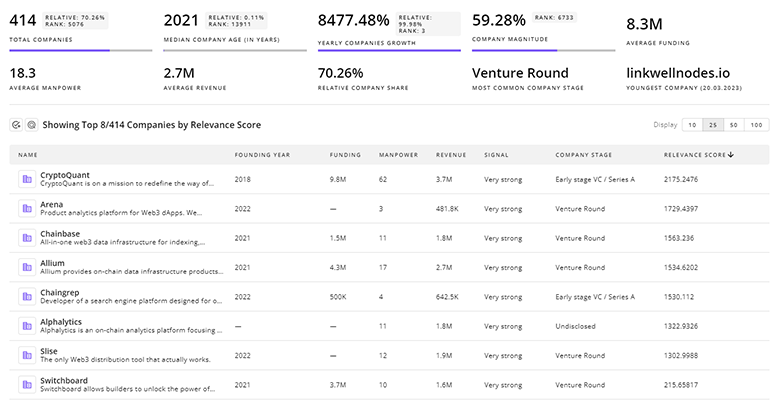
Gain a better understanding of 126.1K companies that drive Decarbonization, how mature and well-funded these companies are.
126.1K Decarbonization Companies
Discover Decarbonization Companies, their Funding, Manpower, Revenues, Stages, and much more
Decarbonization Investors
Gain insights into 31.7K Decarbonization investors and investment deals. TrendFeedr’s investors tool presents an overview of investment trends and activities, helping create better investment strategies and partnerships.
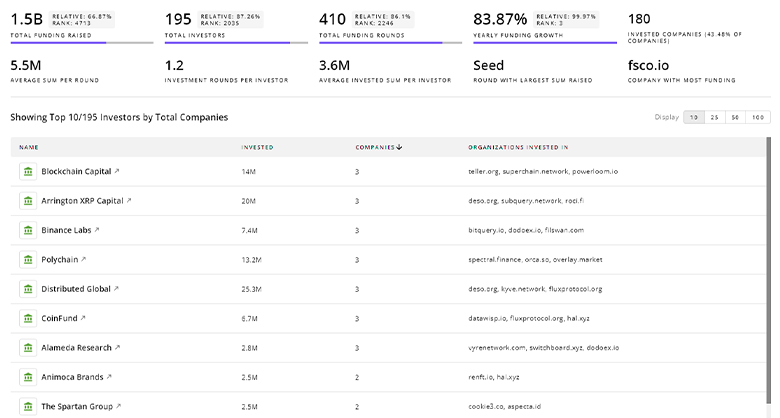
31.7K Decarbonization Investors
Discover Decarbonization Investors, Funding Rounds, Invested Amounts, and Funding Growth
Decarbonization News
Gain a competitive advantage with access to 284.3K Decarbonization articles with TrendFeedr's News feature. The tool offers an extensive database of articles covering recent trends and past events in Decarbonization. This enables innovators and market leaders to make well-informed fact-based decisions.
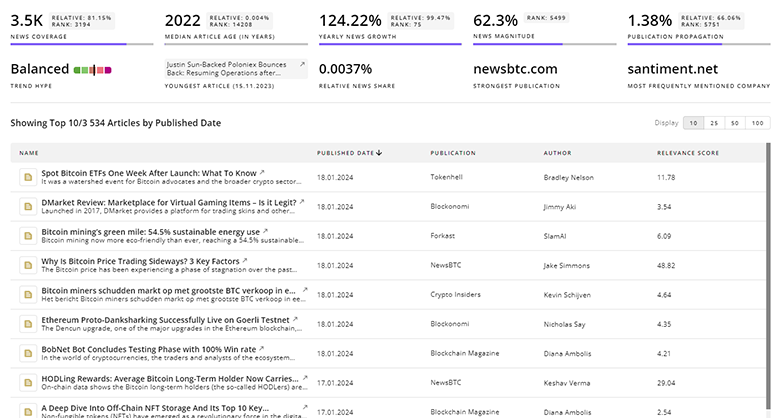
284.3K Decarbonization News Articles
Discover Latest Decarbonization Articles, News Magnitude, Publication Propagation, Yearly Growth, and Strongest Publications
Executive Summary
Decarbonization is both a large market and a systems challenge: capital will flow unevenly across services, durable removals, hardware and fuels as technologies mature and policy clarity increases. Near term, companies that provide measurement, project development, MRV and marketplace infrastructure extract outsized value because they derisk and scale demand for physical removals and retrofit projects. Medium term, cost reduction in capture (DAC and point source), green hydrogen scale-up and CO2 conversion routes will determine which hardware players reach industrial scale. Strategic choices for investors and corporate buyers should prioritize measurable removals, integration with existing industrial footprints (to reduce transport and permit risk), and partnerships that link capture to concrete offtake or high-value product streams so projects clear both climate and commercial thresholds.
We seek partnerships with industry experts to deliver actionable insights into trends and tech. Interested? Let us know!