
Deep Learning Neural Networks Report
: Analysis on the Market, Trends, and TechnologiesThe deep learning neural networks market shows rapid expansion and platform consolidation: total funding reported across companies active in this topic reached $16.05B in the available internal trend data, while independent market forecasts project high double-digit growth (projected CAGR ~32.15% to 2034) indicating durable commercial demand for model training, inference, and lifecycle platforms REPORT: Deep Learning Neural Networks Market (2034 projection). This combination—significant funding plus a large market growth projection—drives two immediate implications: (1) firms that integrate the AI lifecycle (data, compute, model governance, deployment) capture disproportionate value, and (2) efficiency innovations (model compression, specialized hardware, fewer-data training) materially change unit economics for customers and providers.
We updated this report 359 days ago. Noticed something’s off? Let’s make it right together — reach out!
Topic Dominance Index of Deep Learning Neural Networks
The Topic Dominance Index trendline combines the share of voice distributions of Deep Learning Neural Networks from 3 data sources: published articles, founded companies, and global search
Key Activities and Applications
- Large-scale model development and lifecycle platforms: end-to-end pipelines (data labeling, model tuning, evaluation, deployment) form the commercial core for enterprise adopters and platform providers Scale AI.
- Computer vision for healthcare and industrial inspection: medical image diagnostics and automated quality inspection remain high-value use cases where accuracy gains translate into cost savings and risk reduction Deep Learning in Computer Vision market data.
- Autonomous systems and robotics: perception stacks (vision + sensor fusion), RL-based control, and onboard inference for ADAS and robots continue as core applications driving both software and hardware demand DeepRoute.ai.
- Edge AI and embedded inference: deploying compressed, quantized, or neuromorphic models on low-power NPUs, FPGAs, and analog chips to meet latency and privacy constraints.
- Explainable, auditable models for regulated domains: model governance, explainability toolchains, and traceability are active deployments in healthcare, finance, and defense where compliance is non-negotiable Xpdeep.
Emergent Trends and Core Insights
- Platform consolidation plus specialization: the market moves to integrated platforms that manage data, training, governance, and deployment; niche vendors succeed when they deliver truly differentiated capability that plugs into these platforms.
> So what: Buyers prefer one vendor to reduce integration risk; vendors should map whether to integrate horizontally or specialize into a defensible vertical capability. - Efficiency as commercial lever: techniques that cut training/inference costs (pruning, quantization, transfer/few-shot learning, “lottery ticket” style initialization) plus new hardware change provider economics and broaden addressable customers MIT Technology Review: Lottery Ticket & tiny nets.
> So what: Vendors offering measurable TCO reduction (compute hours, energy, or data needs) gain faster adoption across cost-sensitive segments. - Edge + cloud hybridization: orchestration that assigns training, fine-tuning, and inference across cloud and distributed edge nodes grows as 5G and NPU availability increase.
> So what: Product road maps must include lightweight models and secure federated pipelines to capture latency-sensitive workloads. - Explainability and continuous learning: demand for explainable models (integrated into pipelines) and systems that learn continuously without catastrophic forgetting is increasing; research and patents show active work on continual learning and stability methods.
> So what: Certification and auditability become product differentiators for enterprise contracts. - Domain-specific foundation models and transfer learning: practitioners favor pre-trained backbones fine-tuned for vertical datasets to accelerate deployment and reduce data needs.
> So what: Firms that provide high-quality vertical backbones plus labeled domain data can command premium pricing.
Technologies and Methodologies
- Transformer architectures and attention mechanisms for NLP and multimodal tasks; continue to scale but create compute pressure that fuels efficiency research.
- Convolutional and residual networks for vision tasks remain primary building blocks for imaging and inspection systems.
- Model compression techniques (pruning, quantization, sparsity) and “lottery ticket” style initialization to reduce training/inference cost and enable on-device learning.
- Neuromorphic and analog accelerators, spiking networks, and in-memory compute to attack energy limits for edge/embedded AI.
- Federated and privacy-preserving learning to enable cross-institution training in regulated domains (healthcare, finance) without raw data sharing.
- Explainable AI toolchains (integrated XAI, AutoML with explainability) and model governance platforms that bake auditability into the lifecycle.
Deep Learning Neural Networks Funding
A total of 244 Deep Learning Neural Networks companies have received funding.
Overall, Deep Learning Neural Networks companies have raised $6.3B.
Companies within the Deep Learning Neural Networks domain have secured capital from 1.0K funding rounds.
The chart shows the funding trendline of Deep Learning Neural Networks companies over the last 5 years
Deep Learning Neural Networks Companies
- Hoursec — Hoursec claims an architecture that sharply reduces required training data (up to 80%) and enables simultaneous on-chip training and inference, targeting ultra-low-power embedded use cases near sensors. That approach directly addresses edge latency and privacy needs by shrinking data and compute footprints; the company positions its offering as plug-and-play hardware/software for proximity deployments.
- GEMESYS — GEMESYS develops an analog, brain-inspired chip architecture that the firm states trains neural networks with dramatically lower energy use (claimed orders-of-magnitude efficiency gains) to enable decentralized edge training and inference. The company targets embedding learning capability across devices, which, if realized at scale, alters economics of on-device personalization and privacy-preserving learning.
- Deep4It — Deep4It packages pre-trained, continuously learning models for banking and financial services, focusing on on-premises deployment, data residency, and near-real-time predictive insights (fraud, risk scoring). Its vertical focus reduces integration time and positions it to deliver immediate ROI for regulated institutions that resist cloud migration.
- Comprendo.ai — Comprendo.ai offers an explainable AutoML engine that produces transparent, auditable models for compliance-sensitive workflows. By pairing explainability with AutoML, the company targets organizations that require model traceability as part of procurement and regulatory processes.
- Datature — Datature provides an end-to-end no-code MLOps platform focused on computer vision: data labeling, training, and deployment orchestrated for product teams. The platform reduces friction for teams that need to deploy CV solutions quickly and supports model lifecycle automation that aligns with enterprise procurement patterns.
Gain a better understanding of 1.1K companies that drive Deep Learning Neural Networks, how mature and well-funded these companies are.
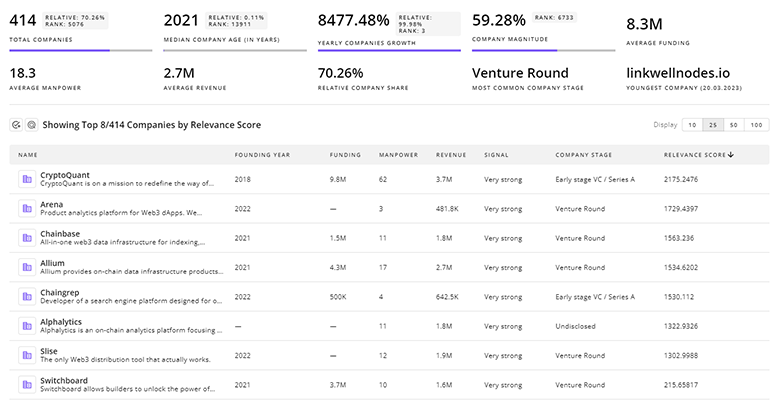
1.1K Deep Learning Neural Networks Companies
Discover Deep Learning Neural Networks Companies, their Funding, Manpower, Revenues, Stages, and much more
Deep Learning Neural Networks Investors
Gain insights into 1.3K Deep Learning Neural Networks investors and investment deals. TrendFeedr’s investors tool presents an overview of investment trends and activities, helping create better investment strategies and partnerships.
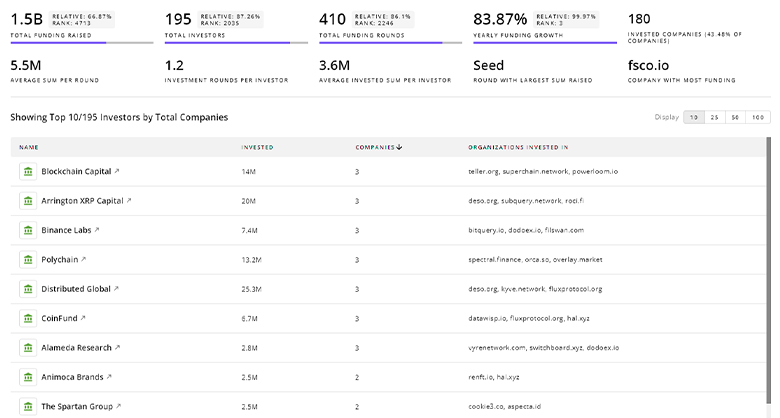
1.3K Deep Learning Neural Networks Investors
Discover Deep Learning Neural Networks Investors, Funding Rounds, Invested Amounts, and Funding Growth
Deep Learning Neural Networks News
Gain a competitive advantage with access to 5.1K Deep Learning Neural Networks articles with TrendFeedr's News feature. The tool offers an extensive database of articles covering recent trends and past events in Deep Learning Neural Networks. This enables innovators and market leaders to make well-informed fact-based decisions.
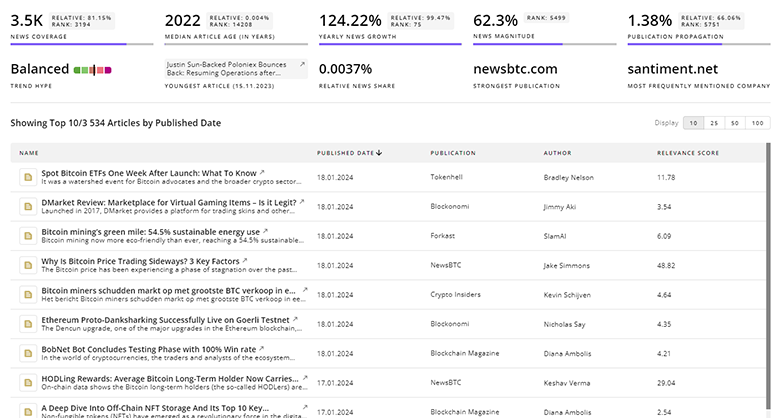
5.1K Deep Learning Neural Networks News Articles
Discover Latest Deep Learning Neural Networks Articles, News Magnitude, Publication Propagation, Yearly Growth, and Strongest Publications
Executive Summary
Deep learning neural networks now sit at a commercial inflection point where platform capability, compute economics, and domain specialization determine winners. The data shows sizable capital flows and optimistic market growth projections, which justify continued investment but also raise selection pressure: platform providers that reduce integration burden and deliver measurable cost savings will capture the largest enterprise contracts; niche vendors will thrive only if they bring defensible, measurable advantage (e.g. explainability, orders-of-magnitude efficiency, or vertical pre-training). For corporate strategy, prioritize (1) partnerships that embed your offering into lifecycle platforms, (2) measurable efficiency gains that lower TCO for customers, and (3) governance and explainability capabilities for regulated use cases.
We seek partnerships with industry experts to deliver actionable insights into trends and tech. Interested? Let us know!