Dna Analysis Report
: Analysis on the Market, Trends, and TechnologiesThe DNA analysis sector shows clear commercial momentum: the internal data records total funding raised of $3.67B for companies working on DNA analysis, signaling concentrated investor interest in specialized subsegments such as sequencing, diagnostics, and data platforms. Market projections vary by subsegment: the forensic segment was valued at roughly USD 3.5 billion in 2024 and forecasts an annual expansion in the mid single digits, while broader genetic-analysis and sequencing markets range from mid-single to high-teens CAGR depending on scope and methodology DNA Forensics MarketDNA Sequencing Market. These funding and market signals favor companies that combine fast, low-cost sample processing with AI-enabled interpretation and secure data handling; public sector procurement and clinical reimbursement materially influence near-term adoption.
We updated this report 347 days ago. Noticed something’s off? Let’s make it right together — reach out!
Topic Dominance Index of Dna Analysis
The Topic Dominance Index trendline combines the share of voice distributions of Dna Analysis from 3 data sources: published articles, founded companies, and global search
Key Activities and Applications
- Forensic identification and criminal casework — STR profiling, mixture interpretation, paternity and DVI (disaster victim identification) remain core use cases with sustained public funding for lab upgrades and rapid-DNA systems.
- Clinical diagnostics and oncology — DNA sequencing, liquid biopsy (cfDNA), and methylation assays drive early-detection and monitoring use cases that increase lab throughput and demand for validated panels DNA Diagnostics Market.
- Genotyping and pharmacogenomics — large-scale SNP and panel assays support precision prescribing and trial stratification, yielding recurring consumables revenue for providers.
- Environmental DNA (eDNA) monitoring — noninvasive biodiversity and invasive-species detection (water, soil) opens new public-sector and private conservation contracts.
- Point-of-need pathogen testing and food safety — microfluidic extraction and field workflows shorten time-to-action for food/environmental testing and reduce lab load.
- Archival DNA data storage (experimental) — proof-of-concept demonstrations and enzyme-based write/read R&D target ultra-dense, long-term archival use cases for specific sectors (media, government).
Emergent Trends and Core Insights
- Rapid, sample-to-answer systems move procurement cycles from capital equipment to consumables + service models. Law-enforcement demand for rapid STR profiles pushes procurement of integrated field units and drives a procurement pattern that rewards low-touch workflows and certified assays DNA Forensics Market.
> So what: vendors that package hardware, validated consumables, and recurring licensing for software will capture higher lifetime value per agency than one-time instrument sales. - AI and cloud bioinformatics scale interpretation work and shrink time-to-usable-result for NGS and complex mixture analysis; regulatory-validated, explainable models become differentiators for clinical and forensic customers.
> So what: companies that invest in explainability and audit logs reduce buyer risk and accelerate accreditation and reimbursement. - Liquid biopsy and methylation profiling expand screening and MRD monitoring; methylation assays show strong CAGR and attract clinical partnerships for oncology diagnostics.
> So what: clinical labs and platform vendors should prioritize assay sensitivity and standardized pipelines to win hospital contracts. - Miniaturized sample prep and microfluidics lower per-test cost and enable decentralized testing in food safety and environmental monitoring; this creates new channels outside classic lab customers.
- Data governance and secure sharing shape commercial options: blockchain and confidential-computing pilots address chain-of-custody and patient consent for multi-partner collaborations.
> So what: security features and provenance tracking become procurement criteria for large institutional buyers.
Technologies and Methodologies
- Short Tandem Repeat (STR) analysis — standard forensic marker set; still dominant for identity and chain-of-custody cases; evolving to NGS-based STR panels for higher resolution.
- Next-Generation Sequencing (NGS) and Massively Parallel Sequencing (MPS) — base technology for broad genomic panels, oncology panels, and forensic MPS workflows; drives consumables revenue and higher data volumes.
- Digital PCR (dPCR) and droplet dPCR — high precision quantification for low-abundance targets, viral-vector analytics, and copy-number calls.
- Probabilistic genotyping and automated mixture interpretation — software that reduces analyst subjectivity in complex forensic samples; a procurement hinge for forensic labs.
- Microfluidic sample prep and integrated extraction — reduces hands-on time for field and POC testing and enables on-site pathogen detection workflows.
- Nanopore and long-read sequencing — enables rapid, portable sequence reads and direct methylation detection; supports decentralized genomics and epigenetic assays.
- Synthetic DNA data storage (sequence- and structure-based) — research and prototyping with enzyme-based writing and readout using NGS; current limits remain cost and throughput DNA Data Storage Market.
- AI/ML in variant calling, methylation pattern recognition, and automated triage — enables scale in clinical pipelines and reduces expert time per sample.
Dna Analysis Funding
A total of 138 Dna Analysis companies have received funding.
Overall, Dna Analysis companies have raised $3.6B.
Companies within the Dna Analysis domain have secured capital from 477 funding rounds.
The chart shows the funding trendline of Dna Analysis companies over the last 5 years
Dna Analysis Companies
- ADNTRO GENETICS — ADNTRO provides consumer-facing genetic reports across health, ancestry and lifestyle and updates interpretive content as research evolves; the company targets accessible, affordable saliva testing and continuous report updates as its customer-retention mechanism. ADNTRO fits the direct-to-consumer trend and addresses demand for recurring interpretive services rather than one-off test sales. Its small team and recent Series C positioning indicate a stage where scaling interpretive software and privacy controls will determine margins.
- SimplexDNA — Spin-out from ETH Zürich, SimplexDNA focuses on environmental DNA (eDNA) workflows from sampling to bioinformatics to deliver biodiversity monitoring as a service. The company sells full workflow contracts to conservation and regulatory customers, which reduces buyer friction for agencies that lack in-house sequencing and analysis capacity. SimplexDNA’s niche aligns with rising public-sector budgets for ecological monitoring and repeat sampling contracts.
- CARE-DNA — CARE-DNA commercializes kits and sample workflows for circular DNA detection in plasma and tumors, with a clinical focus on postoperative prognosis and early relapse detection for pancreatic and lung cancer. Its platform targets a high-value clinical niche where sensitivity and validated clinical endpoints accelerate hospital adoption and reimbursement discussions. Early regulatory steps and partnerships with clinical centers will determine near-term commercial traction.
- Niba Labs — Niba Labs positions itself as an analytics specialist for cell and gene therapy, building multiplex digital PCR assays for vector characterization and genome integrity assessment. That focus maps to growing CDMO and bioprocessing needs in gene therapies, giving Niba Labs recurring service and assay development revenue with strong technical barriers to entry. Their emphasis on ddPCR and multiplex assays meets industry demand for precise quantitation in regulated manufacturing workflows.
Gain a better understanding of 755 companies that drive Dna Analysis, how mature and well-funded these companies are.
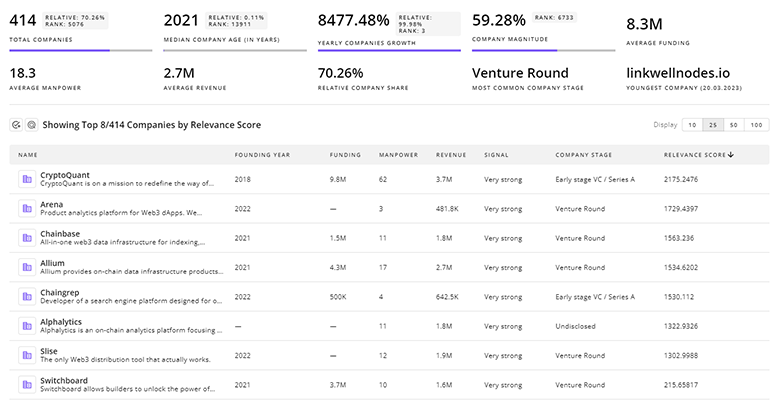
755 Dna Analysis Companies
Discover Dna Analysis Companies, their Funding, Manpower, Revenues, Stages, and much more
Dna Analysis Investors
Gain insights into 546 Dna Analysis investors and investment deals. TrendFeedr’s investors tool presents an overview of investment trends and activities, helping create better investment strategies and partnerships.
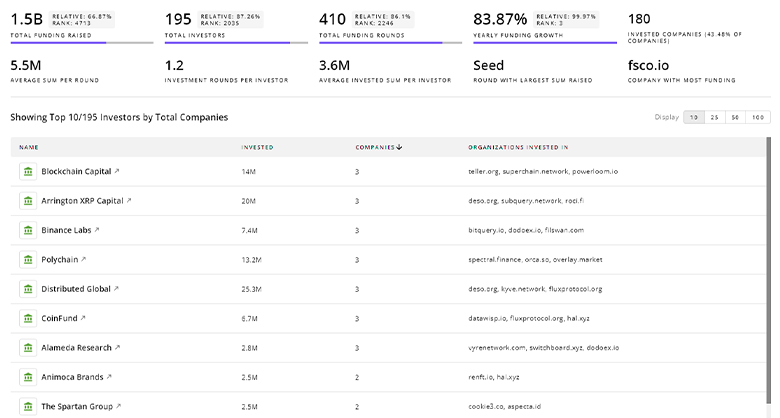
546 Dna Analysis Investors
Discover Dna Analysis Investors, Funding Rounds, Invested Amounts, and Funding Growth
Dna Analysis News
Gain a competitive advantage with access to 2.8K Dna Analysis articles with TrendFeedr's News feature. The tool offers an extensive database of articles covering recent trends and past events in Dna Analysis. This enables innovators and market leaders to make well-informed fact-based decisions.
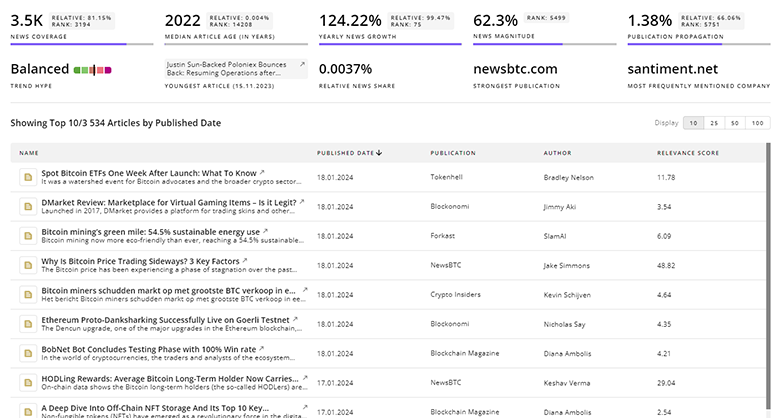
2.8K Dna Analysis News Articles
Discover Latest Dna Analysis Articles, News Magnitude, Publication Propagation, Yearly Growth, and Strongest Publications
Executive Summary
DNA analysis combines mature core methods with fast-moving, data-driven extensions. Forensics and genotyping keep steady demand backed by public budgets and legal use cases, while sequencing and diagnostic platforms present faster growth and recurring consumables revenue. The competitive advantage lies with organizations that align three capabilities: validated sample workflows (fast, low-error), scalable interpretation (AI with explainability and auditability), and data governance (secure, auditable sharing). Investors and managers should prioritize tightly scoped proofs-of-value that map to procurement cycles (public or clinical), protect data provenance, and structure revenue around consumables and recurring analytics services rather than one-off instrument sales. Companies that execute along these vectors will convert current funding and market interest into durable market share.
We seek partnerships with industry experts to deliver actionable insights into trends and tech. Interested? Let us know!