Drug Discovery Report
: Analysis on the Market, Trends, and TechnologiesThe drug discovery sector is moving from isolated experiments to integrated, data-led pipelines where platforms that combine AI with human-relevant biology capture outsized value: market analysis reports show a projected CAGR of 15.3% for drug discovery growth, evidencing rapid commercial momentum. Early evidence indicates AI-first workflows materially shorten preclinical timelines by 30–50% and improve hit rates, making timeline compression and risk reduction the primary levers for near-term commercial success Biopharma Trends 2025. This report synthesizes patent activity, technology adoption, screening evolution, and company positioning to show where capital, partnerships, and operational change will deliver the next wave of clinically relevant assets.
We updated this report 39 days ago. Noticed something’s off? Let’s make it right together — reach out!
Topic Dominance Index of Drug Discovery
The Topic Dominance Index trendline combines the share of voice distributions of Drug Discovery from 3 data sources: published articles, founded companies, and global search
Key Activities and Applications
- Human-relevant phenotypic screening (organoids / 3D cell culture): Organizations are shifting early safety and efficacy testing to organoid and microphysiological systems to reduce clinical attrition and generate higher-fidelity training data for predictive models Latest Trends in Drug Discovery and Development 2026.
- AI-driven target identification and de-novo molecule generation: Generative models and multi-omics integration identify novel targets and propose candidates across vast chemical space, turning hypothesis generation into high-throughput design cycles.
- Ultra-large virtual and DEL screening as data engines: DNA-Encoded Libraries and ultra-large virtual screening pipelines serve not only hit discovery but also data creation for ML retraining loops, shifting value from one-off hits to continuous model improvement.
- Multi-parameter ADME/Tox prioritization earlier in the funnel: Integrating ADME/Tox prediction into hit-to-lead reduces downstream failures and converts screening outputs into clinically actionable candidates faster.
- Targeted modality expansion (TPD, RNA ligands, conjugates): Investment flows toward modalities that render previously intractable biology druggable, notably targeted protein degradation, RNA-binding small molecules, ADCs, and induced-proximity approaches.
- Data-centric repurposing and indication matching: Systematic repurposing engines and curated real-world/genomic datasets are being used to identify faster clinical paths for compounds with known safety profiles Every Cure.
Emergent Trends and Core Insights
- Platformization around closed-loop discovery: Winning companies combine generative AI, automated synthesis/robotics, and rapid biological readouts to form closed-loop discovery platforms that iterate candidate design and validation continuously TandemAI.
- Precision oncology and biomarker-first approvals are reshaping indication strategies: biomarker-driven and tumor-agnostic approvals account for a substantial share of oncology approvals, changing how pipelines are structured and how clinical populations are defined Clarivate Identifies Eleven Potential Blockbuster and Transformative Therapies.
- Differential prediction and safety first scoring: Patent trends and platform roadmaps emphasize scoring candidates for both target engagement and anti-target liabilities early to reduce the >90% historical failure funnel between preclinical and approval.
- Quantum-informed physics integration: Select teams are layering quantum-mechanics simulations into ML pipelines to improve binding energy accuracy and reduce false positives in virtual screening.
- CROs must evolve into differentiated, tech-enabled partners: Large, traditional CROs face margin pressure unless they integrate proprietary datasets or platform services; integrated providers that can offer end-to-end discovery retain pricing power Sygnature Discovery.
- Data as the strategic asset: The most durable moat is exclusive, high-quality biological datasets that feed generative models and inform translational decisions—companies that secure and standardize these datasets will command premium valuations.
Technologies and Methodologies
- Generative AI for de-novo chemistry and peptides: Multi-objective generative models and foundation models for proteins accelerate ideation for small molecules, peptides, and biologics.
- Organoids and microphysiological systems for predictive preclinical testing: These systems supply more human-relevant endpoints for ADME/Tox and efficacy, improving model transferability into clinic.
- DNA-Encoded Libraries (DEL) and mass-spec integration: DELs scale hit generation and, combined with mass spectrometry readouts, become high-throughput data creators for ML pipelines.
- Physics-aware docking and QM/MM simulations: High-fidelity scoring using physics models is being incorporated to reduce false positives and prioritize chemically feasible candidates.
- Spatial biology and single-cell multi-omics: These tools map cellular dysfunction and reveal non-intuitive targets that system-level AI can exploit.
- Automated chemistry and robotics: Rapid synthesis platforms paired with neuro-symbolic planners shorten design-make-test cycles and feed results back to learning engines.
Drug Discovery Funding
A total of 2.8K Drug Discovery companies have received funding.
Overall, Drug Discovery companies have raised $367.3B.
Companies within the Drug Discovery domain have secured capital from 12.2K funding rounds.
The chart shows the funding trendline of Drug Discovery companies over the last 5 years
Drug Discovery Companies
- PharmAI Discovery — PharmAI Discovery operates an end-to-end AI platform combining deterministic AI, medicinal chemistry, and experimental validation that claims screening of 300M compounds and delivery of IND-ready assets 18 months faster with a 10× higher hit rate; the team positions speed and in-vivo validation as product differentiators for challenging protein-protein interactions. PharmAI Discovery targets precision theranostics workflows and emphasizes radiolabel-aware optimization to accelerate candidate readiness.
- Synfini, Inc. — Synfini couples neuro-symbolic AI with automated chemistry and discovery robotics to support agile molecular discovery, positioning itself as a rapid synthesis + design partner for projects requiring tight iteration between model hypotheses and experimental output. The platform is built on patented automated synthesis methods and emphasizes reduced cycle time for lead optimization, marketed to both pharma and emerging biotech teams.
- PhoreMost Ltd — PhoreMost focuses on expanding druggable space via its SITESEEKER® platform and proprietary PROTEINi® libraries to reveal and validate new targets, especially for oncology and other unmet disease areas; the company couples target ID with the practical chemistry path to drugging previously inaccessible pockets. Its strategy centers on partnership to scale discovery programmes and co-develop novel modality pipelines.
- Anyo Labs — Anyo Labs offers highly efficient virtual screening and de-novo small-molecule generation engines aimed at cost-sensitive early discovery programs; the company emphasizes computational throughput and correlation of PPI signals across hundreds of proteins to surface non-obvious hits. Anyo Labs targets biotech partners needing expansive in-silico exploration before committing synthesis budget.
- Delta4ai — Delta4 applies its Hyper-C analytics platform to systematically repurpose known drugs for rare diseases and hard-to-serve indications, using iterative in-silico/experimental cycles and clinical-grade matching to accelerate translational pathfinding; the model reduces regulatory and safety risk by prioritizing compounds with known human safety histories. Delta4's approach targets rapid proof-of-concept trials and philanthropic or grant-funded pipelines for rare disease.
Each company description above draws on company filings and platform claims contained in corporate profiles to show how specific capabilities map to the key activities documented earlier.
Gain a better understanding of 7.2K companies that drive Drug Discovery, how mature and well-funded these companies are.
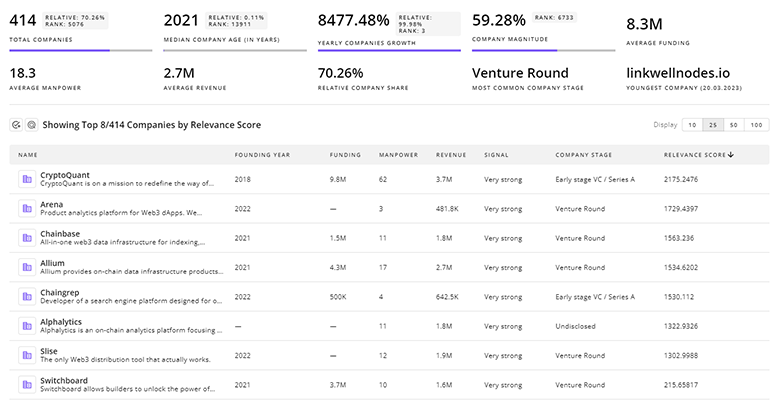
7.2K Drug Discovery Companies
Discover Drug Discovery Companies, their Funding, Manpower, Revenues, Stages, and much more
Drug Discovery Investors
Gain insights into 9.9K Drug Discovery investors and investment deals. TrendFeedr’s investors tool presents an overview of investment trends and activities, helping create better investment strategies and partnerships.
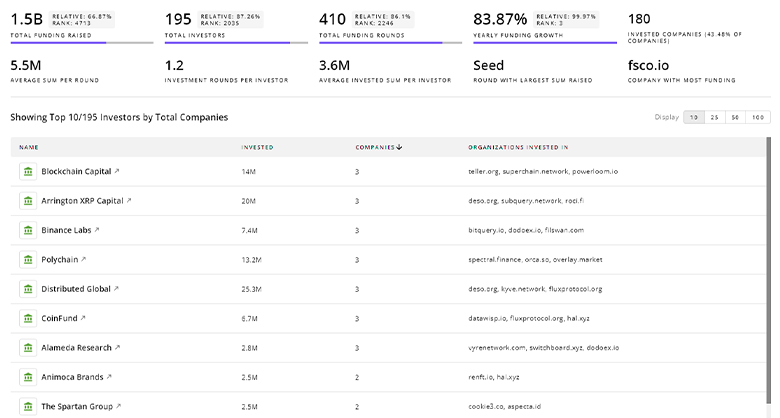
9.9K Drug Discovery Investors
Discover Drug Discovery Investors, Funding Rounds, Invested Amounts, and Funding Growth
Drug Discovery News
Gain a competitive advantage with access to 32.9K Drug Discovery articles with TrendFeedr's News feature. The tool offers an extensive database of articles covering recent trends and past events in Drug Discovery. This enables innovators and market leaders to make well-informed fact-based decisions.
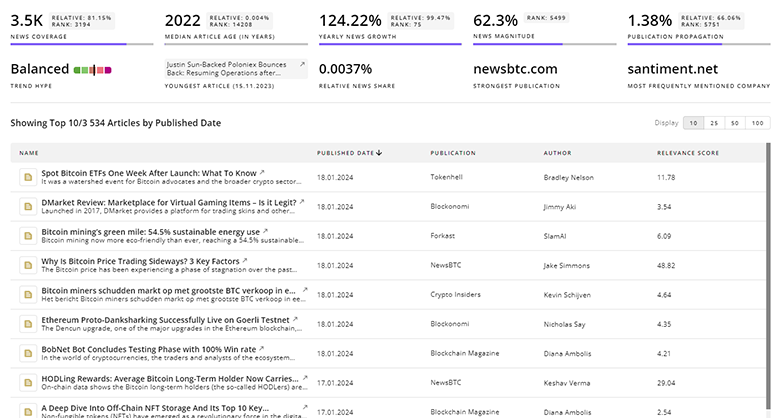
32.9K Drug Discovery News Articles
Discover Latest Drug Discovery Articles, News Magnitude, Publication Propagation, Yearly Growth, and Strongest Publications
Executive Summary
The current investment and innovation pattern makes clear that drug discovery winners will be those who convert predictive models into validated clinical candidates faster and more reliably than rivals. Businesses should prioritize three strategic moves: secure proprietary, high-quality biological datasets; deploy closed-loop platforms that couple design with rapid synthesis and human-relevant testing; and diversify modality capabilities to include TPD, RNA-targeting, and conjugates. For investors and corporate strategists, the immediate opportunity lies in funding and partnering with firms that demonstrate repeatable speed-to-lead metrics and defensible data moats, while operational leaders should reallocate capital from isolated point solutions to integrated discovery stacks that measurably reduce preclinical uncertainty.
We seek partnerships with industry experts to deliver actionable insights into trends and tech. Interested? Let us know!