
Ecotourism Report
: Analysis on the Market, Trends, and TechnologiesThe ecotourism sector is moving from niche practice to high-growth market driven by measurable sustainability tools and consumer preference for verified impact: the internal trend analysis records a market compound growth indicator of 7.4% which frames investment and product decisions for the next decade. Multiple market reports show larger-scale projections and diverging scenarios—some forecasts place global revenue in the low-hundreds of billions today rising toward $500B–$1.1T by the 2030s—creating a strategic window for technology providers, certification platforms, and community-integrated operators to capture value while driving measurable conservation outcomes Ecotourism Market Report.
This article was last updated 268 days ago. If you find any info is missing, let us know!
Topic Dominance Index of Ecotourism
The Dominance Index of Ecotourism looks at the evolution of the sector through a combination of multiple data sources. We analyze the distribution of news articles that mention Ecotourism, the timeline of newly founded companies working in this sector, and the share of voice within the global search data
Key Activities and Applications
- Community-based cultural immersion tours — direct revenue-sharing arrangements and locally managed lodging that route a higher percentage of visitor spend to Indigenous Peoples and Local Communities (IPLCs), supporting livelihoods and conservation incentives.
- Conservation volunteering and habitat work — short and long-stay programs that combine fundraising for projects with on-the-ground labour (reef restoration, reforestation) and generate verifiable ecological outcomes used for corporate partnerships and reporting.
- Low-impact mobility and micro-mobility services — integration of electric shuttles, e-bikes, and rail-first itineraries to reduce transport emissions at destination and ease congestion in sensitive areas.
- Certified eco-accommodation and operational efficiency — ecolodges, tiny homes and modular eco-resorts that combine renewable energy, water savings, and behavioural nudges to lower per-guest resource use and operating costs (examples show measurable hotel water reductions of 20%).
- Digital MRV and monetizable nature finance — platforms converting conservation outcomes into verifiable credits (biodiversity/biocredits) and transparent carbon-co-benefit products, enabling travel brands to fund and market direct ecosystem benefits.
Emergent Trends and Core Insights
- Platformed verification is the new currency. Demand now favours services that provide auditable Measurement, Reporting and Verification (MRV) of ecological and social outcomes; this is redefining trust in booking channels and certification schemes.
- Two-path carbon strategy is forming. One path continues high-volume offsets and guest-level compensation; the other invests in higher-value, monitored biodiversity credits and restoration projects that firms can report as co-benefits for communities and habitats.
- Eco-luxury converts margin into impact. High-yield consumers accept premium pricing when properties can demonstrate low physical impact and measurable restoration or community benefit; this supports a distinct eco-luxury segment with pricing power.
- Digital twin and predictive resource management are maturing. Asset valuation is shifting to include a property's real-time sustainability performance and projected environmental load; owners who expose that data capture higher OTA visibility and institutional interest.
- Experience-product fragmentation increases. Market share concentrates in infrastructure and certification platforms while experience operators remain fragmented, creating acquisition opportunities for platforms seeking supply depth
Technologies and Methodologies
- AI/ML for personalized low-impact itineraries — preference matching and route optimization reduce environmental load while increasing guest satisfaction and yield; AI also underpins predictive carrying-capacity models that guide dynamic access control.
- Blockchain-enabled provenance and MRV — immutable ledgers for carbon and biodiversity credits, and for transparent revenue-sharing with hosts, reduce greenwashing risk and improve corporate reporting quality.
- IoT networks and digital twins — lodge and trail sensor arrays feed real-time dashboards for energy, water and visitor-flow management; these feed predictive maintenance and pricing mechanisms tied to ecological carrying capacity.
- Remote sensing and digital MRV — satellite and drone monitoring combined with on-site sensors provide near-real-time verification for restoration and biodiversity credits, enabling tradable, impact-grade products.
- Behavioural-science interventions — gamified guest engagement and staff nudges produce measurable resource reductions and can be quantified as operational savings and impact metrics for investors and certifiers.
Ecotourism Funding
A total of 171 Ecotourism companies have received funding.
Overall, Ecotourism companies have raised $2.9B.
Companies within the Ecotourism domain have secured capital from 461 funding rounds.
The chart shows the funding trendline of Ecotourism companies over the last 5 years
Ecotourism Companies
- Luniwave — Luniwave offers a turnkey hotel solution that uses behavioural science to reduce guest water use by 20% and converts savings into measurable CO2 reductions and cost savings for operators; the model demonstrates how modest tech investment drives both sustainability and profit for hospitality firms
- Boosterra.io — Boosterra builds biocredit products monitored with satellites and AI, packaging high-value biodiversity credits for corporate buyers that require science-grade outcomes and community benefit; its digital MRV model positions it as an anchor supplier for nature-positive travel finance
- Forest Impact — Forest Impact specializes in rapid native-forest creation using the Miyawaki Method, coupled with urban engagement programmes that produce visible CSR outputs and local activation; the company ties neighborhood planting projects to brand stakeholder engagement and long-term stewardship
- RUPU — RUPU designs e-mobility tours and self-guided micro-mobility experiences (e-bikes) to reduce destination congestion and transport emissions, packaging scalable, low-carbon last-mile solutions for coastal and rural destinations
- NatureEye — NatureEye monetizes remote access via guided drone tours that bring live habitat and wildlife experiences to remote audiences while routing 50% of ticket revenues back to conservation partners, illustrating non-intrusive revenue streams for fragile sites
Uncover actionable market insights on 4.4K companies driving Ecotourism with TrendFeedr's Companies tool.
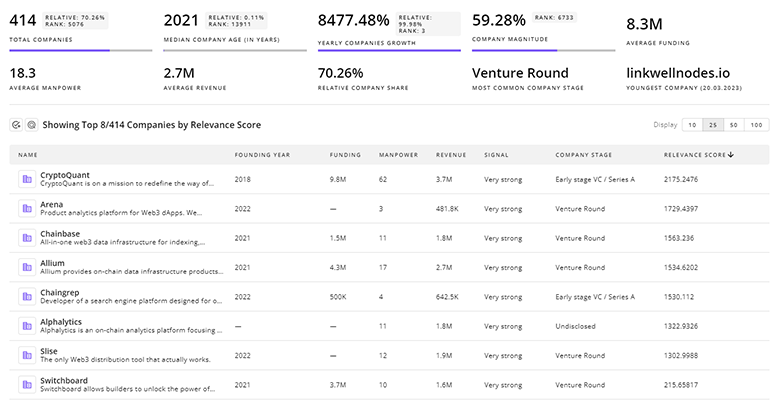
4.4K Ecotourism Companies
Discover Ecotourism Companies, their Funding, Manpower, Revenues, Stages, and much more
Ecotourism Investors
Get ahead with your investment strategy with insights into 419 Ecotourism investors. TrendFeedr’s investors tool is your go-to source for comprehensive analysis of investment activities and financial trends. The tool is tailored for navigating the investment world, offering insights for successful market positioning and partnerships within Ecotourism.
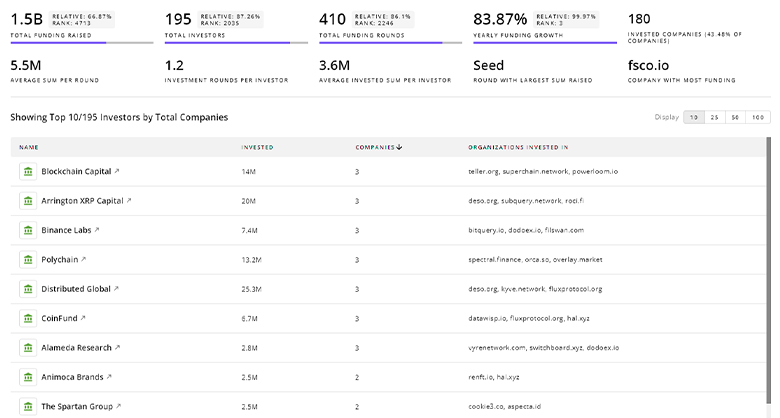
419 Ecotourism Investors
Discover Ecotourism Investors, Funding Rounds, Invested Amounts, and Funding Growth
Ecotourism News
TrendFeedr’s News feature offers access to 2.7K news articles on Ecotourism. The tool provides up-to-date news on trends, technologies, and companies, enabling effective trend and sentiment tracking.
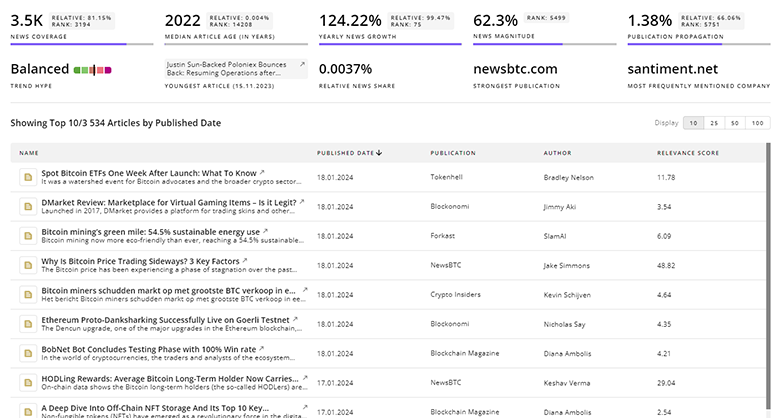
2.7K Ecotourism News Articles
Discover Latest Ecotourism Articles, News Magnitude, Publication Propagation, Yearly Growth, and Strongest Publications
Executive Summary
Ecotourism now competes on hard outcomes rather than narratives. Firms that master auditable MRV, integrate low-carbon mobility, and align guest experiences with measurable ecological and social benefits will convert consumer willingness to pay into defensible revenue streams. The market's projected multi-hundred-billion expansion creates distinct strategic plays: (1) scale verification infrastructure (AI, MRV, blockchain) to become the platform of trust; (2) secure unique regenerative assets and community partnerships that produce non-replicable impact data; and (3) productize low-cost operational efficiencies (water, energy, waste) that deliver immediate margin improvement. Operators and investors must prioritize the datasets and governance needed to measure and monetize impact if they want to move from promise to audited performance.
Have expertise in trends or technology? Your input can enrich our content — consider collaborating with us!