Electric Vehicles Infrastructure Report
: Analysis on the Market, Trends, and TechnologiesThe electric vehicles infrastructure market is at a decisive investment inflection: it measured $19,950,000,000 in 2025 and is projected to reach $35,730,000,000 by 2031 at a 10.2% CAGR, forcing a shift from counting chargers to monetizing grid-integrated energy services.
This article was last updated 236 days ago. If you find any info is missing, let us know!
Topic Dominance Index of Electric Vehicles Infrastructure
The Dominance Index of Electric Vehicles Infrastructure looks at the evolution of the sector through a combination of multiple data sources. We analyze the distribution of news articles that mention Electric Vehicles Infrastructure, the timeline of newly founded companies working in this sector, and the share of voice within the global search data
Key Activities and Applications
- Public and highway DC fast-charger rollouts focused on closing long-distance coverage gaps while meeting mandated corridor siting and uptime requirements; project scale and public funding are central to deployment economics.
- Fleet depot electrification and high-power hub construction that pair megawatt-class charging with site power procurement, scheduling and modular on-site buffering to avoid costly utility upgrades.
- Residential and multi-family on-street solutions (cross-pavement channels and curb-integrated pedestals) to serve the large population segment without private driveways and to reduce adoption barriers in dense urban markets.
- Mobile, off-grid and rapid-deployment charging for ad hoc demand, events and underserved geographies using battery-powered mobile chargers and containerized hubs that enable near-instant capacity increases without long interconnection lead times.
- Energy management and V2X services where chargers and vehicles are orchestrated into distributed energy resources that deliver demand-response, peak shaving and ancillary revenue to site owners and utilities.
Emergent Trends and Core Insights
- From hardware to energy platforms. Asset owners and operators increasingly prioritize software and energy monetization (demand charge management, market participation) above unit-count expansion, pressuring pure-hardware margins EVgo Services.
- High-power DC and depot megawatts. The growth vector is concentrated at 150–900 kW architectures and multi-charger megawatt sites for fleets; site planning now centers on power staging and energy buffering rather than pole counts.
- Bidirectional charging moves to production pilots. Vehicle-to-Grid and Vehicle-to-Building implementations are shifting from trials into commercial use cases that capture utility payments and reduce fleet operating costs.
- Localized energy buffering as an enabler. On-site battery systems and containerized energy reservoirs let operators deliver ultra-fast charging without waiting for long utility upgrades, shortening deployment timelines and lowering up-front grid costs.
- Regional model divergence. Asia-Pacific leads in installed base while North America is accelerating high-power corridor and depot deployments funded by public programs, so business models and unit economics vary materially by geography Electric Vehicle (EV) Infrastructure Market Report.
Technologies and Methodologies
- Dynamic Load Management (DLM) and AI forecasting for per-site demand shaping and to minimize demand-charge exposure while maximizing throughput and uptime.
- Integrated battery energy storage at charging sites used for peak shaving, energy arbitrage and rapid current injection to support multiple simultaneous high-power sessions without immediate grid reinforcement.
- High-power DC fast-charger modular architectures (liquid cooling, shared power cabinets, and multi-gun dispensing) designed for rapid serviceability and incremental capacity expansion.
- Wireless and automated conductive charging for transit and logistics that remove human plug-in friction and lay foundational tech for autonomous vehicle operations.
- Location intelligence and geospatial site scoring employing 100+ parameters to prioritize installs where utilization, grid access and revenue potential align, replacing manual site selection.
Electric Vehicles Infrastructure Funding
A total of 664 Electric Vehicles Infrastructure companies have received funding.
Overall, Electric Vehicles Infrastructure companies have raised $55.0B.
Companies within the Electric Vehicles Infrastructure domain have secured capital from 2.2K funding rounds.
The chart shows the funding trendline of Electric Vehicles Infrastructure companies over the last 5 years
Electric Vehicles Infrastructure Companies
- Volteum — Volteum provides fleet electrification analytics and operations software that generates charger-siting plans and TCO analyses tailored for fleets transitioning to electric. Their Electric Fleet Planner maps vehicle duty cycles to charger requirements and the Electric Fleet Operations product schedules charging to reduce demand charges and downtime. This focus on pre-deployment planning plus daily operations positions Volteum as a firm addressing the planning-to-operations gap for mid-size fleets. Volteum investment and product details are documented in their company profile.
- Bia — Bia offers AI-driven smart charging software for fleets and utilities, concentrating on load forecasting, energy optimization and uptime improvements for eBus and HDV depots. Their hardware-agnostic platform reduces integration friction and enables utilities to monetize EV load flexibility as a grid service. The company's recent commercial traction and product positioning are described in their profile.
- Enerva Generic — Enerva Generic targets ultra-fast, fleet-oriented hubs in the UAE with megawatt-scale charging clusters and AI-based load orchestration to maximize depot throughput. The company's pitch explicitly couples multi-payment support and rapid hub deployment to capture high-utilization fleet business, reflecting the premium on energy optimization for commercial operators.
- Gul-e — Gul-e provides a practical cross-pavement cable channel and curb-integrated solution to deliver home charging to households without driveways, addressing an urban access failure mode that slows retail EV adoption. Their local authority trials demonstrate a low-disruption approach to expanding residential charging access in dense neighborhoods.
- Zero Carbon Charge — Zero Carbon Charge develops off-grid, solar-plus-storage charging hubs for regions with constrained grid infrastructure, using localized generation to enable EV access in underserved markets; the model reduces dependency on long interconnection timelines and drives local energy resilience. Their public-facing pilot and funding structure are described in the company dossier.
Uncover actionable market insights on 3.6K companies driving Electric Vehicles Infrastructure with TrendFeedr's Companies tool.
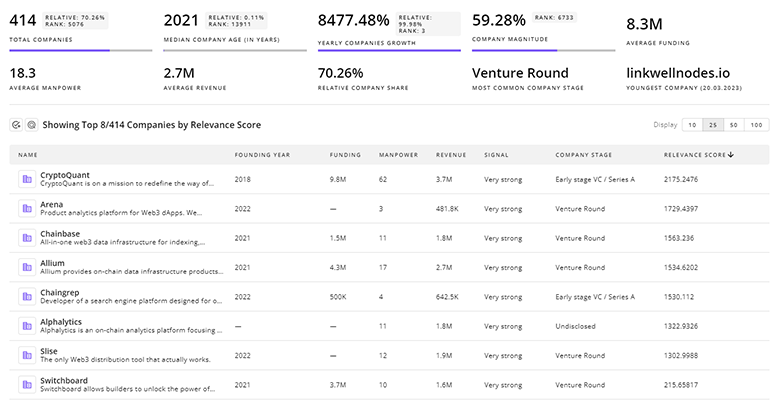
3.6K Electric Vehicles Infrastructure Companies
Discover Electric Vehicles Infrastructure Companies, their Funding, Manpower, Revenues, Stages, and much more
Electric Vehicles Infrastructure Investors
Get ahead with your investment strategy with insights into 2.2K Electric Vehicles Infrastructure investors. TrendFeedr’s investors tool is your go-to source for comprehensive analysis of investment activities and financial trends. The tool is tailored for navigating the investment world, offering insights for successful market positioning and partnerships within Electric Vehicles Infrastructure.
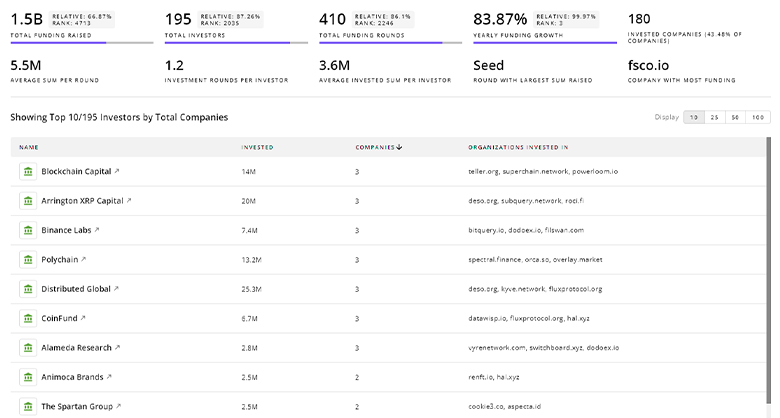
2.2K Electric Vehicles Infrastructure Investors
Discover Electric Vehicles Infrastructure Investors, Funding Rounds, Invested Amounts, and Funding Growth
Electric Vehicles Infrastructure News
TrendFeedr’s News feature offers access to 6.7K news articles on Electric Vehicles Infrastructure. The tool provides up-to-date news on trends, technologies, and companies, enabling effective trend and sentiment tracking.

6.7K Electric Vehicles Infrastructure News Articles
Discover Latest Electric Vehicles Infrastructure Articles, News Magnitude, Publication Propagation, Yearly Growth, and Strongest Publications
Executive Summary
The infrastructure question has moved from "how many chargers" to "how to make chargers pay." Market economics now value software, energy buffering and grid participation as much as power electronics. Operators that combine modular, quickly deployed hardware with intelligent energy orchestration will convert public funding and transient grid constraints into sustainable revenue streams. For private investors and fleet owners, the prudent path is to prioritize projects that demonstrate quantifiable reductions in demand-charge exposure, verifiable uptime, and clear routes to ancillary or market participation revenues. Strategic differentiation will come from integration depth with utilities, site-level energy assets, and proven location intelligence that ensures every deployed asset hits utilization thresholds required for financial durability.
Have expertise in trends or technology? Your input can enrich our content — consider collaborating with us!