Electronic Waste Management Report
: Analysis on the Market, Trends, and TechnologiesThe global electronic waste management market is already large and accelerating: the internal trend report records a 2024 market size of $ 80,000,000,000 and a documented market CAGR of 14.7%. Secondary industry studies confirm rising volumes (reports cluster around 52–70 million metric tons of e-waste in recent baseline years) and diverging market-value forecasts that imply heavy investor appetite for process- and material-capture innovations researchandmarkets – Electronic Waste Management, 2023. The commercial opportunity is defined less by simple scale than by three simultanous constraints: (1) collection and formalization of feedstock, (2) unit-cost and energy intensity of high-purity recovery (notably batteries and printed circuit boards), and (3) enterprise demand for provable data destruction and chain-of-custody records; firms that operationalize verified asset tracking and materially higher recovery yields will capture the premium margin pools highlighted across market reports.
This article was last updated 2 days ago. If you find any info is missing, let us know!
Topic Dominance Index of Electronic Waste Management
The Dominance Index of Electronic Waste Management looks at the evolution of the sector through a combination of multiple data sources. We analyze the distribution of news articles that mention Electronic Waste Management, the timeline of newly founded companies working in this sector, and the share of voice within the global search data
Key Activities and Applications
- Collection and Reverse Logistics — Municipal drop-offs, retail take-back, and corporate ITAD channels remain the primary ingestion points; scaling formal collection is the immediate gating factor for higher recovery yields researchandmarkets – North America E-Waste Management, 2025.
- Secure IT Asset Disposition (ITAD) & Data Destruction — Certified erasure, on-site shredding and NAID/industry-grade certificates are contract preconditions for enterprise customers and are monetizable via premium service fees.
- Component-Level Dismantling and Refurbishment — Manual grading, tested refurbishment and remarketing recover value before material recycling; this activity reduces feedstock complexity for downstream processing and generates recurring resale revenue.
- High-Purity Material Recovery (Urban Mining) — Targeted chemical and metallurgical treatment of PCBs and battery black mass is the highest long-term value driver, since metal purity and targeted extraction determine feedstock value to manufacturers.
- Hazardous Residue Management & Energy Recovery — Safe handling of toxic fractions, plus waste-to-energy routes for non-recyclable fractions, complete the value chain in integrated facilities.
Emergent Trends and Core Insights
- Regulation-led demand for traceability and EPR services — Policy tightening (EU WEEE/EPR variants, state bills in the U.S. national schemes in APAC) converts regulatory compliance into recurring revenue for licensed providers and platform operators.
- Digital chain-of-custody as a procurement requirement — Buyers demand verifiable disposal and audit trails; cloud tracking, QR/RFID tagging and blockchain proofs shift value to operators that supply auditable certificates.
- Material-specific metallurgy is the commercial moat — Hydrometallurgical and selective leaching processes for battery active materials and PCBs are emerging as the decisive technical differentiator; patents point to sequential, high-purity extraction workflows as the next step beyond bulk smelting (battery codes Y02W30/84 are prominent).
- Data security is a distinct monetizable service — Secure and provable data destruction (on-site shredding, cryptographically anchored certificates) commands margins that can exceed commodity metal recovery in enterprise contracts.
- Geographic concentration of deep IP and scale in East Asia — Patent filings and heavy industrial deployments cluster in China and neighbouring jurisdictions, implying that hardware-centric scaling will be fastest there, while service/platform plays will win in regulated Western markets marketdataforecast – Global E-Waste Management Market.
Technologies and Methodologies
- AI-enabled optical sorting and robotic disassembly — Vision systems plus ML model libraries that classify device types and guide soft-grip disassembly materially increase component recovery rates and reduce manual exposure to hazardous streams.
- Hydrometallurgy and closed-loop chemical regeneration — Iterative leaching and targeted precipitation sequences allow sequential separation (cobalt, nickel, copper) from battery powders and improve the economics of battery material recycling.
- Plasma gasification and thermal pulsed plasma — Thermal processes handle mixed, non-recoverable fractions and provide energy recovery options that reduce landfill disposal; selective adoption depends on emissions controls and local permitting.
- Electrochemical metal capture — Electrochemical reactors that plate high-grade copper or other metals from process effluents reduce sludge and downstream handling costs and create new revenue streams from metal sale.
- Bio-hydrometallurgy / bioleaching pilots — Microbial and enzymatic approaches aim to lower environmental footprint for selective metals but require scale demonstration to compete with chemical leaching.
Electronic Waste Management Funding
A total of 563 Electronic Waste Management companies have received funding.
Overall, Electronic Waste Management companies have raised $24.7B.
Companies within the Electronic Waste Management domain have secured capital from 1.6K funding rounds.
The chart shows the funding trendline of Electronic Waste Management companies over the last 5 years
Electronic Waste Management Companies
- Minimise — Minimise operates a documented collection and verification platform that aggregates and vets formal recyclers across seven Global South countries and provides manufacturers traceable proof of recycling; the model reduces supplier friction for OEMs that need verified credits and product-level reporting. Minimise emphasizes up-skilling and formalization of local collectors while monetizing verified documentation for producer clients.
- GKAT Reclamation — GKAT Reclamation uses a proprietary, closed-loop non-thermal process for reclaiming lead and other heavy metals from legacy CRT glass; the technique reduces energy intensity compared with smelting and targets difficult streams that large recyclers typically avoid, creating a specialty feedstock business for glass and lead processors. GKAT Reclamation positions itself as a final-destination partner for niche, hard-to-process fractions.
- ElectraMet — ElectraMet commercializes an electrochemical capture system that plates dissolved copper and other metals from process streams, offering a lower-footprint alternative to chemical precipitation and sludge handling; the system targets microelectronics, battery black mass refinement and semiconductor wastewater remediation, converting treatment waste into saleable metal plates. ElectraMet‘s analytics and lower sludge generation claim improve operating costs on a per-ton basis.
- Ewastec Pty Ltd — Ewastec Pty Ltd runs a manual, high-diversion facility in Victoria that pairs high recovery targets (internal goal >97%) with a social employment model that hires people with disabilities; the company’s approach combines careful manual sorting for commodity integrity with a strong ESG narrative that wins municipal and institutional contracts in Australia. Ewastec demonstrates how social outcomes can form an explicit procurement advantage.
- E-RECIKLAŽA 2010 d.o.o. — E-RECIKLAŽA is the largest WEEE recycler in the Balkan region, operating multi-ton throughput facilities and offering free delivery within Serbia; its regional scale and integrated logistics allow it to secure steady feedstock contracts from municipal and industrial clients, while focusing on mechanical separation and downstream metal sale streams. E-RECIKLAŽA illustrates the economic logic of regional consolidation where logistical density and local compliance matter.
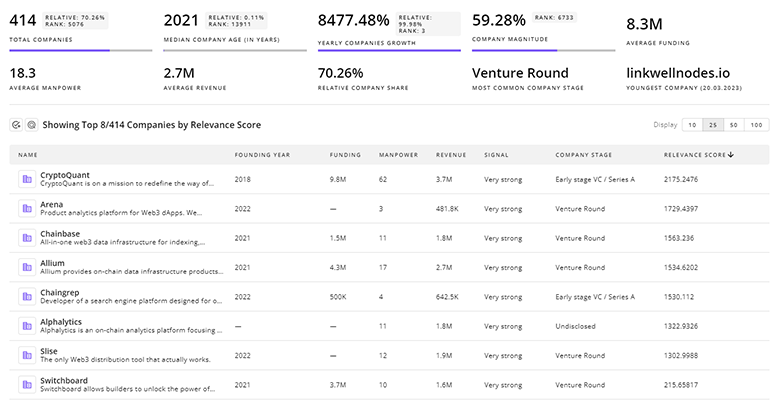
Uncover actionable market insights on 7.0K companies driving Electronic Waste Management with TrendFeedr's Companies tool.
7.0K Electronic Waste Management Companies
Discover Electronic Waste Management Companies, their Funding, Manpower, Revenues, Stages, and much more
Electronic Waste Management Investors
Get ahead with your investment strategy with insights into 1.9K Electronic Waste Management investors. TrendFeedr’s investors tool is your go-to source for comprehensive analysis of investment activities and financial trends. The tool is tailored for navigating the investment world, offering insights for successful market positioning and partnerships within Electronic Waste Management.
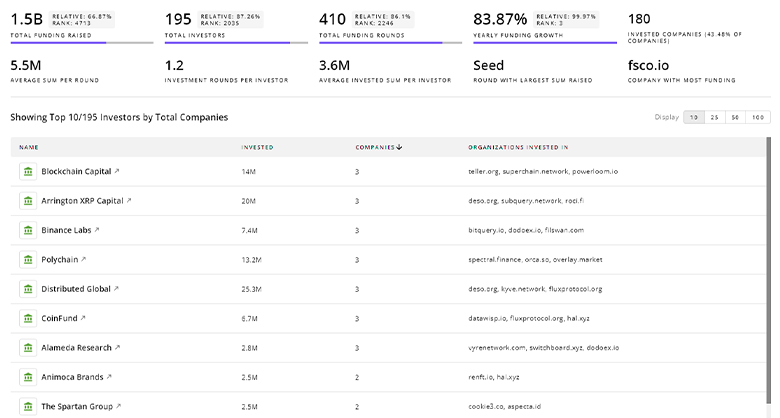
1.9K Electronic Waste Management Investors
Discover Electronic Waste Management Investors, Funding Rounds, Invested Amounts, and Funding Growth
Electronic Waste Management News
TrendFeedr’s News feature offers access to 4.7K news articles on Electronic Waste Management. The tool provides up-to-date news on trends, technologies, and companies, enabling effective trend and sentiment tracking.
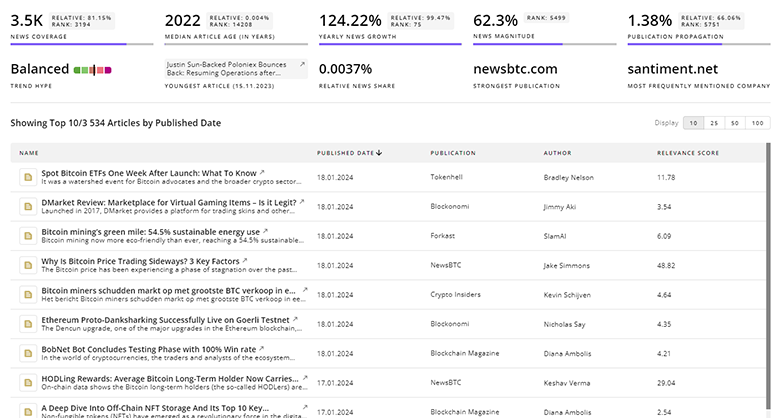
4.7K Electronic Waste Management News Articles
Discover Latest Electronic Waste Management Articles, News Magnitude, Publication Propagation, Yearly Growth, and Strongest Publications
Executive Summary
The market for electronic waste management is driven by rising e-waste volumes and by regulatory and commercial pressures that favor certified, auditable, and material-efficient operators. Short-term returns reward players that secure and formalize feedstock and offer verifiable ITAD and data destruction services. Medium-term margins shift to organizations that invest in targeted metallurgy and low-energy separation technologies for batteries and PCBs. Strategically, decision makers should prioritize (1) capture and proof of compliant feedstock flows, (2) modular investments in selective recovery technologies that can be integrated into existing facilities, and (3) commercial models that bundle data security certification with material recovery to convert compliance into differentiated revenue. These moves position firms to extract the highest available value from the expanding but complex e-waste stream.
Have expertise in trends or technology? Your input can enrich our content — consider collaborating with us!