Fermentation Report
: Analysis on the Market, Trends, and TechnologiesThe fermentation sector sits at a clear inflection point: demand for advanced fermenters reached USD 1,800,000,000 in 2025 and process equipment is forecast to expand with mid-single-digit CAGRs across adjacent markets, creating near-term capacity and scaling decisions that will determine winners and losers in food, ingredients, fuels, and industrial chemicals Global Fermenters Market Report Fermentation Chemicals Market. This report synthesizes the available market, patent, company, and technical data to highlight where value pools form, which technologies reduce cost-per-unit, and which company profiles are best aligned to capture emerging opportunities.
This article was last updated 170 days ago. If you find any info is missing, let us know!
Topic Dominance Index of Fermentation
The Dominance Index of Fermentation looks at the evolution of the sector through a combination of multiple data sources. We analyze the distribution of news articles that mention Fermentation, the timeline of newly founded companies working in this sector, and the share of voice within the global search data
Key Activities and Applications
- Precision production of animal-free proteins and specialty food ingredients (whey, casein, egg analogues) via targeted microbial expression platforms; this segment is a core driver for precision fermentation ecosystems and CDMO demand.
- Commodity fermentation for fuels and industrial alcohols (bioethanol production, including 2G/cellulosic, and gas fermentation routes) that supply fuel blending, SAF feedstocks and chemical intermediates.
- Valorization of agri-food side streams into ingredient markets (single-cell proteins, organic acids, enzymes) supporting circular-economy product flows and feedstock cost reduction
- Fermentation-based production of specialty chemicals and biopolymers (lactic acid → PLA, succinic acid, platform organic acids) that substitute petrochemical inputs and feed fast-growing bioplastics demand Fermentation Chemicals Market.
- Real-time process monitoring, PAT and automation to increase yield, reduce contamination events, and shorten scale-up cycles in beverage, dairy, precision fermentation and pharma applications
Emergent Trends and Core Insights
- Precision fermentation drives high margin, low-volume ingredient economics: market models show precision ingredient markets expanding rapidly (multi-billion projections) and attracting concentrated R&D and facility investment to meet regulatory pathways and scale
So what: Firms that master strain engineering, downstream purification, and regulatory dossiers capture ingredient ASPs that commodity processors cannot match. - Continuous and extractive fermentation architectures reduce CAPEX/OPEX per kg: novel bioreactor designs with improved gas/liquid/solid contacting and ISPR concepts claim >75% CAPEX and >90% OPEX reductions in specific cases, altering techno-economic thresholds for low-value streams
So what: Process innovation (not only biology) is now a primary lever to reach parity with incumbent ingredients and fuels. - Feedstock diversification and waste-to-value models accelerate sustainability profiles: gas fermentation and microbial gas-to-product platforms (CO/CO2 feeds) and upcycling of food side streams expand usable carbon sources, improving life-cycle GHG metrics and insulating producers from sugar commodity swings
So what: Projects that combine low-cost feedstocks with high-efficiency bioreactors de-risk margins and command preferential offtake under corporate sustainability sourcing. - Process digitization and real-time analytics become table stakes: continuous sensor arrays and cloud analytics (BrewIQ-style) materially reduce batch failures and permit tighter process windows, increasing usable capacity without new vessels
So what: Monitoring vendors and integrators will be preferred partners in CDMO contracts; operators with legacy plants can unlock immediate yield improvements via retrofits. - Regulatory and public acceptance friction remains a gating factor for GMO-enabled precision products in some jurisdictions; parallel non-GMO fermentation routes and transparent labeling strategies accelerate market entry in permissive markets.
So what: Market access planning (regional approvals, supply chain traceability) must be integral to commercialization timelines.
Technologies and Methodologies
- Synthetic biology and metabolic engineering toolchains (CRISPR, genome-scale models, AI strain design) that shorten R&D cycles and raise titers; applied across precision and commodity streams.
- Novel bioreactor topologies and continuous extractive platforms (gas/liquid/solid contacting; packed or fluidized beds; membrane ISPR) that lower product inhibition and streamline downstream separation
- Gas fermentation and C1 platforms that convert waste gases or captured CO2 into ethanol, proteins, or platform chemicals, enabling carbon-negative value chains.
- In-line PAT (real-time PCR, optical biosensors, density/gravimetric sensors) and cloud analytics for closed-loop control and reduced contamination risk.
- Enzyme-assisted pretreatment and consolidated bioprocessing (CBP) for lignocellulosic feedstocks to lower hydrolysis cost and increase sugar yields for 2G ethanol and chemical routes.
Fermentation Funding
A total of 978 Fermentation companies have received funding.
Overall, Fermentation companies have raised $38.1B.
Companies within the Fermentation domain have secured capital from 3.6K funding rounds.
The chart shows the funding trendline of Fermentation companies over the last 5 years
Fermentation Companies
- Fermbox Bio — Synthetic biology research and manufacturing company focused on precision fermentation and bespoke synbio product development; early-stage with a lab-to-launch platform and Series A/seed funding history, positioning it as a flexible CDMO for niche ingredient projects
- Precision Fermentation, Inc. — Developer of BrewIQ, a real-time fermentation monitoring and analytics system for beverage and fermentation producers; demonstrates commercial traction with recurring software + sensor model and measurable yield/stability benefits
- Fermenstation — Japan-based B-Corp applying proprietary fermentation to upcycle unused biomass into low-carbon ingredients for cosmetics and food; emphasizes zero-waste production and green-energy operations, fitting demand for upcycled clean-label inputs
- Horizon Bioreactors Ltd — Designer of an industrial bioreactor family with a novel gas/liquid/solid contacting principle for continuous/extractive fermentation; claims steep CAPEX/OPEX reductions that materially change process economics for precision and gas fermentation routes
Notes on selection: each company links directly to activities highlighted earlier (upcycling, precision ingredients, monitoring, novel reactor design); they are less widely referenced in mainstream press yet hold applied technology plays that match the sector's immediate value levers.
Uncover actionable market insights on 5.3K companies driving Fermentation with TrendFeedr's Companies tool.
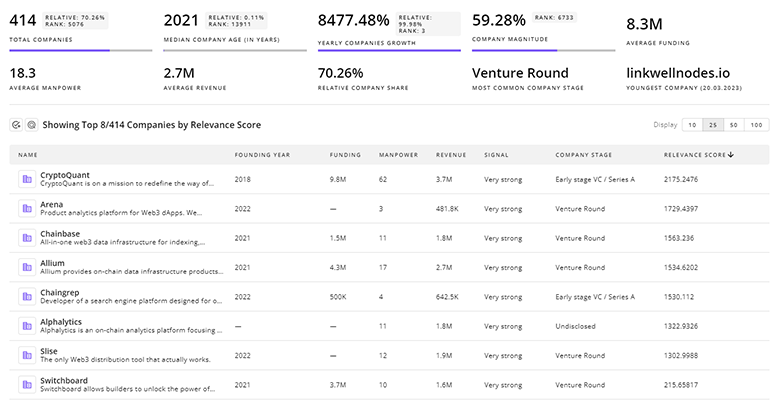
5.3K Fermentation Companies
Discover Fermentation Companies, their Funding, Manpower, Revenues, Stages, and much more
Fermentation Investors
Get ahead with your investment strategy with insights into 3.3K Fermentation investors. TrendFeedr’s investors tool is your go-to source for comprehensive analysis of investment activities and financial trends. The tool is tailored for navigating the investment world, offering insights for successful market positioning and partnerships within Fermentation.
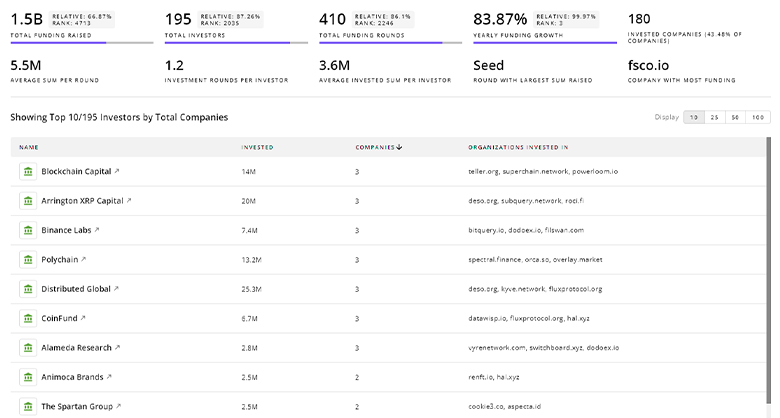
3.3K Fermentation Investors
Discover Fermentation Investors, Funding Rounds, Invested Amounts, and Funding Growth
Fermentation News
TrendFeedr’s News feature offers access to 13.4K news articles on Fermentation. The tool provides up-to-date news on trends, technologies, and companies, enabling effective trend and sentiment tracking.
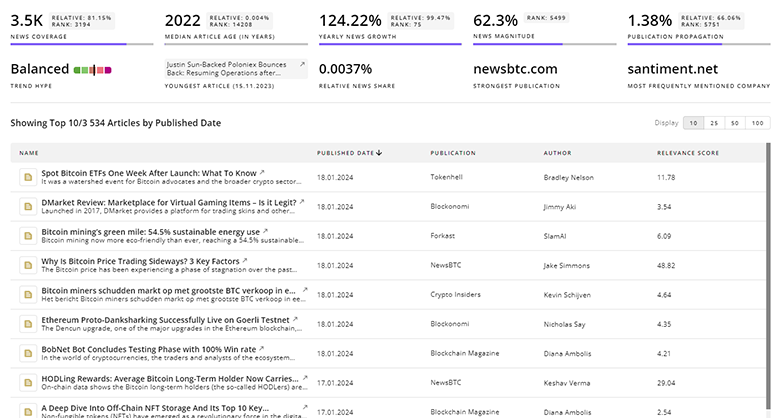
13.4K Fermentation News Articles
Discover Latest Fermentation Articles, News Magnitude, Publication Propagation, Yearly Growth, and Strongest Publications
Executive Summary
Fermentation is shifting from well-understood heritage processes to an integrated bioeconomy platform where biology, reactor engineering, digital control, and feedstock strategy jointly determine economic outcomes. Market signals point to significant upside for companies that combine advanced strain engineering with process architectures that cut CAPEX/OPEX and use low-cost feedstocks. Investors and operators will favor modular, data-instrumented plants and CDMO partnerships that lower scale-up risk. For business leaders, the pragmatic path is to choose a clear economic focus (ingredient margin, commodity volume or enabling tech), secure feedstock and offtake early, and prioritize process control investments that raise realized capacity before committing to full-scale capital projects.
Have expertise in trends or technology? Your input can enrich our content — consider collaborating with us!