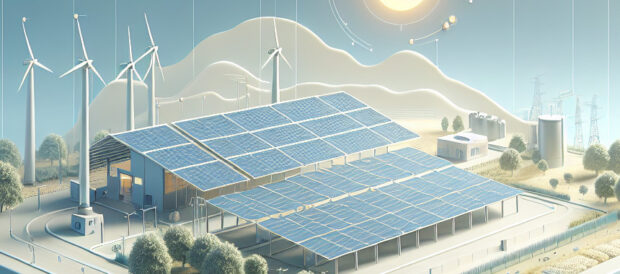
Floating Solar System Report
: Analysis on the Market, Trends, and TechnologiesThe floating solar sector is accelerating sharply: $33,010,000 market size in 2024 with a projected 32.5% CAGR and a 2032 forecast of $313,590,000, indicating concentrated near-term growth driven by reservoir-to-offshore commercialization and yield-improvement technologies. This growth is paired with sizable capital flows into specialist platforms and resilient materials, creating clear commercial windows for companies that can validate long-duration performance on open water and deliver lower Levelized Cost of Energy.
This article was last updated 252 days ago. If you find any info is missing, let us know!
Topic Dominance Index of Floating Solar System
The Dominance Index of Floating Solar System looks at the evolution of the sector through a combination of multiple data sources. We analyze the distribution of news articles that mention Floating Solar System, the timeline of newly founded companies working in this sector, and the share of voice within the global search data
Key Activities and Applications
- Utility-scale reservoir farms: Deployments on drinking-water reservoirs and hydro storage provide megawatt-scale generation while reducing evaporation and algal growth, establishing direct water-security value in project economics.
- Hybrid floating–hydro integration: Co-locating FPV with hydropower assets to shift generation timing and provide grid-firming services, improving capacity utilization of existing water concessions.
- Near-shore and offshore pilots: Moving from sheltered inland waters to nearshore and maritime environments to place generation closer to coastal load centers and industrial users, requiring new structural designs for waves and saline exposure.
- Evaporation management and water services: Using arrays to reduce reservoir evaporation and improve water quality as an ancillary revenue stream or public-benefit justification in procurement.
- Tracking-enabled FPV for yield uplift: Adapting single- and multi-axis tracking to waterborne platforms to increase annual energy yield and improve project IRR compared with stationary floats.
- Integrated O&M and digital asset management: Specialized monitoring for anchoring loads, biofouling, and water-level variability becomes a distinct service line as installations scale.
Emergent Trends and Core Insights
- High growth projections with forecasting variance: Market models diverge widely—some outside analyses forecast low-single-digit CAGR for narrow FPV PV segments while others predict multi-decade, multi-billion expansion—but the internal trend report supports a 32.5% CAGR baseline for the near term, reflecting concentrated expansion in Asia-Pacific and utility reservoir projects Roots Analysis – Floating Solar Panels Market.
- Platform standardization around durability and low LCOE: Competitive advantage increasingly attaches to material systems and anchoring designs that demonstrably lower lifecycle costs and maintenance frequency, shifting procurement from bespoke pilots to performance-specified tenders.
- Hybridization with other marine assets: Combining floating PV with wind, desalination, or aquaculture creates diversified revenue stacks and stronger project bankability where water-body access and grid connection are constrained IFC – Floating Solar Photovoltaic.
- Tracking and bifacial panel synergy: Water cooling and reflected irradiance increase capacity factors for bifacial modules, while water-adapted tracking can deliver material yield gains cited up to ~28% in vendor claims and internal technology listings.
- Investor focus on scale and IP: Funding flows prioritize platforms with field-proven resilience and intellectual property in buoyancy/anchoring and material science rather than service-only firms, making IP-backed hardware providers primary acquisition targets as the market consolidates.
Technologies and Methodologies
- Modular prefabricated pontoons and ferrocement floats: Offsite assembly and serial production lower installation timelines and logistics risk; ferrocement variants provide a cost/strength tradeoff used in large reservoir projects.
- Hydroelastic membrane platforms: Membrane-based arrays reduce material use and allow arrays to flex with wave action, cutting fatigue loading and maintenance cycles compared with rigid frames Ocean Sun.
- Water-actuated and sensor-driven tracking: Water-compatible high-stability trackers integrate gyroscopic or fluid-based stabilization to maintain alignment under wave motion and improve yield versus static floats.
- Corrosion-resistant composites and aluminum floatbacks: Materials engineered for saline exposure extend life and reduce O&M, particularly for nearshore pilots that face spray and biofouling.
- Specialized anchoring and elastic mooring: Mooring systems that allow controlled drift and dampen peak loads reduce anchor requirements and make deep or variable-level sites feasible.
- Digital twins and O&M software for water dynamics: Asset management platforms that combine hydrodynamic modeling, meteorological forecasting, and real-time sensor data reduce unplanned outages and optimize cleaning and maintenance windows Skyfri.
Floating Solar System Funding
A total of 86 Floating Solar System companies have received funding.
Overall, Floating Solar System companies have raised $14.2B.
Companies within the Floating Solar System domain have secured capital from 266 funding rounds.
The chart shows the funding trendline of Floating Solar System companies over the last 5 years
Floating Solar System Companies
- Swimsol GmbH — Swimsol pioneered sea-grade floating PV with its SolarSea™ offering and focuses on island and tropical markets where land constraints and diesel dependence raise project economics; their commercial model pairs heavy-duty marine platforms with financing options that lower sponsor CAPEX exposure. Swimsol’s track record in the Maldives (multi-MW deployments) validates operating methods in corrosive, tropical conditions and positions the company for expansion across Southeast Asia.
- SolarinBlue — SolarinBlue engineers floating solutions for extreme offshore conditions, designing truss and lightweight structures meant to survive wave heights above 10 meters and severe winds, aiming to place solar arrays outside sheltered waters and next to offshore wind assets. Their approach targets high-value coastal and deep-water projects where land scarcity and proximity to load justify higher initial CAPEX.
- ISIGENERE — Developer of ISIFLOATING, the company emphasizes flexible deployment across irrigation reservoirs, hydropower dams, and aquaculture ponds and reports measurable water-savings benefits (evaporation reductions cited up to 80% in vendor literature), making it attractive for combined water-energy tenders and public-utility partnerships. Its decade-plus operational history supports claims of low O&M and rapid installation cycles.
- Xfloat — Focused on yield optimization, Xfloat markets an integrated mounting and tracking system that the company states produces up to 28% greater yield than typical FPV installations; their value proposition targets LCOE parity with ground PV by combining water-specific tracking, damping geometry, and logistical efficiencies. This performance orientation appeals to developers aiming to justify higher floating CAPEX through energy revenue.
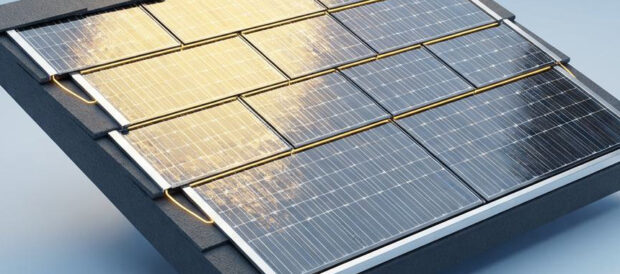
- Sunlit Sea — Small, engineering-led firm using aluminum float-back plates integrated with panel structures to provide passive water cooling and simplified logistics; the design prioritizes manufacturability and O&M safety for near-shore and rough-water applications, targeting industrial coastal sites where durability and low degradation rates matter most.
Uncover actionable market insights on 809 companies driving Floating Solar System with TrendFeedr's Companies tool.
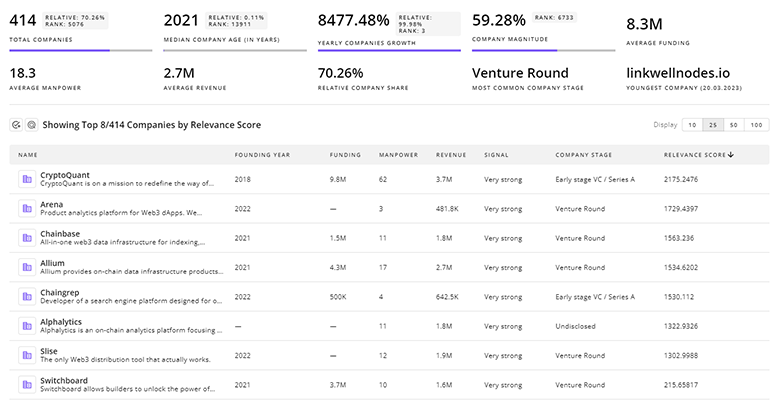
809 Floating Solar System Companies
Discover Floating Solar System Companies, their Funding, Manpower, Revenues, Stages, and much more
Floating Solar System Investors
Get ahead with your investment strategy with insights into 346 Floating Solar System investors. TrendFeedr’s investors tool is your go-to source for comprehensive analysis of investment activities and financial trends. The tool is tailored for navigating the investment world, offering insights for successful market positioning and partnerships within Floating Solar System.
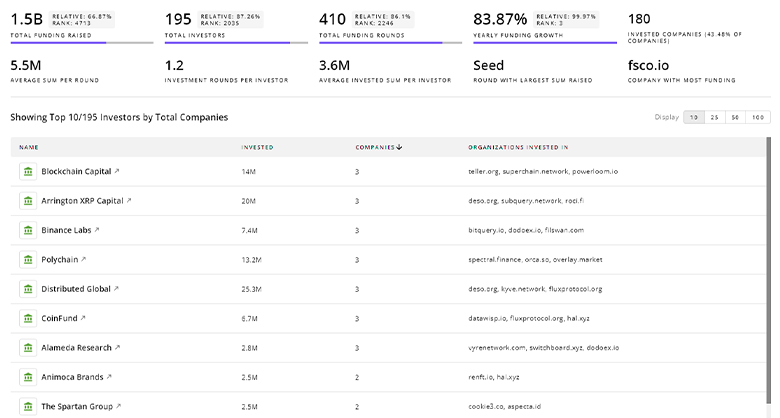
346 Floating Solar System Investors
Discover Floating Solar System Investors, Funding Rounds, Invested Amounts, and Funding Growth
Floating Solar System News
TrendFeedr’s News feature offers access to 4.3K news articles on Floating Solar System. The tool provides up-to-date news on trends, technologies, and companies, enabling effective trend and sentiment tracking.
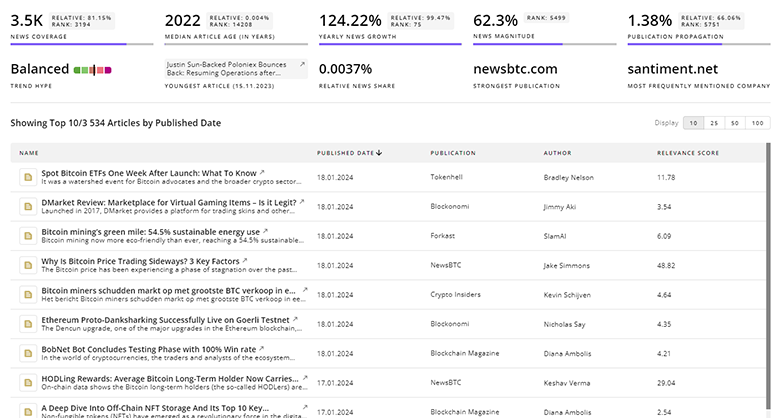
4.3K Floating Solar System News Articles
Discover Latest Floating Solar System Articles, News Magnitude, Publication Propagation, Yearly Growth, and Strongest Publications
Executive Summary
Floating solar is progressing from experimental pilots to financeable infrastructure through a technical pivot: platform durability, water-specific tracking, and integrated digital O&M now determine which companies can scale. The internal trend indicators—notably a 2024 market baseline of $33,010,000 and a 32.5% CAGR projection—show a market where early technical differentiation yields outsized commercial value; project sponsors should weight procurement toward proven material systems, validated anchoring approaches, and asset management capabilities that reduce lifecycle risk. For investors, the clearest path to defensible returns lies with firms that can demonstrate multi-year field performance in saline or nearshore conditions, sign binding water-use concessions, and stack revenues from generation plus water-service benefits.
Have expertise in trends or technology? Your input can enrich our content — consider collaborating with us!