
Gas To Grid Report
: Analysis on the Market, Trends, and TechnologiesThe gas-to-grid sector sits at a pivotal commercialization point: the internal trend report values the market at about USD 43.92 billion in 2025 with a 10.2% CAGR projected in that dataset, signalling strong investment momentum for grid-compatible renewable gas and related infrastructure. Multiple market forecasts differ in magnitude and horizon, but they converge on steady double-digit or high single-digit growth driven by policy support for hydrogen and renewable methane, falling electrolyzer costs, and rising utility demand for long-duration storage fortunebusinessinsights.com.
We updated this report 94 days ago. Missing information? Contact us to add your insights.
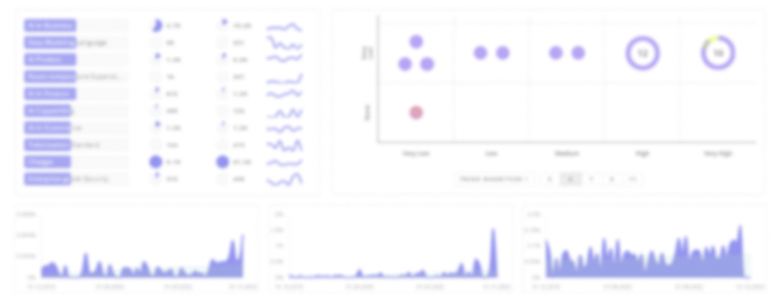
Topic Dominance Index of Gas To Grid
The Topic Dominance Index combines the distribution of news articles that mention Gas To Grid, the timeline of newly founded companies working within this sector, and the share of voice within the global search data
Key Activities and Applications
- Grid injection of biomethane and renewable natural gas (RNG) — upgrading landfill and biogas streams to pipeline quality for dispatchable gas supply and seasonal storage; this is a major commercial activity with multiple operational projects converting waste methane into grid fuel.
So what: biomethane provides a near-term pathway to reduce methane emissions while using existing pipeline assets, lowering the capital barrier vs. green hydrogen-only builds. - Power-to-Gas (electrolysis + methanation) for long-duration storage — converting surplus renewables into hydrogen or synthetic methane for later power generation or pipeline use.
So what: this creates value arbitrage between electricity and gas markets and enables seasonal balancing that batteries cannot economically provide. - Biological and catalytic methanation integrated with anaerobic digestion — producing pipeline-grade methane from CO2 and H2 or upgrading biogas with low methane slip.
So what: these methods reduce CO2 emissions while generating a drop-in fuel for heating, industry, and transport. - Retrofitting pipelines and network operations for hydrogen blends and pure hydrogen transmission — studies and pilot projects test blend limits and materials compatibility while system operators prepare hydrogen roadmaps HIGGS project.
So what: adapting existing networks shortens timelines and reduces cost compared with wholly new hydrogen pipelines. - Grid-flexibility services and digital orchestration — platforms that manage injection scheduling, gas quality accounting, and aggregator services (V2G, VPP, DERMS) to monetise renewable gas and flexibility Voltalis.
So what: digital orchestration increases utilization of gas assets and opens new revenue streams for asset owners.
Emergent Trends and Core Insights
- Policy and subsidy alignment drives scale. Government incentives and hydrogen strategies materially accelerate utility and project developer commitment to injection projects and electrolyzer procurement.
So what: policy windows determine deployment cadence and shorten payback timelines for first movers. - Market forecasts vary by scope; capacity and application definitions cause wide headline differences. Some reports model narrowly defined P2G segments and show USD-millions today, whereas broader system studies report multi-billion valuations (example comparisons below).
So what: investors and strategists must confirm whether a forecast covers electrolyzers, methanation, biomethane upgrading, or an aggregated “gas to grid” systems market before comparing figures. - Mid-scale modular electrolysis (100 kW–1 MW) is the commercial sweet spot. Reports and project pipelines show medium-scale units capture rapid deployment and favorable cost/benefit for industrial and utility edge applications.
So what: suppliers that optimise manufacturing for this band will find the largest early demand pockets. - Biological methanation and waste-to-gas pathways scale the circular economy. Multiple firms advance biological catalysts and gasification routes to produce methane or hydrogen from waste feedstocks.
So what: projects that secure feedstock contracts with municipalities and agri-producers reduce fuel feedstock risk and improve project bankability. - Digital gas quality management and selective billing emerge as necessary market functions. Implementation of gas quality tracking software becomes essential where multiple gas types share pipelines.
So what: systems that provide transparent allocation and settlement remove a key commercial barrier to blended gas markets.
Technologies and Methodologies
- Electrolysis families: PEM, alkaline, AEM and SOEC for green hydrogen production, PEM and alkaline lead current deployments, while SOEC promises higher electrical efficiency where industrial waste heat exists.
So what: choosing technology depends on duty cycle and available heat; project developers must model levelized hydrogen cost for site-specific conditions. - Catalytic and biological methanation: chemical catalysts for high-throughput plants and biological archaea catalysts for flexible, lower-temperature conversion are both commercialising.
So what: biological methanation reduces CAPEX for distributed units and tolerates variable H2 supply. - Biogas upgrading and cryogenic separation: membrane + cryogenic solutions enable landfill gas to pipeline-grade RNG at scale (commercial WAGABOX® deployments illustrate maturity) Waga Energy.
So what: turnkey solutions with O&M contracts attract landfill operators and utilities. - Gasification and thermal conversion (waste-to-X) to produce syngas, green hydrogen, or methanol — modular gasifiers and plasma processes expand feedstock options beyond anaerobic digestion ETGAS.
So what: waste feedstock lowers fuel cost and can generate negative or low lifecycle emissions when paired with carbon capture. - Digital control, gas quality tracking, and DER orchestration — platforms for scheduling, billing, and grid services (DERMS, VPP) reduce operational friction for mixed-gas grids SmartSim GmbH Camus Energy.
So what: digital layers turn physical assets into monetizable flexibility and mitigate commercial disputes over gas quality.
Gas To Grid Funding
A total of 278 Gas To Grid companies have received funding.
Overall, Gas To Grid companies have raised $111.4B.
Companies within the Gas To Grid domain have secured capital from 901 funding rounds.
The chart shows the funding trendline of Gas To Grid companies over the last 5 years
Gas To Grid Companies
- Power-to-Gas Hungary — A small startup commercialising a biological catalyst that converts CO2 and renewable electricity into pipeline-grade methane; the company emphasises efficiency and scalability for utility-scale P2G plants and positions its tech as a route to bidirectional coupling of power and gas markets.
- GridThink — Developer of an energy storage concept that converts carbon feedstock into ethane and hydrogen for distributed storage use; GridThink targets higher conversion efficiency and distributed deployments to support seasonal balancing.
- Anax Power — Builds turboexpander systems that generate electricity from pressure drops in gas pipelines without combustion; the approach captures otherwise wasted energy and provides a low-emission power source colocated with gas infrastructure.
- Standard Gas Technologies Ltd — Offers thermal cracking and syngas generation technology that converts otherwise non-recyclable waste into syngas and biochar; the company markets this as a carbon-negative feedstock route for low-carbon gas production.
- Boson Energy — Focuses on gasification-based, modular waste-to-hydrogen and green molecule production with projects in Europe and India; Boson targets distributed, standardised plants to supply local hydrogen and methanol markets.
Gain a competitive edge with access to 1.5K Gas To Grid companies.
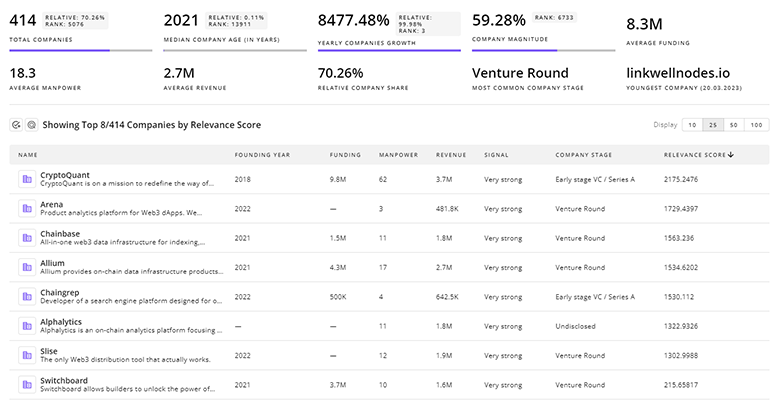
1.5K Gas To Grid Companies
Discover Gas To Grid Companies, their Funding, Manpower, Revenues, Stages, and much more
Gas To Grid Investors
Leverage TrendFeedr’s sophisticated investment intelligence into 871 Gas To Grid investors. It covers funding rounds, investor activity, and key financial metrics in Gas To Grid. investors tool is ideal for business strategists and investment experts as it offers crucial insights needed to seize investment opportunities.
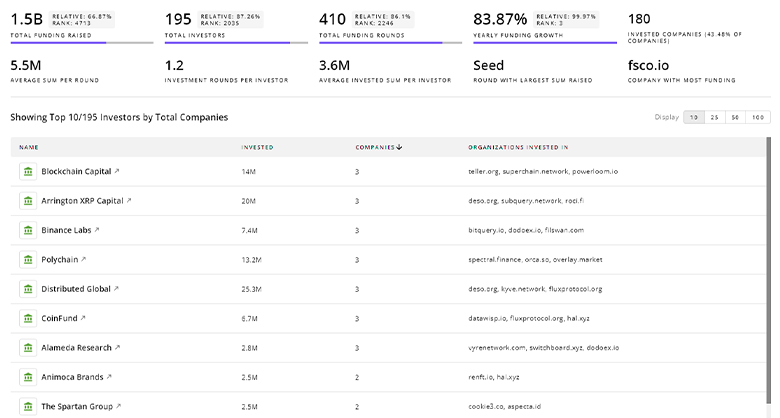
871 Gas To Grid Investors
Discover Gas To Grid Investors, Funding Rounds, Invested Amounts, and Funding Growth
Gas To Grid News
TrendFeedr’s News feature provides a historical overview and current momentum of Gas To Grid by analyzing 3.7K news articles. This tool allows market analysts and strategists to align with latest market developments.
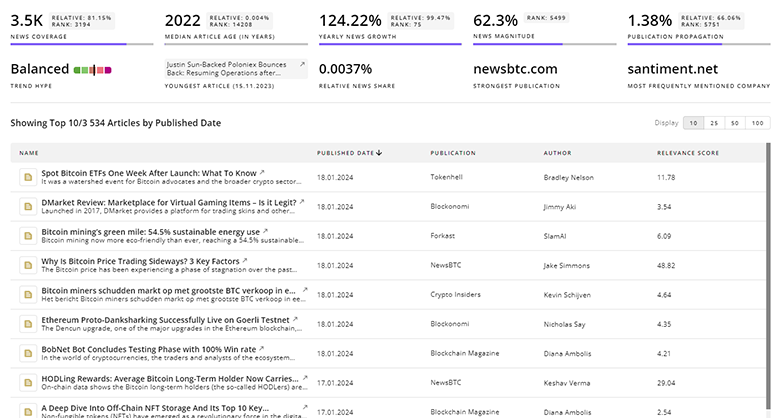
3.7K Gas To Grid News Articles
Discover Latest Gas To Grid Articles, News Magnitude, Publication Propagation, Yearly Growth, and Strongest Publications
Executive Summary
The gas-to-grid opportunity that ties renewable electricity, hydrogen, and upgraded biogas into the existing gas network is commercially attractive and strategically important for energy systems seeking long-duration storage and sector coupling. The internal market estimate of about USD 43.9 billion in 2025 and the 10.2% CAGR in the internal data indicate strong momentum for integrated projects that combine modular electrolysis, biological/catalytic methanation, and digital gas management. Practically, successful strategies will combine (1) proven, scalable upgrading or conversion technologies; (2) firm offtake or feedstock contracts to derisk cash flows; and (3) digital settlement and dispatch systems so injected gases and flexibility services translate directly into revenue. Investors and utilities should prioritise mid-scale modular deployments (100 kW–1 MW), hydrogen-readiness for pipelines, and partnerships that secure feedstock or renewable power to capture the earliest, highest-return market segments.
Interested in contributing your expertise on trends and tech? We’d love to hear from you.