Green Economy Report
: Analysis on the Market, Trends, and TechnologiesThe green economy is at a decisive inflection where measurable scale meets commercial discipline: total funding in the sector stands at $12.56B according to the internal green economy trend analysis, reflecting concentrated capital deployment into a mix of digital platforms and physical decarbonization assets. Market forecasts show a parallel, high-growth consumer and project market — one estimate moves from $7.92B in 2024 to $29.97B by 2033 at a 15.63% CAGR. Large-scale renewable rollouts (notably record solar installations and accelerating wind capacity) and stronger green-revenue performance (green lines growing at 12% annually) are already reshaping corporate valuations and capital costs.
We updated this report 162 days ago. Missing information? Contact us to add your insights.
Topic Dominance Index of Green Economy
The Topic Dominance Index combines the distribution of news articles that mention Green Economy, the timeline of newly founded companies working within this sector, and the share of voice within the global search data
Key Activities and Applications
- Renewable power generation (solar PV, onshore wind, biomass) — utility-scale development, distributed rooftop projects, and project-financed battery co-location constitute the bulk of capital deployment; solar continues to set installation records and remains the primary volume driver.
- Carbon management and verified nature-based projects — measurement, high-integrity conservation and restoration projects, and verifiable removals that can be marketed as tradable assets are rising in strategic importance as firms seek to manage Scope 3 risk and access lower-cost capital.
- Industrial waste valorization and advanced recycling — pyrolysis, material recovery, and recovered-carbon supply chains convert end-of-life streams into feedstocks (e.g. recovered carbon black, syngas) that reduce dependency on virgin inputs and capture value across industrial buyer networks Scandinavian Enviro Systems AB (publ).
- Green fuels and low-carbon drop-ins — biobutanol, biomethane, and advanced biofuels targeting transport and maritime sectors deliver immediate emissions reductions in hard-to-abate segments when produced from waste feedstocks.
- Circular construction and secondary raw materials — converting textile and construction waste into building inputs and engineered materials reduces embodied carbon in the built environment and eases supply risk for developers and manufacturers.
- Enterprise sustainability platforms and carbon accounting — software that centralizes Scope 1–3 inventory, automates compliance, and generates audit-ready disclosures is shifting from optional to foundational for access to institutional capital Greenly.
Emergent Trends and Core Insights
- Market scale compression around data and verification — value is concentrating on solutions that make sustainability claims auditable and investable; firms that provide enterprise-grade, auditable Scope 3 data capture pricing power as compliance requirements harden Green Story.
- High-growth green revenue lines — firms actively selling green products and services report ~12% annual growth in those lines, yielding valuation and financing advantages relative to conventional revenue streams Those making bold moves in the green economy are enjoying 2x faster growth in revenue - WEF + BCG.
- Policy-driven capital flows and geographic leadership — regulatory frameworks and national strategies (notably in East Asia and parts of Europe) are guiding where CapEx lands; market participants must map regulatory pipelines as actively as project economics Global Green Economy Market 2024–2033 - Custom Market Insights.
- Shift from single-technology bets to systems integration — hybrid projects (renewables + storage + green hydrogen or CCU) are moving higher on developer roadmaps because they reduce dispatch risk and enhance merchant value under volatile power markets (material shift in project design and offtake structures).
- Skills and workforce constraint as a near-term bottleneck — projected shortages of green-skilled workers risk slowing deployment in construction, transport, and manufacturing unless reskilling programs scale rapidly Forecasts Key Workplace Demographic and Recruitment Changes Up to 2030.
Technologies and Methodologies
- Digital carbon accounting + blockchain verification — enterprise platforms that combine satellite/IoT measurement, AI analytics, and immutable ledgers to deliver verifiable removals and reliably priced credits Single.Earth.
- Advanced thermal and chemical recycling (pyrolysis, gasification) — industrial-scale processes that convert mixed waste into syngas, oils, and recovered solids, enabling circular feedstocks for chemicals and fuels Global Green International Investments.
- Electrolytic and PEM electrolysis for green hydrogen — modular electrolyzer stacks and supply-chain approaches to scale green hydrogen as a dispatchable decarbonization vector for industry and heavy transport.
- AI-driven asset optimization and predictive maintenance — ML models and digital twins increase availability and lower LCOE for renewables and distributed assets by optimizing dispatch and reducing unplanned downtime.
- Low-energy materials engineering and biobased composites — next-generation bioplastics, lignocellulosic composites, and hemp-derived structural materials that cut embodied emissions and enable circular construction.
- Financing innovations (pay-as-you-save, on-bill/roof-PV financed retrofits) — project structures that convert CapEx into predictable Opex streams accelerate adoption among asset owners without access to upfront capital re-green.
Green Economy Funding
A total of 244 Green Economy companies have received funding.
Overall, Green Economy companies have raised $12.6B.
Companies within the Green Economy domain have secured capital from 801 funding rounds.
The chart shows the funding trendline of Green Economy companies over the last 5 years
Green Economy Companies
- Bergen Carbon Solutions AS — Bergen Carbon Solutions AS converts captured CO₂ into solid carbon materials used in batteries and advanced materials; the company positions CO₂ as a feedstock rather than a liability, supporting downstream manufacturers with alternative raw materials while targeting the battery industry. The firm reports $21.71M in total funding and is publicly listed, reflecting a capital-intensive scale-up pathway that links capture to high-margin specialty materials.
- Rare Earth Global — Rare Earth Global uses hemp seed concentrate to replace soy in aquafeed, achieving a reported 41% reduction in associated emissions and producing zero-waste co-products that feed construction and materials lines; the model bundles feed supply resilience with downstream carbon removal via biomass-derived materials. The company's seed funding and targeted offtake commitments position it as a materials-plus-food circular play.
- Green COP Pte Ltd — Green COP Pte Ltd commercializes second-generation biobutanol from agricultural residues using proprietary pretreatment and fermentation; the technology targets drop-in fuel needs for transport sectors that cannot electrify quickly, creating immediate emissions savings while avoiding food-feedstock conflicts.
- GreenEmissions — GreenEmissions operates a satellite-driven carbon sequestration marketplace that links satellite monitoring to farmer-led sequestration projects, enabling transparent measurement and a retail market for verified removal credits; the platform approach reduces verification friction for smallholders and corporates seeking traceable offsets.
- Greenful Group — Greenful Group produces construction materials at scale from textile and plastic waste, claiming per-factory conversion rates that eliminate tens of thousands of tonnes of waste annually and supply recycled inputs that meet building codes; the business model couples municipal waste feedstock access with off-taker agreements from construction firms focused on embodied carbon reduction.
Gain a competitive edge with access to 2.6K Green Economy companies.
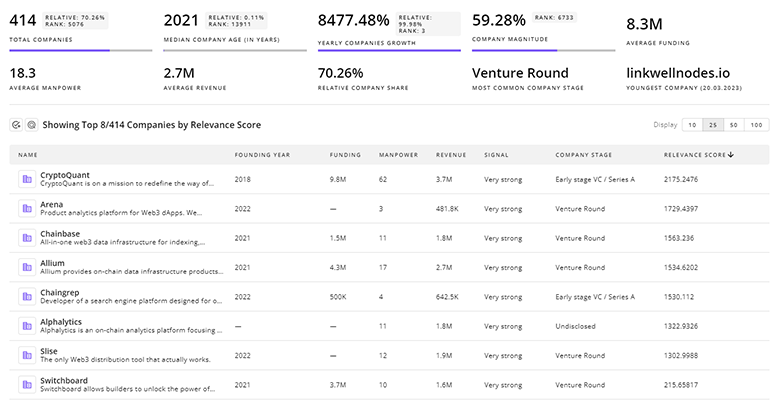
2.6K Green Economy Companies
Discover Green Economy Companies, their Funding, Manpower, Revenues, Stages, and much more
Green Economy Investors
Leverage TrendFeedr’s sophisticated investment intelligence into 702 Green Economy investors. It covers funding rounds, investor activity, and key financial metrics in Green Economy. investors tool is ideal for business strategists and investment experts as it offers crucial insights needed to seize investment opportunities.
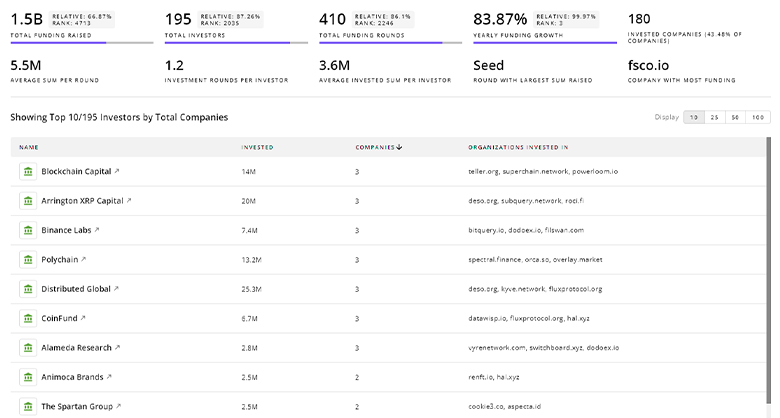
702 Green Economy Investors
Discover Green Economy Investors, Funding Rounds, Invested Amounts, and Funding Growth
Green Economy News
TrendFeedr’s News feature provides a historical overview and current momentum of Green Economy by analyzing 6.0K news articles. This tool allows market analysts and strategists to align with latest market developments.
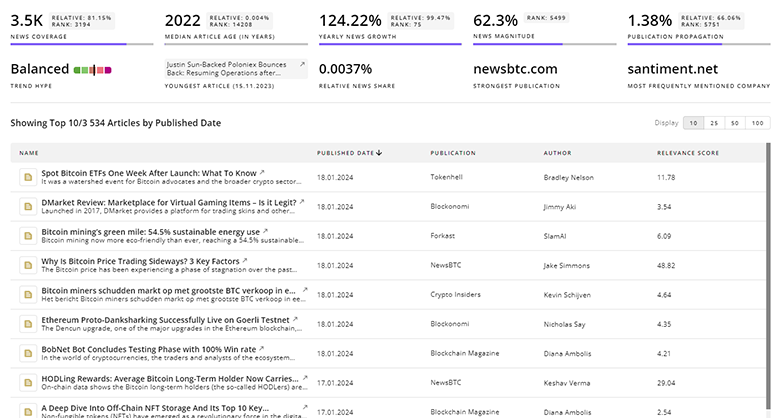
6.0K Green Economy News Articles
Discover Latest Green Economy Articles, News Magnitude, Publication Propagation, Yearly Growth, and Strongest Publications
Executive Summary
Investment and operational priority in the green economy now center on two linked imperatives: creating audit-grade environmental data flows that translate sustainability into financial claims, and industrializing circular material and fuel pathways that replace carbon-intensive inputs. Short horizons demand companies prove both measurable emissions reductions and credible commercial paths to scale. For corporate strategists and investors, the clear playbooks are (1) secure proprietary, verifiable data positions or partner tightly with providers that do, and (2) finance physical projects with business models that convert CapEx into predictable revenue streams or durable feedstock contracts. These twin strategies reduce regulatory and market risk and concentrate premium economics where traceability and material substitution intersect.
Interested in contributing your expertise on trends and tech? We’d love to hear from you.