Haptics Report
: Analysis on the Market, Trends, and TechnologiesThe haptics market sits at an inflection point where precision applications capture premium value while commodity vibration features face margin pressure$3,100,000,000 in 2024 and the trend report projects $9,270,000,000 by 2032 with a stated market CAGR of 10.0%—a figure that frames investment and product-roadmap decisions across consumer, medical, automotive, and industrial buyers.
We updated this report 62 days ago. Missing information? Contact us to add your insights.
Topic Dominance Index of Haptics
The Topic Dominance Index combines the distribution of news articles that mention Haptics, the timeline of newly founded companies working within this sector, and the share of voice within the global search data
Key Activities and Applications
- Immersive AR/VR training and simulation for high-stakes procedures where force feedback and texture fidelity replace physical prototypes and accelerate skill acquisition.
- Automotive HMI and safety cues embedding tactile confirmations into center consoles, steering, and seats to reduce visual distraction and signal ADAS events.
- Medical simulation and rehabilitation using force-feedback gloves, mid-air cues, and haptic phantoms to create reproducible clinical training and therapy regimens.
- Robotics dexterity and tactile sensing where high-resolution sensors enable gentle, precise manipulation for e-commerce fulfillment, electronics assembly, and prosthetic control
- Accessibility devices and tactile graphics—refreshable displays and wearable navigation systems convert visual or social cues into tactile signals for blind and visually impaired users
- Wearable vibroacoustic and EMS products that provide sensory augmentation for entertainment, recovery, and therapy, linking biometric inputs to tailored haptic outputs Hapbeat.
Emergent Trends and Core Insights
- Sensor-actuator convergence is governing value capture: companies that pair high-fidelity sensing with tailored actuation secure enterprise contracts and recurring software revenue.
- Software and APIs are becoming the new competitive moat: authoring tools and SDKs that enable consistent haptic experiences across heterogeneous hardware increase platform stickiness and lower integration cost.
- Mid-air and surface haptics broaden hygiene-sensitive and in-vehicle use cases: contactless ultrasonic arrays and friction-modulation surfaces remove wearables for certain applications while enabling novel UI patterns Tanvas.
- Medical certification materially shifts economics: devices that clear regulatory pathways show higher margin durability and stronger enterprise procurement outcomes than consumer peripherals hapticlink.nl Cynteract.
- Tactile data becomes an asset class: companies that convert touch interactions into datasets (e.g. road tactility for AV mapping or finger-pressure corpora) extend monetization into analytics and training sets Tactile Mobility.
- Power and cost tradeoffs remain gating factors for mobile and wearable mainstreaming; materials and driver efficiency innovations are therefore high-value R&D targets Global Haptic Touchscreen Market.
Technologies and Methodologies
- Piezoelectric actuators for high-definition, low-latency texture rendering in thin form factors and touch surfaces
- Ultrasonic mid-air haptics enabling contactless tactile impressions for public kiosks, automotive dashboards, and AR/VR without wearables Ultraleap.
- Electroactive polymers (EAP) and thin-film actuators permitting ultra-thin, flexible haptic layers on wearables and small devices.
- High-resolution tactile sensing (optical / MEMS / elastomeric imaging) that digitizes surface geometry and pressure for robotic manipulation and quality inspection Contactile.
- Haptic authoring tools and SDKs that translate audio/video events into rendered haptic timelines and enable cross-device mapping Hapticlabs.
- AI-driven haptic rendering and compression for adaptive feedback, latency masking and scalable tactile codecs suitable for networked teleoperation and cloud-assisted XR
Haptics Funding
A total of 357 Haptics companies have received funding.
Overall, Haptics companies have raised $12.7B.
Companies within the Haptics domain have secured capital from 1.4K funding rounds.
The chart shows the funding trendline of Haptics companies over the last 5 years
Haptics Companies
- Haption — Haption designs professional force-feedback devices with full six-degree-of-freedom kinesthetic fidelity aimed at industrial simulation and tele-robotics; their product set targets engineering workflows where virtual prototypes reduce physical prototyping costs and cycles. Haption emphasizes 6-DOF realism to enable assembly, maintenance, and human factors testing in digital twins
- HUVANT — HUVANT combines immersive VR with physical 3D phantoms to deliver surgical planning and training platforms that align virtual anatomy with tactile feedback for patient-specific rehearsal, reducing OR time and improving procedure confidence. HUVANT focuses on clinical fidelity and surgeon workflow integration to shorten learning curves for complex interventions
- NewHaptics — NewHaptics pursues full-page refreshable tactile displays intended to provide page-scale access for blind users and tactile graphics for STEM education; their product strategy ties accessibility mission to government grants and education procurement pathways. NewHaptics targets an underserved market where regulatory and institutional buyers can deliver early commercial traction
- Haptic — Haptic (formerly WearWorks) builds AI-powered haptic navigation and screen-free guidance systems that use forearm or wearable cues to deliver audio-free and screen-free directions for mobility and smart-cities applications. Haptic pairs low-bandwidth tactile patterns with contextual sensing to provide private, non-auditory user guidance for urban and accessibility scenarios
- Tactile Images — Tactile Images produces custom kinesthetic artifacts and tactile graphics to make museums, classrooms, and cultural content accessible to blind and low-vision audiences; their approach couples design services with physical fabrication to deliver turnkey accessibility installations. Tactile Images leverages content-led contracts in education and cultural institutions for steady demand
Gain a competitive edge with access to 1.7K Haptics companies.
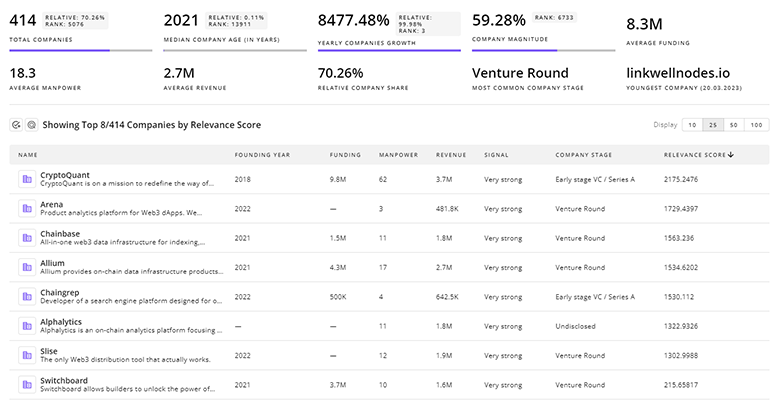
1.7K Haptics Companies
Discover Haptics Companies, their Funding, Manpower, Revenues, Stages, and much more
Haptics Investors
Leverage TrendFeedr’s sophisticated investment intelligence into 1.4K Haptics investors. It covers funding rounds, investor activity, and key financial metrics in Haptics. investors tool is ideal for business strategists and investment experts as it offers crucial insights needed to seize investment opportunities.
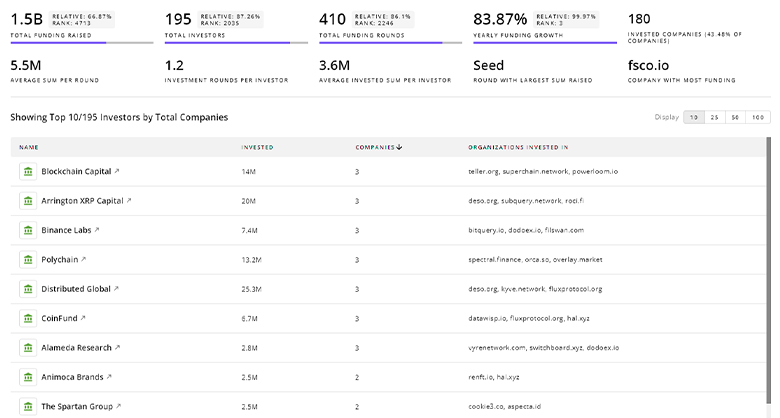
1.4K Haptics Investors
Discover Haptics Investors, Funding Rounds, Invested Amounts, and Funding Growth
Haptics News
TrendFeedr’s News feature provides a historical overview and current momentum of Haptics by analyzing 6.1K news articles. This tool allows market analysts and strategists to align with latest market developments.
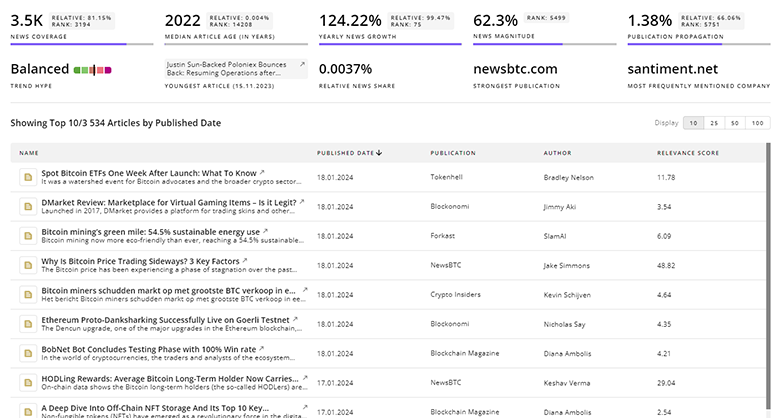
6.1K Haptics News Articles
Discover Latest Haptics Articles, News Magnitude, Publication Propagation, Yearly Growth, and Strongest Publications
Executive Summary
The haptics landscape requires firms to choose between two durable plays: own the high-fidelity, regulated verticals where precision, certification, and data yield higher margins, or become the low-cost integrator of commodity vibration into mass hardware where scale matters. Market sizing and forecasts point to meaningful upside—the internal trend report cites $3.1B in 2024 and a $9.27B projection for 2032—but monetization will favor companies that convert tactile interactions into software and data services, secure institutional procurement (medical, automotive, accessibility), and align with standardization efforts that reduce integration friction. Investment priorities should therefore tilt toward driver efficiency, cross-platform SDKs, validated datasets from tactile sensing, and regulatory pathways that raise barriers for copycats Haptic Technology Market worth $8.21 billion by 2030.
Interested in contributing your expertise on trends and tech? We’d love to hear from you.