
Hazardous Waste Disposal Report
: Analysis on the Market, Trends, and TechnologiesThe hazardous waste disposal sector is under simultaneous pressure from rising regulatory enforcement and constrained treatment capacity, yet it still supports a large industrial footprint—2,149 active companies and $16.75B in recorded funding across the topic, signaling liquidity concentrated in a narrow set of players. Market studies show persistent growth in demand for advanced treatment and on-site solutions as generators seek to reduce transport liability and meet tighter reporting obligations Hazardous Waste Management Market Report, 2025 – 2030. The commercial logic is shifting: value accrues to firms that remove generator risk through on-site destruction or that convert hazardous outputs into monetizable feedstocks, while pure-hauling models face margin compression Hazardous Waste Management Market Research Report, 2025.
We updated this report 46 days ago. Missing information? Contact us to add your insights.
Topic Dominance Index of Hazardous Waste Disposal
The Topic Dominance Index combines the distribution of news articles that mention Hazardous Waste Disposal, the timeline of newly founded companies working within this sector, and the share of voice within the global search data
Key Activities and Applications
- Waste stream profiling and lab-pack services — detailed chemical characterization and lab packing remain foundational for compliant disposal of heterogeneous R&D and industrial residues.
- On-site treatment and modular remediation — distributed treatment units (mobile autoclaves, modular pyrolysis/plasma) reduce transport volumes and generator liability, and are being deployed where TSDF capacity is limited
- High-temperature destruction for recalcitrant wastes (PFAS, AFFF, some pharmaceuticals) — permitted incineration and thermal processes remain the accepted route for certain chemistries where destruction efficiency is required
- Resource recovery and alternative fuel production — processing hazardous organics and sludges into kiln fuels or refinery feedstocks creates a revenue uplift vs. fee-for-disposal models
- Emergency spill response and site remediation — specialized rapid-response crews, vacuum fleets, and soil remediation services handle high-liability incidents and asset decontamination.
Emergent Trends and Core Insights
- Liability migration to the point of generation. Pressure from transport risk and tighter enforcement is increasing demand for on-site destruction platforms that eliminate cradle-to-grave exposure.
- Digital traceability is a competitive must. Electronic manifests, GPS/RFID container tracking, and integrated compliance platforms are moving from differentiation to baseline capability as regulators expect auditable chains of custody Hazardous Waste Collection in the US Report.
- Material valorization raises margin ceilings. Operators that can validate safe recovery pathways (e.g. solvent distillation, metal recovery, waste-derived fuels) command premiums versus landfill/incineration-only peers
- Regulatory fragmentation creates regional arbitrage and local capacity constraints. Jurisdictions tightening transboundary movement rules boost domestic processing demand and favor modular or local treatment investments
- Worker safety and automation converge. Rising incident frequency at material handling sites is accelerating adoption of remote handling, robotic manipulators, and automated classification to reduce exposure and labor costs.
Technologies and Methodologies
- Pyrolysis and plasma gasification (thermal conversion) — compact plasma ARC and pyrolysis units enable on-site destruction of organics with reduced off-gas volumes, making them attractive for regulated generators
- Supercritical water oxidation and high-temperature incineration — proven for PFAS-containing wastes and AFFF where high destruction efficiency is required AFFF incineration case study.
- Chemical stabilization and solidification for heavy-metal wastes — reagent-based fixation remains the compliance route for many metal-bearing residues, supported by a dense patent footprint in stabilization chemistries.
- AI/vision sorting and automated classification — camera- and ML-driven systems reduce manual inspection and improve segregation of hazardous items from mixed streams Industrial waste management trends (AI recognition).
- Distributed treatment systems and containerized units — modular reactors and skid-mounted treatment lower permitting barriers and enable rapid deployment to industrial sites, cutting haul distances and exposure
Hazardous Waste Disposal Funding
A total of 129 Hazardous Waste Disposal companies have received funding.
Overall, Hazardous Waste Disposal companies have raised $16.8B.
Companies within the Hazardous Waste Disposal domain have secured capital from 300 funding rounds.
The chart shows the funding trendline of Hazardous Waste Disposal companies over the last 5 years
Hazardous Waste Disposal Companies
- Safe Dispose — Safe Dispose markets a mobile Pyrolysis-Plasma ARC system that performs on-site destruction of biohazardous, pharmaceutical, and infectious wastes, directly addressing generator transport liability and permitting complexity. The platform targets hospitals and mid-size labs that prefer elimination at source rather than off-site transfer; that reduces cradle-to-grave risk and the need for long-haul sealed logistics. Its mobility and small footprint enable deployments in constrained urban or campus environments
- ECO Management and Protection Services — ECO Management operates a low-cost hazardous-recycling unit in India that accepts high-variability streams (e.g. paint sludge) with minimal material preconditions, offering disposal at Rs. 5.50/kg in its market. This price-focused model captures volumes in regions where centralized TSDF capacity and per-ton disposal economics differ sharply from Western markets, and it monetizes residues via local reuse or secondary-fuel routes
- HazExperts — HazExperts provides a one-vendor service for packaging, DGSA-led compliance, and nationwide collections across the UK, which simplifies hazardous and difficult waste management for SMEs and mid-market generators. By embedding a Dangerous Goods Safety Advisor in-house and offering streamlined documentation, the company reduces administrative friction and supports accelerated collections for regulated chemistry streams
- Green America Recycling — Green America Recycling runs Part B permitted TSD facilities that convert mixed hazardous and non-hazardous organics into alternative kiln fuels for cement manufacture, effectively turning disposal fees into feedstock revenue. Their on-site analytical lab and blending buildings enable higher acceptance flexibility and a tighter compliance envelope for fuel-by-product routes
- INTEXO Hazardous & Chemical Waste Solutions — INTEXO focuses on chemical waste identification, secure destruction, and logistics in Australia, serving industrial and laboratory clients that require cradle-to-grave documentation and secure destruction services. Their service model combines profiling, licensed transport, and final treatment, appealing to customers that must comply with local transboundary and hazardous-storage rules
Gain a competitive edge with access to 2.1K Hazardous Waste Disposal companies.
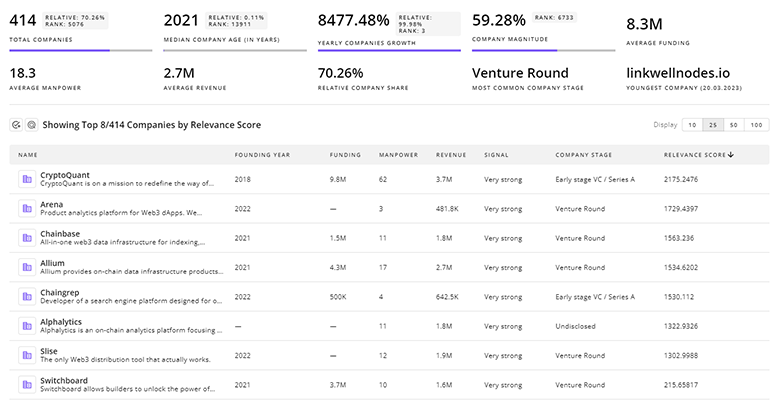
2.1K Hazardous Waste Disposal Companies
Discover Hazardous Waste Disposal Companies, their Funding, Manpower, Revenues, Stages, and much more
Hazardous Waste Disposal Investors
Leverage TrendFeedr’s sophisticated investment intelligence into 255 Hazardous Waste Disposal investors. It covers funding rounds, investor activity, and key financial metrics in Hazardous Waste Disposal. investors tool is ideal for business strategists and investment experts as it offers crucial insights needed to seize investment opportunities.
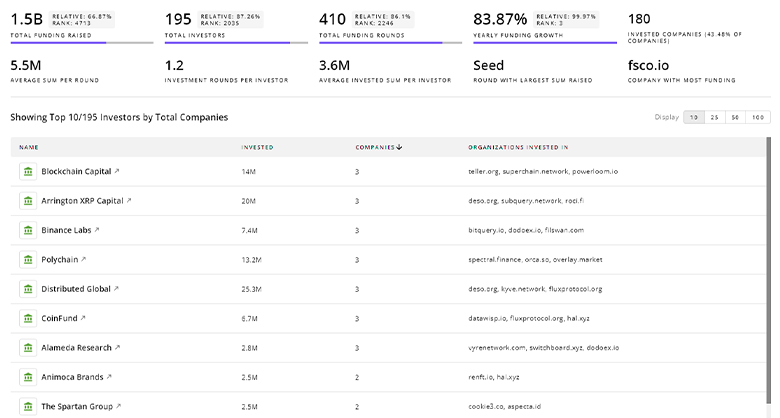
255 Hazardous Waste Disposal Investors
Discover Hazardous Waste Disposal Investors, Funding Rounds, Invested Amounts, and Funding Growth
Hazardous Waste Disposal News
TrendFeedr’s News feature provides a historical overview and current momentum of Hazardous Waste Disposal by analyzing 586 news articles. This tool allows market analysts and strategists to align with latest market developments.
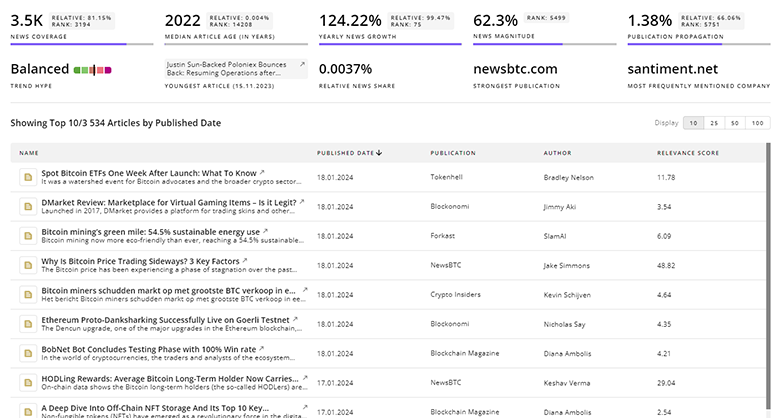
586 Hazardous Waste Disposal News Articles
Discover Latest Hazardous Waste Disposal Articles, News Magnitude, Publication Propagation, Yearly Growth, and Strongest Publications
Executive Summary
Regulatory tightening and localized capacity constraints create a clear strategic split: firms that convert hazard into value through validated recovery pathways or that remove generator liability via on-site destruction will capture outsized margins; logistics-heavy providers will face compressing returns unless they integrate certified digital traceability and higher-value treatment capabilities. For investors and corporate strategists the immediate levers are (1) backing modular treatment platforms that lower permitting and transport exposure, (2) acquiring or partnering with companies that prove monetizable recovery routes, and (3) deploying enterprise-grade traceability to meet escalating audit expectations. These moves reframe hazardous waste disposal from a cost center into a controllable risk and, where feasible, a revenue source.
Interested in contributing your expertise on trends and tech? We’d love to hear from you.