
Heat Pumps Report
: Analysis on the Market, Trends, and TechnologiesThe global heat pump market has reached a decisive inflection: market data shows USD 88,370,000,000 in size for 2023, with a reported CAGR of 8.96% that underpins projections toward USD 189,370,000,000 by 2032—figures that confirm rapid commercialization across applications and geographies. Policy incentives, advances in cold-climate and high-temperature systems, and practical service-layer innovations are shifting deployment from niche pilots to volume adoption, but the ultimate winners will be organizations that pair technical differentiation (high-temperature process capability, natural refrigerants, novel cycles) with service and installation control.
We updated this report 243 days ago. Missing information? Contact us to add your insights.
Topic Dominance Index of Heat Pumps
The Topic Dominance Index combines the distribution of news articles that mention Heat Pumps, the timeline of newly founded companies working within this sector, and the share of voice within the global search data
Key Activities and Applications
- Residential space heating and cooling — physical replacement of gas furnaces and boilers with electric heat pumps, including ducted, ductless, and window systems that support retrofits and new builds.
- Domestic hot water and heat-pump water heaters (HPWHs) — electrification of water heating using packaged HPWHs and integrated tank solutions to reduce household emissions and enable demand shifting.
- Industrial process heating and very high temperature process steam — conversion of low-grade waste heat and fossil-fuel boilers to heat pumps that deliver elevated sink temperatures (up to 200°C) for manufacturing and chemical processes.
- District and commercial HVAC — large-scale air-to-water and water-source systems integrated into building services and district thermal networks to serve multi-family, hospitality, and institutional loads.
- Waste-heat capture and valorization — engines and add-on systems that upgrade industrial waste heat to useful process temperatures or electrical output (WHtP), enabling scope-1 reductions and improved plant economics.
Emergent Trends and Core Insights
- Policy and incentive levers materially alter adoption trajectories: tax credits, rebates, and direct grants are accelerating uptake; U.S. and EU programs are explicit drivers of near-term demand United States Heat Pump Market.
- Smart controls and demand-response enablement are becoming value sources: IoT, remote monitoring, and predictive control increase realized seasonal performance and open grid services revenue for owners as deployments scale Global Residential Air to Water Heat Pump Market.
- Cold-climate performance has moved from a technical limitation to a market differentiator: modern inverter and EVI designs sustain practical heating capacity at low ambient temperatures, changing purchase decisions in northern markets This chart shows why heat pumps are still hot in the US.
- Refrigerant transition and natural refrigerants are creating a durable regulatory and product barrier: R290, CO₂ (R744) and low-GWP blends are now central design choices and influence supply chains and installation codes.
- Industrial high-temperature capability is an under-exploited value corridor: companies developing piston/TurboClaw and other oil-free compressors that reach >150°C–200°C target the hardest-to-abate emissions and command stronger project economics HEATEN.
- Service and installer networks are the current chokepoint for scalable residential deployment: business models that bundle financing, standardized installation processes, and training unlock volume more than product-only strategies (installer networks and software platforms capture outsized lifetime value) HPIN - The Heat Pump Installer Network.
Technologies and Methodologies
- Variable-speed inverter compressors and EVI — essential for maintaining COP at low ambient temperatures and for flexible modulation across loads.
- TurboClaw® and oil-free high-temperature compressors — engineered to reach process steam temperatures near 200°C, enabling industrial boiler replacement and fast paybacks for heavy heat users.
- Transcritical CO₂ cycles and R290 systems — allow efficient high-temperature water generation and low-GWP compliance, particularly for hot water and certain industrial applications.
- Thermally driven and adsorption cycles (thermoacoustic, adsorption) — alternatives that reduce reliance on conventional refrigerants and compressors; attractive where grid impact or refrigerant policy constraints exist Cooll.
- Integrated thermal energy storage and demand shifting — pairing short-term storage with heat pumps enables peak shaving, arbitrage on time-of-use tariffs, and grid services monetization.
- Digital design and installer tooling — software that automates heat-loss calculation, design packs, and compliance documentation reduces installation cycle time and increases throughput for installer networks Spruce.
Heat Pumps Funding
A total of 1.1K Heat Pumps companies have received funding.
Overall, Heat Pumps companies have raised $29.2B.
Companies within the Heat Pumps domain have secured capital from 2.4K funding rounds.
The chart shows the funding trendline of Heat Pumps companies over the last 5 years
Heat Pumps Companies
- Futraheat — Futraheat develops the TurboClaw® oil-free compressor and targets industrial decarbonization by delivering high-temperature process steam up to 200°C. Their sub-MW design emphasizes lower maintenance and easier integration into existing process lines, aiming to displace fossil boilers in heat-intensive sites. The company's commercial trajectory and patent position make it a direct play on the industrial heat value corridor.
- Upheat Solutions — Upheat Solutions offers oil-free high-temperature heat pumps designed to convert waste heat into usable plant heat and claims simple retrofittability into existing systems. Their small team and early-stage funding profile point to focused commercial pilots in process industries where waste-heat capture yields rapid payback. Upheat targets industrial users seeking capex-light pathways to electrify process heat.
- Adia — Adia combines lightweight sensors and ML-driven digital twins to estimate heat loss and simplify radiator-based retrofits, enabling faster, lower-risk residential heat-pump installs. Their approach reduces survey and balancing time, addressing the installer bottleneck that limits mass rollouts. By focusing on installation velocity and predictive commissioning, Adia positions itself at the interface between product and service layers.
- BlueHeart Energy — BlueHeart Energy prototypes a thermoacoustic residential heat pump that eliminates traditional refrigerants and rotating compressors. If scaled, the technology can sidestep refrigerant-policy risk and reduce maintenance complexity for interior-mounted systems, which is especially attractive for urban retrofits that face outdoor-unit constraints. Pilot development status points to near-term product validation steps.
- Stash Energy — Stash Energy integrates thermal storage with air-to-air heat pumps and grid-ready thermostatic controls to shift load and offer utility-grade demand flexibility. Their storage-enabled units are designed to create peak-shaving capacity and provide monetizable grid services while improving customer economics through time-of-use optimization. This creates an asset that utilities and aggregators can program for system value.
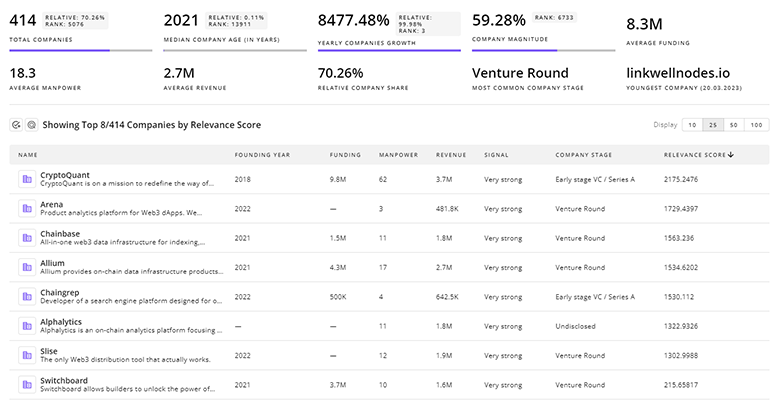
Gain a competitive edge with access to 23.4K Heat Pumps companies.
23.4K Heat Pumps Companies
Discover Heat Pumps Companies, their Funding, Manpower, Revenues, Stages, and much more
Heat Pumps Investors
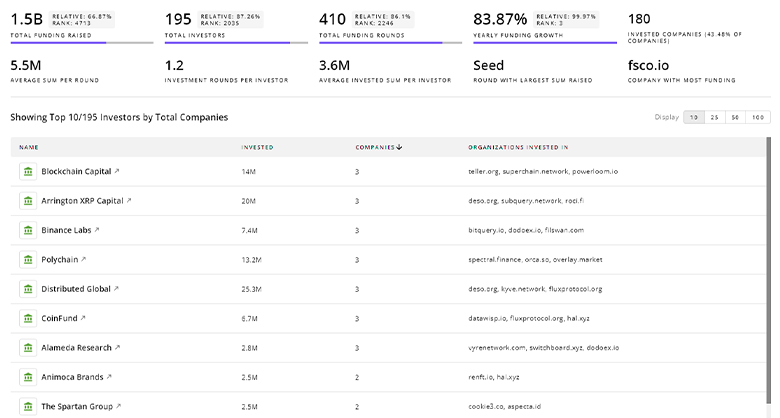
Leverage TrendFeedr’s sophisticated investment intelligence into 2.1K Heat Pumps investors. It covers funding rounds, investor activity, and key financial metrics in Heat Pumps. investors tool is ideal for business strategists and investment experts as it offers crucial insights needed to seize investment opportunities.
2.1K Heat Pumps Investors
Discover Heat Pumps Investors, Funding Rounds, Invested Amounts, and Funding Growth
Heat Pumps News
TrendFeedr’s News feature provides a historical overview and current momentum of Heat Pumps by analyzing 12.7K news articles. This tool allows market analysts and strategists to align with latest market developments.

12.7K Heat Pumps News Articles
Discover Latest Heat Pumps Articles, News Magnitude, Publication Propagation, Yearly Growth, and Strongest Publications
Executive Summary
Heat pumps are transitioning from a technology push into a market pull stage, fuelled by policy, demonstrable cold-climate performance, and industrial decarbonization demand. The industry's value pools are bifurcated: high-temperature industrial systems command premium project economics and require deep technical IP, while residential scale depends on mastering distribution, installation networks, and customer financing. Commercial strategies should therefore choose—secure industrial process heat IP or capture the installer and service layer that monetizes recurring revenue. Companies that marry credible hardware differentiation with a disciplined go-to-market for installation and after-sales services will capture the largest share of value as the market scales.
Interested in contributing your expertise on trends and tech? We’d love to hear from you.