Hydrogen Economy Report
: Analysis on the Market, Trends, and TechnologiesThe hydrogen economy shows sustained investor and policy traction with an implied market growth rhythm of 15.9% CAGR identified in the trend data, signaling persistent commercialization momentum even as deployment bottlenecks remain. Policy levers and project financing are bringing large electrolyzer and hub projects online, while alternate production pathways and carriers create multiple commercially viable routes to low-carbon hydrogen; together these forces indicate that the sector is moving from technology validation toward infrastructure scaling, but with clear gaps in transport, storage and standardization that determine near-term winners and losers.
We updated this report 53 days ago. Missing information? Contact us to add your insights.
Topic Dominance Index of Hydrogen Economy
The Topic Dominance Index combines the distribution of news articles that mention Hydrogen Economy, the timeline of newly founded companies working within this sector, and the share of voice within the global search data
Key Activities and Applications
- Green hydrogen production via renewable-powered electrolysis: utility and project developers scale PEM, AWE and SOE electrolyzers to produce grid-linked, high-purity hydrogen for industrial off-takers and export corridors.
- Industrial decarbonization (steel, refining, chemicals) where hydrogen substitutes fossil feedstocks and high-temperature heat, supported by long-term offtake contracts and hub aggregation strategies.
- Heavy-duty transport and fleet conversions (trucks, buses, maritime, aviation derivatives) using fuel cells and hydrogen-diesel co-combustion conversions to preserve range and quick refuel cycles.
- Long-distance transport and export logistics using carriers (ammonia, LOHC, liquefied hydrogen) and pipeline repurposing to move bulk hydrogen between low-cost production regions and high-demand markets
- On-site and modular generation for remote/industrial sites to avoid distribution costs and enable immediate decarbonization of captive loads.
- Alternative feedstock pathways (pyrolysis, plasma, biomass-to-H2, waste-to-H2) that produce hydrogen plus valuable carbon co-products, creating new margin stacks and localized business models
- Hydrogen storage and seasonal balancing using underground caverns, metal hydrides and LOHCs to support grid integration and long-duration energy storage.
Emergent Trends and Core Insights
- Policy-centred bankability: subsidies and tax credits materially change project economics; support mechanisms such as the U.S. production tax credit and EU funding are directly accelerating electrolyzer and hub FIDs
- Green hydrogen leads growth but multi-pathway markets persist: market analyses show green hydrogen CAGR ~20.2% while blue/turquoise pathways retain commercial roles where renewables or permitting lag GMI Insights hydrogen outlook.
- Asia-Pacific supply concentration: the region supplies a majority share of revenue and hosts major manufacturing and project pipelines, which reshapes trade flows and electrolyzer supply chains
- Logistics innovation becomes a value wedge: solutions that lower distribution cost or enable non-pipeline trade (LOHC, depots, novel pipelines, airship transport concepts) capture meaningful margin and accelerate market access for remote producers H2 Clipper
- Feedstock diversification reframes competitiveness: methane pyrolysis and biomass electrolysis create new revenue from co-products (solid carbon, biogenic outputs) that can subsidize hydrogen pricing and force revaluation of pure-electrolysis business models Modern Hydrogen.
- Electrolyzer scale and manufacturing matters: gigawatt-class electrolyzer plants and vertical integration in manufacturing reduce levelized costs and shorten time to market for industrial customers Electric Hydrogen.
- Standardization and permitting are near-term gating factors that frequently delay commercialization even when technology and financing exist Global hydrogen policy reviews and market reports.
Technologies and Methodologies
- Advanced electrolyzers (PEM, AWE, SOE, AEM and decoupled designs): next-generation designs reduce precious metal use and improve dynamic response to variable renewables; membrane-less or decoupled electrolysis can materially cut CAPEX and OPEX H2Pro.
- PGM-free catalyst and membrane chemistries to lower stack cost and supply risk, enabling wider electrolyzer manufacturing scale Versogen
- Methane pyrolysis, microwave and plasma conversion for low-emission hydrogen with solid carbon co-product that creates alternative economics to electrolysis Ekona Power
- Liquid Organic Hydrogen Carriers (LOHC) and ammonia cracking to enable maritime and long-distance trade without cryogenic liquefaction penalties Hydrogenious LOHC technology and maritime JV Hydrogenious LOHC Maritime.
- Solid-state and material-based storage (metal hydrides, MOFs, composite vessels) for dense, safe storage suitable for grid and mobility use cases Steelhead Composites.
- Digital twins, AI and power-conditioning electronics to time-match renewables, maximize electrolyzer uptime and qualify hourly/temporal clean-power requirements under incentive regimes.
Hydrogen Economy Funding
A total of 2.9K Hydrogen Economy companies have received funding.
Overall, Hydrogen Economy companies have raised $695.1B.
Companies within the Hydrogen Economy domain have secured capital from 9.6K funding rounds.
The chart shows the funding trendline of Hydrogen Economy companies over the last 5 years
Hydrogen Economy Companies
Hymeth — Hymeth develops a compact, low-temperature alkaline electrolyzer (Hyaeon™) that uses a non-precious alloy electrocatalyst and supports high-pressure output, targeting on-site refueling and industrial modularity. The design reduces dependency on scarce PGMs and aims at smaller footprint deployments that fit urban or constrained industrial sites. Hymeth's approach directly addresses capex and material-sourcing pressure points in electrolyzer rollouts
SHYP BV LTD — SHYP commercializes membraneless direct seawater electrolysis to eliminate desalination cost and freshwater constraints for coastal and offshore projects, positioning itself for maritime, island and offshore wind coupling. Their membraneless architecture targets simplified balance-of-plant and lower water preprocessing requirements, enabling electrolysis where freshwater is scarce
Ki Hydrogen — Ki Hydrogen develops biomass electrolysis and co-product pathways producing green hydrogen and biogenic carbon, claiming substantial energy savings versus conventional green routes and a dual revenue stream that supports highly competitive delivered hydrogen pricing for industrial feedstock markets. Their model directly targets chemical manufacturers and regional industrial clusters
Hydrogen Refinery (H2R) — Hydrogen Refinery focuses on waste-to-hydrogen using a patented Plasma Electrolyser System that converts municipal solid waste and plastics into hydrogen and carbon soot, enabling carbon-negative hydrogen plus feedstocks for green cement and chemicals. This offers a low-cost hydrogen pathway for regions seeking circular economy synergies and local fertilizer or synthetic fuel production
Gain a competitive edge with access to 22.0K Hydrogen Economy companies.
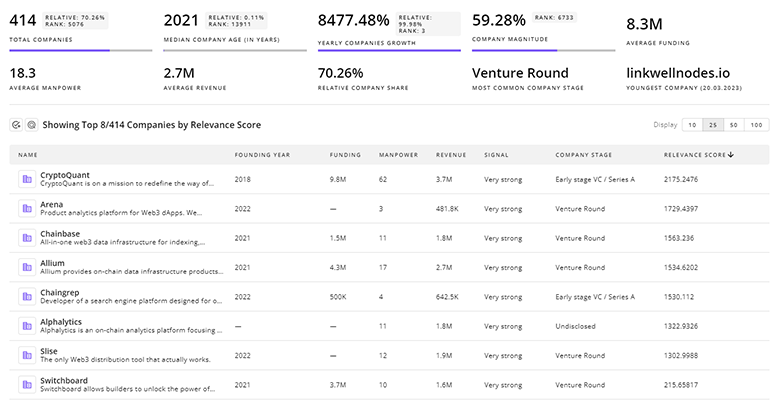
22.0K Hydrogen Economy Companies
Discover Hydrogen Economy Companies, their Funding, Manpower, Revenues, Stages, and much more
Hydrogen Economy Investors
Leverage TrendFeedr’s sophisticated investment intelligence into 8.3K Hydrogen Economy investors. It covers funding rounds, investor activity, and key financial metrics in Hydrogen Economy. investors tool is ideal for business strategists and investment experts as it offers crucial insights needed to seize investment opportunities.
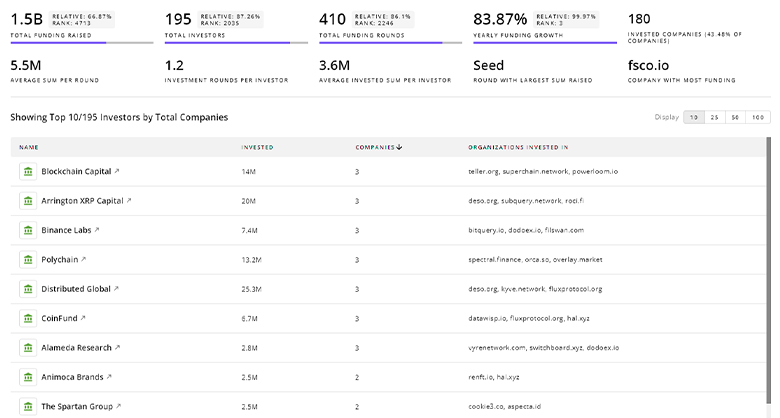
8.3K Hydrogen Economy Investors
Discover Hydrogen Economy Investors, Funding Rounds, Invested Amounts, and Funding Growth
Hydrogen Economy News
TrendFeedr’s News feature provides a historical overview and current momentum of Hydrogen Economy by analyzing 121.1K news articles. This tool allows market analysts and strategists to align with latest market developments.
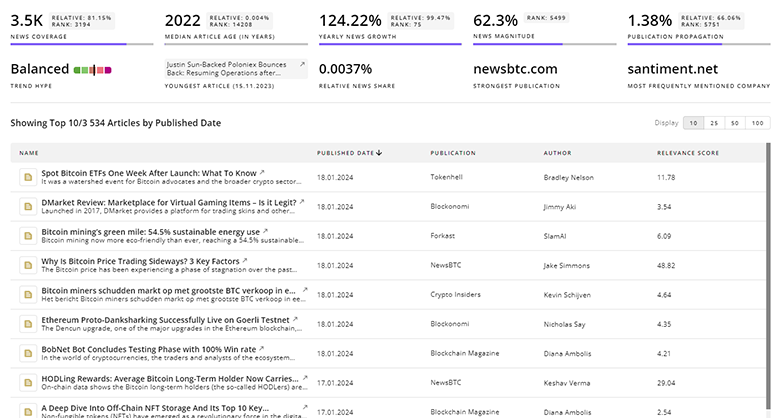
121.1K Hydrogen Economy News Articles
Discover Latest Hydrogen Economy Articles, News Magnitude, Publication Propagation, Yearly Growth, and Strongest Publications
Executive Summary
The hydrogen economy's near-term trajectory depends less on a single technology winner and more on portfolio economics across production, storage and logistics. Governments and large investors are de-risking projects and driving electrolyzer scale, which benefits players able to deliver gigawatt manufacturing and standardized system integrations. At the same time, alternative feedstock processes and carrier technologies offer defensible commercial niches that can underwrite low hydrogen prices through co-product value or lower distribution cost. For business leaders the strategic focus should be on (1) controlling delivered LCOH through integration of generation and logistics, (2) securing technology pathways that minimize reliance on scarce materials, and (3) structuring offtake and hub partnerships to remove demand risk during the build-out phase. Companies that combine scalable electrolyzer supply, flexible feedstock options and logistics solutions will command premium leverage as hydrogen shifts from demonstration to mainstream industrial supply.
Interested in contributing your expertise on trends and tech? We’d love to hear from you.