Incident Response Report
: Analysis on the Market, Trends, and TechnologiesThe incident response market is undergoing concentrated change: $46,810,000,000 market size in 2025 with a 23.8% CAGR is driving buyers to prioritize external-attack-surface controls, automated playbooks, and AI-assisted triage to close shrinking detection windows. High-frequency exploitation of internet-facing services (recent quarters showing a jump to 45% of IR engagements) and compressed attacker dwell times (average ~12 days) are forcing organizations to pair continuous external-asset discovery with automated containment and playbook execution.
The last update of this report was 201 days ago. If you spot incomplete or incorrect info, please let us know.
Topic Dominance Index of Incident Response
The Topic Dominance Index analyzes the time series distribution of published articles, founded companies, and global search data to identify the trajectory of Incident Response relative to all known Trends and Technologies.
Key Activities and Applications
Primary operational activities that define modern incident response
- External attack-surface discovery and hardening — continuous scanning and prioritization of internet-exposed applications and services to remove low-effort initial-access vectors; this activity addresses the rapid rise in public-facing application exploitation Incident Response trends Q1 2023.
- Automated orchestration and playbook execution — conversion of validated IR playbooks into machine-executable workflows (SOAR/XDR integrations) that perform triage, enrichment, and containment actions without manual handoffs.
- Rapid forensic capture and traceability — targeted collection of memory, endpoint telemetry, and cloud audit logs to preserve evidence and enable fast root-cause analysis, with audit trails used for regulatory reporting and executive risk mitigation.
- High-fidelity simulation and team training — immersive drills that replicate realistic multi-system incidents to shorten MTTR and improve human decision speed; vendors report measurable MTTR reduction from platform-based drills. This activity shifts preparedness from checklists to practice-under-pressure.
- Cloud and SaaS incident containment — rapid identity and session controls, workload segmentation, and automated revocation across cloud platforms to address the growing share of cloud-native compromises.
- Regulatory and insurance alignment — playbooks and response evidence tailored to breach notification laws and cyber-insurance requirements, ensuring legal, customer, and policy obligations are satisfied during and after incidents.
Emergent Trends and Core Insights
- Public-facing application exploitation becomes the primary vector. Quarterly telemetry shows a move from low single-digits to ~45% of engagements where internet-exposed apps are the initial access path, making continuous discovery and rapid patch/mitigation a priority.
- Compressed response windows; attack tempo rises. Average dwell has contracted to roughly 12 days, which reduces time available for manual analysis and increases the value of automated detection and containment 2025 Unit 42 Global Incident Response Report – Palo Alto Networks.
- AI becomes a force multiplier for defenders and attackers. Organizations that adopt AI-assisted detection and triage report up to 40% reductions in detection latency and roughly 30% reductions in investigation effort when AI supports enrichment and playbook selection 2025 Emerging Trends in Incident Response – IT and Cyber Solutions.
- Prescriptive automation — the shift from "detect" to "execute." Patented systems and products increasingly move beyond alerting to suggest and execute remediation steps tied to past incident outcomes, shortening the loop between detection and eradication.
- Hybrid incidents force combined cyber + physical playbooks. Large incidents increasingly involve operational disruption (supply chain, ICS, logistics). Organizations need unified playbooks that coordinate IT containment, physical resource recovery, and public-facing communications in parallel incident and emergency management market reports.
- Human factors and responder resilience require investment. Sustained high-tempo incident volumes increase burnout; training, certification, and post-incident wellness measures are rising priorities in program budgets.
Technologies and Methodologies
- Security Orchestration, Automation & Response (SOAR) and playbook engines — standardized, testable workflows that integrate SIEM/EDR/XDR telemetry with containment actions and runbook verification.
- AI/ML for triage and summarization — models that reduce analyst load by clustering alerts, scoring risk, and producing executive-ready timelines; emphasis on augmenting human decisions rather than replacing them.
- Cloud-native forensics and behavioral runtime detection — tooling that captures ephemeral artifacts in containers, serverless functions, and distributed workloads and flags attacker behavior in context (e.g. Kubernetes runtime verification).
- Unified incident management platforms for SRE and engineering — integrated on-call, incident channels, status pages, and retrospectives that shorten MTTR and embed learning loops into development processes incident.io.
- High-fidelity simulation and drill platforms — simulated production environments that stress communication, coordination, and technical responses to validate playbooks and accelerate skill acquisition.
- Geospatial Common Operating Picture (COP) and digital mapping — for physical incidents and hybrid events, layering assets, responder locations, and hazard zones on real-time maps improves coordination across agencies Critical Response Group.
- Integrated evidence and compliance workflows — automated capture of evidence and generation of audit packages to meet notification and insurance requirements, reducing post-incident legal exposure.
Incident Response Funding
A total of 815 Incident Response companies have received funding.
Overall, Incident Response companies have raised $67.3B.
Companies within the Incident Response domain have secured capital from 2.9K funding rounds.
The chart shows the funding trendline of Incident Response companies over the last 5 years
Incident Response Companies
- BreachRx — BreachRx offers an intelligent IR platform that auto-generates tailored breach plans and drives role-specific guidance through an incident lifecycle; the company reports 33 employees and $24.38M in funding and emphasizes integrated privileged communications and audit trails to reduce executive risk.
- Exigence Ltd. — Exigence delivers a SaaS IR planning and tabletop platform focused on automation of onboarding, war rooms, status pages and playbooks for IR teams, MSPs, and MSSPs; the vendor positions its templates and analytics to accelerate regulator and insurer readiness while enabling multi-tenant operations at scale.
- Uptime Labs — Uptime Labs provides immersive incident drill simulations that recreate realistic production outages; the company reports that its platform reduces MTTR by at least 20% in measured deployments and packages drill analytics to identify team and process gaps.
- ORNA — ORNA combines AI-guided detection triage with case management for small IR teams; the vendor advertises a 94% reduction in false positives via AI playbooks, and positions its product for teams that need rapid case building, regulatory reporting, and automated remediation guidance.
- IRScribe — IRScribe (Incident Scribe) focuses on DFIR workflows and audit-ready reporting, turning alerts into structured, visual timelines to accelerate investigations and provide compliance evidence for MSSPs and enterprise SOCs; the product is purpose-built for preservation and rapid reporting.
TrendFeedr’s Companies tool is an exhaustive resource for in-depth analysis of 7.9K Incident Response companies.
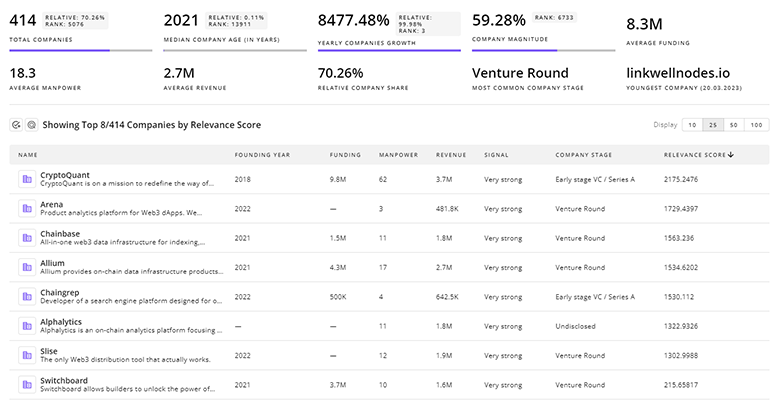
7.9K Incident Response Companies
Discover Incident Response Companies, their Funding, Manpower, Revenues, Stages, and much more
Incident Response Investors
The TrendFeedr’s investors tool features data on 3.5K investors and funding activities within Incident Response. This tool makes it easier to analyze complex investment patterns and assess market potential with thorough and up-to-date financial insights.
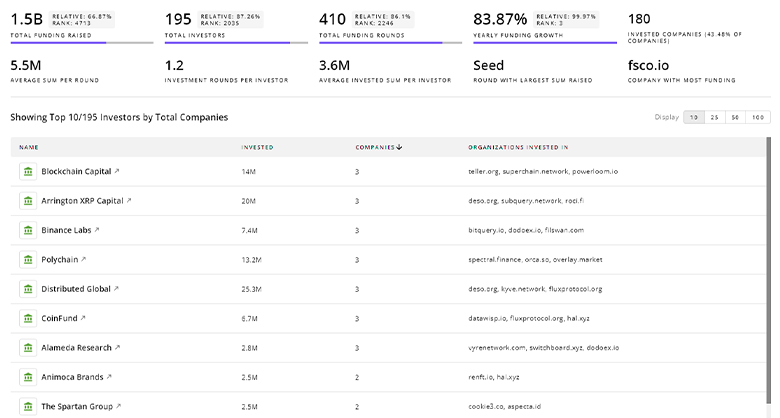
3.5K Incident Response Investors
Discover Incident Response Investors, Funding Rounds, Invested Amounts, and Funding Growth
Incident Response News
Stay ahead of the curve with Trendfeedr’s News feature. The tool provides access to 15.7K Incident Response. Navigate the current business landscape with historical and current Incident Response data at your fingertips.
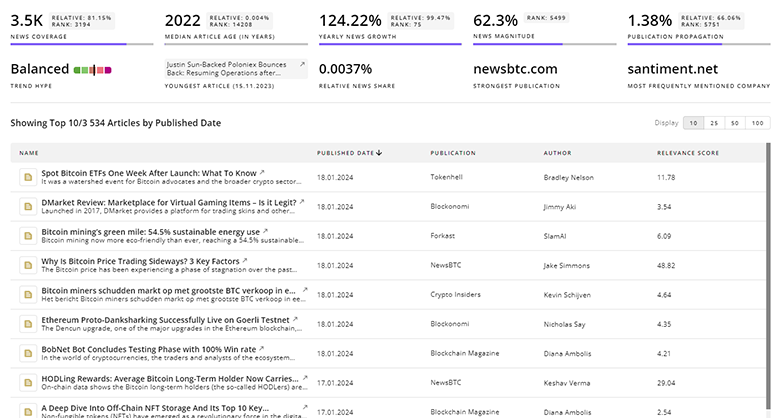
15.7K Incident Response News Articles
Discover Latest Incident Response Articles, News Magnitude, Publication Propagation, Yearly Growth, and Strongest Publications
Executive Summary
Incident response has moved from a primarily reactive discipline into a hybrid operational function that blends automated remediation, high-fidelity human training, and integrated cloud forensics. Market growth and telemetry force two simultaneous investments: continuous external-asset hygiene to remove low-effort access vectors and systems that convert validated human knowledge (playbooks and post-incident lessons) into reliable automated actions. For buyers, the immediate priorities are reducing detection latency, codifying response into testable playbooks, and ensuring evidence flows meet regulatory and insurance needs. For vendors, the decisive advantage will come from delivering verifiable automation that integrates into engineering and public-safety workflows while preserving human oversight and auditability.
If you’re an expert in trends or emerging tech, we invite you to contribute to our insights.