
Industrial AI Report
: Analysis on the Market, Trends, and TechnologiesThe industrial AI market sits at an inflection point: the internal trend data projects a market of USD 6.35 billion in 2025 with an expected CAGR of 46.2% that drives a long-range projection to USD 191.76 billion by 2034. This growth reflects two converging forces: high-value, measurable use cases (predictive maintenance and AI vision) that deliver immediate ROI and a parallel expansion of platforms and edge capabilities that let manufacturers move pilots into production fast (marketresearchfuture – 2025gminsights – 2024). The near-term commercial battleground will reward vendors that prove measurable uptime or yield improvements at scale while also addressing data quality, explainability, and industrial deployment constraints.
The last update of this report was 343 days ago. If you spot incomplete or incorrect info, please let us know.
Topic Dominance Index of Industrial AI
The Topic Dominance Index analyzes the time series distribution of published articles, founded companies, and global search data to identify the trajectory of Industrial AI relative to all known Trends and Technologies.
Key Activities and Applications
- Predictive maintenance and asset-performance management — real-time sensor analytics and failure-prediction models that reduce unplanned downtime and extend equipment life.
- Automated visual inspection and virtual metrology — camera + CNN pipelines for defect detection at line speeds, lowering false rejects and increasing yield (averroes.ai).
- AI-driven digital twins and simulation for process optimization — closed-loop twin + ML ensembles used to simulate parameter changes and validate production decisions before physical change.
- Edge AI for low-latency control and anomaly response — on-site inference to trigger immediate protective actions or corrective control without cloud roundtrips.
- AI agents and operator assistants — LLM-driven copilots and context-aware assistants that compress training time and surface root causes to frontline staff (4Cuesai).
- Supply-chain forecasting and production planning optimization — probabilistic demand models and prescriptive replenishment to reduce inventory and improve flow.
Emergent Trends and Core Insights
- Platform consolidation vs. niche specialization — buyers choose integrated data+models+deployment stacks or extremely focused point solutions that deliver measurable KPIs; success requires a clear economic metric (e.g. reduction in downtime, energy saved) (Augury).
- Data-centric production: pipelines, labels, and synthetic data matter more than new model architectures — firms invest heavily in DataOps, digital twins, and synthetic generation to scale repeatable models.
- Edge + hybrid cloud is the de facto deployment model — low latency and data sovereignty push inference to the edge while cloud hosts training and orchestration.
- Explainable and governed AI as a purchasing filter — regulated industries and large asset owners demand traceability and model explanations before widescale rollout.
- Visual inspection and perception reach industrial accuracy thresholds — academic and patent evidence shows >97%–99% detection accuracy at production speeds, enabling replacement or augmentation of human inspection in many lines.
- The "AI execution gap" — organizations adopt AI faster than they can reskill staff and industrialize data flows; the constraint shifts from model innovation to organizational change management.
Technologies and Methodologies
- Deep learning for time-series and vision tasks — CNNs for inspection and hybrid LSTM/CNN or transformer variants for multi-sensor fault detection.
- Digital twins and simulation-augmented training — using simulated scenarios to generate training data, run what-if optimization, and validate model actions before physical deployment.
- Edge inference stacks and AI in a box — compact on-prem inference appliances that reduce latency and keep sensitive telemetry on site (Syntient.ai).
- Hybrid physics-informed ML and model fusion — combining first-principle models with ML to improve generalization and reduce data needs for critical processes.
- No-code and low-code model creation platforms — enabling process engineers to build, validate, and deploy models without deep data-science resources.
- Explainable AI toolchains and governance frameworks — logging, counterfactuals, and human-in-the-loop validation as part of procurement criteria.
Industrial AI Funding
A total of 115 Industrial AI companies have received funding.
Overall, Industrial AI companies have raised $4.2B.
Companies within the Industrial AI domain have secured capital from 512 funding rounds.
The chart shows the funding trendline of Industrial AI companies over the last 5 years
Industrial AI Companies
- Tinental — Tinental packages patented AI for energy optimization and predictive maintenance focused on fluid-dynamic machines (pumps and motors); the company reports up to 60% energy reduction in targeted subsystems and claims 30% lower maintenance costs in deployed pilots, positioning the product as an energy and emissions lever for asset-intensive sites.
- Altitude AI — Altitude AI supplies Altitude OS, a perception-to-motion software layer that converts camera and force-sensor inputs into intelligent robot commands, enabling pre-existing robots to execute more complex tasks without mechanical change and accelerating automation cycles.
- Intelecy — Intelecy sells a no-code industrial AI platform that lets process engineers build production models quickly; the company emphasizes in-plant deployment, energy savings, and reduced unplanned downtime through engineer-driven model creation.
- Contrasto AI — Contrasto AI offers an open-source governance and compliance toolchain for industrial AI projects, addressing explainability and risk controls so enterprises can meet procurement and regulatory requirements while deploying agentic and automated systems.
TrendFeedr’s Companies tool is an exhaustive resource for in-depth analysis of 539 Industrial AI companies.
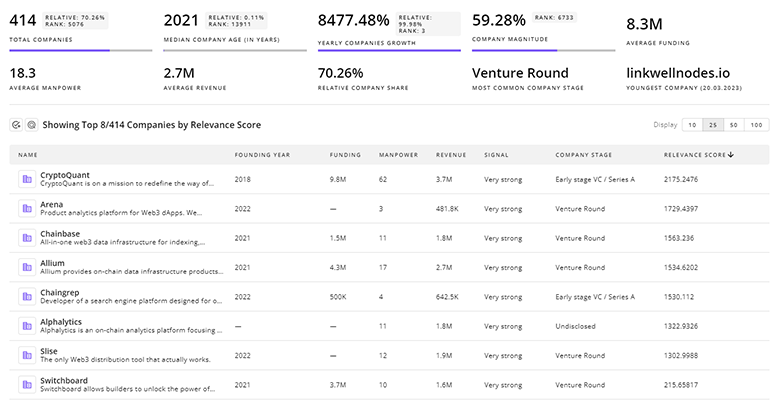
539 Industrial AI Companies
Discover Industrial AI Companies, their Funding, Manpower, Revenues, Stages, and much more
Industrial AI Investors
The TrendFeedr’s investors tool features data on 675 investors and funding activities within Industrial AI. This tool makes it easier to analyze complex investment patterns and assess market potential with thorough and up-to-date financial insights.
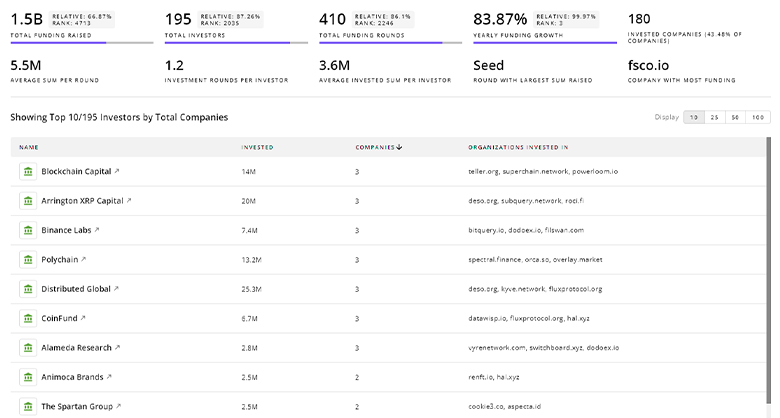
675 Industrial AI Investors
Discover Industrial AI Investors, Funding Rounds, Invested Amounts, and Funding Growth
Industrial AI News
Stay ahead of the curve with Trendfeedr’s News feature. The tool provides access to 1.7K Industrial AI. Navigate the current business landscape with historical and current Industrial AI data at your fingertips.
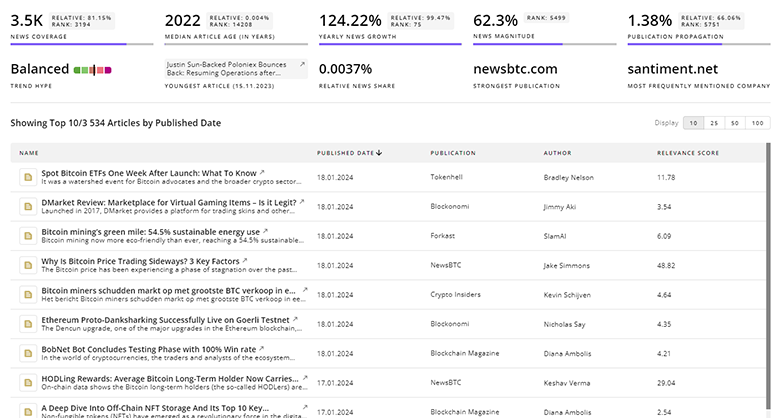
1.7K Industrial AI News Articles
Discover Latest Industrial AI Articles, News Magnitude, Publication Propagation, Yearly Growth, and Strongest Publications
Executive Summary
Manufacturers that convert the current wave of AI investment into measurable operational improvements—shorter downtime, higher yield, and lower energy use—will capture immediate financial value and create defensible reference cases. Execution will hinge on three practical priorities: (1) clean and production-grade data pipelines plus synthetic/twin-based augmentation to reduce model brittleness, (2) edge-first deployment patterns that respect latency and data-sovereignty constraints, and (3) embedding explainability, logging, and human-in-the-loop checks to satisfy asset owners and regulators. Financially, vendors must price for demonstrated payback and purchasers must require KPI-based proofs in pilot contracts; the firms that do both will lead purchasing decisions as industrial AI moves from experiments to production at scale.
If you’re an expert in trends or emerging tech, we invite you to contribute to our insights.