Information System Report
: Analysis on the Market, Trends, and TechnologiesThe information-system landscape is consolidating around cloud-first, AI-enabled platforms and sector-specific orchestration, with the topic reporting $186.02B in total funding to date—evidence of concentrated capital flow into scale and specialist players. Market analysis indicates accelerating technology adoption even as patent filings and news volume decline, creating a window for organizations that convert modular data governance, hybrid IT/OT integration, and security-centric architectures into measurable operational advantage Information System Market Analysis 2026 – Cognitive Market Research.
The last update of this report was 175 days ago. If you spot incomplete or incorrect info, please let us know.
Topic Dominance Index of Information System
The Topic Dominance Index analyzes the time series distribution of published articles, founded companies, and global search data to identify the trajectory of Information System relative to all known Trends and Technologies.
Key Activities and Applications
- Cloud migration and SaaS consolidation — Enterprises move legacy MIS and ERP workloads to multi-tenant cloud platforms to reduce run costs and enable centralized analytics; this shift supports the majority of new IS deployments and drives vendor consolidation Student Information System - Market Share Analysis, Industry Trends & Statistics.
- Verticalized information systems (healthcare, education, utilities) — Sector specialists embed compliance, clinical/operational workflows, and domain models to defend pricing power; this is especially visible in hospital IS and SIS rollouts where modularity and certification matter.
- IT/OT integration for real-time operations — Information systems now span plant floors and edge devices, using iPaaS and secure API fabrics to synchronize telemetry, control loops, and enterprise planning systems, reducing latency for critical decisions.
- Unified observability and incident correlation — Full-stack monitoring that links logs, metrics, and traces across hybrid estates shortens detection timelines and reduces tool sprawl; operational leaders report detection remains multiple times harder than resolution without integrated observability IT Trends Report 2025 – SolarWinds.
- Embedded compliance and ISMS integration — Information systems increasingly ship with policy automation and governance primitives to satisfy standards (HIPAA, GDPR, ISO 27001) and sector rules, turning security from a retrofit into a product requirement.
- Citizen development and low-code automation — Business teams use low-code/no-code tools to assemble workflows and dashboards, accelerating time-to-value and shifting a portion of customization spend away from central IT.
Emergent Trends and Core Insights
- AI/ML as a built-in capability, not an add-on — Vendors embed predictive models into record systems for forecasting, anomaly detection, and prescriptive actions; buyers now evaluate IS vendors on model governance and operational ML pipelines as much as on UI and integration.
- Hybrid architecture strategies — Organizations adopt cloud-native services plus controlled on-prem or edge processing for latency, sovereignty, or safety constraints; this hybrid posture forces vendors to provide consistent automation and IaC practices across environments.
- Data governance and provenance as competitive moats — With rising regulatory pressure and cross-boundary data sharing, companies that expose lineage, policy enforcement, and tokenization win enterprise commitments; patent activity and vendors emphasize secure modular integration for these functions.
- Observability and security converge — Security telemetry and operational observability now feed shared analytics to accelerate incident triage and forensics; this consolidates spend previously split across SIEM, APM, and logging stacks.
- Narrow, context-aware automation — Instead of generic RPA, teams build narrowly scoped automation that encapsulates industry rules and exceptions (clinical workflows, meter-to-cash processes), delivering measurable throughput gains and compliance evidence Customer Information System Market analysis.
Technologies and Methodologies
- Cloud-native microservices and API-first design — Modular services enable multi-tenant SaaS, easier upgrades, and ecosystem plugging; vendors highlight API stability and developer experience as purchasing criteria i2i Systems.
- AI/ML pipelines and model governance — Integrated feature stores, retraining workflows, and explainability controls are now evaluated alongside transactional capabilities in procurement decisions.
- DevOps, CI/CD, DevSecOps and Security as Code — Continuous delivery, automated security checks, and policy-as-code are standard for modern IS development to reduce mean time to deploy while maintaining compliance.
- Low-code/no-code platforms for domain specialists — These tools compress delivery timelines and allow domain experts to configure workflows and reports, shifting part of system ownership toward business units.
- Edge processing and local AI inference — Edge IS components process sensor and OT data locally to meet latency and bandwidth constraints, then federate summarized events to central platforms for correlation.
- Interoperability via standards and integration platforms — HL7/FHIR in healthcare, open APIs in education and utilities, and integration middleware/iPaaS reduce bespoke connectors and speed cross-system workflows.
Information System Funding
A total of 4.9K Information System companies have received funding.
Overall, Information System companies have raised $186.0B.
Companies within the Information System domain have secured capital from 14.7K funding rounds.
The chart shows the funding trendline of Information System companies over the last 5 years
Information System Companies
- 3Insys — 3Insys delivers a hybrid iPaaS tailored to utilities that stitches IT and OT data flows, identity and API management, and RPAs to automate meter-to-enterprise operations; its pragmatic focus on secure IT/OT orchestration helps utilities accelerate digital operations while containing risk from field-device heterogeneity. The company's utility-first connectors reduce custom integration effort and lower deployment lead times for smart-grid projects.
- iSAMS By IRIS — iSAMS offers cloud-native MIS and SIS solutions for schools across more than 1,700 campuses and emphasizes multi-platform access and user-centric portals; the vendor packages modules for admissions, academics, communications, and parent engagement and demonstrates steady financials and international reach that suit schools seeking a turnkey cloud transition.
- Intelligent Systems A/S — Focused on automated logistics control, this Danish firm builds the software intelligence for baggage handling, automated warehouses, and hospital logistics; its value lies in tightly coupling robotics/automation controllers with enterprise IS to achieve mission-critical throughput and deterministic behavior in high-velocity physical systems.
- SISL Global — SISL operates as a global systems integrator and infrastructure reseller with managed services across EMEA, NAM, LATAM, and APAC; its scale in delivery, 24/7 operations, and regional footprint provide practical execution capacity for enterprises migrating complex estates to cloud or hybrid models.
- IcSoft - Digital Manufacturing Solutions Company — IcSoft focuses on MES and ERP integration for manufacturing with prebuilt industry templates and no-code configuration to speed shop-floor digitalization; by combining digital twin concepts and composable modules it reduces the time required to standardize production data and integrate predictive analytics into manufacturing routines.
TrendFeedr’s Companies tool is an exhaustive resource for in-depth analysis of 82.4K Information System companies.
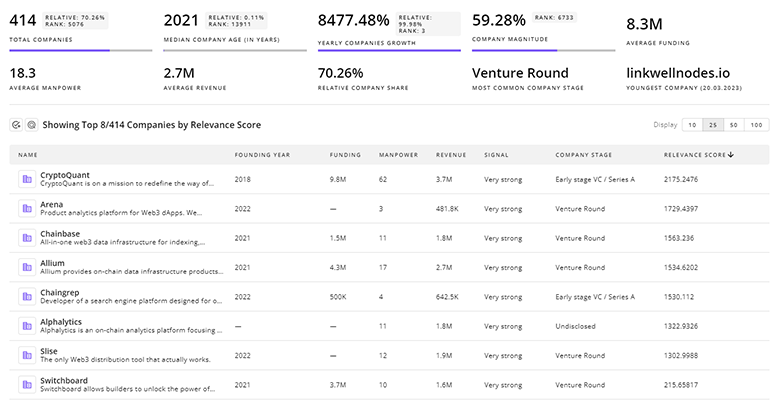
82.4K Information System Companies
Discover Information System Companies, their Funding, Manpower, Revenues, Stages, and much more
Information System Investors
The TrendFeedr’s investors tool features data on 12.2K investors and funding activities within Information System. This tool makes it easier to analyze complex investment patterns and assess market potential with thorough and up-to-date financial insights.
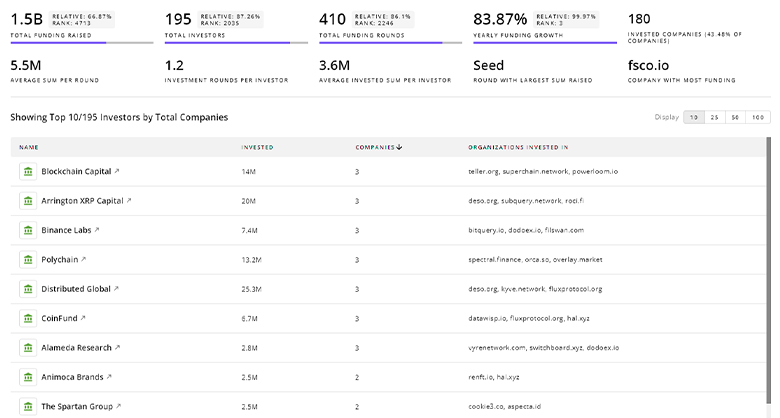
12.2K Information System Investors
Discover Information System Investors, Funding Rounds, Invested Amounts, and Funding Growth
Information System News
Stay ahead of the curve with Trendfeedr’s News feature. The tool provides access to 28.3K Information System. Navigate the current business landscape with historical and current Information System data at your fingertips.
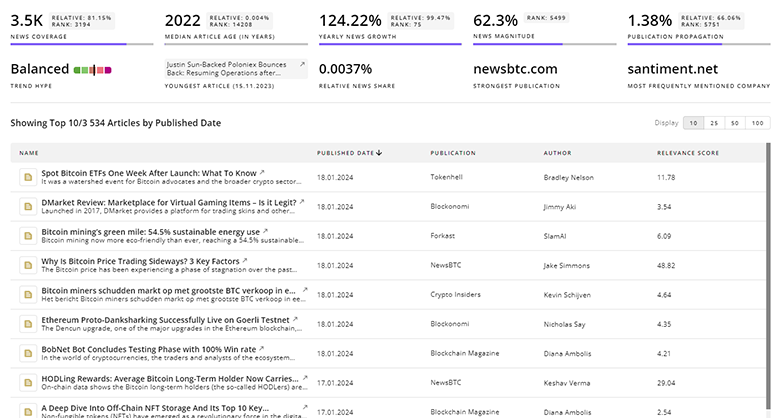
28.3K Information System News Articles
Discover Latest Information System Articles, News Magnitude, Publication Propagation, Yearly Growth, and Strongest Publications
Executive Summary
The information-system market rewards clarity of scope: vendors that convert domain expertise, compliance controls, and reliable integration into measurable operational outcomes secure durable contracts; generalist platforms must either scale rapidly or stitch deep vertical capabilities to retain margin. Capital is concentrated and selective, creating an opening for specialist vendors that expose clear ROI through shorter deployment cycles, embedded governance, and hybrid architectures that respect latency, sovereignty, and safety constraints. For buyers, procurement shifts from feature checklists to evaluation of model governance, integration velocity, and the vendor's ability to sustain secure, auditable data flows across edge, cloud, and enterprise systems.
If you’re an expert in trends or emerging tech, we invite you to contribute to our insights.