Land Management Report
: Analysis on the Market, Trends, and TechnologiesThe land-management sector is undergoing measurable repositioning where data, regulatory performance, and alternative revenue streams now determine asset value as much as crop yield; the market holds 3529 active companies with $15.14B total funding deployed across the theme, signaling concentrated capital but broad participation in service layers. This report synthesizes activity across soil health, rehabilitation, vegetation control, planning and software markets to show where investment and operational priorities will produce commercially measurable outcomes.
Our latest update of this report was 75 days ago. If you found a mistake or missing information, tell us!
Topic Dominance Index of Land Management
The Topic Dominance Index evaluates Land Management's significance by analyzing data on the distribution of news articles that mention Land Management, the timeline of newly founded companies working in this sector, and global search trends
Key Activities and Applications
- Valuation, Leasing and Title Administration — Commercial and energy sectors rely on structured lease acquisition, title research, and contract administration to reduce transaction risk and accelerate project timelines.
- Sustainable Agriculture and Soil-Health Programs — Service models (including subscription-based Soil as a Service) package soil improvement and monitoring so landowners access measurable productivity gains and carbon outcomes.
- Ecological Restoration and Land Rehabilitation — Reclamation of mined and degraded sites using engineered landforms, biodegradable seed pods, and native-species replanting converts marginal acreage into functioning ecosystems for conservation or productive use.
- Vegetation and Right-of-Way Management — Utilities, railroads, and renewables require vegetation clearance and integrated vegetation management (IVM) programs supported by drones and robotics to protect assets and reduce wildfire/operational risk; this market shows a 2024 baseline of $1.58B with projected growth to $2.36B by 2033.
- Public-Land Multiple-Use Administration and Monitoring — Large federal datasets and Rapid Ecoregional Assessments (REAs) form the backbone for management decisions across millions of acres and enable standardized compliance reporting Data for Public Land Management.
- Permit Acceleration and Zoning Optimization — Online permitting platforms and standardized rule sets shorten approvals for development and renewable projects, changing time-to-market for land conversion and infrastructure GovPilot – Five Trends Shaping Land Use for 2026 and Beyond.
Emergent Trends and Core Insights
- Geospatial software is becoming the operational baseline for land transactions and program delivery; the land-management software market moved from $2.00B in 2024 to $2.16B in 2025 and is forecast to reach $2.91B by 2029, underlining sustained investment in digital field intelligence.
- Carbon and natural-capital monetization convert ecological health into recurring cash flows; carbon marketplaces and high-integrity measurement practices drive farmer and landowner participation.
- Public-private hybrid delivery of monitoring and compliance is intensifying: federal data standards reduce reporting lag and allow private analytics firms to build product layers that scale across REAs and national datasets.
- Regional divergence in land value is widening: Sunbelt cash-rent and land-value growth outpace interior regions (for example, reported 5.2% YoY cash-rent growth in Texas in 2024) which reshapes where developers and investors allocate capital Land Trends – ASFMRA.
- Decision-grade remote sensing and AI are enabling site-level risk scoring that supports faster permitting and more targeted stewardship payments; this materially reduces advisory friction in sourcing conservation or renewable-project acreage.
- The patent corpus shows the sector shifting from physical remediation to integrated, data-driven optimization—this indicates near-term productization of adaptive management systems that tie sensor inputs to actuators and verified outcomes (soil carbon, grazing intensity, hydrology).
Technologies and Methodologies
- Geospatial AI and Satellite Basemaps — High-frequency NDVI/biophysical basemaps combined with machine learning permit rapid opportunity sourcing, risk scoring and MRV for nature-based contracts thebusinessresearchcompany – Land Management Software Market Insights, 2025.
- Soil Health Platforms and SHaaS — Cloud platforms that integrate in-field probes, laboratory assays, and satellite joins create auditable soil-health indexes suitable for supply-chain premiums or carbon programs.
- Integrated Vegetation Management (IVM) with Robotics — Drones, autonomous mowers and targeted sprayers lower OPEX for utilities and solar farms while improving compliance and safety.
- Low-Impact Landform Design and Biodegradable Regeneration Tech — GeoFluv™ landform design, biodegradable seed pods, and natural microbial amendments accelerate establishment on steep or post-mining sites, shortening recovery timelines and lowering life-cycle costs.
- Blockchain for Land Records and Compliance Ledgers — Immutable registries are appearing to streamline title, lease and carbon credit provenance for multiple stakeholders and reduce audit friction.
- Scenario Planning & Multi-Objective Optimization — Tools combining NSGA-II/PLUS simulation, hydrology models and economic forecasts enable planners to balance production, biodiversity and carbon outcomes under constrained budgets.
Land Management Funding
A total of 307 Land Management companies have received funding.
Overall, Land Management companies have raised $16.3B.
Companies within the Land Management domain have secured capital from 689 funding rounds.
The chart shows the funding trendline of Land Management companies over the last 5 years
Land Management Companies
- Sages Networks — Sages Networks provides cloud-based integrated land management platforms focused on government and agency clients; it raised $2.5M seed funding to expand data services that reduce permitting timelines and improve public-sector land operations. The company emphasizes interoperability with GIS and national datasets to deliver a single operational view for field teams, enabling faster program rollout for conservation and infrastructure projects.
- Raindance Systems — Raindance Systems develops aerial incendiary systems and will showcase mechanized fire-management and re-seeding tools at industry exhibitions, positioning itself to serve large-scale restoration and wildfire-fuel reduction programs. Their hardware-software approach reduces manual labor on remote sites and aligns with asset owners seeking measurable fuel-treatment outcomes.
- ArchAI — ArchAI launched a product for historical land-use analysis, offering archived basemaps and machine-assisted restoration planning; that capability supports due diligence for rehabilitation and biodiversity-net-gain transactions. By combining historical imagery with habitat models, they lower advisory costs for restoration project scoping and make bankable project outcomes more visible to investors.
- Land Betterment — Land Betterment focuses on technology for sustainable agriculture and received a $175K USDA NIFA SBIR grant to advance container-based sustainable agriculture and field-scale rehabilitation tools. Their solutions apply when degraded parcels require staged interventions and where commercial returns depend on rapid, verifiable improvement in soil function.
- BurnBot — BurnBot builds remote-operated prescribed-fire systems and mechanized wildfire fuel-treatment units; the company recently attracted Series A investment to commercialize mechanized fuel reduction technologies that cut crew risk and deployment time. Their products address the precise needs of utilities, conservation agencies and large landowners to perform controlled burns in a manner that links to monitoring and compliance workflows.
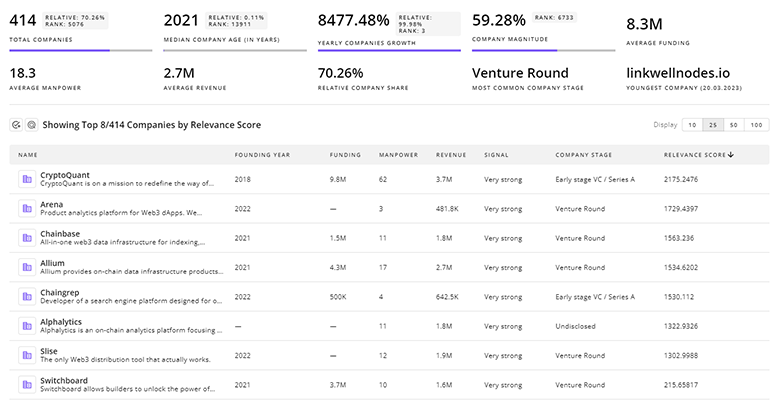
Explore comprehensive profiles of 4.0K companies shaping the future of Land Management with TrendFeedr's Companies feature.
4.0K Land Management Companies
Discover Land Management Companies, their Funding, Manpower, Revenues, Stages, and much more
Land Management Investors
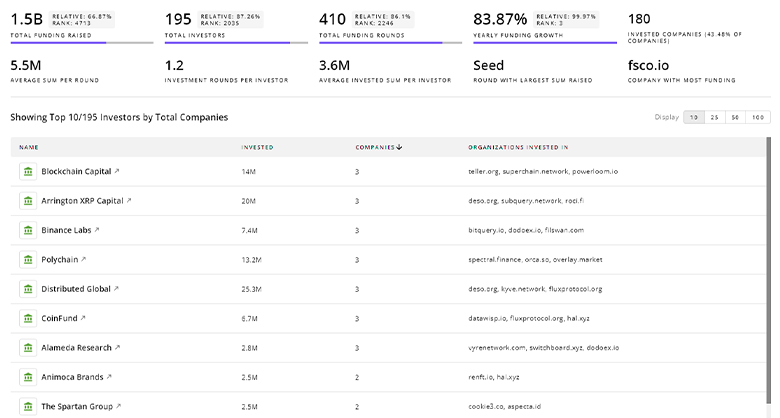
TrendFeedr’s Investors tool allows you to explore detailed investment activities and trends based on 568 Land Management investors. This tool provides an in-depth analysis of funding rounds and market dynamics to make informed investment decisions.
568 Land Management Investors
Discover Land Management Investors, Funding Rounds, Invested Amounts, and Funding Growth
Land Management News
Stay updated with TrendFeedr’s News feature, which offers you access to 6.7K Land Management articles. This tool provides you with a comprehensive understanding of the historical and current trends shaping the market.
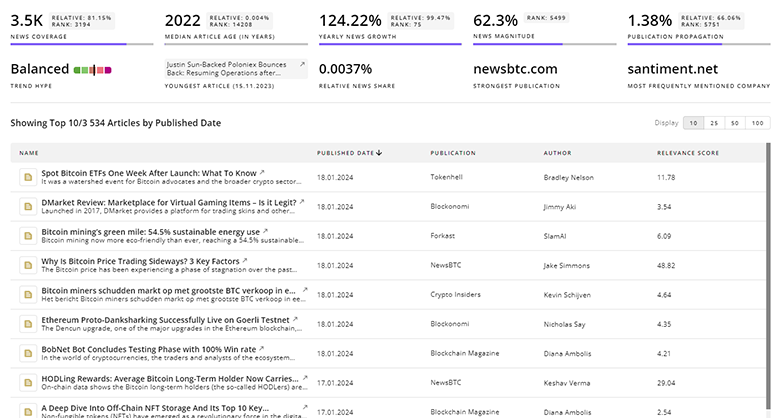
6.7K Land Management News Articles
Discover Latest Land Management Articles, News Magnitude, Publication Propagation, Yearly Growth, and Strongest Publications
Executive Summary
Land management now sits at the intersection of engineering, ecology and finance. Operational leaders must combine field-grade diagnostics (soil probes, vegetation mapping), verifiable outcome frameworks (carbon and biodiversity metrics) and streamlined regulatory execution (digital permitting, standardized REAs) to convert ecological performance into durable revenue lines. The most immediate commercial returns will come to organizations that integrate high-frequency spatial intelligence with outcome-based contracting and make stewardship measurable in investor terms. Functional priorities for practitioners and investors should be: convert monitoring into auditable metrics, reduce friction in permitting and title processes through digital platforms, and invest in technologies that reduce unit cost of rehabilitation per acre while preserving downstream proof chains for natural capital markets.
We’re keen to partner with subject matter experts to enrich our coverage. Think you can help? Let us know.