Large Scale Solar Report
: Analysis on the Market, Trends, and TechnologiesThe large scale solar sector is entering a phase of concentrated growth and commercial scaling: global utility-scale deployments exceeded 240 GW operational in 2024, the U.S. added 32 GW of utility-scale capacity in 2024, and the internal trend data places the 2023 market size at $229.68 billion with a projected CAGR of 13.77%—figures that together signal rapidly rising project pipelines, heavy policy support, and clear financing demand Wind and solar year in review 2024 – Global Energy Monitor US Solar Industry Set for a Landmark Year in 2024 with Record Growth Projected – Renewable Institute.
Our latest update of this report was 99 days ago. If you found a mistake or missing information, tell us!
Topic Dominance Index of Large Scale Solar
The Topic Dominance Index evaluates Large Scale Solar's significance by analyzing data on the distribution of news articles that mention Large Scale Solar, the timeline of newly founded companies working in this sector, and global search trends
Key Activities and Applications
- Utility-scale PV farm development: end-to-end project delivery (site selection, permitting, financing, EPC, O&M) remains the primary commercial activity and the main source of capacity additions in high-growth markets Solar Market Insight Report 2024 Year in Review – SEIA.
- Community solar aggregation and subscription platforms: shared-ownership projects expand access for renters and non-rooftop customers and are driving sizeable regional additions (e.g. NY and ME growth)
- Solar-plus-storage plants and BESS integration: pairing PV with battery systems to provide capacity, time-shifted energy, and grid services is now a core application for utility and C&I projects
- Agrivoltaics and co-location with productive land uses: projects combining farming and PV reduce land conflict and improve social acceptance while opening new revenue streams
- Floating PV and unconventional siting (landfills, quarries, reservoirs): these applications reduce competition for agricultural land and are gaining traction in constrained geographies
- Advanced deployment methods (on-site modular factories, robotic installation): automation and on-site manufacturing accelerate large project delivery and reduce labor constraints
Emergent Trends and Core Insights
- Concentrated annual additions with geographic concentration. Global additions concentrate in a few countries but emerging import markets (e.g. Pakistan, Saudi Arabia) are expanding demand, signaling future supply-chain diversification Solar power continues to surge in 2024 – Ember
So what: developers and financiers must model supply risk and procurement timelines into project schedules and cost forecasts. - Storage has moved from optional to required for many large projects. Project designs now routinely include multi-hour BESS to capture arbitrage and provide grid services Large-scale solar with 600 MWh of storage now operational in California.
So what: LCOE comparisons need to include storage capex and stacked revenue streams (capacity, ancillary, merchant). - Module and system scale economics: large-format modules, bifacial designs, and higher voltage systems (shift toward 2 kV systems) drive lower balance-of-system costs and improved plant yields Solar Builder Magazine.
So what: equipment selection now materially affects BOS, interconnection studies, and inverter architecture decisions. - Platformization and vertical integration: market momentum favors companies that combine development, manufacturing, financing, and digital O&M capabilities SolarBank Corporation.
So what: specialist vendors must choose between partnering with platform players or differentiating via narrow, high-value capabilities. - Policy and project pipelines create near-term opportunities and financing pressure: the U.S. recovery in installations plus government incentives are concentrating project closures in tight time windows
So what: speed to finance and interconnection readiness are often the decisive project risk factors.
Technologies and Methodologies
- Large-format, high-efficiency PV modules and bifacial panels: raise per-module wattage and energy yield per land area; common in utility deployments and large projects
- Advanced tracking systems and elevated dual-axis trackers: increase capacity factor where land or shading conditions permit; enable dual-use ground activities (agrivoltaics)
- Solar plus battery architectures (LFP, NMC) and integrated control stacks: plant designs increasingly specify multi-hour BESS sized to capture peak price spreads and provide ancillary services UVcell Solar.
- CSP and thermal storage for dispatchable renewables: molten salt, PCM, and supercritical CO2 cycles provide 24/7 solar options for industrial heat and baseload replacement in select markets.
- Automation, digital twins, and aerial intelligence: drone surveys, AI analytics, and robotics shorten construction schedules and reduce O&M cost per MW
- Higher system voltages and next-gen power electronics: migration to 2 kV systems and inverter specialization reduces conductor costs and BOS losses for very large plants Solar Power World.
Large Scale Solar Funding
A total of 177 Large Scale Solar companies have received funding.
Overall, Large Scale Solar companies have raised $34.8B.
Companies within the Large Scale Solar domain have secured capital from 580 funding rounds.
The chart shows the funding trendline of Large Scale Solar companies over the last 5 years
Large Scale Solar Companies
-
Gridworks Technology, LLC — Gridworks combines automated on-site manufacturing with AI data tools to accelerate utility-scale delivery; the company promotes a “field factory” approach that preassembles modules, trackers, and harnesses near site to cut schedule risk and labor intensity. Gridworks targets utility and green hydrogen projects where rapid, repeatable deployment yields margin advantages. Its model directly addresses current EPC bottlenecks and shortens the path from procurement to commissioning.
-
Stracker Solar — Stracker manufactures elevated dual-axis tracker systems intended for C&I and community solar sites; its elevated design preserves ground use and yields 50–70% more energy than fixed systems per comparable footprint. The technology fits well for parking canopies, agrivoltaic setups, and campuses where land use optimization matters.
-
Jack’s Solar Garden — A community-scale agrivoltaic project combining a 1.2 MW DC solar garden with pollinator habitat and research partnerships; the enterprise packages community subscription models, agricultural co-benefits, and local education programs. That integrated social model reduces siting friction and creates a replicable template for community buy-in in contested permitting environments.
-
Sitemark — Sitemark supplies an AI and robotics platform that centralizes drone and site data across design, construction, and O&M; it supports portfolio managers with automated quality assurance and performance analytics across 150 GWp of managed sites. For large developers and owners, Sitemark shortens decision cycles for rework, optimizes O&M schedules, and improves asset performance benchmarking.
-
Second Life Solar — This company packages circular-economy services: life-extension maintenance, decommissioning with recycling pathways, and redeployment of “second-life” modules and systems into community projects and mobile solar solutions. The model reduces asset replacement costs and supports ESG procurement criteria for corporate and public sector buyers.
Explore comprehensive profiles of 1.2K companies shaping the future of Large Scale Solar with TrendFeedr's Companies feature.
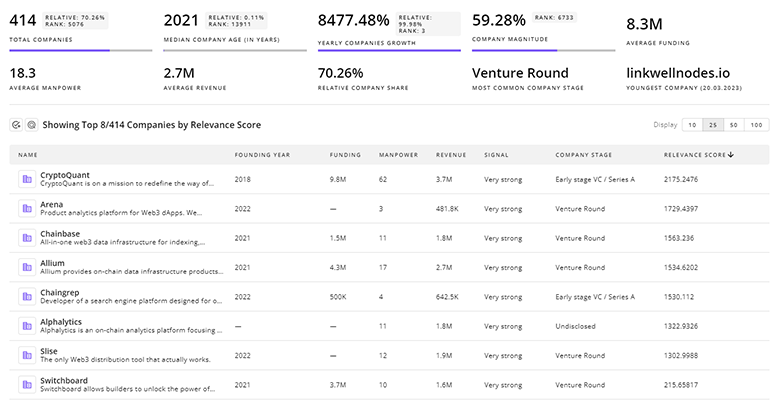
1.2K Large Scale Solar Companies
Discover Large Scale Solar Companies, their Funding, Manpower, Revenues, Stages, and much more
Large Scale Solar Investors
TrendFeedr’s Investors tool allows you to explore detailed investment activities and trends based on 616 Large Scale Solar investors. This tool provides an in-depth analysis of funding rounds and market dynamics to make informed investment decisions.
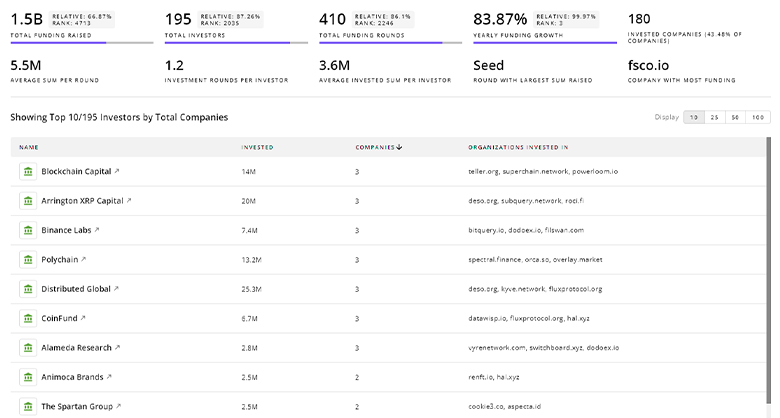
616 Large Scale Solar Investors
Discover Large Scale Solar Investors, Funding Rounds, Invested Amounts, and Funding Growth
Large Scale Solar News
Stay updated with TrendFeedr’s News feature, which offers you access to 7.6K Large Scale Solar articles. This tool provides you with a comprehensive understanding of the historical and current trends shaping the market.
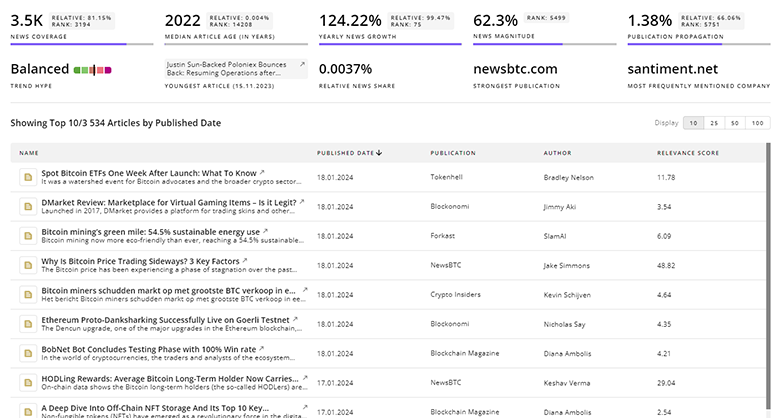
7.6K Large Scale Solar News Articles
Discover Latest Large Scale Solar Articles, News Magnitude, Publication Propagation, Yearly Growth, and Strongest Publications
Executive Summary
Large-scale solar now sits at the intersection of accelerated deployment, tighter supply-chain dynamics, and concentrated policy support. Near term, winners will be those who control project delivery speed, secure cost-competitive module and BESS supply, and stack multiple revenue streams (PPA, capacity, ancillary services). Companies that pair geometric yield gains (large modules, bifacial and tracking) with digital asset management and streamlined capital structures can compress payback timelines and reduce merchant exposure. Meanwhile, agrivoltaics, floating PV, and circular-economy service models will open differentiated pathways for developers facing land, permitting, or ESG constraints. Investors and operators should prioritize capital allocation to integrated platforms and scalable enablers while preserving optionality to partner with niche innovators that materially raise plant yield or cut installation cycle times.
We’re keen to partner with subject matter experts to enrich our coverage. Think you can help? Let us know.