Life Sciences Solutions Report
: Analysis on the Market, Trends, and TechnologiesThe life sciences solutions market shows high-growth potential, with the internal trend data valuing the life-sciences IT segment at USD 25.46 billion in 2024 and projecting USD 49.32 billion by 2029 (CAGR 14.1%), driven by rapid adoption of cloud SaaS, AI analytics, and lab automation that compress R&D timelines and reduce per-experiment cost.
Our latest update of this report was 172 days ago. If you found a mistake or missing information, tell us!
Topic Dominance Index of Life Sciences Solutions
The Topic Dominance Index evaluates Life Sciences Solutions's significance by analyzing data on the distribution of news articles that mention Life Sciences Solutions, the timeline of newly founded companies working in this sector, and global search trends
Key Activities and Applications
- AI-assisted discovery and target validation: machine learning ingests multi-omics and real-world data to prioritize targets and predict ADMET profiles, cutting early attrition and preclinical cycles.
- Laboratory automation and high-throughput screening: robotic liquid handling, automated sample prep, and integrated LIMS/ELN pipelines increase throughput and reproducibility in discovery and assay development.
- Multi-omics data integration and clinical decision support: platforms that merge genomics, proteomics, metabolomics and EHR data enable patient stratification and biomarker development for precision therapies.
- Bioprocess analytics and single-use manufacturing enablement: in-line process telemetry and disposable trains support faster scale-up for biologics, cell and gene therapies.
- Supply-chain visibility for temperature-sensitive biologics: IoT sensors, blockchain records, and predictive analytics protect product integrity across cold chains for vaccines and cell therapies.
- Advanced diagnostic and spatial biology assays: spatial proteomics and multiplexed imaging accelerate companion diagnostic development for oncology and immuno-oncology Lunaphore (a Bio-Techne brand) and broader imaging market analyses.
Emergent Trends and Core Insights
- AI/ML becomes production software, not an experiment: AI is shifting from pilots to embedded pipelines (medical writing, predictive toxicology, image analysis), forcing vendors to provide validated, auditable models to satisfy regulators and GxP practices; adopters gain measurable time savings in IND/CTA preparations and industry outlooks that prioritize AI for 2025 action plans Slalom 2025 outlook.
So what: firms that deliver production-grade, compliance-ready AI can convert efficiency gains into contract wins and acquisition interest. - Platform consolidation plus specialist verticals: large instrument and software vendors expand via acquisitions while niche specialists capture workflow adjacencies (e.g. spatial biology, microbiome analytics), creating buy or partner decisions for mid-sized life sciences companies and echoed in instrument market mapping Lab Instrumentation Markets 2024.
So what: commercial strategy must balance platform reach with deep vertical features that justify premium pricing or M&A. - Automation meets sustainability and cost pressure: automated, single-use workflows reduce contamination risk and water/energy use; sustainability becomes a procurement filter for large CDMOs and pharma.
So what: sustainability-aligned process improvements deliver dual ROI: operating cost reduction and easier procurement in ESG-screened RFPs. - Real-world evidence (RWE) and federated analytics grow clinical value: federated genomic/genomic-clinical platforms allow multi-site model training without moving PHI, enabling broader validation of predictive biomarkers.
So what: companies that enable secure federated analytics become strategic partners to hospitals and pharma for late-stage validation. - Supply-chain digitalization for cell & gene therapies: the complexity and temperature sensitivity of autologous treatments increase demand for validated cold-chain telemetry and GMP-grade logistics services.
So what: logistics providers with validated digital records and temperature control gain preference for high-value therapy launches.
Technologies and Methodologies
- Generative and predictive AI for molecular design and ADMET modeling: AI accelerates lead optimization and in-silico safety screens, reducing wet-lab iterations.
- Multi-omics and single-cell platforms (NGS + proteomics + metabolomics): integrated pipelines enable deep phenotyping and biomarker discovery for precision oncology and chronic disease management.
- Lab automation, liquid-handling robots, and integrated LIMS/ELN: these create reproducible, auditable workflows that scale assay throughput and shorten timelines.
- Microfluidics and lab-on-chip for point-of-need assays: reduce sample volume, accelerate turnaround, and enable decentralized testing.
- Continuous bioprocessing and single-use bioreactors for biologics: support faster scale-up and lower capital intensity for CDMOs and manufacturers.
- Advanced mass spectrometry and AI-driven proteomics for high-throughput biomarker panels: critical to translational pipelines and CLIA-grade assays Biognosys acquisition context and proteomics capabilities.
Life Sciences Solutions Funding
A total of 1.0K Life Sciences Solutions companies have received funding.
Overall, Life Sciences Solutions companies have raised $162.3B.
Companies within the Life Sciences Solutions domain have secured capital from 3.4K funding rounds.
The chart shows the funding trendline of Life Sciences Solutions companies over the last 5 years
Life Sciences Solutions Companies
Cmbio
Cmbio offers multi-omics microbiome and metabolomics services with integrated analytics for human, animal and environmental applications; its end-to-end capability (sampling kits, long-read metagenomics, metabolomics panels and AI-enabled analytics) makes it a partner for microbiome therapeutics and precision nutrition programs seeking regulatory and clinical validation.CellTivity Scientific
CellTivity commercializes Dynamic Cell Imaging (DCI) for real-time metabolic mapping of fresh biopsies at point-of-care, enabling immediate biopsy adequacy assessment without destroying samples; that workflow reduces indeterminate biopsy rates and preserves tissue for downstream NGS, making it attractive to interventional oncology teams and diagnostic labs.BioIntelligence Technologies
BioIntelligence sells an in-line analytics and sensor suite for fermenters and bioreactors, delivering real-time KPIs and anomaly detection that reduce contamination risk and improve yield; their turnkey analytics target industrial bioprocessing and alternative protein manufacturers that need operational predictability at scale.LABMaiTE GmbH
LABMaiTE provides patented AI systems that design and execute biological experiments and optimize conditions automatically; by reducing manual trial-and-error loops, the company targets bioprocess teams and cell culture labs that need faster scale-up and reproducible experimental designs.
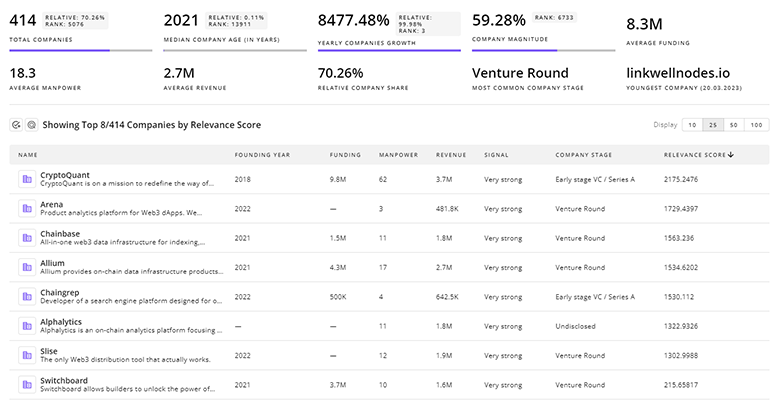
Explore comprehensive profiles of 7.5K companies shaping the future of Life Sciences Solutions with TrendFeedr's Companies feature.
7.5K Life Sciences Solutions Companies
Discover Life Sciences Solutions Companies, their Funding, Manpower, Revenues, Stages, and much more
Life Sciences Solutions Investors
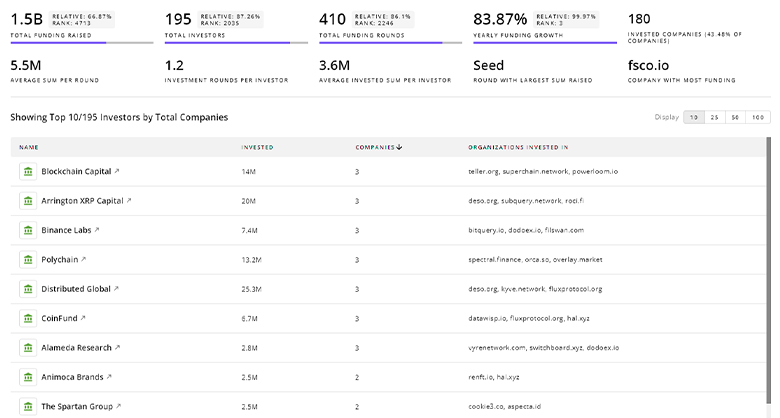
TrendFeedr’s Investors tool allows you to explore detailed investment activities and trends based on 3.4K Life Sciences Solutions investors. This tool provides an in-depth analysis of funding rounds and market dynamics to make informed investment decisions.
3.4K Life Sciences Solutions Investors
Discover Life Sciences Solutions Investors, Funding Rounds, Invested Amounts, and Funding Growth
Life Sciences Solutions News
Stay updated with TrendFeedr’s News feature, which offers you access to 5.0K Life Sciences Solutions articles. This tool provides you with a comprehensive understanding of the historical and current trends shaping the market.
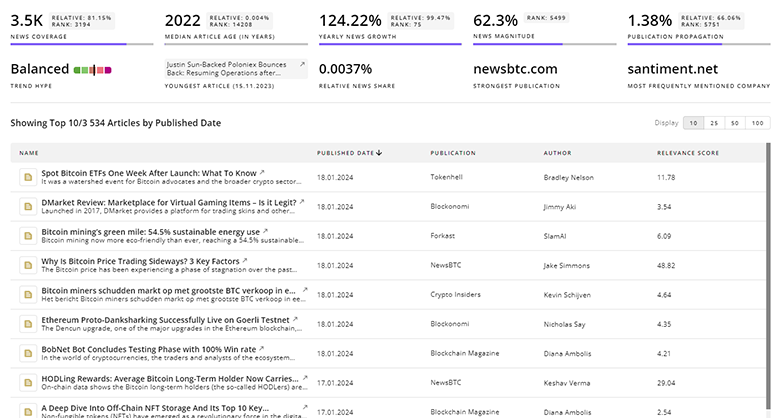
5.0K Life Sciences Solutions News Articles
Discover Latest Life Sciences Solutions Articles, News Magnitude, Publication Propagation, Yearly Growth, and Strongest Publications
Executive Summary
The life sciences solutions market now separates winners from followers by two capabilities: the ability to deliver validated, auditable AI/analytics tied to regulated workflows, and the ability to integrate hardware and data across the lab-to-clinic value chain. Quantitative forecasts show substantial software and tools demand over the next five to ten years; for buyers, that means prioritize vendor interoperability, data integrity, and regulatory readiness. For vendors and investors, the clearest paths to capture value are (1) productizing AI into compliance-ready modules for discovery and regulatory submissions, (2) partnering with CDMOs and logistics providers to offer validated bioprocess and cold-chain stacks, and (3) staking leadership in high-growth verticals such as spatial biology, microbiome analytics and precision oncology diagnostics. Implementing these priorities will convert current technology adoption into durable commercial advantage and exit value.
We’re keen to partner with subject matter experts to enrich our coverage. Think you can help? Let us know.