Long Duration Energy Storage Report
: Analysis on the Market, Trends, and TechnologiesThe long-duration energy storage (LDES) market is shifting from pilot demonstrations to commercial scale, driven by accelerating deployments and capital flows: the internal trend report places market CAGR at 14.6% and records $36.59B total funding across the sector, signaling an inflection where duration, not just power, defines value.
Our latest update of this report was 24 days ago. If you found a mistake or missing information, tell us!
Topic Dominance Index of Long Duration Energy Storage
The Topic Dominance Index evaluates Long Duration Energy Storage's significance by analyzing data on the distribution of news articles that mention Long Duration Energy Storage, the timeline of newly founded companies working in this sector, and global search trends
Key Activities and Applications
- Grid-scale renewable firming and load shifting — systems sized for 8+ hours and multi-day discharge to move surplus solar and wind into evening and cloudy-period supply; this use case is the primary demand driver in market forecasts and project pipelines.
- Seasonal and multi-day thermal delivery for industry — thermal LDES stores heat for industrial processes (e.g. steel, cement, chemicals) at high temperatures and displaces fossil heat sources, an application explicitly cited in industry application lists.
- Beyond-grid resilience (microgrids, remote sites, data centers) — long autonomy (day-to-week) systems for mission-critical loads and off-grid industrial demand represent a fast-growing commercial segment.
- Ancillary-service stacking and revenue optimization — LDES projects increasingly combine energy arbitrage with frequency/voltage services and capacity market participation; optimization software and trading strategies are integral to project economics.
- Infrastructure repurposing and geological storage — salt caverns and underground reservoirs enable very large-scale, low-loss deployments where geography allows, expanding pumped-hydro and compressed-air options beyond classical surface reservoirs.
Emergent Trends and Core Insights
- Duration stratification: 8–24 h vs >36 h — the market is segmenting by duration: native 8–24 hour systems win near-term procurements, while >36 hour and seasonal solutions attract strategic, system-level planning and sovereign finance.
- Physics diversification beyond electrochemistry — thermal, gravity, compressed-CO2 and liquid/gas cycles are moving from R&D into demonstrator and commercial projects because they decouple energy storage scale from battery raw-material constraints.
- Non-lithium chemistries scale to meet multi-day needs — iron-air, iron flow, zinc-based, and sodium-ion developers are closing cost gaps for long durations where lithium-ion's coupled power/capacity economics fail.
- Policy and market design are enabling bankability — capacity tenders, minimum-duration procurement rules, and targeted R&D grants are shifting risk profiles and improving project finance for LDES assets in multiple jurisdictions.
- Software and asset optimization as value multipliers — advanced EMS, AI trading, and asset orchestration increasingly determine revenue capture, making the software layer a strategic differentiator irrespective of hardware pathway.
Technologies and Methodologies
- Pumped hydro and high-density hydro variants — conventional PHS remains dominant where geography permits; high-density fluids and novel hydraulics reduce footprint and open new sites The Global Long Duration Energy Storage Market 2026-2046.
- Flow and metal-air chemistries — iron flow, vanadium alternatives, zinc and iron-air chemistries decouple energy scaling from cell power stacks and are optimized for day-to-week discharge profiles We're going to need a lot more grid storage. New iron batteries could help..
- Thermal batteries and thermochemical cycles — molten salts, packed ceramic beds, particle and CO2 cycles store large amounts of energy at low material cost and supply heat or electricity on demand for industrial and grid uses Long Duration Energy Storage Market - Global Industry Size.
- Gravity and mass-lifting systems — solid gravity, vehicular-mass and block stacking provide mechanical LDES with long lifetimes and limited degradation; suitable for locations that cannot host PHS.
- Compressed-gas and liquefied-gas cycles (CAES/LAES and CO2) — advanced adiabatic CAES and liquefied CO2 systems offer large capacity, geographically flexible options when paired with engineered caverns or containerized plant designs Long Duration Energy Storage Market.
- Hybrid system design and control architectures — pairing fast electrochemical assets for grid services with slower, high-energy media and a central optimizer reduces total system cost and improves service stacking Emerging Energy Storage Technologies.
Long Duration Energy Storage Funding
A total of 165 Long Duration Energy Storage companies have received funding.
Overall, Long Duration Energy Storage companies have raised $36.6B.
Companies within the Long Duration Energy Storage domain have secured capital from 778 funding rounds.
The chart shows the funding trendline of Long Duration Energy Storage companies over the last 5 years
Long Duration Energy Storage Companies
- Cache Energy — Cache Energy develops a thermochemical battery that stores renewable electricity as reversible chemical heat for dispatch across days to seasons; the company emphasizes non-toxic materials and applications in heat electrification and industrial decarbonization, positioning itself where thermal dispatch yields the highest value.
- FeX Energy — FeX Energy targets high-temperature industrial heat storage using iron-based media capable of delivering energy at temperatures approaching 900°C, aiming to serve heavy industrial process heat and long-term seasonal balancing; this thermal focus differentiates it from battery-centric entrants.
- RheEnergise — RheEnergise commercializes High-Density Hydro®, a pumped-hydro approach using a denser working fluid (R-19) to increase energy per volume and enable projects on smaller elevation differentials; the design targets 10–100 MW sites where conventional PHS is infeasible.
- Cavern Energy Storage — Cavern Energy Storage couples pumped hydro concepts with salt-dome caverns to deliver very large-scale storage (projects sized to store thousands of MWh) for regional grid resilience in the U.S. Gulf Coast, emphasizing land-use efficiency and multi-GWh capacity.
- Alumina Energy — Alumina Energy builds packed-bed thermal systems using recycled ceramic media to deliver dispatchable, long-duration storage from kWh to GWh scale; the company targets low LCOS for both utility and distributed industrial applications by leveraging abundant, low-cost storage media.
Explore comprehensive profiles of 348 companies shaping the future of Long Duration Energy Storage with TrendFeedr's Companies feature.
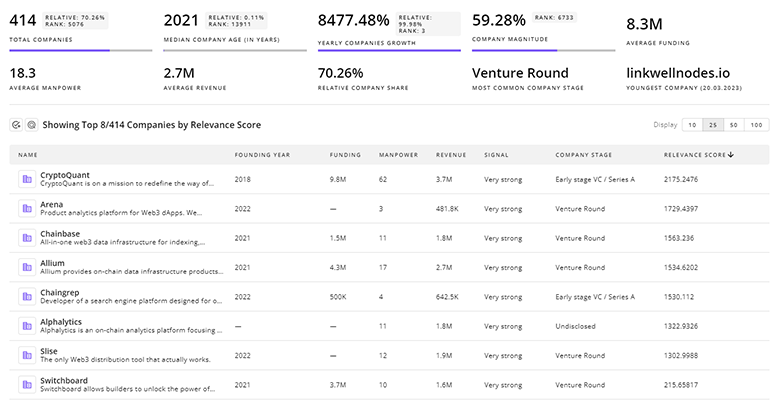
348 Long Duration Energy Storage Companies
Discover Long Duration Energy Storage Companies, their Funding, Manpower, Revenues, Stages, and much more
Long Duration Energy Storage Investors
TrendFeedr’s Investors tool allows you to explore detailed investment activities and trends based on 992 Long Duration Energy Storage investors. This tool provides an in-depth analysis of funding rounds and market dynamics to make informed investment decisions.
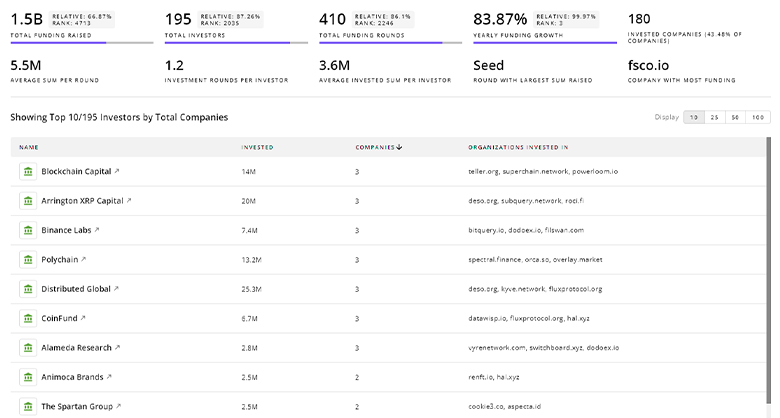
992 Long Duration Energy Storage Investors
Discover Long Duration Energy Storage Investors, Funding Rounds, Invested Amounts, and Funding Growth
Long Duration Energy Storage News
Stay updated with TrendFeedr’s News feature, which offers you access to 3.2K Long Duration Energy Storage articles. This tool provides you with a comprehensive understanding of the historical and current trends shaping the market.
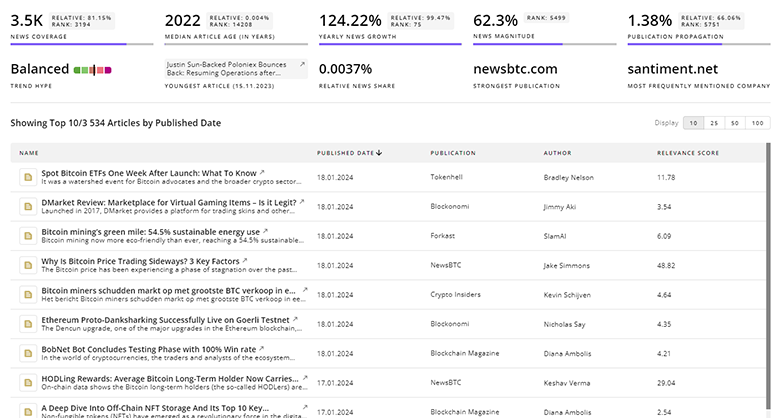
3.2K Long Duration Energy Storage News Articles
Discover Latest Long Duration Energy Storage Articles, News Magnitude, Publication Propagation, Yearly Growth, and Strongest Publications
Executive Summary
LDES has shifted from experimental to strategic infrastructure. Financial signals and project announcements show capital chasing duration instead of incremental power density: market participants must evaluate technology pathways by duration profile, revenue stacking potential, and site fit rather than by cell chemistry alone. Industrial heat applications and geological or mechanical storage options present high-value niches where LDES can achieve advantaged economics sooner than broad grid firming. The decisive commercial winners will combine proven system integration, credible cost trajectories, and software that maximizes multi-market revenues while minimizing financing risk.
We’re keen to partner with subject matter experts to enrich our coverage. Think you can help? Let us know.