Metal Additive Manufacturing Report
: Analysis on the Market, Trends, and TechnologiesThe metal additive manufacturing market is shifting from demonstration runs to certified production, driven by material-led innovation and process control: market data records a global metal AM market of $5,600,000,000 in 2024 with a 16.6% CAGR and a forecast of $26,300,000,000 by 2034, indicating clear commercial scaling but persistent gaps in qualification, feedstock security, and throughput.
We last updated this report 242 days ago. Tell us if you find something’s not quite right!
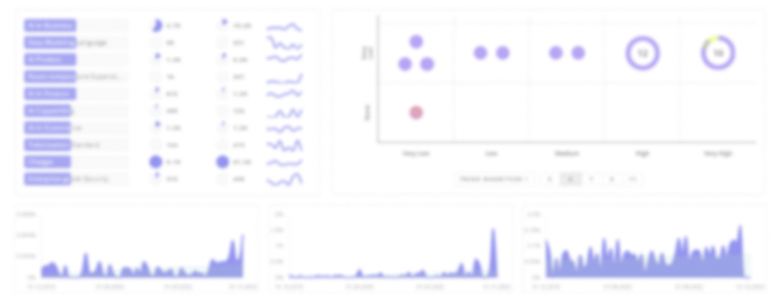
Topic Dominance Index of Metal Additive Manufacturing
To gauge the impact of Metal Additive Manufacturing, the Topic Dominance Index integrates time series data from three key sources: published articles, number of newly founded startups in the sector, and global search popularity.
Key Activities and Applications
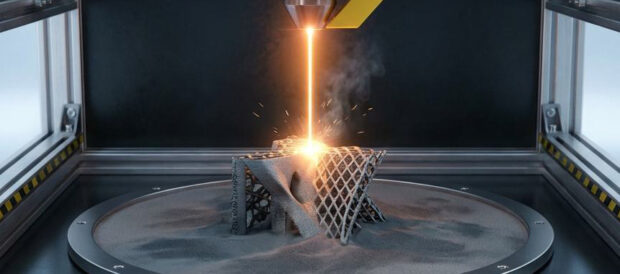
- Aerospace component production — Use of Powder-Bed Fusion (PBF) for structural and engine parts that require certified metallurgy and traceability; suppliers focus on alloy development and process validation to achieve flight acceptance.
- On-demand spare parts and repair — Directed Energy Deposition (DED) and Wire-Arc Additive Manufacturing (WAAM) enable repair, refurbishment, and low-volume replacement parts in energy and maritime sectors, reducing lead times and logistical risk.
- Medical implants and patient-specific devices — Complex geometries and controlled porosity for osseointegration drive growth in titanium and cobalt-chrome powders for orthopedic and dental implants.
- Tooling, molds, and conformal cooling — Metal AM produces conformal cooling channels and consolidated tool structures that cut cycle time and improve part quality in injection molding and die-making.
- High-performance alloy feedstock development — Firms and research groups invest heavily in tailored powders and microalloying strategies to remove the material-performance gap between printed and wrought parts.
(Applications and focus areas summarized from industry forecasts and topic analysis).
Emergent Trends and Core Insights
- Material-first competition: Value now concentrates in engineered feedstock and alloy controls rather than purely in machine indicators; ownership of validated powder chemistries creates revenue stickiness and qualification advantage, as evidenced by concentrated material R&D and patent activity.
- Shift toward production-scale architectures: Growth in high-throughput systems (multi-laser PBF, binder jetting for metals) and large-format deposition (WAAM/DED) signals manufacturers selecting throughput over micro-detail when application allows Trends Impacting Metal Additive Manufacturing's US$13 Billion Future.
- Qualification and in-process assurance as a commercial gate: Real-time monitoring and data-driven quality systems convert AM from a cost center into a repeatable production process; vendors of in-situ assurance capture outsized value where certification matters Wohlers Report 2024 - 3D Printing Trends.
- Regional rebalancing and supply-chain security: Tariffs and strategic sourcing incentivize near-point manufacturing for defense and energy sectors, raising demand for domestic powder production and non-powder feedstock routes.
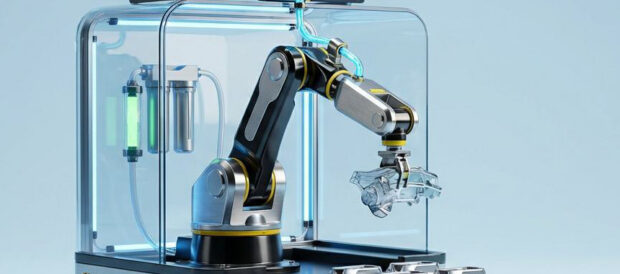
- Hybrid manufacturing workflows: Integration of additive deposition with CNC finishing shortens time-to-certification and reduces post-processing cost, improving economics for serial parts Metal Additive Manufacturing Market Size & Competitors.
Technologies and Methodologies
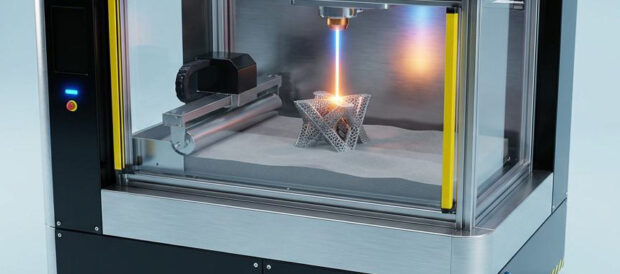
- Powder Bed Fusion (PBF) — Still dominant for fine features and certified aerospace/medical parts; optimization focus shifts to energy deposition control, multi-laser orchestration, and powder handling.
- Directed Energy Deposition (DED) and Wire-Arc Additive Manufacturing (WAAM) — Chosen for large structures, repair operations, and where feedstock cost or build rate are decisive; closed-loop control is a differentiator for repeatability.
- Binder Jetting (metal) — Emergent for cost-effective, higher-throughput production when post-sintering workflows are mature; becoming commercially relevant for mid-volume parts.
- Solid-state and non-melt processes (e.g. MELD, cold spray) — Offer alternative material pathways (recycled feedstock, lower atmosphere control) that reduce reliance on gas-atomized powders and increase feedstock flexibility.
- In-process monitoring, simulation, and AI optimization — Simulation and data systems reduce qualification cycles and improve first-time-right yields; software and sensor stacks now constitute core product differentiation.
Metal Additive Manufacturing Funding
A total of 129 Metal Additive Manufacturing companies have received funding.
Overall, Metal Additive Manufacturing companies have raised $8.7B.
Companies within the Metal Additive Manufacturing domain have secured capital from 596 funding rounds.
The chart shows the funding trendline of Metal Additive Manufacturing companies over the last 5 years
Metal Additive Manufacturing Companies
- Equispheres Inc.
Equispheres develops engineered aluminum powders tailored for Laser-PBF, positioning materials as the primary lever to reduce waste and improve throughput; the company has scaled funding and partnerships to push powder qualification into production lines and to enable OEM adoption in mobility and aerospace supply chains. - Gamma Alloys Inc
Gamma Alloys focuses on nanotechnology-based alloy formulations that raise strength for both wrought and AM parts, targeting lightweight structural applications where substitution of conventional alloys creates direct cost and performance benefits; small team, IP-centric approach aims at high-value adoption paths. - Precision Additive
Precision Additive supplies LPBF systems and process controls engineered for reactive materials (notably magnesium) and certifiable aerospace/defense applications; the company's platform bundles optics, closed-loop controls, and qualification tooling to lower the barrier for mission-critical part approval. - MetShape GmbH
MetShape positions a sinter-based micro-metal production route for micro-scale, high-precision components; its end-to-end LMM process addresses medical and electronics markets that pay premiums for dimensional fidelity and rapid prototype-to-production transition. - MELD Manufacturing Corporation
MELD Manufacturing commercializes a solid-state deposition approach that avoids melt pools entirely, enabling repair, joining, and production with diverse feedstock and reduced post-heat treatment; the technology appeals to customers seeking large, structurally reliable parts without powder handling constraints.
Enhance your understanding of market leadership and innovation patterns in your business domain.
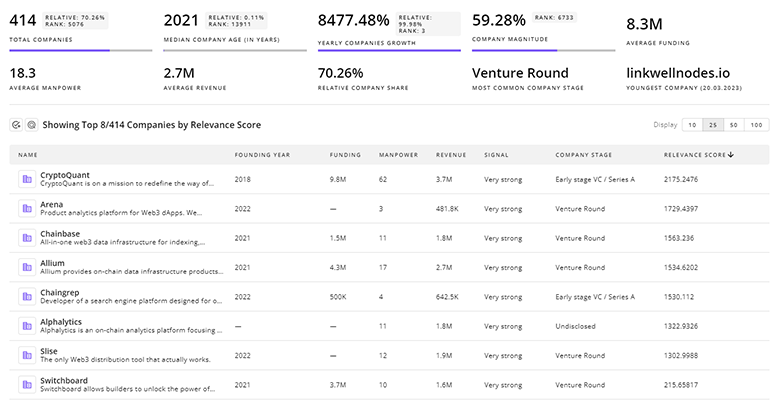
742 Metal Additive Manufacturing Companies
Discover Metal Additive Manufacturing Companies, their Funding, Manpower, Revenues, Stages, and much more
Metal Additive Manufacturing Investors
TrendFeedr’s Investors tool offers comprehensive insights into 650 Metal Additive Manufacturing investors by examining funding patterns and investment trends. This enables you to strategize effectively and identify opportunities in the Metal Additive Manufacturing sector.
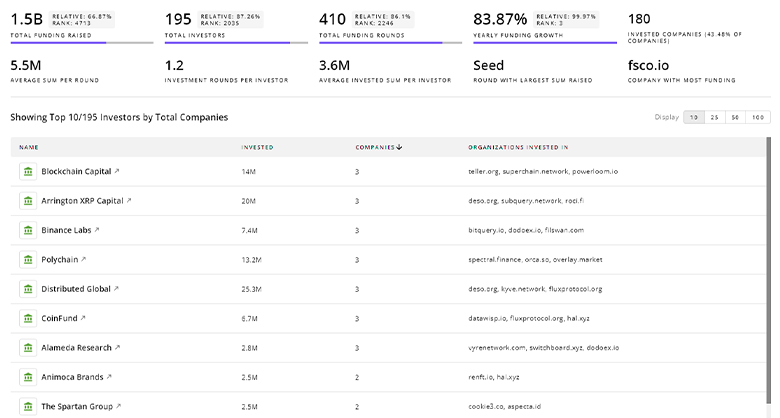
650 Metal Additive Manufacturing Investors
Discover Metal Additive Manufacturing Investors, Funding Rounds, Invested Amounts, and Funding Growth
Metal Additive Manufacturing News
TrendFeedr’s News feature provides access to 5.2K Metal Additive Manufacturing articles. This extensive database covers both historical and recent developments, enabling innovators and leaders to stay informed.
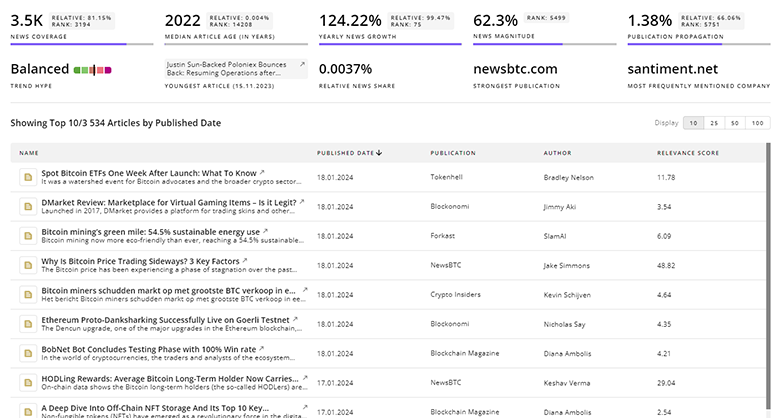
5.2K Metal Additive Manufacturing News Articles
Discover Latest Metal Additive Manufacturing Articles, News Magnitude, Publication Propagation, Yearly Growth, and Strongest Publications
Executive Summary
Metal additive manufacturing is moving beyond technical demonstrations into targeted industrial deployments where material control, process assurance, and throughput economics determine winners. The companies that combine validated alloy systems with rigorous in-process qualification and software-driven controls will capture the highest margin opportunities in aerospace, medical, and critical-service sectors. For projects that trade off extreme detail for scale, large-format deposition and binder jetting offer clear cost pathways; for regulated, high-value parts, investment should prioritize feedstock traceability, certification programs, and integrated quality data systems. The near-term competitive landscape will therefore favor vertically integrated offerings or tight partnerships that deliver certified powder, stable hardware, and turnkey qualification workflows.
We value collaboration with industry professionals to offer even better insights. Interested in contributing? Get in touch!