
Microlearning Report
: Analysis on the Market, Trends, and TechnologiesThe microlearning market sits at a decisive growth inflection: its measured market size for 2025 is $2,960,000,000, with an internal trend dataset reporting a 22.31% projected CAGR figure used in several forecasts, underlining an accelerating commercial adoption curve tied to AI-driven content automation and mobile delivery marketresearchfuture – Micro-learning Market. Market-level forecasts from independent research confirm a multi-billion expansion over the next decade, while practitioner evidence shows micro-modules increasingly move from “supplement” to embedded performance support in frontline, healthcare, and regulated verticals.
We last updated this report 261 days ago. Tell us if you find something’s not quite right!
Topic Dominance Index of Microlearning
To gauge the impact of Microlearning, the Topic Dominance Index integrates time series data from three key sources: published articles, number of newly founded startups in the sector, and global search popularity.
Key Activities and Applications
- Just-in-time performance support delivered as single-task micro-modules that appear in the flow of work; this is the most direct route from content to measurable behavior change and is widely adopted across frontline retail and manufacturing.
- Spaced reinforcement and micro-assessments that interrupt forgetting curves via scheduled reminders, short quizzes, and targeted feedback loops; vendors report measurable retention and competency maintenance gains when reinforcement is applied systematically.
- AI-accelerated content atomization, where long-form courses or product updates are parsed and converted into modular lessons automatically, compressing authoring time and cost per module.
- Conversational and chat-based delivery using messaging channels (Teams, WhatsApp, SMS) to reach deskless or low-bandwidth learners without requiring a native app install, improving reach and completion rates in dispersed workforces.
- Micro-simulation and role-play for rapid practice, where short scenario drills and avatar-based role plays convert knowledge into practiced skill in minutes per session—especially used for sales, compliance, and clinical decision practice.
- Localized, low-bandwidth distribution mechanisms (SMS/WhatsApp) targeted at emerging markets and first-line workers to close access gaps and increase adoption where broadband or devices vary.
Emergent Trends and Core Insights
- AI as the cost lever for scale: Generative and few-shot models are turning instructional design from a bottleneck into a repeatable pipeline, reducing module creation time dramatically and enabling high-frequency content refreshes marketresearchfuture - Micro Learning Platform Market, 2025.
- Evidence-first buying: Buyers increasingly require proof of behavior change (retention, on-the-job performance, reduced incidents) rather than completion metrics; platforms that link micro-activities to KPIs win procurement decisions.
- Channel-first design: Delivery that meets learners where they already work—chat platforms, device OEM apps, or SMS—produces higher completion and adoption than siloed LMS experiences; this drives product roadmaps toward channel integrations and lightweight APIs.
- Vertical specialization for premium pricing: Solutions that embed domain simulation or regulatory traceability (healthcare, life sciences, aviation) capture higher willingness to pay because the cost of error is quantifiable and large researchandmarkets - Microlearning Market, 2024.
- Adaptive personalization at the module level is emerging: platforms are moving from static schedules to per-learner decay models that sequence micro-units based on sparse interaction signals, improving efficiency per learning minute.
Technologies and Methodologies
- Adaptive Spaced-Repetition Engines that tune review intervals based on item difficulty and learner performance; these are the methodological core for retention gains deployed at scale.
- Conversational AI interfaces that deliver micro-nuggets as interactive dialogues (chatbots integrated into Teams, Slack, SMS), enabling low-friction, on-demand retrieval practice eggheads.
- Generative AI for content atomization and translation, converting existing video or docs into micro-lessons, quizzes, and summaries; this reduces production cost and accelerates localization mordorintelligence - Microlearning Market.
- Micro-simulations and avatar role-play engines used for conversational and behavioral practice in soft skills and scenario training; these systems provide rapid, repeatable rehearsal without live actors Meta-Skills.
- Edge and TinyML prospects: low-power inference on device to enable instant feedback in low-connectivity environments and to protect learning state privacy—currently experimental but strategically relevant where latency or connectivity constraints matter.
- Analytics and behavioral measurement stacks that map micro-activity exposure to downstream KPIs (time-to-competency, incident reduction, sales conversion), shifting evaluation from completion to business outcome.
Microlearning Funding
A total of 426 Microlearning companies have received funding.
Overall, Microlearning companies have raised $9.3B.
Companies within the Microlearning domain have secured capital from 1.7K funding rounds.
The chart shows the funding trendline of Microlearning companies over the last 5 years
Microlearning Companies
- MetaMinder — MetaMinder provides an AI-powered microlearning platform focused on frontline teams, delivering 3–5 minute social-style micro-courses and automated course generation from video. The product emphasizes rapid localization and real-time analytics to surface skill gaps across dispersed hourly workforces, which boosts completion and reduces churn in service industries. The company explicitly advertises multi-language support and an AI pipeline that converts assets into ready modules.
- Micromate — Micromate positions itself as a conversational e-learning assistant that integrates into existing chat tools (for example, Microsoft Teams) and delivers hyper-personalized micro-practice and validation. The design goal is to convert routine communications into short learning opportunities, with a small-footprint deployment model for enterprise collaboration platforms. Their approach reduces friction by using familiar channels and science-backed validation techniques.
- Nano Masters AI — Nano Masters AI offers an AI-first content generation engine that produces end-to-end microlearning journeys for large catalogs of industry topics; the vendor markets prebuilt industry learning paths and fast rollout for L&D teams. It focuses on scaling content breadth quickly and aligning micro-paths to corporate skill taxonomies, enabling rapid deployment for enterprise upskilling initiatives.
- Brasstacks — Brasstacks specializes in text-first microlearning delivered via SMS and short message flows to prioritize accessibility for deskless workers and low-bandwidth contexts. The product enables subject matter experts to publish short campaigns through a simple authoring interface and is attractive to organizations that need fast, auditable rollouts without mobile app dependency.
- Monarch Learning Labs — Monarch Learning Labs combines microlearning with lightweight simulation and digital-twin exercises aimed at healthcare and advanced manufacturing workflows. Their niche is converting complex tool training into interactive micro-sessions that support immediate hands-on application and measurable operational metrics such as reduced setup errors and faster onboarding. Monarch targets customers that require applied practice rather than passive content exposure.
Enhance your understanding of market leadership and innovation patterns in your business domain.
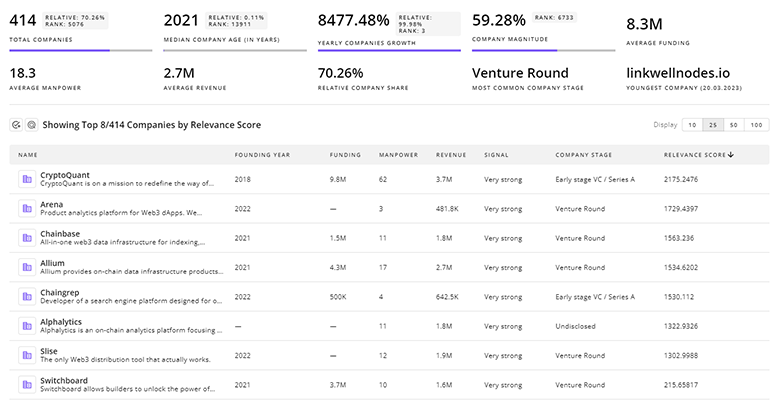
2.4K Microlearning Companies
Discover Microlearning Companies, their Funding, Manpower, Revenues, Stages, and much more
Microlearning Investors
TrendFeedr’s Investors tool offers comprehensive insights into 1.8K Microlearning investors by examining funding patterns and investment trends. This enables you to strategize effectively and identify opportunities in the Microlearning sector.
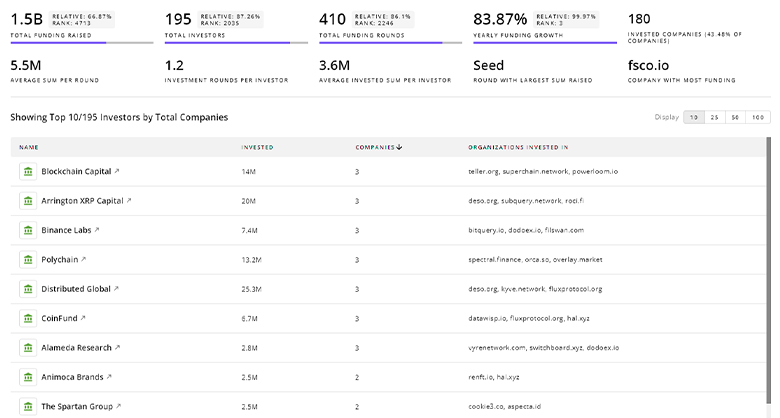
1.8K Microlearning Investors
Discover Microlearning Investors, Funding Rounds, Invested Amounts, and Funding Growth
Microlearning News
TrendFeedr’s News feature provides access to 2.2K Microlearning articles. This extensive database covers both historical and recent developments, enabling innovators and leaders to stay informed.
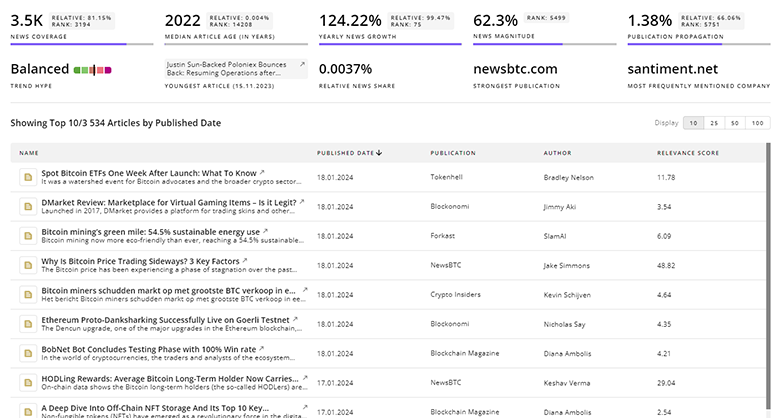
2.2K Microlearning News Articles
Discover Latest Microlearning Articles, News Magnitude, Publication Propagation, Yearly Growth, and Strongest Publications
Executive Summary
Microlearning is no longer just short content; it now functions as a measurement-driven performance tool embedded into the workflow. The immediate commercial winners will be platforms that combine AI-enabled content production, validated cognitive reinforcement engines, and channel integration into the tools employees already use. For buyers, procurement decisions should prioritize systems that demonstrate linkage between micro-activities and business KPIs, provide low-friction delivery for deskless workforces, and scale content production without rising per-module costs. For vendors, the defensible strategies are evidence-based reinforcement engines, verticalized simulation capabilities for risk-sensitive industries, and channel-native delivery models that reduce deployment friction.
We value collaboration with industry professionals to offer even better insights. Interested in contributing? Get in touch!