
Microled Report
: Analysis on the Market, Trends, and TechnologiesThe microLED market is moving from intense R&D toward commercial scale-up, driven by manufacturing breakthroughs and a dense patent pipeline (Total patents filed: 805; 371 granted, 428 applied). Market forecasts vary by scope: one recent industry model projects micro-LED revenue rising from about USD 801.5 million in 2024 to USD 163.1 billion by 2034 (CAGR 71.5%) gminsights – 2025, while other analyses that include mini-LED & micro-LED combined show faster near-term expansion to multibillion-dollar levels by 2026 MarketResearch – Global Micro and Mini LEDs 2025-2035. Unit forecasts indicate early commercial traction concentrated in high-value niches: shipments of microLED displays are forecast to reach tens of millions of units within the next decade (e.g. 34.6 million units by 2031 in one tracker) Omdia. The practical implication is clear: firms that convert lab-scale methods (mass transfer, color conversion, wafer-level integration) into high-yield, low-cost manufacturing will capture disproportionate value as the technology shifts from prototypes to premium products.
We last updated this report 89 days ago. Tell us if you find something’s not quite right!
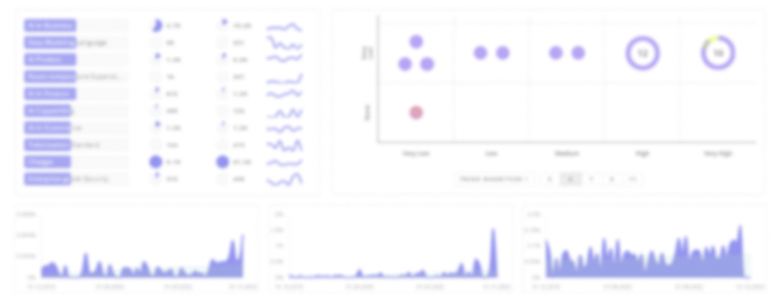
Topic Dominance Index of Microled
To gauge the impact of Microled, the Topic Dominance Index integrates time series data from three key sources: published articles, number of newly founded startups in the sector, and global search popularity.
Key Activities and Applications
- Mass transfer and assembly at scale — continuous-throughput transfer and fluidic/robotic assembly methods remain the central industrial activity to reach mass production economics; startup and academic work focuses on increasing placement speed, reducing handling steps, and automating defect repair.
- Full-color red solution development — creation of efficient native-red emitters and color-conversion stacks (quantum dots, advanced phosphors, porous GaN) to realize true RGB microLED pixels without complex stacking or excessive optical loss.
- Microdisplays for AR/VR and wearables — sub-millimeter microdisplays with >1,000s PPI target near-eye systems and smart wearables; development emphasizes pixel density, optical engine integration, and power efficiency.
- Automotive displays and HUDs — high brightness and daylight readability drive early monetizable volumes (instrument clusters, HUD, ambient and exterior applications) where premium margins offset current production cost premiums ResearchAndMarkets micro-LED market analyses.
- AI-assisted yield management and metrology — AI for optical inspection, in-line defect classification, and closed-loop process control to increase effective yield and reduce per-panel cost Instrument Systems: microLED metrology news.
Emergent Trends and Core Insights
- Fine-pitch microdisplays lead early unit growth — projections and trackers show fine-pitch products (AR/VR, wearables) as the fastest growing segment, with multi-million unit volumes anticipated within the decade as transfer yields improve Counterpoint Research.
- Multiple credible market forecasts; reconcile differences — long-range forecasts differ by methodology and scope: some reports model microLED alone to 2034 (USD 163.1B) while others combine mini-LED and micro-LED or emphasize shorter horizons (e.g. USD 11.5B by 2026 for mini+micro). These differences reflect (a) inclusion of mini-LED, (b) forecast horizon, and (c) assumptions about speed of manufacturing cost decline; strategic planning must therefore use scenario bands rather than a single point estimate BCC Research summary.
- Manufacturing yield and cost remain the gating factor — almost every roadmap ties mainstream adoption to ~50%+ cost reduction via yield, wafer-scale monolithic approaches, or breakthrough transfer automation, making manufacturing IP the prime strategic asset MicroLED Industry Association roadmap ResearchAndMarkets microLED reports.
- Materials and epitaxy competition — GaN on silicon, porous GaN red emitters, and quantum-dot/perovskite converters compete as architectural choices to achieve full-color pixels; licensing or securing materials supply becomes an early moat.
- Regional specialization and supply chain concentration — Asia-Pacific leads production capacity and IP activity, while North America and Europe focus on design, IP, and specialty fabs; risk management will require multi-regional sourcing or strategic foundry partnerships.
Technologies and Methodologies
- Selective-area epitaxy and GaN-on-Si growth — techniques that enable pixel-level epitaxy and larger wafer economics and that reduce the need for die transfer in some architectures.
- Mass-transfer families: elastomeric stamp, laser-assisted, micro-transfer printing, fluidic self-assembly — each method trades throughput, placement accuracy, and repair complexity; companies are optimizing for continuous, wafer-scale workflows and automated defect repair to hit target costs.
- Stacked RGB and monolithic full-color pixels — stacked RGB pixels and monolithic RGB approaches reduce pixel assembly steps but require advanced epitaxy and thermal management; these routes aim to remove color-conversion losses and simplify optics.
- CMOS backplane co-fabrication and active-matrix driving for sub-5 µm pixels — integrating control ASICs or CMOS drivers at wafer level lowers board complexity and improves yield for microdisplays.
- High-accuracy optical metrology and AI inspection — machine vision and AI for AOI become mandatory for million-pixel yields; investments in metrology equipment and data pipelines yield non-linear manufacturing improvements.
Microled Funding
A total of 106 Microled companies have received funding.
Overall, Microled companies have raised $18.2B.
Companies within the Microled domain have secured capital from 510 funding rounds.
The chart shows the funding trendline of Microled companies over the last 5 years
Microled Companies
- Pixel-Flo Ltd. — Pixel-Flo targets the core mass-transfer bottleneck with a continuous-flow mass transfer process designed for very large panels and uninterrupted throughput; the company positions the offering as a licensing or equipment supply play to reduce per-panel assembly time and cost for display manufacturers.
- Ingantec Corporation — Ingantec commercializes a porous nitride approach that yields a bright native-red microLED, a material-level solution that can remove a major color-conversion step and reduce reliance on complex transfer schemes for full-color displays; the firm packages the technology for small-format wearable and AR microdisplays where red efficiency matters most.
Q-Pixel Inc. — Q-Pixel focuses on color-tunable pixels and assembly methods that maximize pixel density and energy efficiency for ultra-high PPI microdisplays.
The company demonstrates record pixel densities suitable for AR/VR engines and wearables, making it a strategic supplier for OEMs seeking smallest-form-factor, high-brightness engines.
- Rayleigh Vision Intelligence Co. Ltd. — RVI combines AI inspection and proprietary transfer approaches to offer turnkey microLED manufacturing solutions and explores co-packaged optical array applications beyond displays; their platform seeks to raise effective yield and reduce time-to-first-panel for mixed-reality and silicon photonics customers.
Enhance your understanding of market leadership and innovation patterns in your business domain.
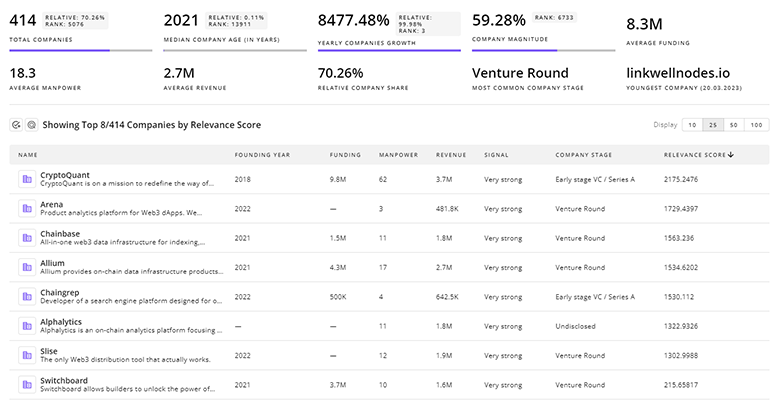
649 Microled Companies
Discover Microled Companies, their Funding, Manpower, Revenues, Stages, and much more
Microled Investors
TrendFeedr’s Investors tool offers comprehensive insights into 656 Microled investors by examining funding patterns and investment trends. This enables you to strategize effectively and identify opportunities in the Microled sector.
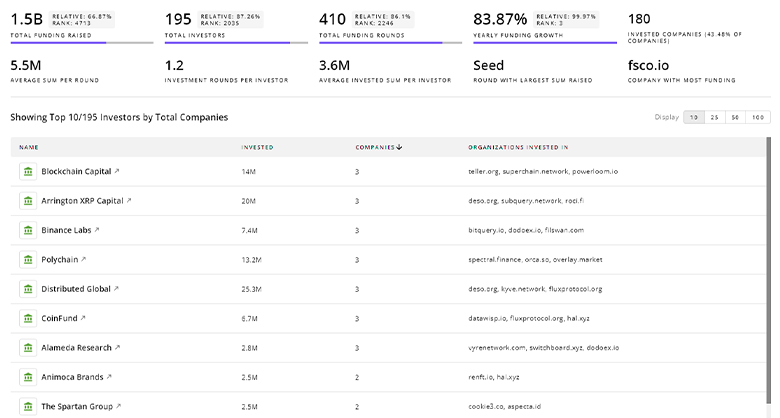
656 Microled Investors
Discover Microled Investors, Funding Rounds, Invested Amounts, and Funding Growth
Microled News
TrendFeedr’s News feature provides access to 5.9K Microled articles. This extensive database covers both historical and recent developments, enabling innovators and leaders to stay informed.
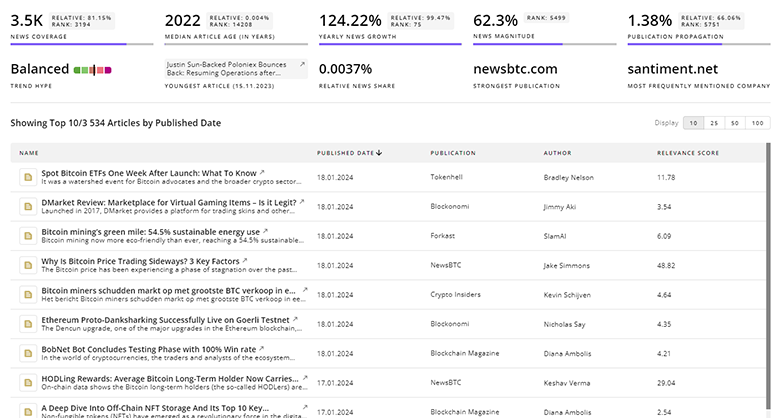
5.9K Microled News Articles
Discover Latest Microled Articles, News Magnitude, Publication Propagation, Yearly Growth, and Strongest Publications
Executive Summary
MicroLED sits at the intersection of material science, precision microfabrication, and automated systems engineering. The short-term commercial path runs through premium niches — AR/VR, automotive HUDs, and large modular signage — where performance justifies higher manufacturing cost. The strategic lever for industry participants is manufacturing economics: companies that secure a practicable route to high yields (via mass transfer automation, monolithic growth, or radically improved red emitters) will control the most valuable parts of the stack. For investors and OEMs, the recommended posture is selective investment in manufacturing IP and metrology, partnerships with specialized fabs, and active tracking of materials breakthroughs that remove color-conversion or transfer steps; these actions best position organizations to capture value as volume and price curves realign in coming product cycles.
We value collaboration with industry professionals to offer even better insights. Interested in contributing? Get in touch!