Mixed Reality Headsets Report
: Analysis on the Market, Trends, and TechnologiesThe mixed reality headset market is entering a decisive commercial phase: market data records a 2025 market size of $12,540,000,000 with a reported 25.92% CAGR driving sector expansion, which forces buyers and investors to prioritize platform and vertical capture now rather than later. Market forecasts from independent research corroborate rapid scaling—several studies place near-term CAGR in the ~29–36% band and predict multi-billion valuations by the end of the decade, signaling both large addressable opportunity and rising competitive intensity Grand View Research – Mixed Reality Headset Market. The current battleground is not only optics and hardware form factor but the software and data layers (spatial indexing, VPS, and multi-user synchronization) that deliver measurable enterprise ROI.
We last updated this report 76 days ago. Tell us if you find something’s not quite right!
Topic Dominance Index of Mixed Reality Headsets
To gauge the impact of Mixed Reality Headsets, the Topic Dominance Index integrates time series data from three key sources: published articles, number of newly founded startups in the sector, and global search popularity.
Key Activities and Applications
- Enterprise training and simulation — High-fidelity surgical, aviation, and industrial training deployments that replace or reduce physical mockups and recurrent training costs; adoption spikes where measurable error reduction and certification throughput are valued.
- Remote collaboration and immersive workspaces — Persistent 3D meeting environments and multi-monitor replacement for knowledge workers, used to shorten design cycles and reduce travel for distributed teams Worldwide XR Headset Market Shares, 2024 – IDC.
- Field service and connected frontline operations — Hands-free, contextual overlays for repair, inspection, and remote expert guidance that cut mean time to repair and lower first-time-fix failure rates.
- Design review and BIM/PLM visualization — Immersive BIM review workflows that let teams interact with full-scale models on consumer headsets to identify clashes and reduce construction rework Resolve.
- Healthcare visualization and preoperative planning — MR overlays for surgical planning and rehab that provide annotated anatomy and scenario rehearsal to improve clinical outcomes and training throughput.
Emergent Trends and Core Insights
- Spatial data and VPS as infrastructure — The companies building accurate, sensor-agnostic visual positioning systems and open 3D maps capture recurring value across verticals; spatial indexing becomes an API layer that gates access to many enterprise workflows.
- Edge AI and split rendering economics — Offloading heavy inference and rendering to edge or cloud enables lighter headsets and extends usable battery life, shifting product design tradeoffs from raw onboard silicon to network and systems integration Market Research Future - Mixed Reality Headset Market.
- Human-eye-resolution and expanded FoV as enterprise requirements — For professional visualization (aerospace, automotive, simulation) image fidelity and wide field of view determine premium pricing and procurement decisions; optics innovation now carries direct commercial returns.
- Haptics and embodied interaction moving into monetizable differentiation — As visual realism increases, demand for tactile feedback and fine motor interfaces grows in training and design workflows, creating a second layer of defensible IP around peripherals and interaction hardware.
- Consolidation around platform openness vs. vertical specialization — Two distinct strategic plays emerge: (1) platform builders seeking broad install bases and developer ecosystems, and (2) vertical integrators that lock clients with domain-specific workflows and service contracts ManageXR.
Technologies and Methodologies
- Visual Positioning Systems (VPS) and sensor-agnostic mapping — Sub-6 cm localization, multi-floor tracking, and model-based object anchoring reduce deployment friction for enterprise sites and scale indoor/outdoor MR use cases.
- Hybrid optics and wide FoV engines — Multi-element, hybrid lens systems and holographic/electro-optical engines target human-eye coverage and reduced vergence-accommodation conflict to support long sessions and professional workflows.
- Foveated rendering + eye tracking + edge inference — Combining gaze-directed rendering with low-latency edge compute yields large reductions in bandwidth and power while keeping perceived fidelity high.
- No-code/low-code content pipelines and enterprise SDKs — Platforms that reduce content creation lead times and integrate with digital twins and PLM systems accelerate measurable ROI for buyers and raise switching costs for vendors.
- Wireless split rendering architectures and 5G/edge orchestration — Architectures that spill rendering to edge nodes let vendors deliver higher effective performance on lighter devices and enable new business models (rendering subscriptions, edge SLAs).
Mixed Reality Headsets Funding
A total of 106 Mixed Reality Headsets companies have received funding.
Overall, Mixed Reality Headsets companies have raised $4.9B.
Companies within the Mixed Reality Headsets domain have secured capital from 508 funding rounds.
The chart shows the funding trendline of Mixed Reality Headsets companies over the last 5 years
Mixed Reality Headsets Companies
- Myracle AI — Myracle AI focuses on mixed reality education platforms that bring hands-on STEM to classrooms and homes using mobile devices and MR overlays; it emphasizes content efficiency and measurable learning outcomes and reports small team scale with early revenue performance that reflects high investment efficiency. The company's approach shows how vertically focused content plus low friction distribution (mobile + MR) can achieve outsized ROI in education procurement cycles.
- Hypervision — Hypervision develops hybrid optical lens architectures aimed at delivering human-sight field of view (up to 270°) in compact modules; the firm packages electro-optical reference designs and an "XR as a Service" stack for partners seeking professional FoV and acuity rather than consumer form factors. Its patent-centric optics work maps directly to enterprise use cases where fidelity and session comfort command premium pricing.
- MultiSet Visual Positioning System — MultiSet offers a scan-agnostic Visual Positioning System that turns LiDAR and photogrammetry scans into deployable AR maps with sub-6 cm localization; this reduces site-preparation costs and accelerates enterprise rollouts for manufacturing floors and logistics centers. Their SDK strategy (iOS, Android, Unity, WebXR) positions them as an infrastructural revenue generator rather than a single-app vendor.
- nullspaces — nullspaces builds projected, touch-sensitive AR without headsets, converting physical surfaces into interactive assemblies and instructions for manufacturing and assembly lines; this headset-optional route responds to procurement realities where comfort, safety, and ease of onboarding matter more than full immersion. The company's approach illustrates a commercial path that captures enterprise value while avoiding the cost and wearability hurdles of head-mounted solutions.
- Fluid Reality — Fluid Reality develops high-resolution fingertip actuators and tactile display primitives intended to bridge the tactile gap in MR training and design tools; targeted use cases include surgical simulation and precision assembly where touch fidelity materially affects learning transfer. By specializing in the interaction layer, the company builds an IP position that complements visual-first headset vendors.
Enhance your understanding of market leadership and innovation patterns in your business domain.
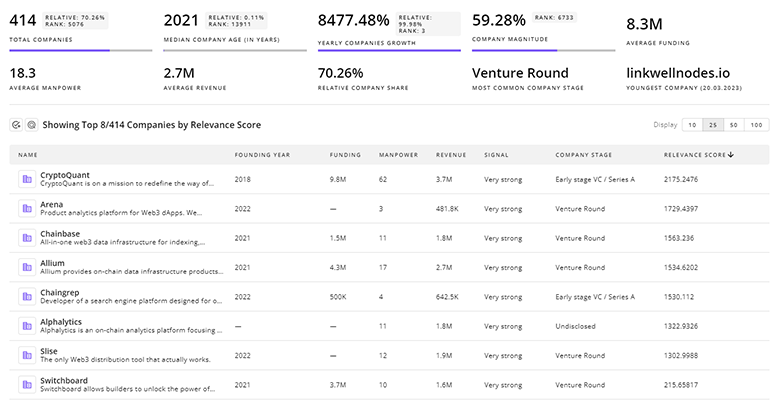
340 Mixed Reality Headsets Companies
Discover Mixed Reality Headsets Companies, their Funding, Manpower, Revenues, Stages, and much more
Mixed Reality Headsets Investors
TrendFeedr’s Investors tool offers comprehensive insights into 674 Mixed Reality Headsets investors by examining funding patterns and investment trends. This enables you to strategize effectively and identify opportunities in the Mixed Reality Headsets sector.
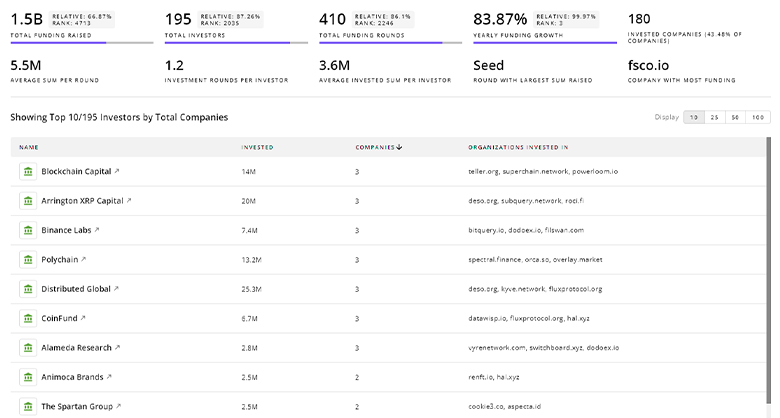
674 Mixed Reality Headsets Investors
Discover Mixed Reality Headsets Investors, Funding Rounds, Invested Amounts, and Funding Growth
Mixed Reality Headsets News
TrendFeedr’s News feature provides access to 3.4K Mixed Reality Headsets articles. This extensive database covers both historical and recent developments, enabling innovators and leaders to stay informed.
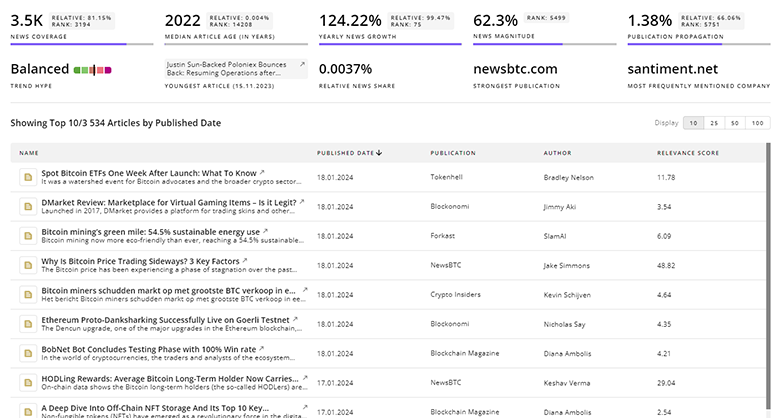
3.4K Mixed Reality Headsets News Articles
Discover Latest Mixed Reality Headsets Articles, News Magnitude, Publication Propagation, Yearly Growth, and Strongest Publications
Executive Summary
The mixed reality headset market now presents two clear strategic choices for incumbents and investors: invest to control the spatial-data and OS layers that will collect recurring rents, or invest in tightly integrated vertical solutions that deliver provable ROI in regulated, high-value sectors such as healthcare, defense, and heavy industry. Near term, winners will be those who can combine high perceptual fidelity (wide FoV, eye-directed rendering) with low deployment friction (VPS, edge orchestration) and demonstrable operational metrics (reduced errors, shortened cycles, improved throughput). Vendors that treat optics, software, and interaction as interchangeable components will struggle; those that assemble an interoperable stack and prove business outcomes will convert early demand spikes into durable contracts.
We value collaboration with industry professionals to offer even better insights. Interested in contributing? Get in touch!