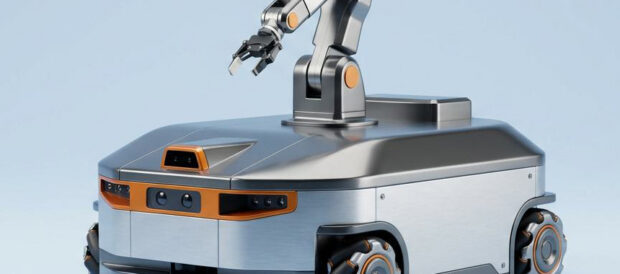
Mobile Robot Report
: Analysis on the Market, Trends, and TechnologiesThe mobile-robot market is in a sustained commercial expansion: global market size reached $18,490,000,000 in 2024 and internal forecasting projects $63,280,000,000 by 2035, driven principally by logistics, healthcare logistics, and emergent service deployments that raise fleet utilization and software value capture. Market signals show accelerating technology adoption for perception, fleet orchestration and modular hardware even as patent filings and company growth patterns diverge across regions, creating a landscape where software-layer interoperability becomes the primary commercial battleground.
We last updated this report 248 days ago. Tell us if you find something’s not quite right!
Topic Dominance Index of Mobile Robot
To gauge the impact of Mobile Robot, the Topic Dominance Index integrates time series data from three key sources: published articles, number of newly founded startups in the sector, and global search popularity.
Key Activities and Applications
- Intralogistics and Warehouse Automation — High-throughput goods-to-person and pallet transport continue to dominate purchases, where AMR fleets replace manual cart movement and increase fulfillment throughput by measurable multiples; deployments concentrate on medium-payload AMRs and fleet orchestration for multi-site operations Mobile Robots Market Report – MarketsandMarkets.
- Healthcare Logistics and Hospital Automation — Mobile robots deliver medication, labs, linens and enable contact-minimizing workflows; hospital-focused AMRs and specialized platforms reduce cross-contamination risk while shortening turnaround times for internal logistics.
- Mobile Manipulation and Machine Tending — Integrating robotic arms with mobile bases (mobile manipulators) shifts robots from transporters to active workers for palletizing, machine tending and flexible pick-and-place, increasing per-unit automation value beyond simple motion.
- Last-Mile and Sidewalk Delivery — Compact, low-emission sidewalk robots and modular delivery carts address urban last-mile costs and regulations; service models favor RaaS and multi-year platform contracts with logistics partners to amortize deployment risk Mobile robot shipments set to grow.
- Inspection, Surveillance and Hazard Work — Legged and hybrid locomotion platforms are used for inspection in constrained or hazardous industrial sites where wheeled AMRs cannot operate reliably, enabling remote data capture and predictive maintenance pipelines ANYbotics.
Emergent Trends and Core Insights
- Software-as-Market-Moat: fleet orchestration and interoperability — The highest strategic value is migrating to universal fleet management and middleware layers that let multiple robot brands operate under a single control plane, creating a buyer preference for open, hardware-agnostic orchestration platforms MOV.AI.
- Vision-first autonomy and sensor fusion — Systems that fuse LiDAR, 3D cameras and AI perception are replacing legacy navigation methods (QR/reflector), enabling robots to operate in denser, changing environments with less facility prep and faster commissioning times Mech-Mind Robotics.
- Hybrid AMR–AGV deployment strategies — Operators pair low-cost AGVs for repeatable, heavy tasks with AI-driven AMRs for dynamic or variable workflows, improving utilization while controlling CAPEX exposure; vendors marketing hybrid platforms see faster site conversion from pilot to fleet scale ANSCER Robotics.
- Service monetization through RaaS and leasing — Battery leasing, pay-per-use and subscription models reduce upfront barriers and concentrate value in recurring software and maintenance contracts, accelerating adoption among SMEs and multi-site operators.
- Regional specialization and IP concentration — Patent and filing data show heavy East Asian—particularly Chinese—concentration in applied service IP, while Western firms capture middleware and high-margin inspection niches; this split creates sourcing and supply-chain tradeoffs for global integrators.
Technologies and Methodologies
- SLAM (Visual, Laser and Fusion SLAM) — Multimodal SLAM stacks that combine LiDAR and camera feeds are now standard for centimeter-level indoor accuracy and to handle dynamic obstacles; providers of Visual SLAM are becoming acquisition targets for larger automation OEMs ABB Robotics.
- Edge AI for perception and control — Onboard neural inference reduces latency for obstacle avoidance and local decision-making, while cloud orchestration supplies higher-level tasking and analytics, creating a split architecture that balances determinism and scale.
- Modular hardware and top-module ecosystems — Swappable payloads (forks, cobot arms, inspection heads) and standardized mechanical/electrical interfaces shorten reconfiguration cycles and improve ROI by letting one chassis serve multiple business lines.
- Digital twins and pre-deployment simulation — Virtual commissioning and route simulation reduce onsite engineering time and cut commissioning risk, especially for multi-robot installations in congested warehouses.
- Real-time motion planning middleware — Low-latency motion planners that compute collision-free paths in microseconds enable higher robot density and safe human-robot collaboration in shared spaces Realtime Robotics, Inc..
Mobile Robot Funding
A total of 434 Mobile Robot companies have received funding.
Overall, Mobile Robot companies have raised $18.3B.
Companies within the Mobile Robot domain have secured capital from 1.8K funding rounds.
The chart shows the funding trendline of Mobile Robot companies over the last 5 years
Mobile Robot Companies
- Techmetics Robotics — Techmetics Robotics builds AMRs specialized for healthcare logistics (medication, food, laundry, elevator interfaces and UV disinfection) and emphasizes federal supplier status for U.S. healthcare contracts, which shortens procurement paths in hospitals; their modular product family and vertical focus reduce integration friction and accelerate ROI for hospital operators. Their small team and owned IP set them up to scale through targeted partnerships rather than broad horizontal sales.
- Capra Robotics — Capra Robotics offers a platform chassis designed as one robot for multiple applications, positioning hardware as a flexible ingredient for inspection, urban maintenance and logistics; this platform-first approach lowers TCO for mid-sized customers that need multifunctionality rather than single-purpose assets. Capra's product design emphasizes operating range, modularity and serviceability to address industry complaints about short operating time and customization overhead.
- Meili Robots — Meili Robots supplies a universal fleet management system (Meili FMS) that resolves interoperability pain across heterogeneous robot fleets and integrates with existing WMS/ERP systems; their mission management, traffic control and route planning features directly attack the main scaling bottlenecks for multi-vendor AMR deployments. Their plug-and-play integration model shortens deployment cycles and reduces vendor lock-in risk for operators.
- Envimo — Envimo focuses on last-mile, sidewalk-compliant delivery robots with modular hardware and a RaaS operating model targeted at urban European markets; their compact, low-emission platforms reduce operating costs in congested areas and sidestep heavy vehicle regulation by meeting pedestrian-area compliance requirements. For retailers and local logistics providers, Envimo's approach trades lower per-vehicle throughput for faster regulatory fit and lower unit economics on short routes.
- Verobotics — Verobotics develops autonomous, AI-based systems for exterior building upkeep, inspection and maintenance, bringing mobile robotics to verticals that have seen limited automation due to environmental complexity; their focus on repeatable, reusable hardware lowers entry barriers for building owners seeking scheduled exterior inspection and upkeep. By treating building exteriors as a deployable service, Verobotics threads a unique commercial model that monetizes repeated maintenance contracts rather than one-off capital sales.
Enhance your understanding of market leadership and innovation patterns in your business domain.
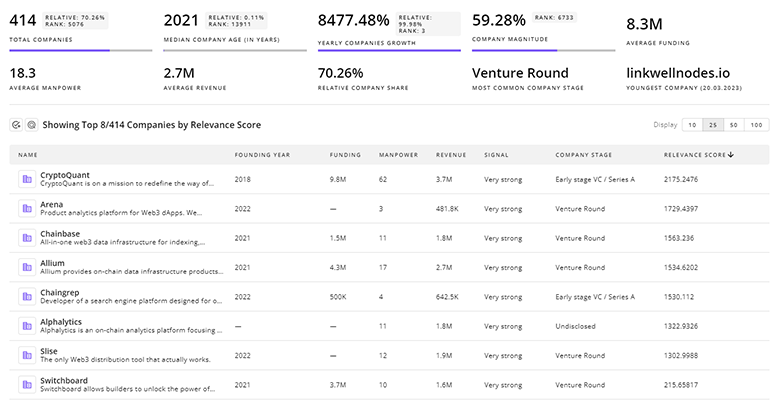
2.2K Mobile Robot Companies
Discover Mobile Robot Companies, their Funding, Manpower, Revenues, Stages, and much more
Mobile Robot Investors
TrendFeedr’s Investors tool offers comprehensive insights into 2.3K Mobile Robot investors by examining funding patterns and investment trends. This enables you to strategize effectively and identify opportunities in the Mobile Robot sector.
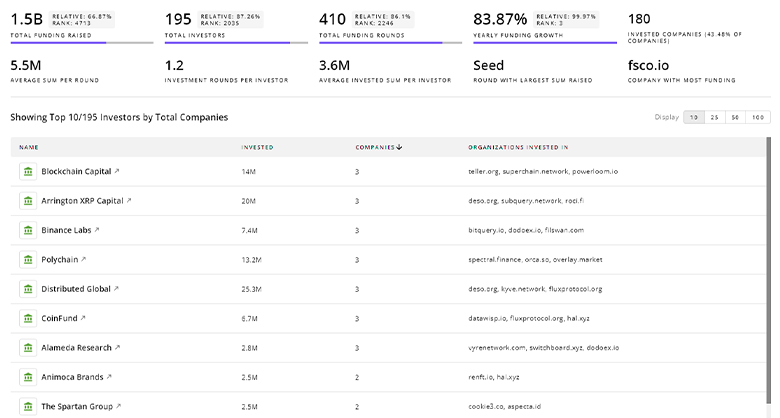
2.3K Mobile Robot Investors
Discover Mobile Robot Investors, Funding Rounds, Invested Amounts, and Funding Growth
Mobile Robot News
TrendFeedr’s News feature provides access to 3.3K Mobile Robot articles. This extensive database covers both historical and recent developments, enabling innovators and leaders to stay informed.
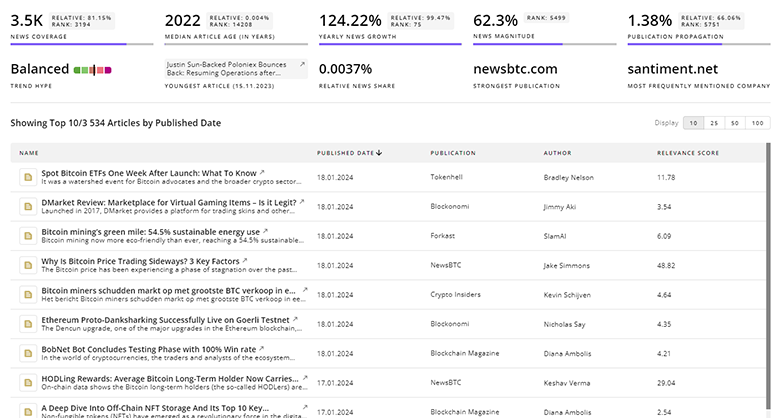
3.3K Mobile Robot News Articles
Discover Latest Mobile Robot Articles, News Magnitude, Publication Propagation, Yearly Growth, and Strongest Publications
Executive Summary
The mobile-robot market now rewards firms that turn physical motion into recurring software and service revenue. The clearest path to commercial scale runs through fleet orchestration, vision-first sensor stacks, and modular hardware that supports multiple business lines. Operators should prioritize integration with hardware-agnostic fleet managers, secure partnerships with low-latency motion-planning and perception providers, and contract structures (RaaS, leasing, battery services) that shift cost and uptime risk away from end users. For strategic investors and integrators, the near-term arbitrage lies in acquiring middleware or Visual SLAM specialists and accelerating deployments in service segments—healthcare logistics and last-mile delivery—where deployment friction is lower and revenue visibility is higher.
We value collaboration with industry professionals to offer even better insights. Interested in contributing? Get in touch!