Modular Design Report
: Analysis on the Market, Trends, and TechnologiesThe modular design ecosystem is shifting from niche use cases toward integrated industrial adoption, underpinned by strong capital flows (total funding raised ~$8.29B) and accelerating technology adoption across construction, data infrastructure, manufacturing and furniture systems. Market-level forecasts and industry studies show this is not marginal: global modular construction was estimated at roughly USD 91.27 billion for 2025 with mid-single-digit CAGR projections into the next decade, creating clear commercial scale for factory-based systems and platform services Modular Construction Market.
We last updated this report 357 days ago. Tell us if you find something’s not quite right!
Topic Dominance Index of Modular Design
To gauge the impact of Modular Design, the Topic Dominance Index integrates time series data from three key sources: published articles, number of newly founded startups in the sector, and global search popularity.
Key Activities and Applications
- Affordable and multi-family housing at scale — factory production and parallel site/factory scheduling compress schedules and lower carrying costs; leading firms report project timelines reduced by ~20–50% versus on-site methods, making modular an increasingly viable route for urban housing programs and public-private affordable housing projects.
- Net-zero ready building modules — pre-integrated PV, battery and high-performance envelopes are being delivered as factory modules so developers can deploy energy ready units faster; industry guidance projects very high solar uptake in new modular builds over the next 1–2 years Trending Modular House Designs 2025.
- Factory-built mission-critical enclosures (data centers, cleanrooms, pharma) — modular data center products provide rapid, repeatable capacity with integrated power/cooling packages for edge and hyperscale use, supporting AI/5G workloads and disaster recovery modular data center.
- Plug-and-play medical and welfare units — bathroom/kitchen/medical pods and headwall systems reduce onsite trades, improve hygiene control and compress commissioning time for hospitals and student housing.
- Modular furniture and interior systems for flexible workplaces and compact residences — configurable seating, storage and workstations that integrate sensors and services to support hybrid work and micro-living.
- Rapid-response and relocatable shelter systems — deployable shelters and shelter-pods for disaster relief, defense and event use; modular shelter designs emphasize mobility, durability and IoT monitoring for situational awareness.
Emergent Trends and Core Insights
- Platformization of the value chain — end-to-end platforms (design → factory scheduling → supply chain → logistics → installation) are coalescing; players that control digital workflows and factory capacity capture margin and shorten lead times, creating a two-tier market of integrated platforms vs. component specialists.
- Sustainability becomes a product requirement, not an option — modular programs are moving beyond waste reduction to circularity (design for disassembly, reusable connections, material passports) so buildings and modules can be redeployed or recycled at end of life.
- Digital twins and data-first manufacturing — BIM + digital twin workflows drive prefabrication accuracy, reduce rework and enable performance validation pre-delivery; adopters report measurable improvements in quality and schedule certainty when digital twins are integrated upstream.
- Modular specialization for high-value niches — modular approaches expand into high-margin, regulated sectors (pharma cleanrooms, modular refineries, high-security facilities, immersion-cooled data pods) where repeatability and factory QA add outsized value.
- Component standardization and interoperability are rising competitive levers — patent activity and engineering work focus on standardized connectors, electrical/mechanical interfaces and MEP modules to reduce integration risk and permit multi-vendor supply chains.
Technologies and Methodologies
- Design for Manufacture and Assembly (DfMA) — core discipline used to convert architectural concepts into factory-friendly modules that maximize throughput and minimize on-site work Modularize DFMA practice.
- Building Information Modeling (BIM) + digital twins — used to run clash detection, simulate assembly sequences and generate factory CNC/G-Code, enabling tight tolerances and fewer site adjustments.
- Factory automation and robotics — welding robots, CNC, automated handling and parallel production lines scale output and reduce labor variability; firms citing these investments report faster, more consistent production.
- Digital platforms and ERP for module lifecycle — cloud ERP/PLM that connects orders, supply chains and installation windows is emerging as the backbone for multi-site factory networks and on-demand capacity.
- Additive manufacturing and rapid prototyping — used for complex connectors, custom grommets, and small runs where tooling cost would otherwise be prohibitive; prototyping shortens iteration cycles and enables more complex geometries in modules.
- IoT, sensorized modules and DCIM — modules embedded with sensors for energy, structural health and occupancy enable service contracts and predictive maintenance, notably in data center and healthcare modules.
Modular Design Funding
A total of 343 Modular Design companies have received funding.
Overall, Modular Design companies have raised $9.0B.
Companies within the Modular Design domain have secured capital from 1.0K funding rounds.
The chart shows the funding trendline of Modular Design companies over the last 5 years
Modular Design Companies
- Modulize — Modulize develops web-based, data-driven software that maps architectural design into off-site production logic to accelerate adoption of factory construction. The company emphasizes linking design choices to manufacture constraints to reduce waste and preserve architectural quality while enabling scale. Modulize positions its software as a tool for developers and manufacturers that want to industrialize repeatable housing and commercial modules.
- DuPod — DuPod offers a plug-and-play modular construction platform focused on room pods (bathroom, kitchen, cloud kitchen, retail pods) and end-to-end lifecycle services. The company pairs productized module lines with digital ordering and factory QA to deliver rapid, repeatable pod solutions for hospitality, real estate and cloud-kitchen operators.
- Abode industries Ltd — Abode proposes a high-throughput, componentized house system designed so unskilled teams can assemble complete homes rapidly using standardized modules and interchangeable skins. Their model targets mass production of scalable housing lines with a focus on minimizing onsite wet trades and enabling local customization via exterior "skins".
- VDL Industrial Modules B.V. — VDL specializes in assembly and series production for modular systems, including cleanroom and mechatronic module assembly. Their value is supply-chain orchestration and turnkey module production for industrial customers who need high precision and serial reliability.
- MDLX Modular Building System — MDLX offers a timber-based prefabricated element system designed for incremental, reconfigurable building massing with a circularity focus. Their system targets clients that want extendable, demountable wooden modules with low embodied carbon and easy lifecycle reconfiguration.
Enhance your understanding of market leadership and innovation patterns in your business domain.
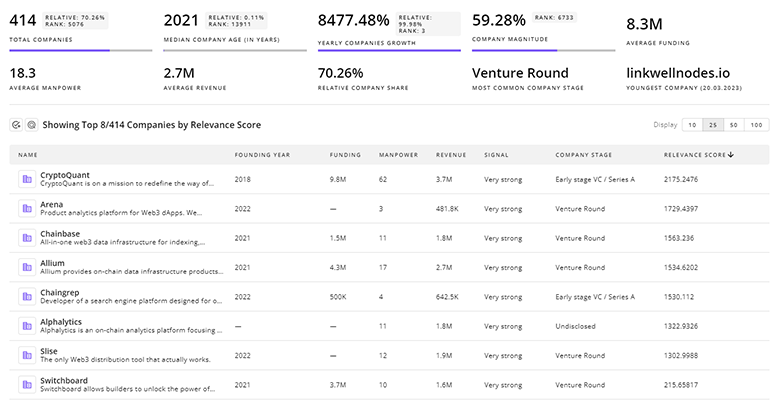
3.0K Modular Design Companies
Discover Modular Design Companies, their Funding, Manpower, Revenues, Stages, and much more
Modular Design Investors
TrendFeedr’s Investors tool offers comprehensive insights into 1.1K Modular Design investors by examining funding patterns and investment trends. This enables you to strategize effectively and identify opportunities in the Modular Design sector.
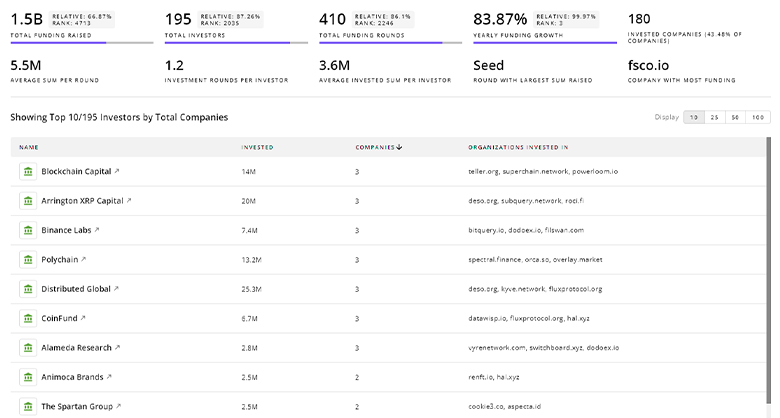
1.1K Modular Design Investors
Discover Modular Design Investors, Funding Rounds, Invested Amounts, and Funding Growth
Modular Design News
TrendFeedr’s News feature provides access to 5.4K Modular Design articles. This extensive database covers both historical and recent developments, enabling innovators and leaders to stay informed.
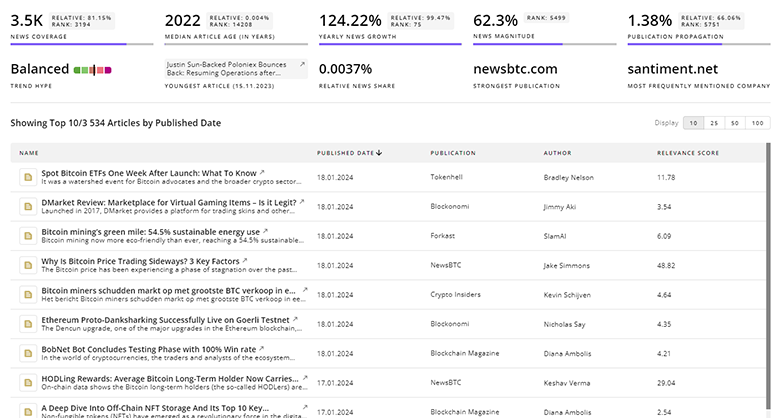
5.4K Modular Design News Articles
Discover Latest Modular Design Articles, News Magnitude, Publication Propagation, Yearly Growth, and Strongest Publications
Executive Summary
Modular design has matured into a multi-sector industrial movement where digital workflows, factory automation and standardized interfaces create measurable commercial advantages: faster delivery, lower waste and repeatable quality. The immediate pragmatics for business leaders are clear — invest in integrated digital-to-factory workflows, secure factory capacity or partnering arrangements, and develop product families with standardized interfaces that enable reuse and secondary markets. Actors that combine software control of the build process with reliable factory throughput and clear sustainability credentials will capture the highest value as modular solutions move from a competitive differentiator to a procurement default across housing, healthcare, data infrastructure and specialized industrial builds.
We value collaboration with industry professionals to offer even better insights. Interested in contributing? Get in touch!