Molecule Therapeutics Report
: Analysis on the Market, Trends, and TechnologiesThe molecule therapeutics sector is entering a data- and delivery-intensive phase in which platforms that pair AI-driven design with precise delivery will capture the greatest commercial value$50,930,000,000 in 2023 and projects a 9.7% CAGR, underlining strong funding and demand pressure for scalable pipelines. Recent market analyses show small-molecule discovery forecasts moving toward $106,770,000,000 by 2031, while contract manufacturing demand (HPAPI and complex formulations) is driving capacity investments and strategic partnerships across regions Small Molecule Healthcare Contract Manufacturing Market.
We last updated this report 161 days ago. Tell us if you find something’s not quite right!
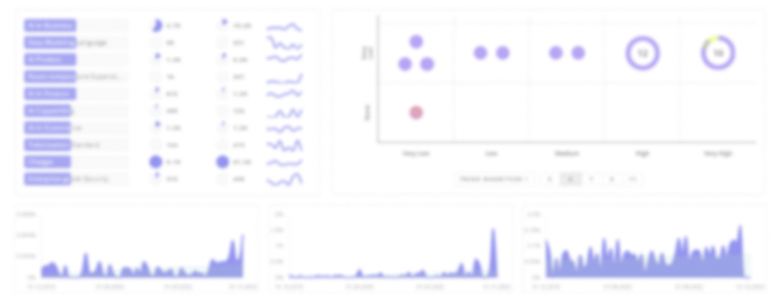
Topic Dominance Index of Molecule Therapeutics
To gauge the impact of Molecule Therapeutics, the Topic Dominance Index integrates time series data from three key sources: published articles, number of newly founded startups in the sector, and global search popularity.
Key Activities and Applications
- Targeted small-molecule discovery for oncology, neurodegeneration, metabolic and infectious indications, increasingly focused on addressing targets that evade classic inhibition.
- Targeted Protein Degradation (TPD) development (PROTACs and molecular glues) to remove disease-causing proteins rather than merely inhibit them; activity concentrates in oncology and immune modulation.
- RNA-targeting small molecules and oligonucleotide delivery—designing ligands that bind RNA structures and improving systemic/non-hepatic delivery for antisense/siRNA approaches Nucleic Acid Based Therapeutics Market.
- Delivery engineering: lipid nanoparticles (LNPs), polymeric and multifunctional nanocarriers, and macroencapsulation approaches that enable CNS access or oral biologics—these activities turn discovery success into clinical viability.
- AI/ML-enabled discovery loops: generative chemistry, motion-informed protein design, and closed-loop experimentation to compress hit-to-lead timelines and reduce attrition Terray Therapeutics.
Emergent Trends and Core Insights
- AI as primary competitive moat: firms investing in proprietary experimental data plus ML pipelines create an escalating advantage; capital concentration correlates with platform ambition (large recent raises for data-centric companies). Market narratives now value data assets as much as candidate portfolios
- Molecular glue commercialization is progressing from research to clinic and strategic licensing, with partnerships between large pharmas and focused small firms signaling near-term validation pathways
- Delivery differentiates winners from followers: companies that pair potent modalities with scalable delivery (HPAPIs, extra-hepatic siRNA, BBB access, oral biologics) secure premium partnership and M&A interest; CDMO capacity constraints amplify this effect
- Therapeutic focus is broadening: while oncology remains the largest commercial anchor, neurodegeneration, metabolic disease, and select infectious/autoimmune indications are rising as delivery and modality advances lower translational barriers Small Molecule Targeted Cancer Therapy Market (2019 To 2025).
- IP shifts from API to delivery and linker chemistry: patent activity shows substantially more filings around conjugates, linkers, and targeting moieties than on primitive active scaffolds, making linker/linker-activation IP a strategic asset (patent counts and class distribution reported in trend data).
Technologies and Methodologies
- PROTACs and Molecular Glues for event-driven protein removal rather than occupancy-based inhibition; platforms combine cheminformatics and E3-ligase biology to expand target scope
- Generative chemistry with integrated synthesis planning and high-throughput experimentation (closed-loop design → synth → assay → retrain) to accelerate lead cycles
- Structure + motion-aware design: molecular dynamics augmented design that optimizes compounds for dynamic protein conformers rather than single static structures
- LNPs and multifunctional nanocarriers adapted to small molecules and nucleic acids to enable targeted tissue distribution and endosomal escape; LNP advances remain critical for systemic RNA and extra-hepatic siRNA work
- Continuous flow chemistry and single-use manufacturing to scale complex APIs and HPAPIs rapidly while reducing contamination risk—a growing focus for CDMOs partnering with discovery firms
- Proteome-wide screening platforms and E3-agnostic assays to discover glueable hotspots and broaden applicability across indications
- AI/ML for ADMET and synthetic route prediction, reducing late-stage attrition and enabling earlier selection of manufacturable leads.
Molecule Therapeutics Funding
A total of 467 Molecule Therapeutics companies have received funding.
Overall, Molecule Therapeutics companies have raised $91.2B.
Companies within the Molecule Therapeutics domain have secured capital from 2.2K funding rounds.
The chart shows the funding trendline of Molecule Therapeutics companies over the last 5 years
Molecule Therapeutics Companies
- Integrated Nanotherapeutics Inc. — Focuses on mRNA-LNP platforms to induce antigen-specific immune tolerance and to expand LNP delivery beyond standard uses; the founding team includes experienced LNP contributors and the company has demonstrated reversal of Type-1 diabetes in preclinical models, positioning it to convert delivery expertise into therapeutic programs for autoimmune indications
- PRAMOMOLECULAR — Develops self-delivering siRNAs by covalently attaching lipid ferry moieties to siRNA, enabling extra-hepatic delivery to lung and pancreas tissues; this patent-protected chemistry directly addresses a persistent delivery bottleneck for oligonucleotide therapeutics and targets hard oncology indications such as pancreatic carcinoma
- Release Therapeutics — Builds a macroencapsulation platform to deliver potent therapeutic proteins across the blood-brain barrier via local, targeted CNS implants; the approach substitutes in vivo gene therapy with controlled protein release, aiming to reduce systemic exposure and enable repeatable dosing for genetic CNS disorders
- TRIMTECH Therapeutics Limited — Advances aggregate-selective degrader chemotypes (TRIMTACs/TRIMGLUEs) designed for CNS penetration to remove toxic protein aggregates in neurodegeneration; the company couples degrader modality design with a CNS delivery strategy to attack a high-value, high-unmet clinical need
- Magnet Biomedicine — Deploys a TrueGlue™ discovery engine for rational molecular glue identification across the proteome; the platform's focus on rational presenter-target pairing seeks to produce glue candidates with improved specificity and lower off-target risk, which supports rapid out-licensing and partnership models
Enhance your understanding of market leadership and innovation patterns in your business domain.
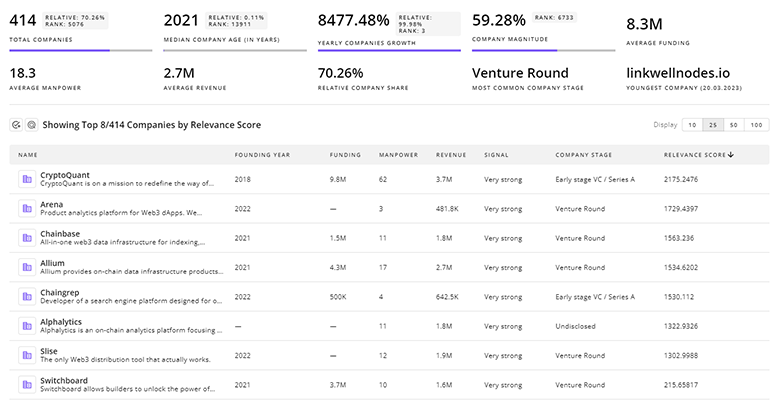
731 Molecule Therapeutics Companies
Discover Molecule Therapeutics Companies, their Funding, Manpower, Revenues, Stages, and much more
Molecule Therapeutics Investors
TrendFeedr’s Investors tool offers comprehensive insights into 2.2K Molecule Therapeutics investors by examining funding patterns and investment trends. This enables you to strategize effectively and identify opportunities in the Molecule Therapeutics sector.
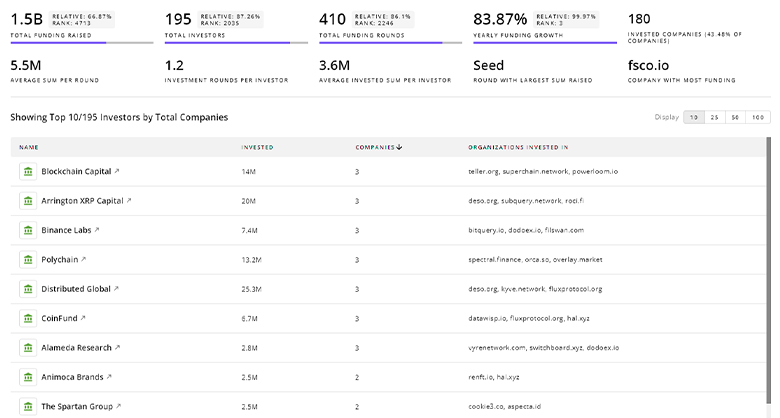
2.2K Molecule Therapeutics Investors
Discover Molecule Therapeutics Investors, Funding Rounds, Invested Amounts, and Funding Growth
Molecule Therapeutics News
TrendFeedr’s News feature provides access to 1.3K Molecule Therapeutics articles. This extensive database covers both historical and recent developments, enabling innovators and leaders to stay informed.
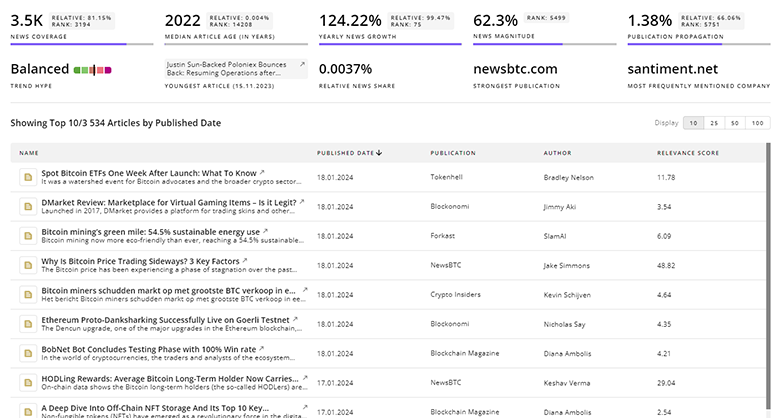
1.3K Molecule Therapeutics News Articles
Discover Latest Molecule Therapeutics Articles, News Magnitude, Publication Propagation, Yearly Growth, and Strongest Publications
Executive Summary
The molecule therapeutics landscape rewards two capabilities above all: the ability to generate high-quality, experiment-linked data that feeds predictive models, and the ability to deliver advanced modalities into the correct tissue compartments. Companies that integrate AI-first discovery stacks with defensible delivery IP (linkers, carrier chemistry, macroencapsulation, or LNP variants) will convert scientific novelty into durable commercial advantage. For investors and strategic leaders, the immediate priorities are clear: (1) evaluate platform datasets and experimental throughput as primary value indicators; (2) prioritize partnerships that close delivery gaps (CDMOs, formulation specialists, or device partners); and (3) protect linker/delivery-related IP as core assets rather than treating them as secondary engineering tasks. These choices determine whether a program becomes a licensable asset or fails at scale.
We value collaboration with industry professionals to offer even better insights. Interested in contributing? Get in touch!