New Materials Report
: Analysis on the Market, Trends, and TechnologiesThe new materials sector is at a clear inflection: patenting activity has expanded aggressively (with 307 granted filings in the nanoscale-to-construction cluster), producing an intense shift from lab curiosities toward high-volume, application-ready materials. Market-level forecasts show large, addressable submarkets — the advanced materials market is projected at $92.71B in 2025 with an 8.4% CAGR to $128.1B by 2029 — while targeted segments such as sustainable materials already exceed $333.31B in 2024 Sustainable Materials Market Size and Forecast 2025 to 2034. This report maps the principal applications, emergent technical directions, enabling methods, and five targeted company profiles that illustrate how discovery platforms, circular feedstock models, and manufacturing-led materialization are defining commercial winners.
We last updated this report 247 days ago. Tell us if you find something’s not quite right!
Topic Dominance Index of New Materials
To gauge the impact of New Materials, the Topic Dominance Index integrates time series data from three key sources: published articles, number of newly founded startups in the sector, and global search popularity.
Key Activities and Applications
- Accelerated digital discovery and synthesis workflows — AI and physics-informed models screen candidate chemistries and generate synthesis routes used by autonomous labs and high-throughput platforms.
- High-performance energy materials — development of silicon-anode structures, graphene-enhanced electrodes, and next-gen cathode chemistries targeted at higher energy density and domestic supply security.
- Circular composites and carbon-fiber reuse — chemical- and process-level recycling routes for CFRP and composite feedstocks to recover high-value fibres and reintroduce them into automotive, aerospace, and energy markets.
- Sustainable, bio-derived polymer replacements — conversion of agricultural residues into compostable packaging and plastic alternatives to reduce embodied carbon in high-volume applications.
- Additive manufacturing-ready feedstocks and reactive AM chemistries — formulations engineered for low-warpage, multi-material printing and chemical consolidation routes that deliver engineering-grade parts without conventional thermal curing.
- Functional nanomaterials for catalysis and hydrogen systems — engineered porous carbons and nanospheres that reduce precious metal loading in fuel cells and electrolyzers.
Emergent Trends and Core Insights
- Platform-ization of materials R&D. The primary intellectual property is migrating from single formulations toward the data, models, and synthesis automation stacks that produce them — materials informatics vendors and AI-first startups materially shorten time-to-candidate.
- Industrial-scale circularity as commercial necessity. Reclaiming high-value fibres and converting waste streams into feedstock is moving from pilot projects to early commercial factories; recyclers and chemical-recovery players monetize both cost and regulatory advantage.
- Regional production sovereignty for energy materials. Policy and procurement pressures favor domestic supply of battery and hydrogen materials; modular, localized plants for critical metals and precursors reduce geopolitical exposure Magnium Australia.
- Convergence of multifunctionality and manufacturing. Materials now must satisfy structural, sensing, and environmental functions simultaneously, pushing R&D toward hybrid chemistries and integrated process control (e.g. embedded sensing in cementitious composites).
- Commercial tension between scale incumbents and digital challengers. Large producers with high capacity face obsolescence risk unless they adopt digital discovery and low-carbon process upgrades; digitally native firms capture higher-margin, application-specific niches Deep Principle.
Technologies and Methodologies
- AI-driven materials informatics and high-throughput experimentation — models and autonomous labs that generate and test millions of candidate structures, reducing discovery cycles from decades to years Google DeepMind GNoME coverage.
- Flash Joule Heating and scalable graphene production — low-energy processes for producing high-quality graphene and nanocarbon feedstocks that enable adoption in composites and energy storage.
- Microreactor and intensified flow synthesis for scale-up — microreactor platforms combined with ML for deterministic scale-up of nanoparticle and additive syntheses.
- Hybrid chemical AM (reactive consolidation) — chemistry-first binder or reactive ink approaches enabling engineering-grade printed polyurethane and composite parts without thermal post-processing Reactive Fusion Ltd..
- Electrified chemical conversion and programmable heating — electrothermal processes for selective conversion and upcycling of plastics or methane feedstocks, enabling modular chemical manufacture Polymer-X Inc..
- In-line manufacturing intelligence and non-destructive characterization — cold-plasma fingerprinting and AI to perform real-time QC and closed-loop process adjustments at scale SirenOpt.
New Materials Funding
A total of 4.3K New Materials companies have received funding.
Overall, New Materials companies have raised $237.0B.
Companies within the New Materials domain have secured capital from 15.8K funding rounds.
The chart shows the funding trendline of New Materials companies over the last 5 years
New Materials Companies
- Fairmat — Fairmat operates chemical recycling and second-generation manufacturing for carbon fiber composites, producing reclaimed CFRP feedstock that meets industrial performance benchmarks. The company positions recycled composites as direct replacements in sports, energy, and automotive parts and demonstrates a manufacturing pathway to reintroduce high-value fibres into supply chains. Fairmat's approach addresses disposal cost and supply tightness by creating an upstream revenue stream for end-of-life composites.
- traceless materials — traceless materials converts agricultural residues into home-compostable, plastic-free materials and is scaling via a €36.6M Series A to bring its first large production facility online in Hamburg at end-2025. The company focuses on packaging and single-use conversion using processes compatible with existing converting lines, reducing embodied emissions compared to fossil-plastic baselines. traceless materials targets brand partners and converters seeking a demonstrable circular substitute.
- Accelerated Materials — Accelerated Materials combines AI and intensified microreactor hardware to compress nanoparticle and nanomaterial scale-up timelines, selling both equipment and development services. Its platform enables reproducible synthesis recipes that bridge bench discoveries to pilot manufacturing, lowering technical risk for customers in energy and electronics. Accelerated Materials targets industrial adopters that require deterministic scale behavior rather than ad hoc scale-up experiments.
- Lineat Composites — Lineat Composites manufactures aligned discontinuous fibre tapes that deliver continuous-fibre mechanical performance with improved formability and enable reclaimed fibre incorporation. The technology lowers manufacturing complexity for composite parts in automotive and aerospace while supporting circularity by accommodating reclaimed fibres. Lineat Composites targets OEMs seeking carbon-reduction pathways that do not sacrifice part formability or mechanical performance.
Enhance your understanding of market leadership and innovation patterns in your business domain.
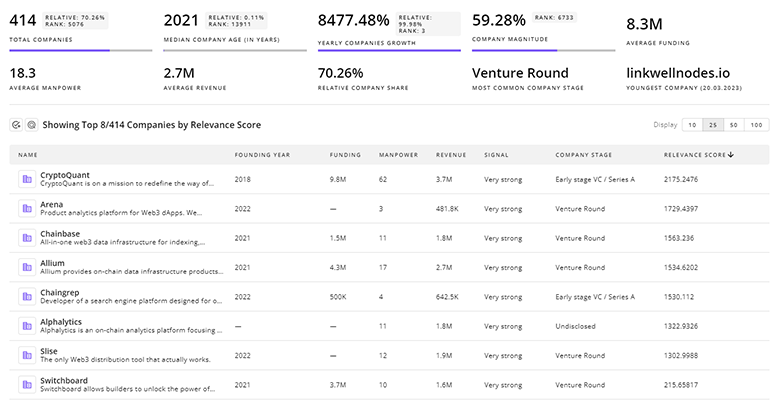
32.9K New Materials Companies
Discover New Materials Companies, their Funding, Manpower, Revenues, Stages, and much more
New Materials Investors
TrendFeedr’s Investors tool offers comprehensive insights into 12.0K New Materials investors by examining funding patterns and investment trends. This enables you to strategize effectively and identify opportunities in the New Materials sector.
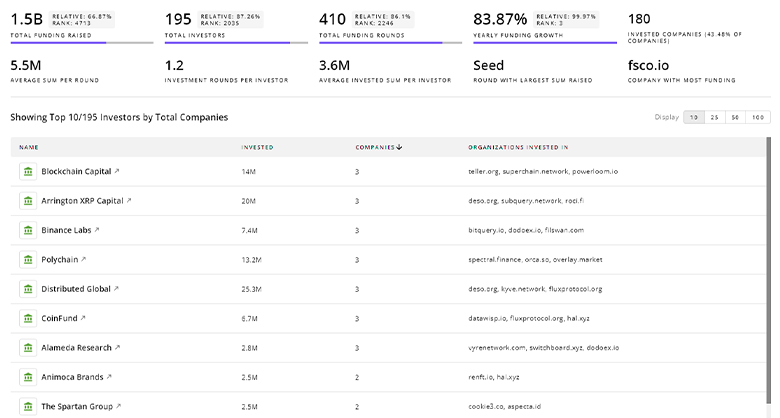
12.0K New Materials Investors
Discover New Materials Investors, Funding Rounds, Invested Amounts, and Funding Growth
New Materials News
TrendFeedr’s News feature provides access to 79.5K New Materials articles. This extensive database covers both historical and recent developments, enabling innovators and leaders to stay informed.
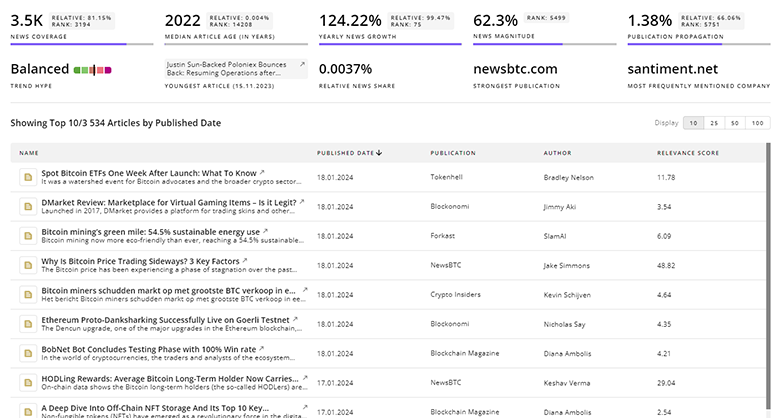
79.5K New Materials News Articles
Discover Latest New Materials Articles, News Magnitude, Publication Propagation, Yearly Growth, and Strongest Publications
Executive Summary
The business imperative in new materials is no longer only chemistry; it is the capacity to move from candidate discovery to manufacturable feedstock with demonstrable environmental and supply-chain advantages. Firms that couple advanced simulation and high-throughput experimentation with modular, low-carbon manufacturing and validated recycling pathways will create economic separation from incumbents that rely on legacy scale and sequential R&D. Investors and procurement leaders should prioritize partners that (1) provide algorithmic discovery validated by physical synthesis, (2) demonstrate closed-loop feedstock economics for high-value composites and polymers, and (3) can localize production of critical energy materials to satisfy procurement and regulatory requirements. Companies that deliver quantifiable emissions reductions, reproducible scale behavior, and composable digital-to-physical toolchains will capture the largest portion of the expanding addressable market.
We value collaboration with industry professionals to offer even better insights. Interested in contributing? Get in touch!