Nuclear Power Generation Report
: Analysis on the Market, Trends, and TechnologiesThe nuclear power generation sector is in active transition: the internal data records 633 companies working on the topic with $10.05 billion total funding raised, signalling concentrated but targeted investment activity rather than broad retail finance flows. Market projections diverge by scope: an industry market analysis forecasts global value near US $299.1 billion by 2030 (1.2% CAGR from 2022), while other market models estimate faster growth for specific segments such as reactor equipment and SMRs Nuclear Power Generation Market Analysis by Size & Share 2030 Nuclear Power Plant Equipment Market 2024. The data shows clear regional divergence: Asia is driving capacity additions, advanced economies are managing retirements, and technological attention concentrates on SMRs, molten-salt systems, TRISO/HALEU fuel chains, and AI-enabled plant operations International Energy Agency — Nuclear Power.
We last updated this report 342 days ago. Tell us if you find something’s not quite right!
Topic Dominance Index of Nuclear Power Generation
To gauge the impact of Nuclear Power Generation, the Topic Dominance Index integrates time series data from three key sources: published articles, number of newly founded startups in the sector, and global search popularity.
Key Activities and Applications
- New-build and life-extension projects for grid baseload and system reliability, with large projects and fleet refurbishments concentrated in Asia and select advanced-economy programmes World Nuclear Industry Status Report 2022 Nuclear Power in the US - Industry Market Research Report.
- Small modular reactor (SMR) commercialization and demonstration: factory fabrication, modular siting, and licensing of multi-module plants for utilities and industrial sites.
- Advanced reactor demo and scale-up (molten salt, sodium/lead fast, HTGR) targeting industrial heat, hydrogen, desalination and flexible generation services Terrestrial Energy Technology trends analysis.
- Fuel cycle and waste management activities: enrichment and HALEU supply-chain rebuilding, fuel recycling/reprocessing pilots, and commercial disposal solutions for spent fuel Deep Isolation.
- Nuclear-enabled industrial applications: process heat for chemicals and steel, large-scale hydrogen production, and colocated data-center or manufacturing power via PPAs and captive SMR plants Third Way map—advanced nuclear demand.
Emergent Trends and Core Insights
- Geographic shift to Asia and select emerging markets: roughly 60% of 2022 net new capacity additions came from emerging/developing markets, with China leading new construction activity.
- Market bifurcation between legacy large reactors (plateauing or contracting in parts of Europe) and modular/advanced reactors (growing pipeline supported by targeted government programs).
- SMRs and microreactors move from concept to procurement and offtake negotiations (utilities, industrials, hyperscalers), shifting project risk profiles by shortening build schedules and enabling staged capacity additions Technology Review coverage of SMR deals.
- Fuel security and HALEU availability are strategic chokepoints; rebuilding enrichment capacity and domestic fuel supply appears in multiple national strategies and corporate pipelines Centrus Energy operational role market-level treatment of HALEU needs.
- Digitalization and AI adoption accelerate operational risk reduction and licensing efficiency through digital twins, predictive maintenance, and AI-enabled regulatory workflows.
Technologies and Methodologies
- Small Modular Reactors (SMRs): factory-fabricated modules (tens to several hundreds MWe), multi-module plant economics, and siting flexibility for grids and industrial sites NuScale Power SMR market research.
- Molten-salt and Integral Molten Salt Reactor (IMSR) variants: high-temperature operation for process heat, potential to consume legacy waste streams, and reduced-pressure safety cases Terrestrial Energy on IMSR.
- TRISO and HALEU fuel technologies: higher tolerance fuels for advanced gas-cooled and high-temperature reactors, and enriched fuel for many Gen-IV/SMR concepts X-energy.
- Advanced coolant and direct-conversion cycles (supercritical CO2, liquid metal coolants) that raise thermal efficiency and enable compact power blocks.
- AI, digital twins, and advanced I&C: shorten operational learning curves, support load-following modes, and improve safety-case traceability for regulators.
- Modular shipyard manufacturing and floating platforms for maritime and remote industrial power applications.
Nuclear Power Generation Funding
A total of 85 Nuclear Power Generation companies have received funding.
Overall, Nuclear Power Generation companies have raised $17.2B.
Companies within the Nuclear Power Generation domain have secured capital from 339 funding rounds.
The chart shows the funding trendline of Nuclear Power Generation companies over the last 5 years
Nuclear Power Generation Companies
- Moltex Energy — Moltex designs molten-salt-based reactors that can use existing spent fuel as feedstock and operate flexibly across baseload and peaking roles. The company highlights waste-burning designs and closed-cycle options intended to reduce lifecycle volumes and long-term radiotoxicity while offering siting options adjacent to existing nuclear sites.
- Radiant — Radiant develops a 1 MW microreactor targeted at replacing diesel generators for remote critical infrastructure and disaster response. Their Kaleidos microreactor aims for a fueled test by 2026 and positions portability, rapid deployment, and low operational footprint as the core product differentiator.
- Nuclearn — Nuclearn supplies nuclear-specific AI tools to accelerate regulatory workflows, predictive maintenance, and knowledge capture for operating reactors. The firm packages domain-trained models and digital workflows to reduce manual effort in inspections and licensing documentation.
- CORE POWER — CORE POWER focuses on molten-salt fast-spectrum reactors adapted for maritime and floating power platforms, pursuing shipyard production methods and modular nuclear power for heavy industry at sea. Their value proposition targets industrial customers that need long-duration, compact, and refuelable power systems.
- Blue Capsule Technology — Blue Capsule develops high-temperature reactor modules for industrial process heat up to 700°C and electrical output for heavy industry (steel, chemicals, hydrogen). The company emphasizes direct industrial integration and modular heat delivery rather than pure-grid electricity sales.
Enhance your understanding of market leadership and innovation patterns in your business domain.
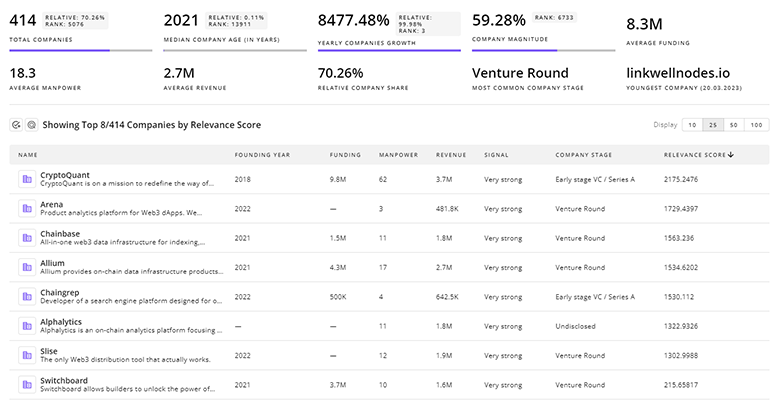
644 Nuclear Power Generation Companies
Discover Nuclear Power Generation Companies, their Funding, Manpower, Revenues, Stages, and much more
Nuclear Power Generation Investors
TrendFeedr’s Investors tool offers comprehensive insights into 323 Nuclear Power Generation investors by examining funding patterns and investment trends. This enables you to strategize effectively and identify opportunities in the Nuclear Power Generation sector.
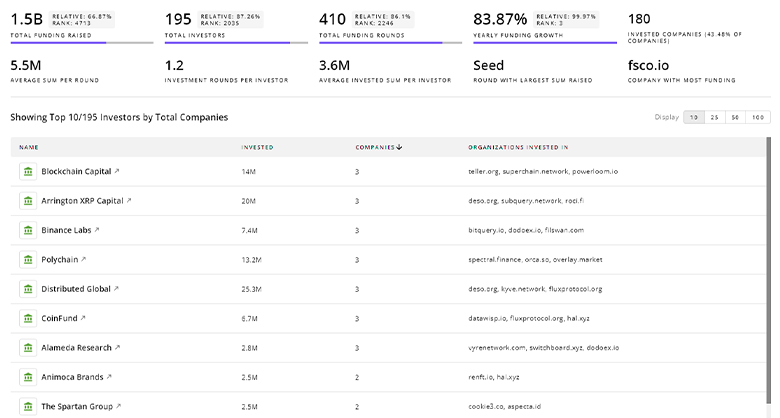
323 Nuclear Power Generation Investors
Discover Nuclear Power Generation Investors, Funding Rounds, Invested Amounts, and Funding Growth
Nuclear Power Generation News
TrendFeedr’s News feature provides access to 1.7K Nuclear Power Generation articles. This extensive database covers both historical and recent developments, enabling innovators and leaders to stay informed.
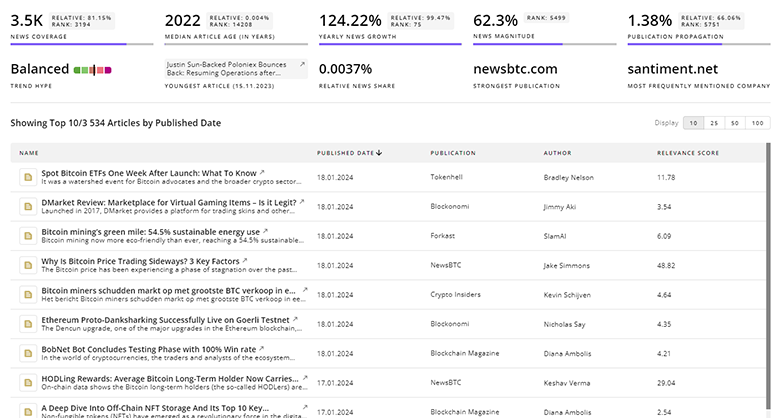
1.7K Nuclear Power Generation News Articles
Discover Latest Nuclear Power Generation Articles, News Magnitude, Publication Propagation, Yearly Growth, and Strongest Publications
Executive Summary
Nuclear power generation no longer sits on a single track. The sector shows concentrated capital and focused innovation across clearly defined plays: modular reactors for faster project economics and siting flexibility; advanced fuels and recycling to address waste and resource constraints; and digital platforms that shrink operational and regulatory frictions. Regional outcomes will diverge sharply: Asia and selected emerging markets will expand capacity rapidly, while many advanced economies will pursue a mix of life extensions, targeted new builds, and SMR demonstrations. For investors and industrial buyers, the practical priorities are supply-chain resilience for HALEU and specialty components, early engagement with regulators to shorten FOAK timelines, and commercial partnerships that align reactor vendor roadmaps with concrete offtake (utilities, industry, data centers). The companies that pair credible engineering demonstrations with concrete commercial contracts will capture disproportionate share of near-term value.
We value collaboration with industry professionals to offer even better insights. Interested in contributing? Get in touch!