Nuclear Testing Report
: Analysis on the Market, Trends, and TechnologiesThe recent resurgence of public and policy attention on nuclear testing has produced a sharp media spike—news coverage grew by 414.29% in the last five years—signaling a rapid escalation in political signaling, verification activity, and demand for detection and stewardship capabilities. Strategic rhetoric from major capitals has emphasized “testing” as leverage while operational activity so far favors non-explosive validation, diagnostics, and delivery-system demonstrations rather than immediate full-yield detonations Can the United States Immediately Return to Nuclear Testing?. This mix of escalatory language, improved monitoring, and advanced simulation creates concrete commercial opportunities for firms that supply high-fidelity simulation, seismic/radionuclide monitoring, subcritical test diagnostics, and nuclear-material accountability services.
We last updated this report 32 days ago. Tell us if you find something’s not quite right!
Topic Dominance Index of Nuclear Testing
To gauge the impact of Nuclear Testing, the Topic Dominance Index integrates time series data from three key sources: published articles, number of newly founded startups in the sector, and global search popularity.
Key Activities and Applications
- Seismic and radionuclide monitoring for test detection and attribution. International monitoring networks and national assets fuse seismic, infrasound, hydroacoustic, and radionuclide data to detect and characterize suspected underground or atmospheric events.
- Verification and treaty compliance operations (CTBT-focused). Governments and verification bodies maintain an on-call verification regimen, including data fusion and On-Site Inspection (OSI) preparedness, to support consultations and potential inspections if suspicious events arise.
- Stockpile stewardship via non-explosive experiments and high-energy physics facilities. National labs use subcritical experiments, high-energy laser facilities, and supercomputing to validate warhead performance without full detonations, sustaining deterrent confidence while avoiding a return to explosive testing.
- High-fidelity simulation and diagnostics for warhead and subsystem validation. Advanced hydrodynamic codes and experiment-driven model calibration replace many historical test functions and shorten technical decision cycles.
- Environmental sampling and contamination legacy management. Long-tail remediation, radiochemical assays, and community advocacy continue at legacy test sites and inform legal and insurance exposures tied to historical testing More than 2,000 nuclear weapons have been detonated in the past 80 years.
- Delivery-system demonstrations and strategic signaling. States increasingly demonstrate novel delivery platforms (nuclear-powered cruise missiles, underwater drones) as coercive signals while avoiding explicit explosive tests, shifting the competitive focus toward platform validation and counter-detection measures What you need to know about recent nuclear exercises and threats.
Emergent Trends and Core Insights
- Media and political amplification outpaces technical activity. Public discourse on testing has surged (news coverage +414.29% over five years), creating policy pressure and accelerating verification investment even where explosive tests remain unlikely.
- Testing rhetoric functions as strategic signaling more than immediate operational intent. Recent high-level statements have provoked reciprocal policy reviews but, to date, emphasize preparations and system trials rather than near-term full-yield detonations Russia’s Latest Nuclear Saber-Rattling: Nuclear Testing?.
- Validation through non-explosive physics and computing is now central. Investment in subcritical experiments, laser facilities, and HPC modeling reduces the technical need for explosive tests while raising commercial demand for advanced simulation and diagnostics.
- Monitoring sophistication has increased and constrains clandestine testing options. IMS networks plus national precision monitoring and satellite-based analytics lower the probability that even low-yield or supercritical activities escape detection in many regions Comprehensive Nuclear Test Ban Treaty.
- Commercial opportunity shifts toward verification, detection, and waste lifecycle solutions. Firms that provide monitoring networks, radiochemical analysis, non-destructive assay, and geologic disposal approaches become strategic suppliers as governments sustain stockpiles while seeking legal and reputational assurance.
- Geopolitics raises asymmetric gain concerns from resumed testing. Because some states have much less historical test data, any return to testing would disproportionately benefit those with smaller prior test datasets, altering the competitive balance among major nuclear actors.
Technologies and Methodologies
- Integrated multi-modal monitoring (seismic + radionuclide + infrasound + hydroacoustic). Modern verification uses fused datasets from global stations to achieve low-magnitude detection and to support OSI cueing.
- Advanced radiation detectors and portable spectrometers. Semiconductor and scintillator innovations (e.g. CZT detectors, modular neutron detectors) enable field deployable, high-resolution identification for on-site and environmental sampling tasks.
- Subcritical experiments and high-energy laboratory platforms. Facilities that reproduce extreme pressures and temperatures (laser-driven inertial confinement and pulsed neutron sources) provide crucial empirical data without producing a nuclear yield.
- High-performance computing and physics-based hydrodynamics codes. 3-D simulation suites and probabilistic risk assessment tools replace many historical verification functions and speed design verification.
- Non-destructive assay (NDA) and radiometric characterization. Automated gamma spectroscopy, segmented drum assay, and calorimetry enable accurate material accountancy and waste stream characterization critical to safeguards and remediation.
- Remote sensing and geospatial analytics for pattern-of-life and site-activity analysis. High-resolution optical, SAR, and InSAR monitoring increase the precision of site assessments and help differentiate routine construction from test preparations How to Get Away with a Nuclear Test.
Nuclear Testing Funding
A total of 49 Nuclear Testing companies have received funding.
Overall, Nuclear Testing companies have raised $1.8B.
Companies within the Nuclear Testing domain have secured capital from 55 funding rounds.
The chart shows the funding trendline of Nuclear Testing companies over the last 5 years
Nuclear Testing Companies
- Metatomic — Metatomic focuses on handling and repurposing spent nuclear fuel with a dry process that aims to convert legacy waste streams into usable fuel forms; the company positions that capability as a way to shrink long-term disposal liabilities while enabling fuel-cycle flexibility. Its current footprint is small, which makes it an attractive technical partner for utilities and remediation projects looking for pilot-scale interventions. Metatomic’s model targets the intersection of remediation and new fuel economics, offering potential licensing pathways for larger fuel-cycle integrators.
- Deep Isolation — Deep Isolation commercializes horizontal drill-hole disposal for spent fuel and high-level waste, offering a geology-based isolation approach that reduces surface footprint and local political friction; the method uses directional drilling technologies adapted from oil and gas and positions disposal as a modular service. The firm emphasizes cost control and community partnerships to accelerate local acceptance and reduce project lead times versus deep mined repositories. Deep Isolation sits at the nexus of waste management and societal risk mitigation for legacy test sites and active reactor fleets.
- A.N. Technology (ANTECH) — ANTECH provides non-destructive radioactivity measurement systems used in safeguards, waste assay, and decommissioning, including segmented gamma scanners and tomographic gamma systems for bulk waste characterization; its product line covers tasks required by verification campaigns and environmental remediation projects. Because accurate NDA underpins credible OSI and certification workflows, ANTECH’s instruments remain operationally essential to both government and commercial actors managing test-affected sites or decommissioning programs.
- Cerberus Nuclear — Cerberus Nuclear is a specialized UK consultancy providing radiation shielding design, criticality safety, and nuclear characterisation services; it combines Monte Carlo modeling and in-situ verification to validate shielding and criticality margins for complex projects. Its independent verification services and training products address a critical shortage of expertise in safety-critical modeling and post-operational cleanout planning, making it a valuable partner for governments and utilities seeking defensible safety cases.
- Nuclearcore — Nuclearcore.ai creates tools to accelerate probabilistic risk assessment (PRA) processing and modeling for the nuclear sector, reducing the friction in licensing and safety case generation. By automating model workflows and supporting scenario analysis, the firm targets the regulatory and programmatic bottlenecks that slow validation of both reactors and material-control regimes. Its product set fits both civil operator needs and government verification programs that require repeatable, auditable PRA outputs.
Enhance your understanding of market leadership and innovation patterns in your business domain.
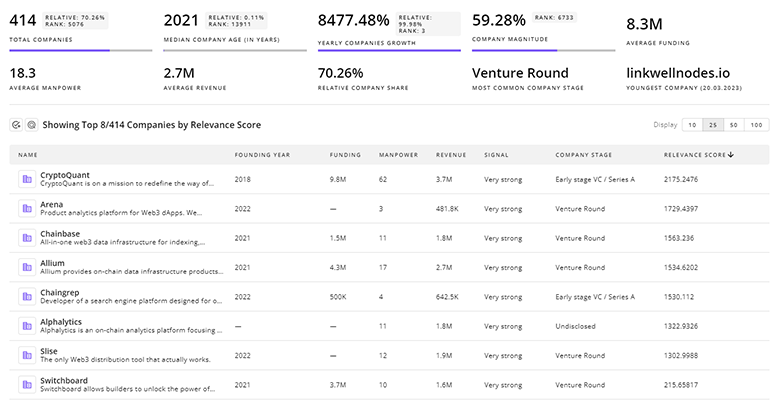
482 Nuclear Testing Companies
Discover Nuclear Testing Companies, their Funding, Manpower, Revenues, Stages, and much more
Nuclear Testing Investors
TrendFeedr’s Investors tool offers comprehensive insights into 68 Nuclear Testing investors by examining funding patterns and investment trends. This enables you to strategize effectively and identify opportunities in the Nuclear Testing sector.
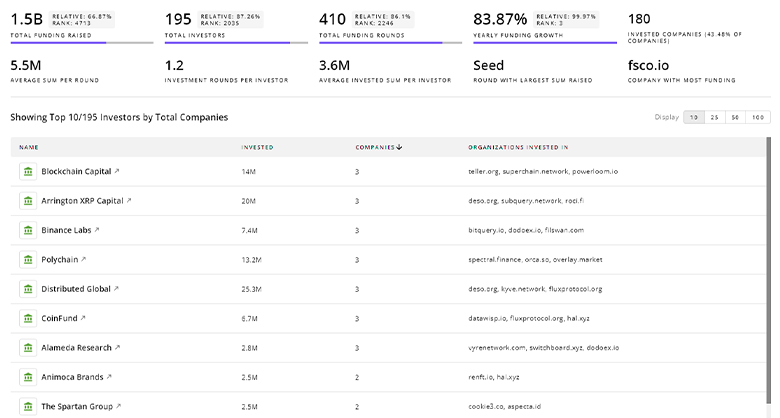
68 Nuclear Testing Investors
Discover Nuclear Testing Investors, Funding Rounds, Invested Amounts, and Funding Growth
Nuclear Testing News
TrendFeedr’s News feature provides access to 918 Nuclear Testing articles. This extensive database covers both historical and recent developments, enabling innovators and leaders to stay informed.
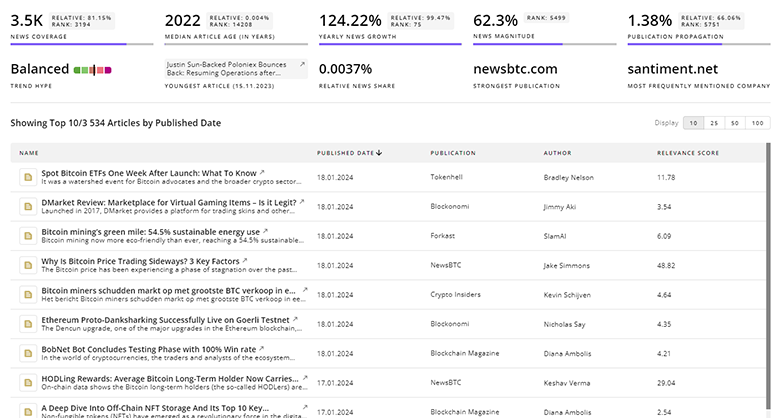
918 Nuclear Testing News Articles
Discover Latest Nuclear Testing Articles, News Magnitude, Publication Propagation, Yearly Growth, and Strongest Publications
Executive Summary
The contemporary testing landscape combines intense political signaling with technologically advanced, non-explosive validation methods. The surge in media coverage (+414.29% over five years) amplifies policy risk and creates near-term demand for monitoring, detection, and stockpile-stewardship services. For the business community the immediate commercial vectors are clear: provide high-fidelity simulation and diagnostics, scale precision detection and NDA instrumentation, and offer credible waste-management and site-remediation solutions that reduce legal and social liabilities. Companies that can align deliverables with treaty verification workflows and accelerate regulatory evidence packages will capture disproportionate value as states navigate the tension between modernization and non-proliferation.
We value collaboration with industry professionals to offer even better insights. Interested in contributing? Get in touch!