Payment Processing Report
: Analysis on the Market, Trends, and TechnologiesThe payment-processing market shows sustained expansion with an industry-level growth thesis that centers on faster settlement, data orchestration, and cost optimization; the market’s projected momentum is supported by an 11.7% CAGR noted in recent trend analysis. Market forecasts from independent reports align on continued expansion—for example, one major study projects growth from $103.2 billion (2023) to $160.0 billion by 2028 at a 9.2% CAGR MarketsandMarkets – Payment Processing Solutions Market. The competitive imperative is clear: platforms that combine real-time settlement rails, acquiring-agnostic orchestration, and AI risk/routing will protect margin while vertical integrators capture customer stickiness by embedding payments into business workflows.
The last time we updated this report was 35 days ago. If there’s something missing or off, your tips are welcome!
Topic Dominance Index of Payment Processing
The Dominance Index for Payment Processing merges timelines of published articles, newly founded companies, and global search data to provide a comprehensive perspective into the topic.
Key Activities and Applications
- Real-time settlement and instant payments. Processors and gateways implement rails and connectors that shorten settlement windows and provide immediate confirmation to merchants and buyers.
- Payment orchestration and multi-provider routing. Merchants use orchestration layers to cascade transactions across acquirers and PSPs to maximize approvals and minimize fees.
- Tokenization and point-to-point encryption for data minimization. Token/payload abstractions remove PAN exposure from merchant systems and reduce PCI scope.
- SoftPOS and tap-to-phone acceptance. Software-based POS removes hardware friction for small merchants and accelerates coverage in emerging markets.
- Account-to-Account (A2A) and Open Banking flows. Direct bank-debited settlement reduces interchange and supports B2B collections and low-cost payouts.
- Subscription, recurring billing, and BNPL settlement. Processors that automate card updates, dunning, and cross-jurisdiction tax handling reduce churn for SaaS and subscription commerce.
- AI-driven fraud detection and payment routing. Real-time ML models lower chargebacks and dynamically select the best acquirer based on performance and cost.
Emergent Trends and Core Insights
- Real-time payments become baseline for merchant experience. Adoption of instant rails and the growth of RTP networks shift product design toward immediate confirmation and reconciliation.
- Payment orchestration attacks processor commoditization. Orchestration layers convert acceptance into an operational advantage—routing logic and local acquiring reduce cross-border decline rates and fee leakage.
- A2A / open banking expands in B2B use cases. Lower cost and direct settlement dynamics favor bank-based collection for large B2B flows, pressuring card revenue mix in certain verticals market_us - Global Payment Processing Solution Market, 2024.
- SoftPOS plus tokenization reduces merchant onboarding friction. Tap-to-phone with strong token/P2PE lowers hardware and certification costs for micro-merchants, expanding addressable market.
- Invisible and embedded payments grow in platform ecosystems. Platforms embed payment flows so end customers never leave the host app; firms that own the UX capture higher LTV per merchant marketresearchfuture - Payment Processing Solutions Market, 2025.
- Margin pressure forces specialization: incumbents defend interchange share while nimble vertical integrators monetize data and compliance automation to sustain higher margins.
Technologies and Methodologies
- ISO 20022 and richer messaging for cross-border reconciliation. Higher data fidelity enables smarter routing, tax handling, and reconciliation for international merchants.
- Cloud-native payment hubs and microservice architectures. Cloud platforms provide elasticity for peak loads and simplify PCI boundary management while enabling multi-rail connectivity.
- Tokenization + P2PE for data minimization. Token vaults and vaultless approaches minimize merchant exposure and lower compliance costs.
- AI/ML for fraud, risk scoring, and smart routing. Models operate at transaction-millisecond latencies to reduce false positives and optimize approval rates across routes.
- SoftPOS / Tap-to-Phone SDKs. Software acceptance on commodity devices widens merchant access without specialized terminals.
- Payment orchestration (POP) with acquiring-agnostic design. Orchestration engines implement rulesets to route by currency, cost, and historical approval performance.
- A2A rails / Open Banking APIs. Direct bank debiting and consented data flows reduce reliance on card rails for low-value, high-frequency B2B and utility payments.
- Selective blockchain/CBDC experimentation. Some processors pilot tokenized settlement channels and CBDC compatibility for specific corridors and institutional flows.
Payment Processing Funding
A total of 1.7K Payment Processing companies have received funding.
Overall, Payment Processing companies have raised $158.6B.
Companies within the Payment Processing domain have secured capital from 6.9K funding rounds.
The chart shows the funding trendline of Payment Processing companies over the last 5 years
Payment Processing Companies
- FinResults — FinResults targets platform-centric payment onboarding and has completed SOC-2 Type-II certification while preparing a full payments product launch to support merchants with integrated reconciliation and payout features. The company positions itself as a Payment-as-a-Service provider with developer tooling that reduces integration time for ISVs. Its emphasis on compliance automation aims to lower merchant onboarding friction and time-to-value.
- Payzli — Payzli focuses on mobile and contactless acceptance for SMEs and recently received a transformational investment to scale its acquiring and merchant services in North America. The platform emphasizes next-day funding and simplified pricing to attract independent merchants. Payzli's roadmap centers on SoftPOS and embedded merchant reporting to improve retention.
- Silverflow — Silverflow delivers a cloud-native card processing engine and announced strategic partnerships with banks to accelerate product deployments in 2024, aiming at issuers and merchant acquirers that require low-latency token processing. Their architecture reduces legacy translation layers and enables faster feature rollout for card products. The company's API-first model targets fintechs building issuer and processor services.
- PayRentChex — PayRentChex concentrates on verticalized rent and rental payments with instant ACH funding options and tenant billing automation. By blending payment orchestration with accounts receivable workflows, the startup reduces reconciliation work for property managers. Its niche focus improves approval and retention rates where standard PSP flows fail to meet billing complexity.
- Preludd — Preludd builds SoftPOS and tap-to-phone SDKs targeting merchants in emerging markets and reported workforce expansion to support double-digit growth in 2023. The startup emphasizes low-footprint SDKs and regional acquiring integrations to accelerate merchant activation without terminal logistics. Preludd's product roadmap includes integrated token vaults to reduce PCI exposure for mobile acceptance.
Delve into the corporate landscape of Payment Processing with TrendFeedr’s Companies tool
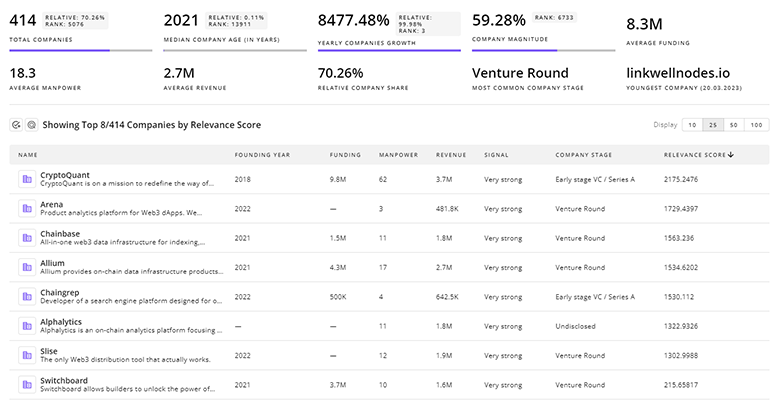
11.2K Payment Processing Companies
Discover Payment Processing Companies, their Funding, Manpower, Revenues, Stages, and much more
Payment Processing Investors
TrendFeedr’s Investors tool provides insights into 6.9K Payment Processing investors for you to keep ahead of the curve. This resource is critical for analyzing investment activities, funding trends, and market potential within the Payment Processing industry.
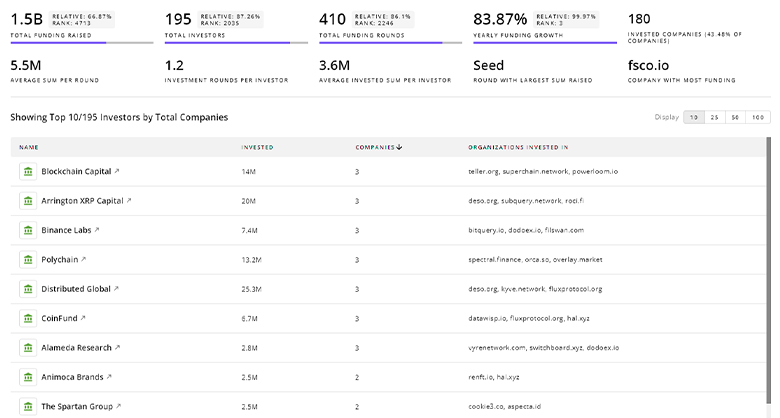
6.9K Payment Processing Investors
Discover Payment Processing Investors, Funding Rounds, Invested Amounts, and Funding Growth
Payment Processing News
TrendFeedr’s News feature offers you access to 12.5K articles on Payment Processing. Stay informed about the latest trends, technologies, and market shifts to enhance your strategic planning and decision-making.
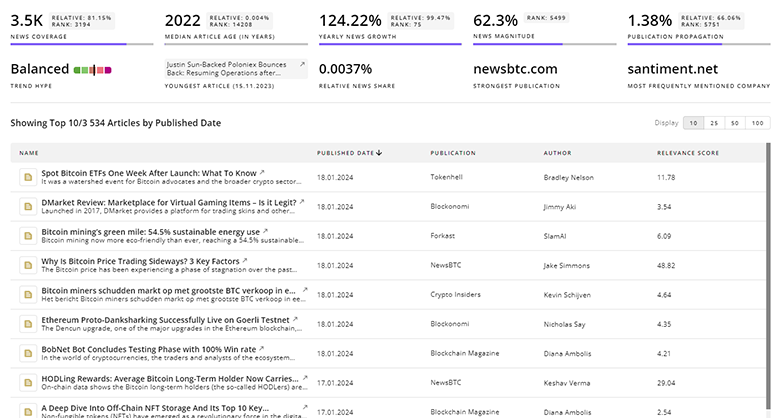
12.5K Payment Processing News Articles
Discover Latest Payment Processing Articles, News Magnitude, Publication Propagation, Yearly Growth, and Strongest Publications
Executive Summary
Payment processing remains a high-growth market where technical architecture and regulatory depth determine winners. Firms that combine cloud-native orchestration, comprehensive local acquiring, and advanced AI for real-time routing will preserve margin while meeting merchant demand for lower friction and lower cost settlement. Vertical specialists that embed payments into domain workflows—handling tax, compliance, and recurring billing—can sustain premium pricing even as pure acceptance commoditizes. For operators and investors, the practical play is to accelerate investments in orchestration, A2A rails, SoftPOS enablement, and ML risk tooling while building or partnering for regional regulatory footprints that block simple global replication.
Are you an insider in the trends or tech industry? We’d love for you to contribute to our content.