Real-time Multilingual Meetings Report
: Analysis on the Market, Trends, and TechnologiesThe real-time multilingual meetings market is shifting from niche support to core collaboration infrastructure: demand indicators show 79% of professionals report rising non-English attendance while event planners report 94% willingness to adopt AI speech translation for future events AI transforms multilingual event planning landscape. Commercial signals confirm business-scale expansion: the broader real-time communications market is estimated at $17,710,000,000 in 2025 with a 45.7% CAGR projection in key segments, while Remote Simultaneous Interpretation (RSI) revenues alone are tracking from $13.6B (2023) toward $22.5B by 2031. These numbers show that organizations must move beyond captions toward low-latency, integrated translation and meeting intelligence in order to preserve comprehension, compliance, and cross-border productivity.
This report was last revised 272 days ago. See a missing piece? Your input can help — contact us.
Topic Dominance Index of Real-time Multilingual Meetings
The Dominance Index for Real-time Multilingual Meetings delivers a multidimensional view by integrating data from three key viewpoints: published articles, companies founded, and global search trends
Key Activities and Applications
- Live speech-to-speech translation for meetings, webinars, and town halls — used increasingly in employee all-hands and customer sessions; 62% of organizations already deploy AI translation in meetings State of AI Translation 2024.
- Remote Simultaneous Interpretation (RSI) for conferences and high-stakes sessions — cloud RSI replaces booths and expands reach to large, multilingual audiences.
- Real-time captioning and multilingual subtitles to meet accessibility and regulatory requirements in healthcare, legal, and government settings, supporting compliance and record-keeping.
- Meeting intelligence (summaries, action extraction, searchable memory) that indexes multilingual transcripts to produce multilingual summaries and assigned action items in real time.
- Customer-support bridging where real-time translation is embedded into chat, voice, and ticketing workflows to let monolingual agents support global customers, reducing time-to-resolution and headcount pressure Language IO.
- Event localization and on-demand dubbed assets where live sessions are simultaneously dubbed or captioned and later packaged as multilingual VOD for extended audience reach Wordly launches Voice Transcripts and event dubbing trends.
Emergent Trends and Core Insights
- The market is resolving around two commercial models: high-fidelity human RSI for mission-critical contexts and AI-first low-latency translation for scale. Evidence shows buyers expect integrated, low-latency features from major platforms, increasing pressure on specialist vendors The RSI Market Is Booming—Here’s Why.
- Latency is the primary discriminant. Vendors that reduce perceivable delay (anticipatory or streaming models) capture live-conversation use cases otherwise reserved for human interpreters.
- Meeting data becomes strategic. Platforms that index multilingual conversations create proprietary datasets that feed industry-tuned models and meeting memory products, creating a defensible moat in meeting intelligence.
- Platform integration is required. Enterprises prefer translation that arrives a native part of their UC stack (Teams, Zoom, Google Meet). Native platform features reduce friction and increase adoption rates Online Meeting Software Market Size and Outlook 2031.
- Hybrid workflows persist. The winning operational pattern is human + AI: AI handles scale and draft output while vetted interpreters or editors cover compliance, specialized terminology, and dialect nuance.
- Verticalization matters. Healthcare, legal, financial services, and government require higher provenance and domain lexica, creating an opening for firms that can deliver certified, auditable multilingual meeting records Multilingual Interpretation Market Size and Forecast 2032.
Technologies and Methodologies
- Neural Machine Translation (NMT) with domain fine-tuning and in-meeting glossary injection to preserve brand and technical terminology.
- Streaming, anticipatory translation models that begin generation before sentence end to shrink latency gaps in language pairs with divergent word order.
- Cloud-native RSI platforms and WebRTC integrations enabling remote interpreters and low-latency language channels without on-site hardware TRANSLIT RSI.
- Voice cloning and voice-preserving TTS for synthesized translated audio that retains speaker identity and affect, used in live dubbing and recorded asset generation.
- Edge inference and optimized codecs to lower round-trip time for speech recognition + translation in geographically distributed events; tie into 5G and low-latency networking to reach conferencing SLAs.
- Hybrid human+AI quality pipelines where AI supplies drafts and human interpreters provide real-time or post meeting correction for accuracy and nuance in high-risk sectors hybrid workflows in language services market analysis.
- Meeting memory and indexable multilingual archives that map utterances to decisions and actions, enabling cross-meeting search and automated follow-ups.
Real-time Multilingual Meetings Funding
A total of 102 Real-time Multilingual Meetings companies have received funding.
Overall, Real-time Multilingual Meetings companies have raised $3.3B.
Companies within the Real-time Multilingual Meetings domain have secured capital from 369 funding rounds.
The chart shows the funding trendline of Real-time Multilingual Meetings companies over the last 5 years
Real-time Multilingual Meetings Companies
- Streamlingo – Streamlingo offers AI real-time translation targeted at events and community gatherings with a lightweight QR-code access model that supports 50+ languages and low setup friction. The product is designed to replace costly audio infrastructure in price-sensitive verticals such as religious services and small conferences, enabling rapid multilingual access via attendees’ headphones. This focused go-to-market lets Streamlingo compete on simplicity and cost where heavy SaaS integrations are unnecessary.
- JotMe – JotMe delivers contextual, real-time translation plus automated writing outputs (emails, tickets) from meeting context and supports more than 100 languages in a compact client. The company positions its assistant as a conversational aide that both translates and directly produces follow-up artifacts, shortening the meeting->execution loop for distributed teams. Its lean team and product focus aim at small multinational teams seeking immediate productivity gains.
- Deeptrue – Deeptrue markets a real-time translation copilot that provides smart suggestions and fluency support during live calls in 30+ languages, optimizing speaker confidence rather than only providing literal translations. The startup targets executives and trainers who need conversational coaching and idiomatic alternatives in the moment, distinguishing itself from pure-translation vendors. Its product integrates with standard video platforms for minimal disruption.
- vSpeeq – vSpeeq combines a rapid booking model for live human interpretation with cloud delivery, promising interpreter booking in five minutes and support for 100+ languages. The business model sells speed and human quality to mid-sized enterprises that cannot wait weeks for interpreter scheduling but require verified language professionals. That operational focus captures urgent internal communications and ad hoc stakeholder briefings.
- Ablio – Ablio provides 24/7 professional interpreting services accessible via phone, video, or on-site, leaning on certification and global coverage to serve regulated sectors. Their pay-as-you-go model removes contract friction for customers and targets high-compliance verticals where audit trails and certified human interpreters remain mandatory. The company blends human quality with compact digital access for mission-critical multilingual interactions.
TrendFeedr's Companies feature is your gateway to 563 Real-time Multilingual Meetings companies.
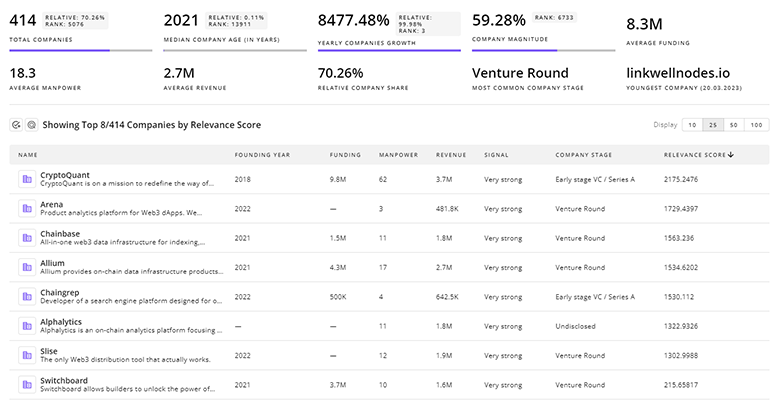
563 Real-time Multilingual Meetings Companies
Discover Real-time Multilingual Meetings Companies, their Funding, Manpower, Revenues, Stages, and much more
Real-time Multilingual Meetings Investors
The Investors tool by TrendFeedr offers a detailed perspective on 506 Real-time Multilingual Meetings investors and their funding activities. Utilize this tool to dissect investment patterns and gain actionable insights into the financial landscape of Real-time Multilingual Meetings.
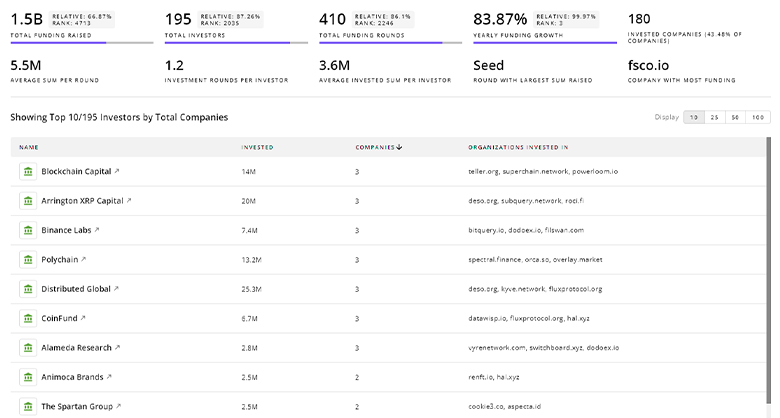
506 Real-time Multilingual Meetings Investors
Discover Real-time Multilingual Meetings Investors, Funding Rounds, Invested Amounts, and Funding Growth
Real-time Multilingual Meetings News
TrendFeedr’s News feature allows you to access 1.7K Real-time Multilingual Meetings articles as well as a detailed look at both historical trends and current market dynamics. This tool is essential for professionals seeking to stay ahead in a rapidly changing environment.
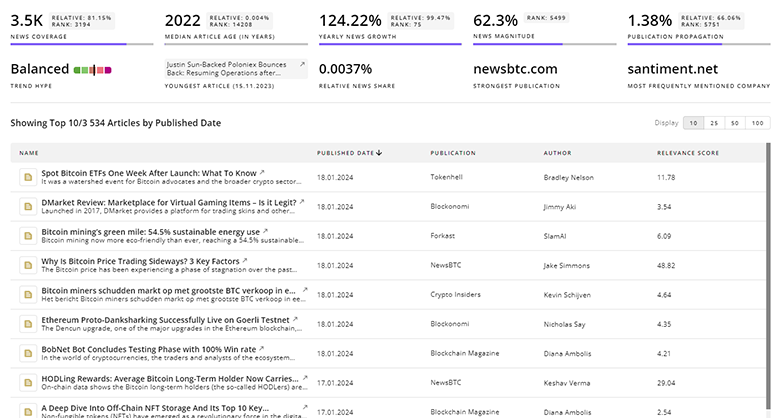
1.7K Real-time Multilingual Meetings News Articles
Discover Latest Real-time Multilingual Meetings Articles, News Magnitude, Publication Propagation, Yearly Growth, and Strongest Publications
Executive Summary
Real-time multilingual meetings are at a decisive inflection: buyers now expect integrated, low-latency translation plus post-meeting intelligence rather than isolated captioning. Market evidence — adoption rates above 60% for AI translation in meetings, rising non-English participation in 79% of events, and multi-billion-dollar forecasts for RSI and language services — shows commercial viability across internal collaboration, events, and customer service. Strategic choices for organizations reduce to two clear paths: invest in certified human interpretation where legal or clinical fidelity matters, or operationalize AI-first, API-integrated translation and meeting intelligence to scale global operations and capture meeting data as a knowledge asset. Vendors and buyers should treat latency, domain tuning, and meeting data governance as the three practical gating factors for deploying production-grade multilingual meeting systems.
Partner with us to offer cutting-edge insights into trends and tech. We welcome your input.