Remote Patient Monitoring Report
: Analysis on the Market, Trends, and TechnologiesThe remote patient monitoring market shows a maturing but high-opportunity profile, driven by widespread platform adoption and concentrated funding: 3,691 companies have engaged the space and those firms have raised $37.22B in aggregate funding, indicating significant capital flow into service and software layers. Market demand is anchored in chronic-disease management and home-based care while value capture is shifting toward AI-enabled analytics and reimbursement-ready platform services gminsights – U.S. Remote Patient Monitoring Market, 2025.
This report was last revised 244 days ago. See a missing piece? Your input can help — contact us.
Topic Dominance Index of Remote Patient Monitoring
The Dominance Index for Remote Patient Monitoring delivers a multidimensional view by integrating data from three key viewpoints: published articles, companies founded, and global search trends
Key Activities and Applications
Primary, revenue-driving activities
- Chronic disease management: Continuous measurement and remote follow-up for cardiovascular disease, diabetes, respiratory illness, and heart failure remain the largest use cases, with providers using RPM to convert monitoring into recurring billable care events.
- Post-acute and hospital-at-home programs: RPM supports shorter inpatient stays and home-based acute care by enabling clinician oversight and remote escalation pathways, reducing readmissions and per-episode costs thebusinessresearchcompany - Remote Patient Monitoring System Market, 2025.
- Cardiac device and ambulatory cardiac management: Remote ECG, Holter workflows and implantable device telemetry are high-acuity applications that require real-time data pipelines and clinical-grade analytics
- Remote therapeutic monitoring and adherence: Medication adherence, smart pillboxes and RTM codes are being used to capture additional reimbursable services; these activities increase lifetime revenue per patient and improve clinical outcomes.
- Safety and fall-prevention in institutional care: Contactless mobility and fall-detection systems in senior-living and long-term care reduce liability and staff burden by preventing incidents through continuous observation.
Operational patterns that create value
- Turning raw device data into reimbursable clinical workflows by managing device logistics, billing, and clinician triage is the highest-yield activity.
- Combining device connectivity with human-in-the-loop clinical review (virtual nursing teams) increases retention and clinical credibility in high-risk cohorts.
Emergent Trends and Core Insights
- Contactless, passive sensing for adherence lift: Radar and ambient sensing reduce patient friction and materially increase daily data capture compared with patient-dependent devices
- AI shifting from detection to prediction: Systems that build patient-specific risk models and predict deterioration days in advance are moving from pilots into clinical deployments, creating opportunities for differential reimbursement and hospital-at-home scale
- Platform consolidation around EHR integration and billing ops: Platforms that handle CPT/RPM billing, patient onboarding, device logistics and rapid EHR integration capture outsized revenue per clinician and show higher adoption among health systems polarismarketresearch - U.S. Remote Patient Monitoring System Market, 2025.
- Cellular-first and device-agnostic strategies reduce operational churn: Systems that remove Wi-Fi pairing and smartphone dependency materially improve patient retention in underserved populations, improving program economics.
- Scaling friction remains clinical workload and governance: The most frequent barrier to system-wide RPM deployment is clinician alert volume and inconsistent regulatory or payer guidance that complicates scaling beyond pilots Scaling Remote Patient Monitoring in Healthcare.
Technologies and Methodologies
- Contactless radar and UWB sensors for continuous respiratory and heart-rate capture, improving daily adherence without patient interaction globaldata - Remote Patient Monitoring Pipeline Market, 2024.
- Cellular gateways and plug-and-play kits to bypass patient broadband and smartphone dependencies, increasing data reliability and inclusion for less tech-savvy cohorts.
- AI-driven early-warning and predictive risk scoring that ingest multi-parameter biosignals and contextual EHR features to generate prioritized alerts and clinician action items researchandmarkets - Remote Patient Monitoring Devices, 2025.
- Device-agnostic, cloud-based orchestration layers that host device fleets, normalize telemetry and expose clinician-ready dashboards and APIs for EHRs.
- Hybrid human-plus-AI workflows where automated triage resolves the majority of low-acuity events while trained remote clinical teams handle complex escalations, improving safety and reducing false positives.
Remote Patient Monitoring Funding
A total of 1.3K Remote Patient Monitoring companies have received funding.
Overall, Remote Patient Monitoring companies have raised $37.2B.
Companies within the Remote Patient Monitoring domain have secured capital from 5.9K funding rounds.
The chart shows the funding trendline of Remote Patient Monitoring companies over the last 5 years
Remote Patient Monitoring Companies
Neteera — Neteera provides continuous, contactless, radar-based vital-sign sensing that removes the need for patient device manipulation and improves adherence for elderly or impaired users. Their solution is FCC, HIPAA and GDPR compliant and targets home and institutional deployments where maintenance-free operation is essential; the company has raised $61.3M and reports multi-year revenue growth supporting clinical pilots.
The firm matches the sector need for low-friction data capture and can act as an ingredient sensor for larger platform integrators.ATLASense Biomed — ATLASense builds a wearable-plus-cloud analytics platform focused on early prediction of respiratory failure and sepsis, claiming 1–3 day prediction windows for high-acuity deterioration and winning government innovation grants for predictive analytics development. Their product orientation is toward hospital-at-home and high-risk post-acute populations, where early intervention yields outsized cost savings and clinical benefit
Their value lies in moving monitoring from alerting to actionable forecasting for clinicians.Heartfelt Technologies — Heartfelt offers an automatic, non-contact monitoring system designed specifically for heart failure populations that captures reliable daily signals even among non-adherent patients and supports Medicare billing thresholds by delivering frequent observations. Their device design targets the highest-cost cohort in RPM economics, aiming to reduce readmissions through persistent passive monitoring.
This niche focus makes them attractive for payers and hospital systems seeking measurable readmission reductions.QUMEA — QUMEA provides contactless mobility and fall-prevention monitoring for institutional care settings, combining privacy-preserving radar sensing with mobility analytics to reduce falls and improve staff allocation. The company emphasizes in-facility safety use cases where continuous, ambient monitoring replaces reactive staff responses and reduces liability and incident rates.
QUMEA's product addresses a persistent cost center for long-term care operators.PULSARIO — PULSARIO offers physician-designed real-time cardiac diagnostics and a monitoring platform focused on arrhythmia detection and outpatient cardiac management. The solution emphasizes high signal clarity and direct clinician workflows for cardiology practices and smaller providers seeking turnkey diagnostic throughput.
Their clinical-first approach targets cardiology use cases that command premium reimbursement and tight clinical SLAs.
TrendFeedr's Companies feature is your gateway to 3.7K Remote Patient Monitoring companies.
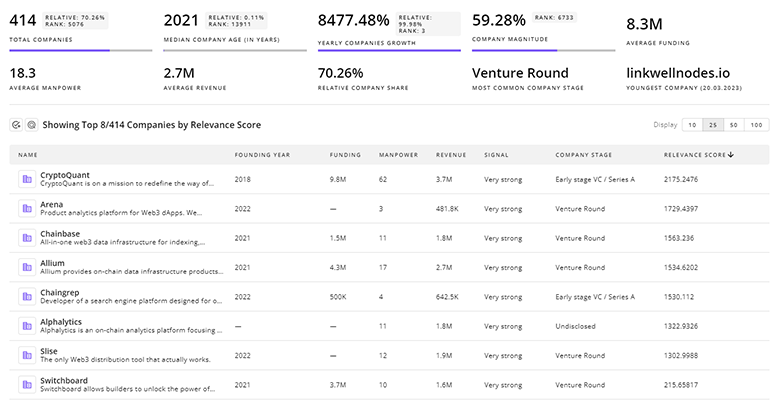
3.7K Remote Patient Monitoring Companies
Discover Remote Patient Monitoring Companies, their Funding, Manpower, Revenues, Stages, and much more
Remote Patient Monitoring Investors
The Investors tool by TrendFeedr offers a detailed perspective on 4.6K Remote Patient Monitoring investors and their funding activities. Utilize this tool to dissect investment patterns and gain actionable insights into the financial landscape of Remote Patient Monitoring.
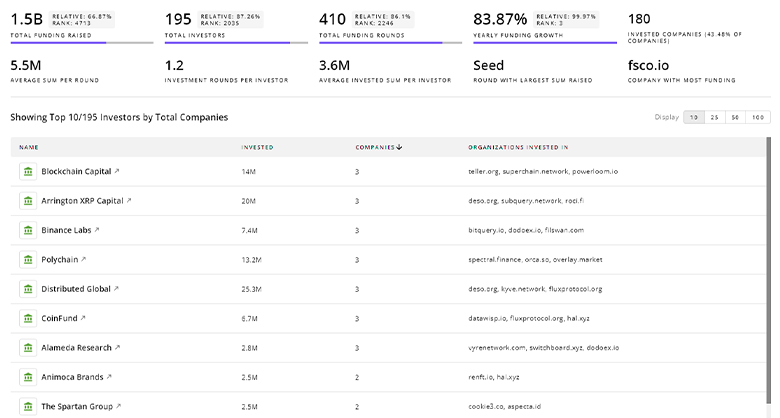
4.6K Remote Patient Monitoring Investors
Discover Remote Patient Monitoring Investors, Funding Rounds, Invested Amounts, and Funding Growth
Remote Patient Monitoring News
TrendFeedr’s News feature allows you to access 9.9K Remote Patient Monitoring articles as well as a detailed look at both historical trends and current market dynamics. This tool is essential for professionals seeking to stay ahead in a rapidly changing environment.
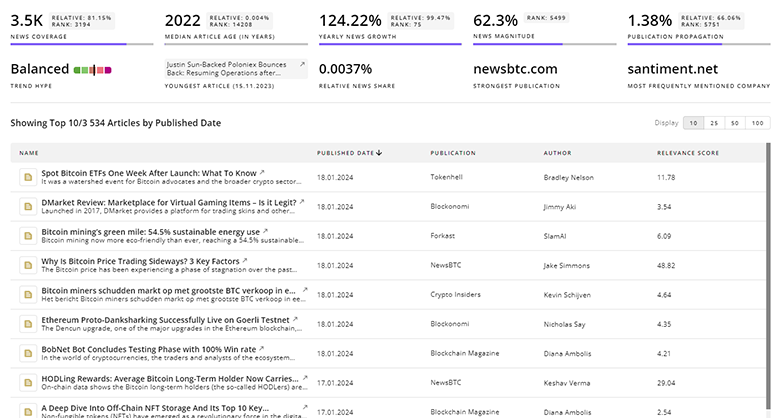
9.9K Remote Patient Monitoring News Articles
Discover Latest Remote Patient Monitoring Articles, News Magnitude, Publication Propagation, Yearly Growth, and Strongest Publications
Executive Summary
The remote patient monitoring market is shifting from isolated device sales to platform-driven, reimbursable care models that combine frictionless data capture, AI-based risk stratification, and embedded operational services. Investors and providers will capture the strongest returns by prioritizing EHR integration, payment-complete workflows, and low-friction sensing that increases daily data capture without raising patient burden. Niche technology innovators that prove measurable outcome improvements in high-cost cohorts will either scale via acquisition by platform players or become indispensable ingredient suppliers to health systems. Operational execution—billing, device logistics and clinician workload management—remains the pragmatic gating factor for system-wide adoption; organizations that solve these mechanics while demonstrating validated reductions in acute utilization will lead the next consolidation wave.
Partner with us to offer cutting-edge insights into trends and tech. We welcome your input.