Remote Work Report
: Analysis on the Market, Trends, and TechnologiesThe remote work market has matured into a capital-rich operational sector, now showing $280.48B in total funding across the participant set, which refocuses value from simple discovery to multi-jurisdictional employment infrastructure and high-assurance talent services. Employers and vendors must prioritize legal compliance, secure endpoint and network posture, and AI-driven talent quality control to convert adoption into durable business advantage.
This report was last revised 71 days ago. See a missing piece? Your input can help — contact us.
Topic Dominance Index of Remote Work
The Dominance Index for Remote Work delivers a multidimensional view by integrating data from three key viewpoints: published articles, companies founded, and global search trends
Key Activities and Applications
- Global Employment and EOR Services: Building compliant local entities, payroll, benefits, and tax management for cross-border hires remains the highest-value activity; platforms that integrate payroll, HRIS, and legal workflows capture outsized client reliance.
- Vetted Talent Marketplaces and AI Screening: Sourcing pre-vetted engineers and product builders using machine learning for initial screening and skill matching reduces time-to-hire and improves hire quality.
- Remote IT Asset Lifecycle Management: Procuring, deploying, securing, reclaiming, and recycling end-user devices for distributed teams reduces security risk and total cost of ownership for remote programs
- Workation and Mobility Compliance: Automating approvals, tax impact assessments, and short-term cross-border work authorizations is an emerging corporate need as employees request temporary remote work from foreign jurisdictions Work From Anywhere.
- Remote Security and BYOD Controls: Device-level isolation, identity-centric access, and network-edge hardening convert unmanaged endpoints into enforceable security zones for regulated workloads
- Virtual Office and Persistent Collaboration Spaces: Persistent virtual workspaces, immersive meeting rooms, and asynchronous collaboration patterns support culture, spontaneous interaction, and documentation of institutional knowledge.
Emergent Trends and Core Insights
- Compliance has become the commercial moat. Platforms that operationalize payroll, employment law, and tax for 150+ jurisdictions convert transactional revenue into high-retention enterprise contracts.
- Hybrid preference shapes policy, not collapse. Worker surveys show a strong appetite for hybrid schedules, and large employer mandates are increasing in-office requirements even as many employees signal exit risk if flexibility is removed statista - Work from home: remote & hybrid work, 2024.
- AI moves from screening to operational automation. Firms are using agentic HR tools and AI employees for 24/7 compliance, onboarding and payroll tasks, compressing administrative headcount while increasing process velocity TechRemote.
- Security at the edge is now product category-defining. Solutions that create isolated work networks and protect data on unmanaged endpoints win in regulated verticals; point VPNs no longer suffice Venn®.
- Physical proximity alternatives proliferate. Close-to-home micro-hubs and rentable neighborhood spaces reduce churn caused by isolation and long commutes, presenting a low-capex complement to virtual-first policies
- Employee sentiment drives commercial risk. Nearly 46% of remote-capable U.S. workers say they would be unlikely to stay if forced back full-time to the office, raising voluntary turnover risk tied to rigid RTO policies pewresearch - Remote workers say they’d be likely to leave their job if they could no longer work from home, 2025.
Technologies and Methodologies
- Cloud-based DaaS / VDI and Remote Desktop Protocols for secure, centralized work environments that reduce endpoint footprint while enabling managed access.
- Zero-Trust & Identity-Centric Access combined with continuous device posture checks to secure BYOD and home-office routers
- AI-driven Talent Matching and Automated Vetting employing skill tests, behavioral scoring, and career-trajectory signals to raise hire precision and reduce sourcing cost-per-hire Brix.
- Immersive Virtual Workspaces (2D/3D/VR) and Spatial Audio to recreate informal interactions and reduce perceived distance among distributed teams WorkAdventure.
- Integrated IT Asset Lifecycle Platforms that automate procurement, global shipping, configuration, and end-of-life recovery for distributed hardware fleets Workwize
- Asynchronous Collaboration Patterns and Meeting Analytics that reduce meeting load while preserving alignment through recorded summaries, action extraction, and searchable meeting artifacts.
Remote Work Funding
A total of 5.7K Remote Work companies have received funding.
Overall, Remote Work companies have raised $280.5B.
Companies within the Remote Work domain have secured capital from 19.7K funding rounds.
The chart shows the funding trendline of Remote Work companies over the last 5 years
Remote Work Companies
- Vamoz AG — Vamoz AG enables employers to offer controlled short-term remote work abroad as an official employee benefit, coupling policy engines with risk scoring to approve or deny overseas remote requests. The company packages compliance checks into a simple HR workflow to reduce manual legal review and protect organizations from inadvertent tax and employment exposures. This service targets HR teams that want to permit mobility without adding legal headcount.
- Loxada — Loxada sells managed routers and hardened firmware that create a separate, work-only network for employees at home, automatically patched and policy-enforced. The product reduces attack surface at the network edge and simplifies compliance with standards such as HIPAA and PCI, making it attractive to healthcare and financial services customers. Loxada positions network segregation as a practical, deployable control for distributed teams.
- Radious — Radious operates a marketplace for rentable collaborative workspaces in residential neighborhoods, delivering on-demand meeting rooms and local team hubs that are cheaper than centralized offices. The model addresses employee proximity needs and lowers commute friction while allowing companies to offer flexible in-person touchpoints without long-term leases. It targets organizations balancing retention and cost control.
- KIZWORK — KIZWORK combines low-energy VR spaces and Web3-based security to deliver immersive remote work and learning environments with a claimed 30x reduction in energy compared to traditional video conferencing. The platform targets ESG-minded teams and training programs that need richer presence with lower environmental impact. KIZWORK emphasizes digital twins and API integrations for business workflows.
- Remota — Remota manages the full lifecycle of endpoints for distributed organizations, from procurement through repair and secure disposal, aiming to make global IT logistics hands-off for HR and IT teams. By standardizing equipment and recovery processes, Remota reduces security gaps and simplifies asset management for hybrid programs. Their offering reduces operational friction for firms scaling remote headcount.
TrendFeedr's Companies feature is your gateway to 77.2K Remote Work companies.
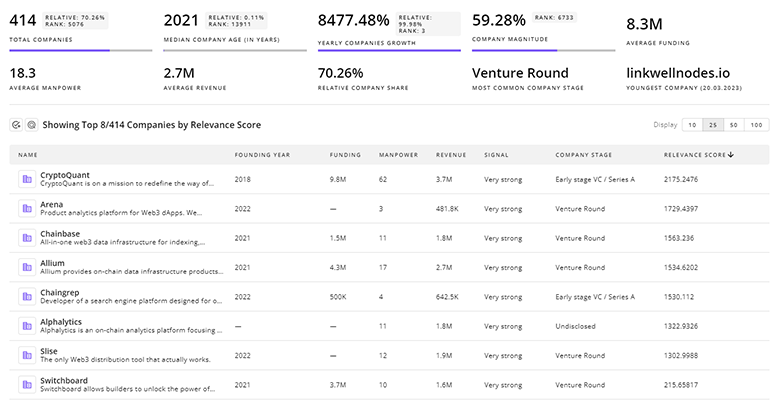
77.2K Remote Work Companies
Discover Remote Work Companies, their Funding, Manpower, Revenues, Stages, and much more
Remote Work Investors
The Investors tool by TrendFeedr offers a detailed perspective on 17.6K Remote Work investors and their funding activities. Utilize this tool to dissect investment patterns and gain actionable insights into the financial landscape of Remote Work.
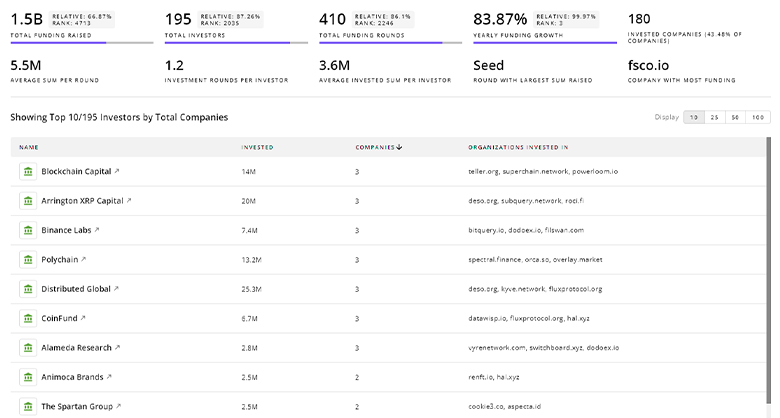
17.6K Remote Work Investors
Discover Remote Work Investors, Funding Rounds, Invested Amounts, and Funding Growth
Remote Work News
TrendFeedr’s News feature allows you to access 101.1K Remote Work articles as well as a detailed look at both historical trends and current market dynamics. This tool is essential for professionals seeking to stay ahead in a rapidly changing environment.

101.1K Remote Work News Articles
Discover Latest Remote Work Articles, News Magnitude, Publication Propagation, Yearly Growth, and Strongest Publications
Executive Summary
Businesses must treat remote work as a multi-dimensional operating system combining legal, security, operational, and cultural components. The most defensible vendors will be those that solve cross-border employment complexity, secure unmanaged endpoints and network edges, and deliver measurable improvements in talent quality through AI-assisted vetting. Companies that stitch together compliance, device lifecycle management, and employee experience tools gain three levers at once: lower legal risk, lower operational cost, and higher retention. Strategic buyers should prioritize partners with proven jurisdictional coverage, strong security assurances for BYOD, and demonstrable talent-quality signals when assembling a remote-work vendor stack.
Partner with us to offer cutting-edge insights into trends and tech. We welcome your input.