Robotic Process Automation Report
: Analysis on the Market, Trends, and TechnologiesThe RPA market is at an inflection point: enterprises are shifting spend from one-off bots to platform orchestration and AI-enabled workflows, reflected in a reported market size of $5.25 billion in 2025 and a projected market of $37.4 billion by 2033 with a 24.9% CAGR. This growth is concentrated in software-led offerings (process discovery, IDP, orchestration) and cloud delivery, while AI integration and process mining are the primary mechanisms converting pilot projects into enterprise programs Robotic Process Automation Market worth $46.66 billion by 2034 – Yahoo Finance. The next 24 months will reward vendors that combine low-cost, API-first automation with lifecycle governance and clear ROI metrics; failure to do so will consign many point-solution vendors to acquisition or niche status.
This report was last revised 219 days ago. See a missing piece? Your input can help — contact us.
Topic Dominance Index of Robotic Process Automation
The Dominance Index for Robotic Process Automation delivers a multidimensional view by integrating data from three key viewpoints: published articles, companies founded, and global search trends
Key Activities and Applications
- Transaction processing (AP/AR, invoicing, reconciliation) — High-volume, rule-based finance workflows remain the core RPA workload because they deliver immediate measurable savings and audit trails, making them repeatable ROI wins for enterprise deployments.
- Customer service automation (contact center routing, ticket triage, virtual agents) — Bots combined with conversational AI reduce handle times and escalate only exceptions, shifting FTEs from routine handling to exceptions and sales.
- Compliance, audit and reporting automation — Automated logging, credentialed execution and standardized reporting simplify regulatory proof and shorten audit cycles, a prime use case in heavily regulated sectors such as BFSI and healthcare.
- Legacy system bridging and desktop automation — UI-level bots remain valuable where APIs are absent; organizations use RPA to avoid costly replacement projects and to accelerate modernization timelines Global Robotic Process Automation Market Size, Share & Trends.
- Supply-chain and logistics orchestration — Order processing, carrier integration, and inventory reconciliation are increasing targets as companies combine RPA with workflow engines to keep multi-system supply chains synchronized.
- IT operations and SRE support (provisioning, monitoring, incident remediation) — RPA automates routine operations, enabling faster MTTR and more predictable SLAs when combined with runbook codification and orchestration platforms.
Emergent Trends and Core Insights
- AI-augmented process discovery and IDP — Process mining plus ML-driven candidate scoring prioritizes high-impact automations and reduces false starts; process discovery is shifting from ad hoc identification to continuous pipeline generation IMARC Group.
- Hyperautomation stacks and orchestration layers — Enterprises favor unified orchestration that manages attended/unattended bots, schedules, credentials, and SLAs; vendor differentiation now sits in lifecycle governance and cross-vendor orchestration.
- Cloud-first, API-centric deployments — Cloud delivery lowers TCO and accelerates scale; simultaneously, a steady migration to API-based automation reduces maintenance costs tied to fragile UI interactions and increases platform portability Robotic Process Automation Market Size, Share & Trends 2035.
- SME adoption via low-code/no-code and RPAaaS — SaaS RPA and citizen-developer tooling expand addressable market beyond large enterprises and shorten proof-of-value cycles for smaller organizations Enterprise Robotic Process Automation Market 2025.
- Security, governance and credential management as gating factors — Data exposure and bot credential risks require integrated lifecycle controls; absent those, scaling automation increases enterprise risk and invites audit failures Robotic Process Automation - Market Share Analysis.
- Sector playbooks and verticalized IP — Vendors that bundle domain-specific connectors, templates and KPIs (e.g. hospitality revenue workflows or aerospace inspection sequences) shorten time-to-value and reduce implementation variance.
Technologies and Methodologies
- Process and task mining coupled with continuous analytics — Instrumentation of event logs generates objective automation pipelines and post-deployment effectiveness signals, enabling data-driven prioritization.
- Intelligent Document Processing (IDP) + OCR + NLP — IDP transforms scanned and unstructured inputs into automatable, validated data; when combined with RPA, this eliminates significant exception handling in document-heavy workflows.
- Low-code / No-code development and citizen developer governance — Visual design tools democratize bot creation while platform governance and role-based controls maintain enterprise safety.
- Containerized runtimes and cloud orchestration — Kubernetes-style scaling, ephemeral bot instances, and cloud provisioning reduce idle cost and support elastic processing for batch peaks.
- Hybrid bot types (Attended, Unattended, RDA) — Mixed autonomy strategies place bots where they maximize throughput while preserving human oversight for edge cases Robotic Process Automation Capabilities in APEJ Manufacturing.
- Security-first design: credential vaults, least-privilege execution, audit trails — These features move from optional to mandatory as programs scale and regulatory scrutiny increases.
- AI layers for resilience (computer vision, self-repair, semantic mapping) — Patent activity and recent platform releases show work on self-healing bots and semantic UI understanding to reduce fragility and maintenance overhead.
Robotic Process Automation Funding
A total of 2.3K Robotic Process Automation companies have received funding.
Overall, Robotic Process Automation companies have raised $116.1B.
Companies within the Robotic Process Automation domain have secured capital from 7.8K funding rounds.
The chart shows the funding trendline of Robotic Process Automation companies over the last 5 years
Robotic Process Automation Companies
- AppRobotic — AppRobotic provides a cloud-native RPA platform focused on Windows, browser and virtualized environments with embedded OCR and in-bot ML predictions; the company emphasizes no per-bot licensing and unlimited bot execution to lower marginal cost for scale projects. AppRobotic targets modernization of desktop-heavy processes by combining visual automation with Selenium integrations for precise browser control.
- RobosizeME — RobosizeME builds industry-specific digital workers for the hospitality sector, integrating hotel APIs for distribution, revenue management and reservations automation; the company positions tight security (ISO 27001, GDPR, PCI-DSS) as core to its value, enabling global hotel groups to automate sensitive financial and guest workflows with guaranteed compliance.
- BotCity — BotCity offers a Python-centric RPA stack and orchestration with an open-source orientation, claiming up to 70% license cost savings by enabling Python-native automations and removing vendor lock-in; the platform emphasizes developer velocity, governance and KPI tracking for ROI measurement.
- RoBoTec PTC — RoBoTec PTC applies AI, 3D image recognition and robotics to highly specialized, sterile production automation in plant propagation and agri-tech; their offering demonstrates how RPA concepts extend into physical automation when tailored sensors, vision and lasers replace manual workstreams in niche industrial processes.
- C TWO — C TWO (formerly RPA Supervisor) provides a vendor-agnostic automation management and orchestration layer that reduces operational friction and maintenance costs across mixed RPA estates; their single-pane orchestration approach directly addresses the governance and scaling problems that cause many enterprise programs to stall.
TrendFeedr's Companies feature is your gateway to 22.6K Robotic Process Automation companies.
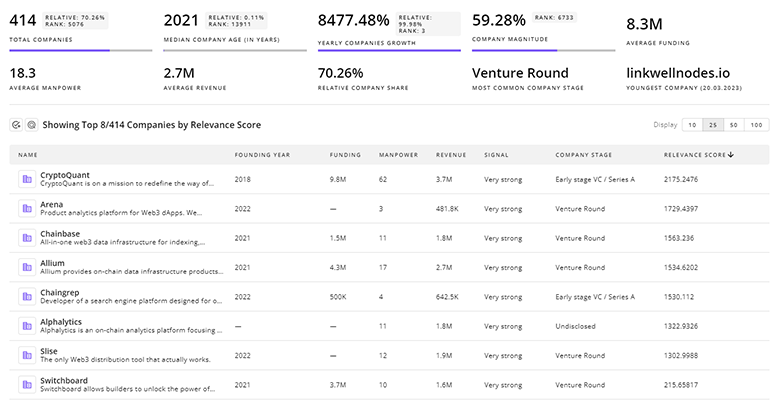
22.6K Robotic Process Automation Companies
Discover Robotic Process Automation Companies, their Funding, Manpower, Revenues, Stages, and much more
Robotic Process Automation Investors
The Investors tool by TrendFeedr offers a detailed perspective on 8.0K Robotic Process Automation investors and their funding activities. Utilize this tool to dissect investment patterns and gain actionable insights into the financial landscape of Robotic Process Automation.
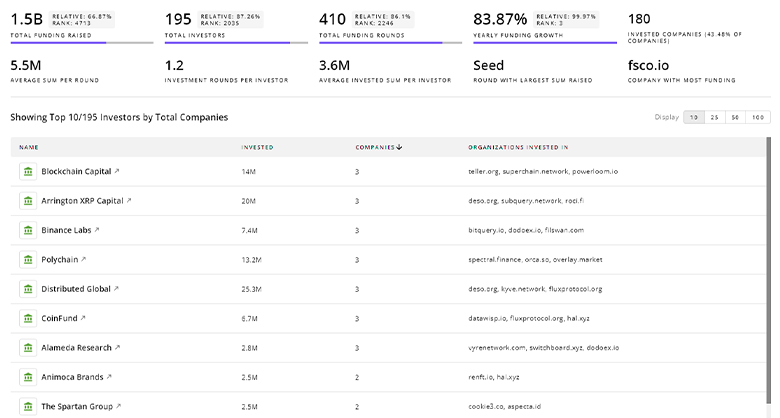
8.0K Robotic Process Automation Investors
Discover Robotic Process Automation Investors, Funding Rounds, Invested Amounts, and Funding Growth
Robotic Process Automation News
TrendFeedr’s News feature allows you to access 13.4K Robotic Process Automation articles as well as a detailed look at both historical trends and current market dynamics. This tool is essential for professionals seeking to stay ahead in a rapidly changing environment.
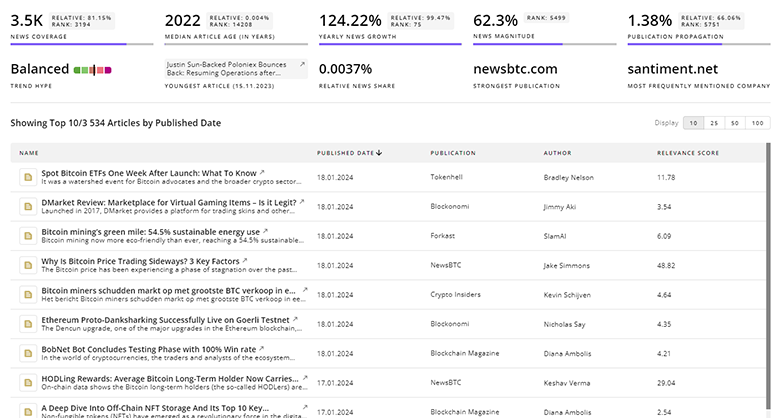
13.4K Robotic Process Automation News Articles
Discover Latest Robotic Process Automation Articles, News Magnitude, Publication Propagation, Yearly Growth, and Strongest Publications
Executive Summary
RPA will remain a core enterprise toolset, but the value pool now sits in orchestration, AI augmentation and secure lifecycle controls rather than individual bots. Leaders will invest in process discovery, IDP and orchestration layers that deliver measurable ROI and reduce maintenance overhead. Vendors that combine API-first execution, continuous process analytics and strict credential governance will capture mainstream enterprise budgets, while vertical specialists will keep premium positions where deep domain automation shortens implementation time and risk. Stakeholders should treat RPA programs as long-lived platform investments and prioritize metrics, security and integration depth when selecting partners.
Partner with us to offer cutting-edge insights into trends and tech. We welcome your input.